Recognition: unknown
Ranking with Partitioning
Pith reviewed 2026-05-08 17:33 UTC · model grok-4.3
The pith
The rank of a special subset of items can be bounded above and below by solving four optimization problems that merge similar items according to an undirected graph.
A machine-rendered reading of the paper's core claim, the machinery that carries it, and where it could break.
Core claim
We define four problems that, given an undirected similarity graph and an additive measure on items, seek to maximize or minimize either the absolute or the relative rank of a distinguished subset by choosing which similar items to combine into single positions. We show that all four problems are NP-hard on general graphs, yet admit efficient exact solutions on interval graphs, trees, and certain other structured families, plus constant-factor approximations in additional cases. These algorithms let us compute the full interval of possible ranks that a subset can occupy, thereby measuring the robustness of its position under different ways of handling similarity.
What carries the argument
Four combinatorial optimization problems (max/min absolute rank and max/min relative rank) whose feasible solutions are partitions of the vertex set that respect the edges of the similarity graph and whose objective is the resulting position of the special subset in the induced total order.
If this is right
- Any reported rank for a subset must be accompanied by the interval of ranks obtainable under different similarity-respecting partitions.
- When the similarity graph is an interval graph or a tree, the extreme ranks can be found in polynomial time.
- Approximation algorithms exist that guarantee a bounded deviation from the true extreme ranks even when exact solution is hard.
- The same framework applies to any additive ranking task in which items have a well-defined similarity relation, including emissions accounting and other aggregate statistics.
Where Pith is reading between the lines
- The method could be lifted to weighted similarity graphs or to cases where the additive measure itself changes under merging.
- The robustness intervals might serve as a new primitive for fair-ranking or uncertainty-aware ranking systems outside the paper's examples.
- Empirical tests on larger real-world datasets could reveal how often the computed intervals are narrow versus wide in practice.
Load-bearing premise
The given undirected graph correctly identifies which items may be merged without distorting the meaning of their summed measure.
What would settle it
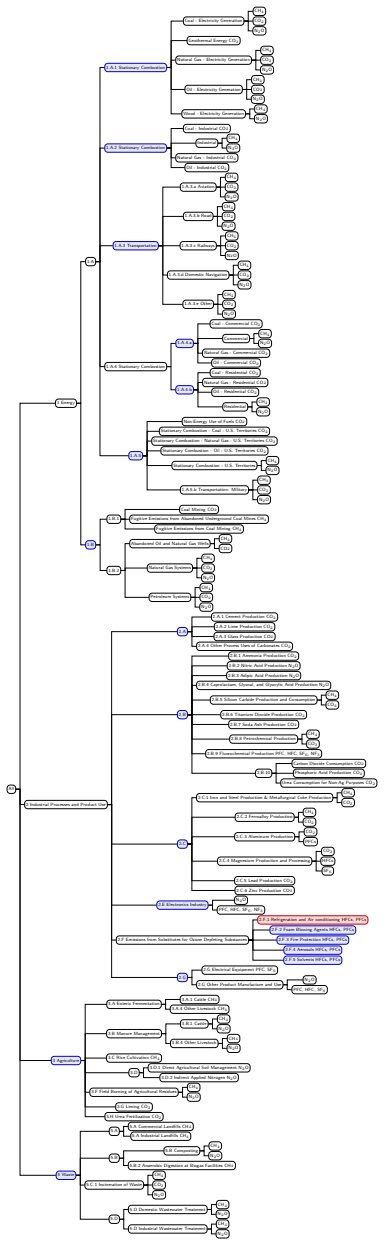
On a concrete instance such as national greenhouse-gas sources, compute the four optimal ranks; if the observed reported rank lies strictly outside the computed interval, or if the interval collapses to a single point while domain experts expect variation, the modeling approach is falsified.
Figures


read the original abstract
Given an undirected graph representing similarities between a set of items and an additive measure evaluating the items, we treat the position of a special subset of items in an ordinal ranking through a collection of combinatorial optimization problems in which items may be combined if they are similar. The objective for these problems is to either maximize or minimize the absolute or relative rank of the special subset, with a meta-goal of assessing the robustness of the rank, even in the presence of a well-defined criterion. We classify the computational complexity of all four problems, mostly finding worst-case hardness, then find exact and approximate solutions to special cases and variants of the problems. These structured cases are inspired by several real-world examples and may be used to assess commonly cited facts across disparate domains, as we demonstrate for sources of greenhouse gas emissions that contribute to climate change.
Editorial analysis
A structured set of objections, weighed in public.
Referee Report
Summary. The paper defines four combinatorial optimization problems on an undirected graph encoding item similarities together with an additive measure on items. The problems seek to maximize or minimize the absolute or relative rank of a distinguished subset by allowing merges of similar items into partitions. The manuscript classifies the computational complexity of all four problems (primarily establishing NP-hardness), supplies exact and approximation algorithms for structured special cases and variants, and demonstrates the framework on a real-world instance of ranking greenhouse-gas emission sources.
Significance. If the hardness results and algorithmic guarantees hold, the work supplies a clean theoretical lens for assessing ranking robustness under item grouping, with direct applicability to domains that already use similarity graphs and additive scores. The special-case algorithms and the GHG demonstration are concrete strengths that make the framework usable beyond pure theory.
minor comments (2)
- [Abstract] Abstract: the four problems are alluded to collectively but never named or given one-sentence definitions; inserting brief labels (e.g., Max-Abs-Rank-Partition, Min-Rel-Rank-Partition) would make the contribution immediately clearer to readers.
- The transition from the general hardness results to the structured special cases would benefit from an explicit statement of which graph properties (e.g., interval graphs, trees) are assumed in each algorithmic section.
Simulated Author's Rebuttal
We thank the referee for the positive summary and recommendation of minor revision. The referee's description accurately reflects the manuscript's focus on the four ranking-with-partitioning problems, their complexity, special-case algorithms, and the greenhouse-gas application. No specific major comments were provided in the report.
read point-by-point responses
-
Referee: No specific major comments listed.
Authors: We appreciate the recognition of the theoretical contributions (NP-hardness results and algorithmic guarantees) and the practical demonstration. Since no concrete points for revision were raised, we will prepare the revised manuscript with only minor editorial polishing if needed. revision: no
Circularity Check
No significant circularity
full rationale
The manuscript defines four combinatorial problems on undirected graphs equipped with an additive measure, then classifies their complexity (primarily via NP-hardness reductions from external problems) and supplies exact/approximation algorithms for structured special cases. All load-bearing steps—problem formalization, hardness proofs, and algorithmic guarantees—operate on externally supplied graph and measure inputs using standard techniques from complexity theory. No self-definitional loops, fitted parameters renamed as predictions, or load-bearing self-citations appear in the derivation chain; the arguments remain self-contained against external benchmarks.
Axiom & Free-Parameter Ledger
Reference graph
Works this paper leans on
-
[1]
On rectangle intersection and overlap graphs
C.S. Rim and K. Nakajima. “On rectangle intersection and overlap graphs”. In:IEEE Transac- tions on Circuits and Systems I: Fundamental Theory and Applications42.9 (1995), pp. 549– 553.doi:10.1109/81.414831
-
[2]
CPG graphs: Some structural and hardness results
Nicolas Champseix et al. “CPG graphs: Some structural and hardness results”. In:Discrete Applied Mathematics290 (2021), pp. 17–35.issn: 0166-218X.doi:https://doi.org/10. 1016/j.dam.2020.11.018.url:https://www.sciencedirect.com/science/article/pii/ S0166218X20305060. 36
2021
- [3]
-
[4]
Large Neighborhood Local Search for the Maximum Set Packing Problem
Maxim Sviridenko and Justin Ward. “Large Neighborhood Local Search for the Maximum Set Packing Problem”. In:Automata, Languages, and Programming: 40th International Collo- quium, ICALP 2013. Vol. 7965. Lecture Notes in Computer Science. Springer, 2013, pp. 792– 803.doi:10.1007/978-3-642-39206-1_67.url:https://arxiv.org/abs/1302.4347
work page doi:10.1007/978-3-642-39206-1_67.url:https://arxiv.org/abs/1302.4347 2013
-
[5]
On strongly hamiltonian abelian group graphs
C. C. Chen and N. F. Quimpo. “On strongly hamiltonian abelian group graphs”. In:Com- binatorial Mathematics VIII. Ed. by Kevin L. McAvaney. Berlin, Heidelberg: Springer Berlin Heidelberg, 1981, pp. 23–34.isbn: 978-3-540-38792-3
1981
-
[6]
License: CC BY-SA 4.0
Eric Bryant.New England Minor Civil Divisions. License: CC BY-SA 4.0. Wikimedia Com- mons. Sept. 25, 2019.url:https://commons.wikimedia.org/wiki/File:New_England_ Minor_Civil_Divisions.png
2019
-
[7]
United States Census Bureau.New England City and Town Areas Wall Map (March 2020). Mar. 2020.url:https : / / www . census . gov / geographies / reference - maps / 2020 / geo / nectas.html
2020
-
[8]
Optimal algorithms and inapproximability results for every CSP?
David G. Kirkpatrick and Pavol Hell. “On the completeness of a generalized matching prob- lem”. In:Proceedings of the Tenth Annual ACM Symposium on Theory of Computing. STOC ’78. San Diego, California, USA: Association for Computing Machinery, 1978, pp. 240–245. isbn: 9781450374378.doi:10 . 1145 / 800133 . 804353.url:https : / / doi . org / 10 . 1145 / 80...
-
[9]
On the complexity of partitioning graphs into connected sub- graphs
M.E. Dyer and A.M. Frieze. “On the complexity of partitioning graphs into connected sub- graphs”. In:Discrete Applied Mathematics10.2 (1985), pp. 139–153.issn: 0166-218X.doi: https://doi.org/10.1016/0166-218X(85)90008-3.url:https://www.sciencedirect. com/science/article/pii/0166218X85900083
work page doi:10.1016/0166-218x(85)90008-3.url:https://www.sciencedirect 1985
-
[10]
Food and Drug Administration.21 CFR 101.4
U.S. Food and Drug Administration.21 CFR 101.4. Electronic Code of Federal Regula- tions (eCFR). Dec. 2024.url:https : / / www . ecfr . gov / current / title - 21 / chapter - I/subchapter-B/part-101/subpart-A/section-101.4
2024
-
[11]
Environmental Protection Agency.Inventory of U.S
U.S. Environmental Protection Agency.Inventory of U.S. Greenhouse Gas Emissions and Sinks: 1990-2022. Tech. rep. U.S. Environmental Protection Agency, 2024
1990
-
[12]
Environmental Protection Agency.Sources of Greenhouse Gas Emissions
U.S. Environmental Protection Agency.Sources of Greenhouse Gas Emissions. 2025.url: https://www.epa.gov/ghgemissions/sources-greenhouse-gas-emissions
2025
-
[13]
https://www.gov.ca.gov/2024/04/16/california-remains-the-worlds-5th-largest- economy/
Office of Governor Gavin Newsom.California Remains the World’s 5th Largest Economy. https://www.gov.ca.gov/2024/04/16/california-remains-the-worlds-5th-largest- economy/. Apr. 2024. 37 A List of CRT Categories The following list gives the hierarchical breakdown of CRT Categories, with 2022-level emissions, in million metric tons ofCO2 equivalent, shown in...
2024
discussion (0)
Sign in with ORCID, Apple, or X to comment. Anyone can read and Pith papers without signing in.