Recognition: unknown
Geodesic simplices of pseudo-hyperbolic space
Pith reviewed 2026-05-08 04:25 UTC · model grok-4.3
The pith
A cohomological condition determines exactly when geodesic simplices in pseudo-hyperbolic space have finite volume.
A machine-rendered reading of the paper's core claim, the machinery that carries it, and where it could break.
Core claim
The geodesic simplices of the pseudo-hyperbolic space of signature (p,q) admit a cohomological interpretation, which yields a necessary and sufficient condition for finite volume. Consequently, every ideal geodesic polytope in the pseudo-hyperbolic space of signature (2,2) has finite volume.
What carries the argument
The cohomological interpretation of geodesic simplices that converts geometric volume questions into algebraic criteria.
Load-bearing premise
The cohomological interpretation accurately reflects the geometric volume properties of simplices across all signatures (p,q).
What would settle it
An explicit example of an ideal geodesic polytope in signature-(2,2) pseudo-hyperbolic space whose volume is infinite would refute the corollary.
Figures
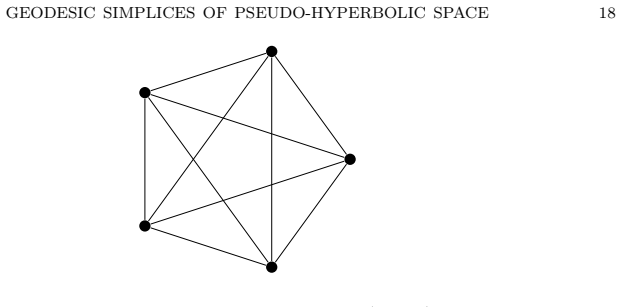
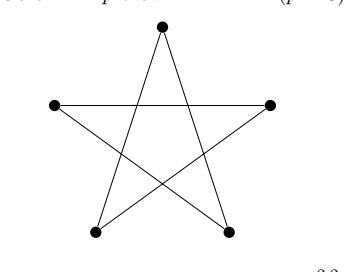
read the original abstract
We give a cohomological interpretation of the geodesic simplices of the pseudo-hyperbolic space of signature $(p,q)$ and formulate a necessary and sufficient condition for such a simplex to have finite volume. As a corollary, we obtain that every ideal geodesic polytope in the pseudo-hyperbolic space of signature $(2,2)$ has finite volume.
Editorial analysis
A structured set of objections, weighed in public.
Referee Report
Summary. The manuscript gives a cohomological interpretation of geodesic simplices in pseudo-hyperbolic space H^{p,q} and derives a necessary-and-sufficient condition for such a simplex to have finite volume. As a corollary it concludes that every ideal geodesic polytope in the (2,2) signature case has finite volume.
Significance. If the central cohomological criterion is valid, the work supplies a new algebraic-topological tool for controlling volumes of geodesic simplices in indefinite-signature hyperbolic geometry. This extends classical finite-volume results beyond the Riemannian setting and may prove useful for studying ideal polytopes, their triangulations, and related questions in pseudo-Riemannian geometry and cohomology.
major comments (1)
- [Corollary (following the main theorem on simplices)] The corollary asserts that every ideal geodesic polytope in H^{2,2} has finite volume. The manuscript supplies no separate argument showing that an arbitrary ideal polytope admits a triangulation (or decomposition) into geodesic simplices each satisfying the cohomological finite-volume condition, nor that finite volume is preserved under such a decomposition when the metric is indefinite and light-cone behavior at infinity differs from the Riemannian case. This step is load-bearing for the corollary to follow from the simplex theorem.
Simulated Author's Rebuttal
We thank the referee for the careful reading and for identifying the missing justification in the argument for the corollary. We address the major comment below and will revise the manuscript to incorporate the necessary clarification.
read point-by-point responses
-
Referee: [Corollary (following the main theorem on simplices)] The corollary asserts that every ideal geodesic polytope in H^{2,2} has finite volume. The manuscript supplies no separate argument showing that an arbitrary ideal polytope admits a triangulation (or decomposition) into geodesic simplices each satisfying the cohomological finite-volume condition, nor that finite volume is preserved under such a decomposition when the metric is indefinite and light-cone behavior at infinity differs from the Riemannian case. This step is load-bearing for the corollary to follow from the simplex theorem.
Authors: We agree that the manuscript does not supply an explicit argument for triangulating arbitrary ideal geodesic polytopes into simplices or for confirming that finite volume is preserved under such a decomposition in the indefinite-signature setting. In the revised version we will add a short paragraph immediately following the statement of the corollary. This paragraph will recall that any ideal geodesic polytope in H^{2,2} admits a triangulation into ideal geodesic simplices (a construction that extends from the classical hyperbolic case by using the same combinatorial subdivision of the boundary at infinity while respecting the pseudo-Riemannian geodesic structure). Each resulting simplex satisfies the cohomological finite-volume criterion because its ideal vertices lie on the light cone in the same manner as in the simplex theorem. Finite volume of the polytope then follows by additivity of the integral of the volume form; the lightlike portions of the boundary have measure zero with respect to this form and therefore introduce no additional divergences. revision: yes
Circularity Check
No circularity: derivation relies on independent cohomological construction
full rationale
The paper defines a cohomological interpretation for geodesic simplices in H^{p,q} and states a necessary-and-sufficient finite-volume criterion directly from that interpretation. The (2,2) polytope corollary is presented as following from the simplex result; no equation or definition reduces to itself by construction, no fitted parameter is relabeled as a prediction, and no load-bearing step collapses to a self-citation whose content is merely the present claim. The argument chain is therefore self-contained against external differential-geometric and cohomological benchmarks.
Axiom & Free-Parameter Ledger
axioms (1)
- standard math Standard axioms of pseudo-Riemannian geometry and singular cohomology on manifolds
Reference graph
Works this paper leans on
-
[1]
Deformations of F uchsian AdS representations are quasi- F uchsian
Thierry Barbot. Deformations of F uchsian AdS representations are quasi- F uchsian. J. Differential Geom. , 101, 2013
2013
-
[2]
H ^ p,q -convex cocompactness and higher higher T eichmüller spaces
Jonay Beyrer and Fanny Kassel. H ^ p,q -convex cocompactness and higher higher T eichmüller spaces. Geom. Funct. Anal. , 35, 2025
2025
-
[3]
Anosov AdS representations are quasi- Fuchsian
Thierry Barbot and Quentin Mérigot. Anosov AdS representations are quasi- Fuchsian . Groups Geom. Dyn. , 6(3):441–483, 2012
2012
-
[4]
Maximal surfaces and the universal T eichmüller space
Francesco Bonsante and Jean-Marc Schlenker. Maximal surfaces and the universal T eichmüller space. Invent. Math. , 182(2):279–333, 2010
2010
-
[5]
Anti-de S itter geometry and T eichmüller theory
Francesco Bonsante and Andrea Seppi. Anti-de S itter geometry and T eichmüller theory. 2020
2020
-
[6]
Convex cocompactness in pseudo- R iemannian hyperbolic spaces
Jeffrey Danciger, François Guéritaud, and Fanny Kassel. Convex cocompactness in pseudo- R iemannian hyperbolic spaces. Geom. Dedicata , 192:87–126, 2018
2018
-
[7]
Volume and bounded cohomology
Michael Gromov. Volume and bounded cohomology. Publications Mathématiques de l'IHÉS , 56:5–99, 1982
1982
-
[8]
Munkholm
Uffe Haagerup and Hans J. Munkholm. Simplices of maximal volume in hyperbolic n -space. Acta Math. , 147:1–11, 1981
1981
-
[9]
Lorentz spacetimes of constant curvature
Geoffrey Mess. Lorentz spacetimes of constant curvature. Preprint (1990), available as arXiv:0706.1570
-
[10]
Polygonal surfaces in pseudo-hyperbolic spaces
Alex Moriani. Polygonal surfaces in pseudo-hyperbolic spaces. 2024
2024
-
[11]
Thurston
William P. Thurston. The Geometry and Topology of Three-Manifolds . 1980. Princeton lecture notes
1980
discussion (0)
Sign in with ORCID, Apple, or X to comment. Anyone can read and Pith papers without signing in.