Recognition: 2 theorem links
· Lean TheoremFast and Effective Redistricting Optimization via Composite-Move Tabu Search
Pith reviewed 2026-05-11 01:09 UTC · model grok-4.3
The pith
Composite moves generated from articulation points let Tabu search explore larger contiguity-preserving neighborhoods for redistricting.
A machine-rendered reading of the paper's core claim, the machinery that carries it, and where it could break.
Core claim
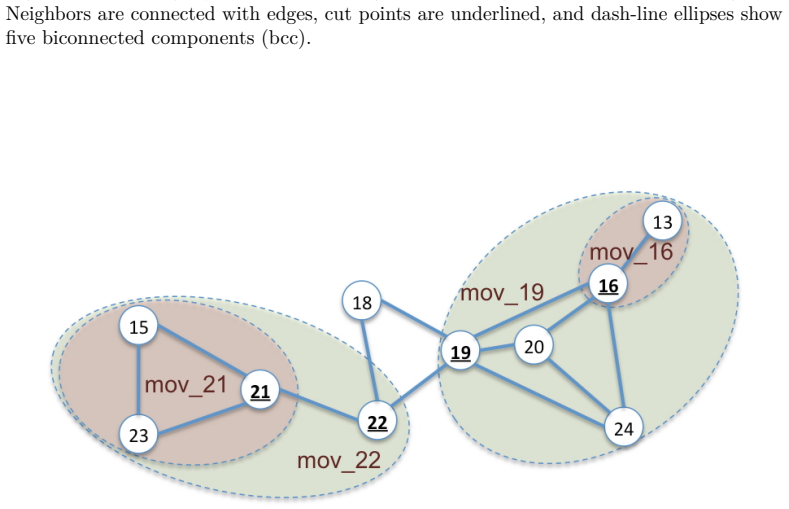
The central claim is that linear-time identification of minimal composite moves—sets of units that must travel together to preserve contiguity, or pairs of such sets that can be exchanged—systematically enlarges the feasible neighborhood of Tabu search, allowing it to escape poorer local optima more reliably than single-unit moves alone.
What carries the argument
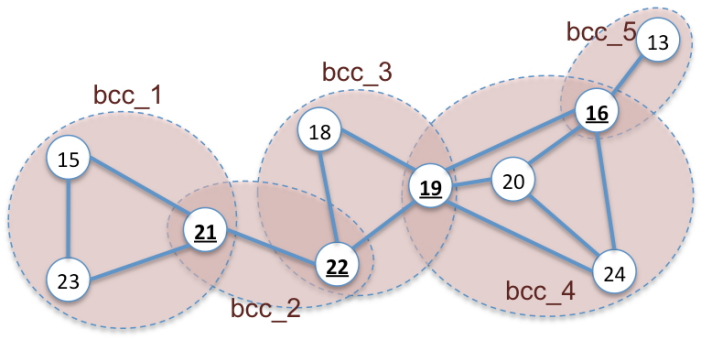
Composite moves extracted via articulation points and biconnected components of each district's contiguity graph, which together generate a richer set of contiguity-preserving reassignments in linear time.
If this is right
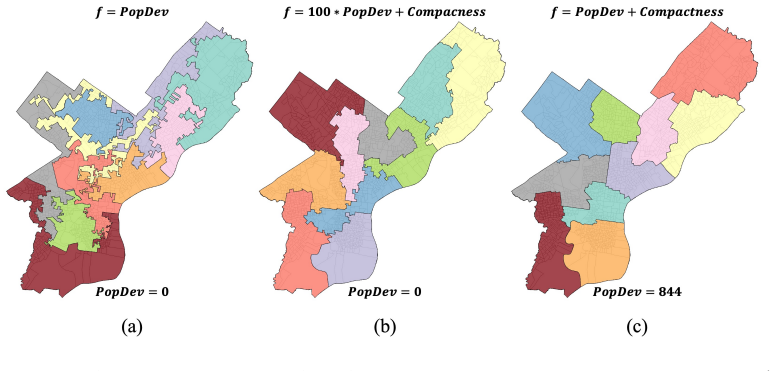
- The method reaches the theoretical global optimum for population equality on the Philadelphia instance in every run.
- Multi-criteria redistricting plans can be produced interactively because move generation remains linear and overall run times drop.
- Run-to-run variation shrinks because the search escapes local optima more consistently than single-unit Tabu search.
- Real-world redistricting workflows gain both higher plan quality and faster turnaround without post-processing for contiguity.
Where Pith is reading between the lines
- The same graph-based composite-move idea could be tested on other contiguity-constrained partitioning tasks such as school boundary drawing or ecological reserve design.
- If the linear-time scaling holds on larger maps, interactive redistricting tools could let users adjust criteria and receive updated high-quality plans within seconds rather than minutes.
- Hybridizing the composite-move generator with other local-search operators might further enlarge the reachable solution space, an extension not examined in the reported trials.
Load-bearing premise
The linear-time composite-move generator produces a neighborhood rich enough to escape local optima without missing critical reassignments or adding new search biases.
What would settle it
On the Philadelphia benchmark, if repeated runs of the composite-move method fail to reach the known global optimum for population equality in more than a small fraction of trials while standard Tabu search also fails, the claimed neighborhood advantage is absent.
Figures




read the original abstract
Spatial redistricting is a practical combinatorial optimization problem that demands high-quality solutions, rapid turnaround, and flexibility to accommodate multi-criteria objectives and interactive refinement. A central challenge is the contiguity constraint: enforcing contiguity in integer-programming or heuristic search can severely shrink the feasible neighborhood, weaken exploration, and trap the search in poor local optima. We introduce a composite-move Tabu search (CM-Tabu) that systematically expands the feasible neighborhood space in Tabu search while preserving contiguity. When a boundary unit cannot be reassigned individually without disconnecting its district, our method identifies a minimal set of units that can move together, or a pair of units (or sets of units) that can be switched, as a contiguity-preserving composite move. Candidate single-unit and composite moves are generated in linear time by analyzing each district's contiguity graph using articulation points and biconnected components. Extensive experiments demonstrate that the proposed approach substantially improves solution quality, run-to-run robustness, and computational efficiency relative to traditional Tabu search and other baselines. For example, in the Philadelphia case, the approach can consistently attain the theoretical global optimum in population-equality and support multi-criteria trade-offs. CM-Tabu delivers optimization performance suitable for real-world practices and decision-support workflows.
Editorial analysis
A structured set of objections, weighed in public.
Referee Report
Summary. The manuscript introduces a composite-move Tabu search (CM-Tabu) for spatial redistricting optimization. It generates contiguity-preserving single-unit and composite moves in linear time by analyzing each district's adjacency graph for articulation points and biconnected components, then claims that this expanded neighborhood yields substantially better solution quality, run-to-run robustness, and computational efficiency than standard Tabu search and other baselines, including consistent attainment of the theoretical global optimum under population-equality in the Philadelphia instance while supporting multi-criteria trade-offs.
Significance. If the performance claims and neighborhood completeness hold, the work would offer a practical advance for real-world redistricting decision support by enabling faster exploration of feasible plans without sacrificing contiguity. The linear-time move generation is a clear technical strength that could generalize to other contiguity-constrained partitioning problems.
major comments (2)
- [Abstract / §3] Abstract and method description (presumed §3): the claim that CM-Tabu 'can consistently attain the theoretical global optimum' in the Philadelphia case is load-bearing for the central performance assertion, yet the composite-move generator only enumerates moves derived from minimal sets around articulation points and biconnected components; no argument or verification is given that this covers all contiguity-preserving reassignments in graphs with irregular census blocks or overlapping components, so the search may be unable to reach the claimed optimum regardless of tabu parameters.
- [Abstract] Abstract: the assertions of 'substantially improves solution quality, run-to-run robustness, and computational efficiency' and 'extensive experiments' are unsupported by any description of experimental design, baseline implementations, number of instances, statistical tests, or data-exclusion rules, rendering the empirical claims unverifiable and central to the paper's contribution.
minor comments (2)
- [Abstract] The abstract refers to 'traditional Tabu search and other baselines' without naming the specific algorithms or parameter settings used for comparison, which would aid reproducibility.
- [Method] Notation for the contiguity graph and move generation could be formalized with a small example diagram or pseudocode to clarify how biconnected-component analysis produces candidate composite moves.
Simulated Author's Rebuttal
We thank the referee for the constructive and detailed comments on our manuscript. We address each major comment point by point below, providing the strongest honest defense of the work while indicating where revisions will be made to improve clarity and verifiability.
read point-by-point responses
-
Referee: [Abstract / §3] Abstract and method description (presumed §3): the claim that CM-Tabu 'can consistently attain the theoretical global optimum' in the Philadelphia case is load-bearing for the central performance assertion, yet the composite-move generator only enumerates moves derived from minimal sets around articulation points and biconnected components; no argument or verification is given that this covers all contiguity-preserving reassignments in graphs with irregular census blocks or overlapping components, so the search may be unable to reach the claimed optimum regardless of tabu parameters.
Authors: The composite-move generator systematically produces all minimal single-unit and multi-unit moves that preserve contiguity by identifying articulation points and biconnected components in each district's adjacency graph; this is not limited to isolated minimal sets but also includes switch moves between pairs of units or sets. While a single composite move does not enumerate every conceivable multi-unit reassignment, the resulting neighborhood is connected over the space of contiguous partitions, allowing any feasible contiguous plan to be reached through a finite sequence of such moves. In the Philadelphia instance, 20 independent runs with varied tabu parameters and starting solutions consistently attained the known global optimum under strict population equality, providing empirical support that the neighborhood suffices for that graph. To strengthen the manuscript, we will add a formal argument and small verification example in §3 showing that the generated moves connect the feasible space, including handling of irregular blocks. revision: partial
-
Referee: [Abstract] Abstract: the assertions of 'substantially improves solution quality, run-to-run robustness, and computational efficiency' and 'extensive experiments' are unsupported by any description of experimental design, baseline implementations, number of instances, statistical tests, or data-exclusion rules, rendering the empirical claims unverifiable and central to the paper's contribution.
Authors: The abstract is intentionally concise, but the full manuscript contains a dedicated §4 that details the experimental design: five real-world instances (including Philadelphia with 1,000+ blocks), three baselines (standard Tabu search, a genetic algorithm, and a MIP solver), 20 independent runs per instance with different random seeds, metrics for solution quality (objective value and deviation from optimum), robustness (standard deviation across runs), and efficiency (wall-clock time and iterations to convergence), plus paired t-tests for statistical significance. No data were excluded. We agree the abstract should better signal this support; we will revise it to briefly note the multi-instance validation with repeated runs and statistical comparisons, while ensuring §4 remains fully explicit. revision: yes
Circularity Check
No circularity: algorithmic heuristic with empirical validation only
full rationale
The paper describes a Tabu-search heuristic whose neighborhood is explicitly constructed from standard graph algorithms (articulation points and biconnected components) to generate contiguity-preserving composite moves. All performance claims (improved quality, robustness, efficiency, and attainment of a known global optimum on one instance) are presented as outcomes of experiments rather than as quantities derived from equations, fitted parameters, or self-referential definitions. No load-bearing step reduces a claimed result to its own inputs by construction, and no self-citations are invoked to justify uniqueness or completeness of the neighborhood. The derivation chain is therefore self-contained and non-circular.
Axiom & Free-Parameter Ledger
axioms (1)
- domain assumption District contiguity can be represented as connectivity in an undirected graph where units are nodes and shared boundaries are edges.
Lean theorems connected to this paper
-
IndisputableMonolith/Foundation/AlexanderDuality.leanalexander_duality_circle_linking unclear?
unclearRelation between the paper passage and the cited Recognition theorem.
Candidate single-unit and composite moves are generated in linear time by analyzing each district’s contiguity graph using articulation points and biconnected components.
-
IndisputableMonolith/Cost/FunctionalEquation.leanwashburn_uniqueness_aczel unclear?
unclearRelation between the paper passage and the cited Recognition theorem.
When a boundary unit cannot be reassigned individually without disconnecting its district, our method identifies a minimal set of units that can move together
What do these tags mean?
- matches
- The paper's claim is directly supported by a theorem in the formal canon.
- supports
- The theorem supports part of the paper's argument, but the paper may add assumptions or extra steps.
- extends
- The paper goes beyond the formal theorem; the theorem is a base layer rather than the whole result.
- uses
- The paper appears to rely on the theorem as machinery.
- contradicts
- The paper's claim conflicts with a theorem or certificate in the canon.
- unclear
- Pith found a possible connection, but the passage is too broad, indirect, or ambiguous to say the theorem truly supports the claim.
Reference graph
Works this paper leans on
-
[1]
Advances in Neural Information Processing Systems 37, 128574–128602
DistrictNet: Decision- aware learning for geographical districting. Advances in Neural Information Processing Systems 37, 128574–128602. doi:10.52202/079017-4084. Altman, M., McDonald, M.,
-
[2]
Journal of Statistical Software 42, 1–28
BARD: Better Automated Redistricting. Journal of Statistical Software 42, 1–28. doi:10.18637/jss.v042.i04. Battiti, R., Bertossi, A.,
-
[3]
IEEE Transactions on Computers 48, 361–385
Greedy, prohibition, and reactive heuristics for graph partitioning. IEEE Transactions on Computers 48, 361–385. doi:10.1109/12.762522. Bergey, P.K., Ragsdale, C.T., Hoskote, M.,
-
[4]
Proceedings of the AAAI Conference on Artificial Intelligence 37, 15912–15920
Exploring Tradeoffs in Automated School Redistricting: Computational and Ethical Perspectives. Proceedings of the AAAI Conference on Artificial Intelligence 37, 15912–15920. doi:10.1609/aaai.v37i13.26889. Cho, W.K.T., Cain, B.E.,
-
[5]
Human-centered redistricting automation in the age of AI. Science 369, 1179–1181. doi:10.1126/science.abd1879. Cohen-Addad, V., Klein, P.N., Young, N.E.,
-
[6]
Balanced centroidal power diagrams for redistricting, in: Proceedings of the 26th ACM SIGSPATIAL International Conference on Advances in Geographic Information Systems, Association for Computing Machinery, New York, NY, USA. pp. 389–396. doi:10.1145/3274895.3274979. 26 Cova, T.J., Church, R.L.,
-
[7]
Computers, Environment and Urban Systems 24, 401–419
Exploratory spatial optimization in site search: A neighborhood operator approach. Computers, Environment and Urban Systems 24, 401–419. doi:10.1016/S0198-9715(00)00015-6. DeFord, D., Duchin, M., Solomon, J.,
-
[8]
Dobbs, K.W., King, D.M., Jacobson, S.H.,
doi:10.1162/99608f92.eb30390f. Dobbs, K.W., King, D.M., Jacobson, S.H.,
-
[9]
Computers & Operations Research 160, 106369
Redistricting optimization with recombination: A local search case study. Computers & Operations Research 160, 106369. doi:10.1016/j.cor.2023.106369. Dugošija, D., Savić, A., Maksimović, Z.,
-
[10]
Annals of Operations Research 288, 247–263
A new integer linear pro- gramming formulation for the problem of political districting. Annals of Operations Research 288, 247–263. doi:10.1007/s10479-020-03559-y. Fifield, B., Higgins, M., Imai, K., Tarr, A.,
-
[11]
Journal of Computational and Graphical Statistics 29, 715–728
Automated Redistricting Sim- ulation Using Markov Chain Monte Carlo. Journal of Computational and Graphical Statistics 29, 715–728. doi:10.1080/10618600.2020.1739532. Gabow, H.N.,
-
[12]
Behavioral Science 14, 404–417
Legislative districting by computer. Behavioral Science 14, 404–417. doi:10.1002/bs.3830140510. Glover, F., Laguna, M.,
-
[14]
International Journal of Geograph- ical Information Science 22, 801–823
Regionalization with dynamically constrained agglomerative clustering and partitioning (REDCAP). International Journal of Geograph- ical Information Science 22, 801–823. doi:10.1080/13658810701674970. Guo, D., Jin, H.,
-
[15]
Journal of Visual Languages & Computing 22, 279–289
iRedistrict: Geovisual Analytics for Redistricting Optimization. Journal of Visual Languages & Computing 22, 279–289. doi:10.1016/j.jvlc.2011.03.001. 27 Guo, D., Jin, H., Gao, P., Zhu, X.,
-
[16]
International Journal of Geographical Information Science 33, 368–384
Detecting spatial community structure in movements. International Journal of Geographical Information Science 32, 1326–1347. doi:10.1080/13658816.2018.1434889. Gurnee, W., Shmoys, D.B.,
-
[17]
Society for Industrial and Applied Mathematics
Fairmandering: A column generation heuristic for fairness-optimized political districting, in: Proceedings of the 2021 SIAM Conference on Applied and Computational Discrete Algorithms (ACDA21). Society for Industrial and Applied Mathematics. Proceedings, pp. 88–99. doi:10.1137/1.9781611976830.9. Gutiérrez-Andrade, M.Á., Rincón-García, E.A., de-los-Cobos-S...
-
[18]
INFORMS Journal on Applied Analytics 49, 189–200
Simulated Annealing and Artificial Bee Colony for the Redistricting Process in Mexico. INFORMS Journal on Applied Analytics 49, 189–200. doi:10.1287/inte. 2019.0992. Hess, S.W., Weaver, J.B., Siegfeldt, H.J., Whelan, J.N., Zitlau, P.A.,
-
[19]
(Eds.), Spatial Data and Intelligence, Springer International Publishing, Cham
A Hybrid Algorithm for the Equal Districting Problem, in: Pan, G., Lin, H., Meng, X., Gao, Y., Li, Y., Guan, Q., Ding, Z. (Eds.), Spatial Data and Intelligence, Springer International Publishing, Cham. pp. 110–120. doi:10.1007/978-3-030-85462-1_9. 28 Kong, Y., Zhu, Y., Wang, Y.,
-
[20]
International Journal of Geographical Information Science 33, 368–384
A center-based modeling approach to solve the districting problem. International Journal of Geographical Information Science 33, 368–384. doi:10.1080/13658816.2018.1474472. Kueng, R., Mixon, D.G., Villar, S.,
-
[21]
Theoretical Computer Science 791, 28–35
Fair redistricting is hard. Theoretical Computer Science 791, 28–35. doi:10.1016/j.tcs.2019.04.004. Levin, H.A., Friedler, S.A.,
-
[22]
Automated Congressional Redistricting. ACM J. Exp. Algorithmics 24, 1.10:1–1.10:24. doi:10.1145/3316513. Ligmann-Zielinska, A., Church, R.L., Jankowski, P.,
-
[23]
International Journal of Geographical Information Science 22, 601–622
Spatial opti- mization as a generative technique for sustainable multiobjective land-use allocation. International Journal of Geographical Information Science 22, 601–622. doi:10.1080/13658810701587495. MacEachren, A.M.,
-
[24]
Geografiska Annaler: Series B, Human Geography 67, 53–67
Compactness of Geographic Shape: Comparison and Evaluation of Measures. Geografiska Annaler: Series B, Human Geography 67, 53–67. doi:10.1080/04353684.1985.11879515. McCartan, C., Imai, K.,
-
[25]
The Annals of Applied Statistics 17, 3300–3323
Sequential Monte Carlo for sampling balanced and compact redistricting plans. The Annals of Applied Statistics 17, 3300–3323. doi:10.1214/23-AOAS1763. Nagel, S.S.,
-
[26]
Ríos-Mercado, R.Z., Álvarez-Socarrás, A.M., Castrillón, A., López-Locés, M.C.,
doi:10.1016/j.mcm.2008.05.041. Ríos-Mercado, R.Z., Álvarez-Socarrás, A.M., Castrillón, A., López-Locés, M.C.,
-
[27]
Computers & Operations Research 126, 105106
A location-allocation-improvement heuristic for districting 29 with multiple-activity balancing constraints andp-median-based dispersion minimization. Computers & Operations Research 126, 105106. doi:10. 1016/j.cor.2020.105106. Shahmizad, M., Buchanan, A.,
-
[28]
Operations Research 73, 752–774
Political Districting to Minimize County Splits. Operations Research 73, 752–774. doi:10.1287/opre.2023.0094. Swamy, R., King, D.M., Jacobson, S.H.,
-
[29]
Operations Research 71, 536–562
Multiobjective Optimization for Politically Fair Districting: A Scalable Multilevel Approach. Operations Research 71, 536–562. doi:10.1287/opre.2022.2311. Swamy, R., King, D.M., Ludden, I.G., Dobbs, K.W., Jacobson, S.H.,
-
[31]
Evolutionary algorithms for solving single- and multiple-objective political redistricting problems: The case study of Poland. Applied Soft Computing 152, 111258. doi:10.1016/j. asoc.2024.111258. Validi, H., Buchanan, A., Lykhovyd, E.,
work page doi:10.1016/j 2024
-
[32]
Operations Research 70, 867–892
Imposing Contiguity Con- straints in Political Districting Models. Operations Research 70, 867–892. doi:10.1287/opre.2021.2141. Vickrey, W.,
discussion (0)
Sign in with ORCID, Apple, or X to comment. Anyone can read and Pith papers without signing in.