Recognition: 2 theorem links
· Lean TheoremFQPDR: Federated Quantum Neural Network for Privacy-preserving Early Detection of Diabetic Retinopathy
Pith reviewed 2026-05-12 01:02 UTC · model grok-4.3
The pith
A federated quantum neural network enables privacy-preserving early detection of diabetic retinopathy.
A machine-rendered reading of the paper's core claim, the machinery that carries it, and where it could break.
Core claim
The FQPDR system implements a quantum neural network within a federated learning framework for early diabetic retinopathy detection. With limited samples and few learnable parameters, the models are trained locally and cross-evaluated to confirm robustness. The performances compare favorably to existing non-FL and FL methods.
What carries the argument
Federated quantum neural network that processes retinal images using quantum circuits while training collaboratively without sharing raw data.
If this is right
- Healthcare providers can jointly improve AI models for disease detection without compromising patient confidentiality.
- Resource-efficient quantum models can be applied to medical tasks where data is scarce at individual sites.
- Privacy-preserving techniques become feasible for identifying subtle features in sensitive imaging data.
- Global model updates can enhance local performance for early intervention in diabetic eye disease.
Where Pith is reading between the lines
- Extending this to other eye diseases or similar low-contrast detection tasks in medicine could broaden its utility.
- The approach might integrate with classical deep learning for hybrid systems that balance quantum advantages with proven methods.
- Testing on larger and more varied clinical datasets would help establish if the robustness holds in practice.
- Deployment on portable devices could bring such detection capabilities to underserved areas.
Load-bearing premise
A quantum neural network with few learnable parameters, when trained in federated fashion on limited samples, can reliably detect tiny low-contrast microaneurysms in retinal images from varying sources.
What would settle it
Demonstrating that the detection accuracy falls below useful levels when the model is applied to a new set of retinal images with different characteristics or from a different population.
Figures



read the original abstract
Diabetic Retinopathy (DR) is a common complication of diabetes that can lead to blindness of people. Detecting DR at the earliest stage is essential to prevent irreversible eye damage. Microaneurysm dots are the first signs of DR. As the dots are tiny and of low contrast, detecting mild DR is a very challenging task. Federated learning (FL) preserves data privacy, which is a major concern for medical image processing. FL is a collaborative learning method, which shares only the model parameters with a server, without sharing the patient data to a central server. Inspired by classical FL, we propose a federated learning-based quantum neural network (federated QNN) for this task. We implemented the models with limited samples and few learnable parameters from the E-ophtha and Retina MNIST datasets. The crossevaluation efficiency of the proposed federated quantum neural network system for privacy-preserving early detection of diabetic retinopathy (FQPDR) in Kaggle dataset images indicates the robustness of the light weight learning models. FQPDR performances are inspiring while considering existing non-FL and FL methods.
Editorial analysis
A structured set of objections, weighed in public.
Referee Report
Summary. The manuscript proposes FQPDR, a federated quantum neural network for privacy-preserving early detection of diabetic retinopathy via microaneurysm detection in retinal images. Lightweight QNN models with few learnable parameters are trained on limited samples from the E-ophtha and Retina MNIST datasets; cross-evaluation on Kaggle dataset images is presented as evidence of model robustness, with overall performances described as inspiring relative to existing non-FL and FL baselines.
Significance. If the performance claims hold under quantitative scrutiny, the work could meaningfully advance the application of variational quantum circuits within federated learning frameworks for medical imaging tasks that require both privacy and sensitivity to low-contrast features. The emphasis on parameter-efficient models trained across heterogeneous datasets addresses practical constraints in healthcare AI, though the current lack of metrics prevents evaluation of whether the quantum component delivers measurable gains over classical federated alternatives.
major comments (2)
- [Abstract] Abstract: The central claim that cross-evaluation efficiency on Kaggle images 'indicates the robustness of the light weight learning models' and that 'FQPDR performances are inspiring' is unsupported by any numerical results, error bars, baseline tables, confusion matrices, or statistical tests; without these, the robustness conclusion cannot be assessed.
- [Abstract] Abstract: The assumption that a variational quantum circuit with few parameters, trained federated-style on limited samples from E-ophtha and Retina MNIST, can reliably extract tiny low-contrast microaneurysms under dataset shift to Kaggle images is load-bearing for the headline result yet receives no supporting analysis of quantum encoding, circuit depth, contrast preservation, or ablation against classical layers.
minor comments (1)
- [Abstract] The compound word 'crossevaluation' should be written as 'cross-evaluation' for standard readability.
Simulated Author's Rebuttal
We thank the referee for the constructive feedback on our manuscript. We agree that the abstract requires quantitative support and additional technical analysis to substantiate the claims, and we will revise the manuscript accordingly to strengthen these aspects while preserving the core contributions on federated quantum learning for diabetic retinopathy detection.
read point-by-point responses
-
Referee: [Abstract] Abstract: The central claim that cross-evaluation efficiency on Kaggle images 'indicates the robustness of the light weight learning models' and that 'FQPDR performances are inspiring' is unsupported by any numerical results, error bars, baseline tables, confusion matrices, or statistical tests; without these, the robustness conclusion cannot be assessed.
Authors: We acknowledge that the abstract, in its current form, presents these conclusions qualitatively without embedding the supporting numerical evidence. The main text of the manuscript already contains the detailed experimental results, including performance metrics across the E-ophtha, Retina MNIST, and Kaggle datasets, comparisons against non-FL and FL baselines, and relevant tables. To address the referee's concern directly, we will revise the abstract to incorporate key quantitative findings (such as accuracy, precision, and recall values with any available error bars or statistical context) and explicit references to the baseline tables and figures. This will ensure the robustness claims are assessable from the abstract alone. revision: yes
-
Referee: [Abstract] Abstract: The assumption that a variational quantum circuit with few parameters, trained federated-style on limited samples from E-ophtha and Retina MNIST, can reliably extract tiny low-contrast microaneurysms under dataset shift to Kaggle images is load-bearing for the headline result yet receives no supporting analysis of quantum encoding, circuit depth, contrast preservation, or ablation against classical layers.
Authors: We agree that the abstract would be strengthened by including supporting analysis for the variational quantum circuit's suitability. In the revised manuscript, we will add a concise discussion (likely as an expanded methods subsection or dedicated paragraph) covering the quantum encoding approach for low-contrast retinal features, the design choices for minimal circuit depth to ensure parameter efficiency, considerations for contrast preservation in microaneurysm detection, and results from ablations against classical federated baselines. These additions will provide the requested justification without altering the experimental setup. revision: yes
Circularity Check
No circularity: empirical performance claims rest on implementation, not derivation
full rationale
The paper describes a federated quantum neural network (FQPDR) for early DR detection and reports that cross-evaluation on Kaggle images indicates robustness of the lightweight models. No equations, parameter-fitting procedures, uniqueness theorems, or ansatzes appear in the abstract or description. The central claim is an empirical statement about observed performance relative to non-FL and FL baselines; it does not reduce any prediction or first-principles result to its own inputs by construction. No self-citation load-bearing steps or renaming of known results are present. The derivation chain is therefore self-contained as a straightforward proposal and experimental report.
Axiom & Free-Parameter Ledger
Lean theorems connected to this paper
-
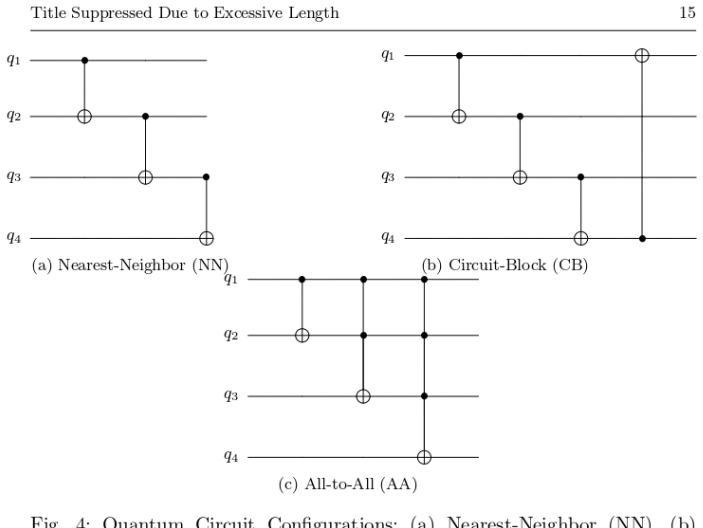
IndisputableMonolith/Cost/FunctionalEquation.leanwashburn_uniqueness_aczel unclearWe implemented an amplitude encoding method to convert image patches to qubit information... 7-qubit QNN... 14 parameters for 14 angles of RY gates
-
IndisputableMonolith/Foundation/AlphaCoordinateFixation.leanJ_uniquely_calibrated_via_higher_derivative unclearThe crossevaluation efficiency of the proposed federated quantum neural network system... indicates the robustness of the light weight learning models
Reference graph
Works this paper leans on
-
[1]
G.S. Karthick, and P. B. Pankajavalli. 2023. Chronic obstructive pulmonary disease pre- diction using internet of things - spiro system and fuzzy-based quantum neural network classifier. Theoretical Computer Science. 941. 55-76
work page 2023
-
[2]
Yunseok Kwak, Won Joon Yun, Jae Pyoung Kim,, Hyunhee Cho, Jihong Park, Min- seok Choi, Soyi Jung, and Joongheon Kim. 2022. Quantum distributed deep learning architectures: Models, discussions, and applications. ICT Express
work page 2022
-
[3]
Ivo Soares, Miguel Castelo-Branco, Antonio Pinheiro. 2023. Microaneurysms detection in retinal images using a multi-scale approach. Biomedical Signal Processing and Control
work page 2023
-
[4]
Kumar, G. Sathish, K. Premalatha, G. Uma Maheshwari, P. Rajesh Kanna, G. Vijaya, and M. Nivaashini. " Differential privacy scheme using Laplace mechanism and statisti- cal method computation in deep neural network for privacy preservation.” Engineering Applications of Artificial Intelligence 128 (2024): 107399. Kumar, G. Sathish, K. Premalatha, G. Uma Mah...
work page 2024
-
[5]
Nithya, T. M., P. Rajesh Kanna, S. Vanithamani, and P. Santhi. ”An Efficient PM- Multisampling Image Filtering with Enhanced CNN Architecture for Pneumonia Classi- fication.” Biomedical Signal Processing and Control 86 (2023): 105296, o Title Suppressed Due to Excessive Length 31
work page 2023
-
[6]
Effective heart discase prediction using hybrid machine learning
Dhivya, P., P. Rajesh Kanna, K. Deepa, and S. Santhiya. ”Square static-deep hyper optimization and genetic meta-learning approach for disease classification.” IETE Journal of Research (2023): 1-10 8. Pandiaraj, A., S. Lakshmana Prakash, and P. Rajesh Kanna. "Effective heart discase prediction using hybrid machine learning.” In 2021 Third International Con...
work page 2023
-
[7]
B. Naveen Kumar, T. R. Mahesh, G. Geetha, Suresh Guluwadi, 2023. Redefining Retinal Lesion Segmentation: A Quantum Leap With DL-UNet Enhanced Auto Encoder-Decoder for Fundus Image Analysis. IEEE Access. 10. V.V. Starovoitov, Yu. L. Golub, M. M. Lukashevich. 2022. A Universal Retinal Image Template for Automated Screening of Diabetic Retinopathy. Pattern R...
work page 2023
-
[8]
Weiwei Gao, Bo Fan, Yu Fang, Mingtao Shan, and Nan Song. 2023. Detection and location of microaneurysms in fundus images based on improved YOLOv4 with IFCM. IET Image Processing. 17.11. 33493357 13. Shorfuzzaman M, Hossain M, EI Saddik A. 2021. An explainable deep learning ensemw- ble model for robust diagnosis of diabetic retinopathy grading. ACM Transac...
work page 2023
-
[9]
Effectiveness of federated learning and CNN ensemble architectures for identifying brain tumours using MRI images. Neral Processing Letters. 55.4. 3779-3809. 17. Sowav Kumar, A. Lakshminarayanan, Ken Cheng, Feri Guretno, Ivo Ho Mien, Jayashree Klpathy-Cramer, Pavitra Krishnaswamy, and Praveer Singh. 2022. Towards more efficient data valuation in healthcar...
work page 2022
-
[10]
DRFL: Federated Learning in Diabetic Retinopathy Grading Using Fundus Images
N Jagan Mohan, R Murugan, Parthapratim Roy, 2023. DRFL: Federated Learning in Diabetic Retinopathy Grading Using Fundus Images. IEEE Transactions on Parallel and Distributed Systems
work page 2023
-
[11]
Federated Learning for Smart Healthcare: A Survey
Dinh C Nguyen, Quoc-Viet Pham, Pubudu N Pathirana, Ming Ding, Aruna Senevi- ratne, Zihuai Lin, Octavia Dobre, Won-Joo Hwang, 2021. Federated Learning for Smart Healthcare: A Survey. ACM Computing Surveys (CSUR). 55.3. 1-37. 20. Guoming Chen, Qiang Chen, Shun Long, Weiheng Zhu, Zeduo Yuan, and Yilin W
work page 2021
-
[12]
Pattern Analysis and Applications
A Quantum convolutional neural network for image classification. Pattern Analysis and Applications. 26.2. 655-667. 21. Rudrajit Choudhuri, and Amiya Halder. 2023. Brain MRI tumour classification using quantum classical convolutional neural net architecture. Neural Computing and Appli- cations. 35.6. 44674478 22. Zhiguo Qu, Yang Li, Y. and Prayag Tiwari. 2...
work page 2023
-
[13]
Viraj Kulkarni, Sanjesh Pawale, and Amit Kharat. 2022. A classical-quantum convolu- tional neural network for detecting pneumonia from chest radiographs. Neural Computing and Applications. 35.21. 15503-13510
work page 2022
-
[14]
Kavitha, S. S., and Narasimha Kaulgud. 2022. Quantum machine learning for support vector machine classification. Evolutionary Intelligence. 1-10 25. Andrea Mari, Thomas R Bromley, Josh Izaac, Maria Schuld, and Nathan Killoran. 2020 Transfer leamning in hybrid classical-quantum neural networks. Quantum 4. 340, 32 Debashis De et al
work page 2022
-
[15]
Juhyeon Kim, Joonsuk Huh, and Daniel K Park. 2023. Classical-to-quantum convolu- tional neural network transfer learning. Neurocomputing. 555. 126643
work page 2023
-
[16]
Zhiguo Qu, Wenke Shi, Bo Liu, Deepak Gupta, Prayag Tiwari. 2023. loMT-based smart healthcare detection system driven by quantum blockchain and quantum neural network: IEEE journal of biomedical and health informatics
work page 2023
-
[17]
Quantum Methods for Neural Networks and Application to Medical Image Classification
Landman, Jonas, Natansh Mathur, Yun Yvonna Li, Martin Strahm, Skander Kazdaghli, Anupam Prakash, and lordanis Kerenidis.2022. Quantum Methods for Neural Networks and Application to Medical Image Classification. Quantum 6.881
work page 2022
-
[18]
Received January 10, 2023 from https://docs.quantum.ibm.com /api/qiskit /qiskit.circuit.library
Real Amplitudes. Received January 10, 2023 from https://docs.quantum.ibm.com /api/qiskit /qiskit.circuit.library. Real Amplitudes
work page 2023
-
[19]
E-ophtha dataset. OPHDIAT (© Tele-medical network, ANR-TECSAN-TELEOPHTA project funded by the French Research Agency (ANR). http://www.adcis.net/en/third- party/e-ophtha/. Accessed January 12, 2024, 3l Kaggle EyePACS dataset, California~ Healthcare Foundations. https:/ /www.kaggle.com /competitions/diabetic-retinopathy-detection. Accessed Jan- uary 12, 2024
work page 2024
-
[20]
Johnson, and Aldn Aspuru-Guzik
Sim, Sukin, Peter D. Johnson, and Aldn Aspuru-Guzik. ”Expressibility and entangling capability of parameterized quantum circuits for hybrid quantum-classical algorithms.” Advanced Quantum Technologies 2, no. 12 (2019): 1900070
work page 2019
discussion (0)
Sign in with ORCID, Apple, or X to comment. Anyone can read and Pith papers without signing in.