Magnetar Fireballs and Short Bursts: Curved Spacetime Lensing, QED Effects, High-Energy Spectra and Polarization, and Energy-Time Impulse Responses
Pith reviewed 2026-05-22 04:14 UTC · model grok-4.3
The pith
Magnetar short burst models that include spacetime curvature and quantum effects predict high linear polarization for most fireballs.
A machine-rendered reading of the paper's core claim, the machinery that carries it, and where it could break.
Core claim
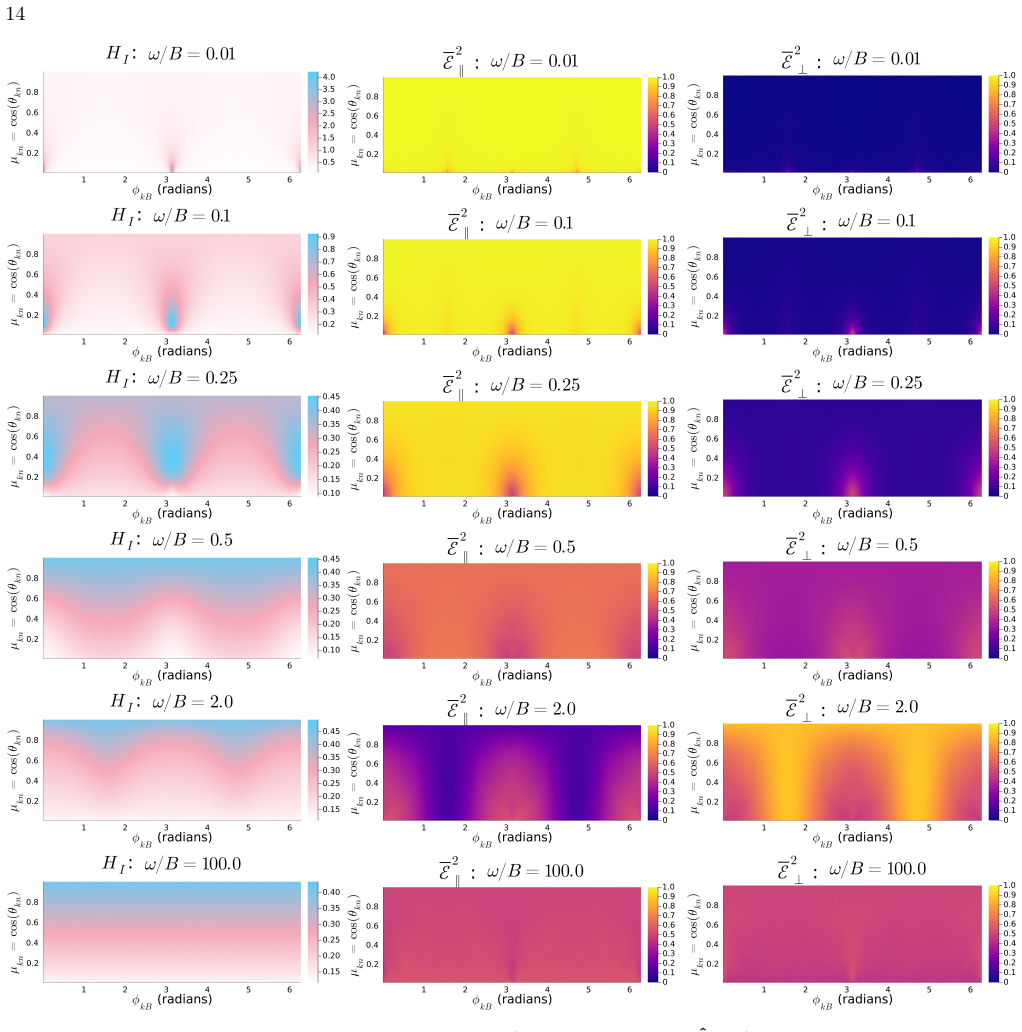
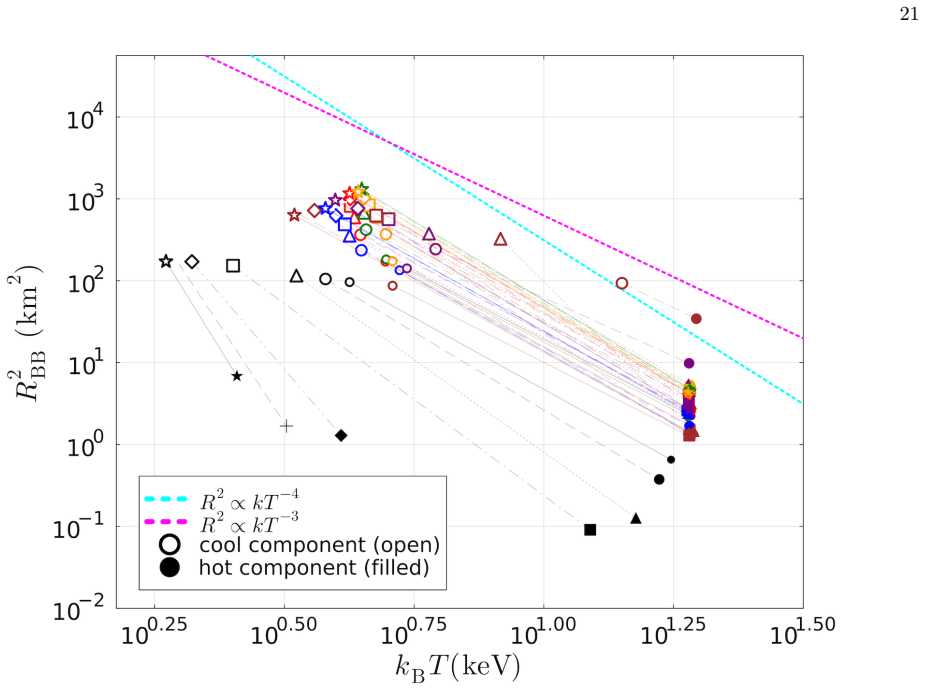
We present new advanced fireball models combining general relativistic light bending, polarized transport in magnetized photospheres, magnetic photon splitting attenuation, and magnetospheric vacuum birefringence. We predict that most fireballs are highly linearly polarized, especially when vacuum birefringence is important. The models can reproduce established double-blackbody short burst spectral phenomenology, and the April 2020 radio-associated short burst from SGR 1935+2154 is broadly consistent with a footpoint close to the magnetic pole and possibly near pole-on viewing geometry.
What carries the argument
Advanced fireball models that combine general relativistic light bending, polarized radiative transfer in magnetized photospheres, magnetic photon splitting, and vacuum birefringence to compute spectra, polarization, and energy-time Stokes impulse responses.
If this is right
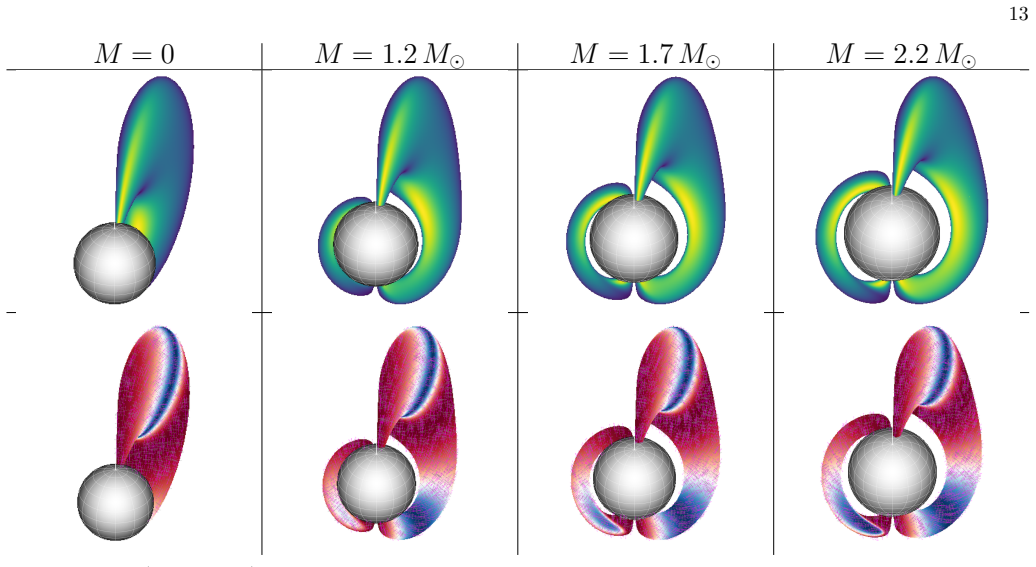
- Direct and gravitationally lensed delayed images of the same fireball can appear together in the light curve.
- Occultation by the neutron-star surface and Shapiro plus Rømer delays create gaps and temporal caustics whose timing depends on spin phase.
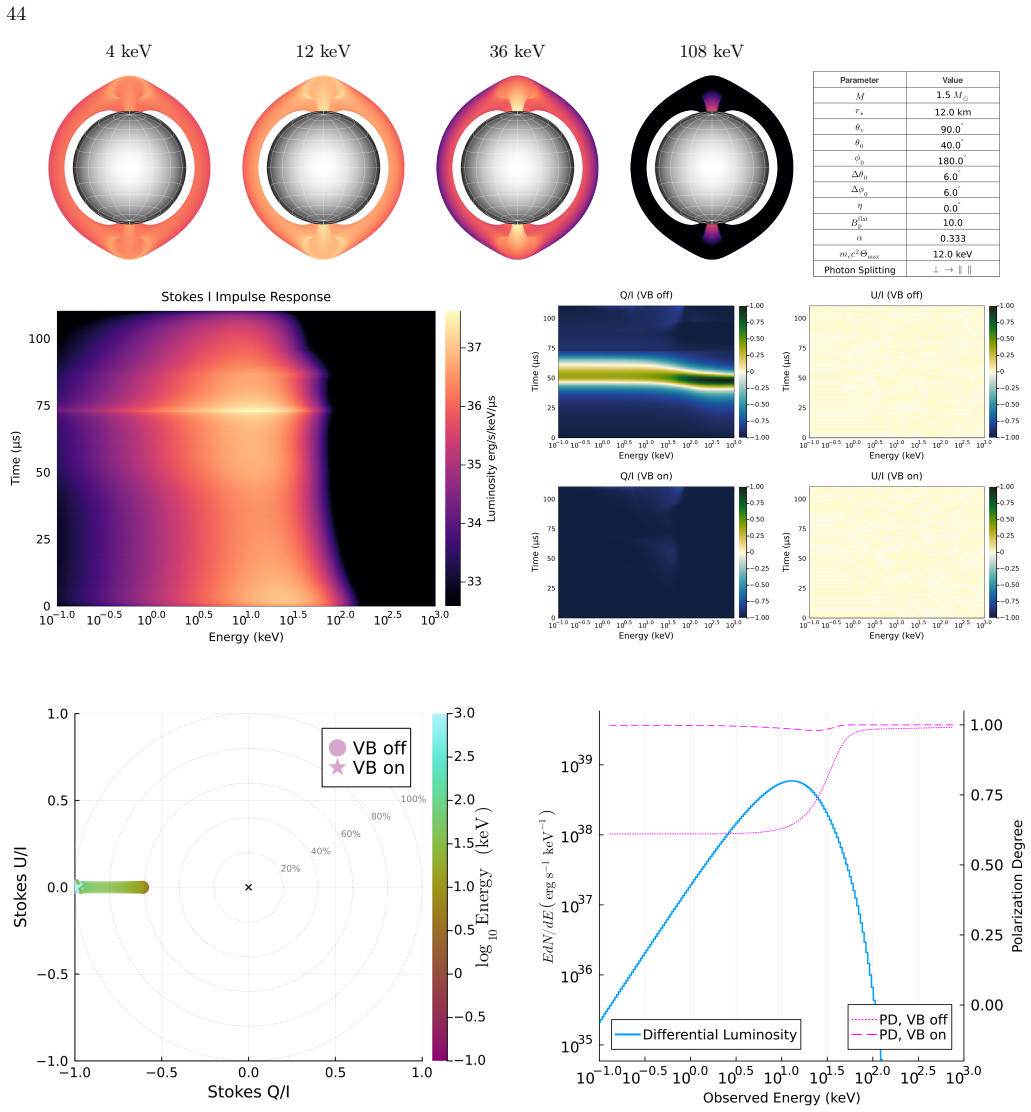
- Predicted high-energy cutoffs, spectral shapes, and polarization fractions vary strongly with viewing angle, fireball shape, and photon-splitting optical depth.
- High-quality data sets could constrain crustal footpoint locations, overall source geometry, and possibly neutron-star mass and radius.
Where Pith is reading between the lines
- Polarization observations with upcoming X-ray polarimeters could directly test the relative importance of vacuum birefringence versus photon splitting.
- Reverberation-mapping methods developed for active galactic nuclei could be adapted to short bursts once sufficient signal-to-noise timing data become available.
- The same modeling framework is already noted to apply to trapped fireballs in the pulsating tails of magnetar giant flares.
Load-bearing premise
The calculations assume confined flux-tube geometries that remain consistent with adiabatic fireballs and adopt anisotropic polarized emergent intensities for all radiative-transfer steps.
What would settle it
A set of high-quality polarization measurements showing low linear polarization in short bursts where vacuum birefringence is theoretically dominant would falsify the high-polarization prediction; alternatively, spectral and timing data for the 2020 SGR 1935+2154 burst that require a footpoint far from the pole would falsify the reported consistency.
Figures






read the original abstract
Magnetar short bursts (SBs) are hard X-ray transients of durations $0.01-1$ s peaking at $\sim 10-100$ keV, and are prime targets for new high-energy missions and polarimeters. The recent association of SBs with bright radio bursts in SGR 1935+2154 has broadened interest in SB physics. We present new advanced fireball models combining general relativistic light bending, polarized transport in magnetized photospheres, magnetic photon splitting attenuation, and magnetospheric vacuum birefringence. These models also have relevance to trapped fireballs in magnetar giant flare pulsating tails. We adopt confined flux tube geometries consistent with adiabatic fireballs, and anisotropic/polarized emergent intensities to produce spectra and polarizations, and energy-time Stokes impulse responses. We predict that most fireballs are highly linearly polarized, especially when vacuum birefringence is important. There is rich potential for diagnostics: coexisting direct and lensed delayed images, gaps by occultation of the neutron star surface, and Shapiro+R{\o}mer delay with temporal caustics. These effects can imprint spin phase dependence of the spectral and polarization character of bursts. Predicted signatures depend strongly on viewing geometry, fireball configuration, and photon splitting assumptions, yielding large variance in model high-energy spectral shapes and cutoffs, and energy-dependent polarization. The models can reproduce established double-blackbody SB spectral phenomenology, and we find that the unusual April 2020 radio-associated SB from SGR 1935+2154 is broadly consistent with a footpoint close to the magnetic pole, and possibly near pole-on viewing geometry. Our models motivate reverberation-style analyses for SBs and suggest that high-quality data might constrain source geometry, burst crustal footpoints, and, potentially, neutron star masses and radii.
Editorial analysis
A structured set of objections, weighed in public.
Referee Report
Summary. The manuscript develops advanced fireball models for magnetar short bursts (SBs) that combine general relativistic light bending, polarized radiative transport in magnetized photospheres, magnetic photon splitting attenuation, and magnetospheric vacuum birefringence. Adopting confined flux-tube geometries consistent with adiabatic fireballs and anisotropic/polarized emergent intensities, the models compute spectra, linear polarization fractions, and energy-time Stokes impulse responses. Central claims are that most fireballs are highly linearly polarized (especially with vacuum birefringence), that the models reproduce established double-blackbody SB spectral shapes, and that the April 2020 radio-associated SB from SGR 1935+2154 is broadly consistent with a magnetic footpoint near the pole and near pole-on viewing geometry. The work also discusses potential diagnostics including lensed delayed images, occultation gaps, Shapiro+Rømer delays with temporal caustics, and spin-phase dependence.
Significance. If the modeling framework holds, the results are significant for providing testable predictions of polarization and spectral signatures that can be confronted with data from upcoming high-energy polarimeters and missions. The explicit inclusion of GR lensing, QED effects, and viewing-geometry dependence offers a pathway to constrain burst footpoints, magnetospheric structure, and potentially neutron-star mass-radius relations via reverberation-style analyses. The acknowledgment of large variance with geometry and photon-splitting assumptions strengthens the falsifiability of the predictions.
major comments (1)
- [Results and discussion of the April 2020 event] The abstract and results sections state that the models 'reproduce established double-blackbody SB spectral phenomenology' and are 'broadly consistent' with the April 2020 SGR 1935+2154 event, yet no quantitative goodness-of-fit metrics (e.g., reduced χ², parameter uncertainties, or direct comparison to alternative models) are reported. This makes it difficult to evaluate whether the agreement is a genuine prediction or arises from post-hoc adjustment of the free parameters (fireball configuration and viewing geometry).
minor comments (2)
- [Methods] Notation for the Stokes parameters and the definition of the impulse-response functions should be introduced with explicit equations in the methods section to aid reproducibility.
- [Figures] Figure captions for the polarization and spectral plots should explicitly state the assumed magnetic colatitude, observer inclination, and photon-splitting optical depth for each curve.
Simulated Author's Rebuttal
We thank the referee for their careful and constructive review of our manuscript. We have considered the comment in detail and provide a point-by-point response below, along with plans for revision.
read point-by-point responses
-
Referee: [Results and discussion of the April 2020 event] The abstract and results sections state that the models 'reproduce established double-blackbody SB spectral phenomenology' and are 'broadly consistent' with the April 2020 SGR 1935+2154 event, yet no quantitative goodness-of-fit metrics (e.g., reduced χ², parameter uncertainties, or direct comparison to alternative models) are reported. This makes it difficult to evaluate whether the agreement is a genuine prediction or arises from post-hoc adjustment of the free parameters (fireball configuration and viewing geometry).
Authors: We thank the referee for this observation. The manuscript is primarily a theoretical exploration of a new modeling framework that incorporates GR lensing, polarized radiative transfer, photon splitting, and vacuum birefringence. The statement that the models 'reproduce established double-blackbody SB spectral phenomenology' refers to the ability of the computed spectra to exhibit the characteristic two-component shape seen in many SBs when integrated over the appropriate energy bands and viewing angles, as shown in our figures. For the April 2020 event, we selected a near-polar footpoint and near pole-on geometry because these are physically motivated by the expected locations of crustal fractures in magnetars and by the radio association implying a compact emitting region; the resulting impulse response and spectrum are then shown to be broadly consistent with the reported timing and spectral properties. We did not perform a formal statistical fit or report reduced χ² values because the model contains several geometric and physical parameters whose primary constraints come from adiabatic fireball theory and magnetospheric structure rather than from optimizing to a single dataset. We agree, however, that this leaves open the question of whether the agreement is robust or tuned. In the revised manuscript we will (i) explicitly label the comparison as qualitative/illustrative, (ii) add a paragraph detailing the physical priors used to choose the displayed configuration and the range of outcomes obtained when those priors are varied, and (iii) include a brief discussion of how future high-quality spectra could be used for quantitative fitting. These changes will clarify the evidential status of the 2020-event comparison without changing the core physical results. revision: partial
Circularity Check
No significant circularity; derivation remains self-contained
full rationale
The paper constructs spectra, polarization, and impulse responses from explicit physical ingredients (GR light bending, polarized radiative transfer in magnetized photospheres, photon splitting, vacuum birefringence) applied to confined flux-tube adiabatic geometries. The high-linear-polarization prediction and double-blackbody reproduction are direct outputs of these transport calculations rather than re-statements of fitted inputs. The April 2020 SGR 1935+2154 consistency is presented as a post-hoc geometric match, not a parameter adjustment that forces the result. No self-definitional equations, load-bearing self-citations, or ansatz smuggling appear in the derivation chain; the model retains independent content relative to its stated assumptions.
Axiom & Free-Parameter Ledger
free parameters (1)
- fireball configuration and viewing geometry
axioms (2)
- domain assumption Confined flux tube geometries are consistent with adiabatic fireballs
- standard math Standard GR light bending and vacuum birefringence apply in the magnetosphere
Lean theorems connected to this paper
-
IndisputableMonolith/Foundation/RealityFromDistinction.leanreality_from_one_distinction unclear?
unclearRelation between the paper passage and the cited Recognition theorem.
We present new advanced fireball models combining general relativistic light bending, polarized transport in magnetized photospheres, magnetic photon splitting attenuation, and magnetospheric vacuum birefringence.
-
IndisputableMonolith/Cost/FunctionalEquation.leanwashburn_uniqueness_aczel unclear?
unclearRelation between the paper passage and the cited Recognition theorem.
The models can reproduce established double-blackbody SB spectral phenomenology
What do these tags mean?
- matches
- The paper's claim is directly supported by a theorem in the formal canon.
- supports
- The theorem supports part of the paper's argument, but the paper may add assumptions or extra steps.
- extends
- The paper goes beyond the formal theorem; the theorem is a base layer rather than the whole result.
- uses
- The paper appears to rely on the theorem as machinery.
- contradicts
- The paper's claim conflicts with a theorem or certificate in the canon.
- unclear
- Pith found a possible connection, but the passage is too broad, indirect, or ambiguous to say the theorem truly supports the claim.
Reference graph
Works this paper leans on
-
[1]
Abarr, Q., Awaki, H., Baring, M. G., et al. 2021, Astroparticle Physics, 126, 102529, doi: 10.1016/j.astropartphys.2020.102529 5.3 Adler, S. L. 1971, Annals of Physics, 67, 599, doi: 10.1016/0003-4916(71)90154-0 2.4, 2.6 30 4 keV 12 keV 36 keV 108 keV Figure 10.A fiducial partial-arc fireball with parameters as indicated and⊥-mode only splitting attenuati...
-
[2]
Nonlinear electrodynamics in magnetars: systematic effects on radius constraints and timing analysis
37 Palmer, D. M., Barthelmy, S., Gehrels, N., et al. 2005, Nature, 434, 1107, doi: 10.1038/nature03525 1 Pan, X., Jiang, W., Yue, C., et al. 2024, Nuclear Science and Techniques, 35, 149, doi: 10.1007/s41365-024-01499-x 5.3 Paul, B. 2022, in 44th COSPAR Scientific Assembly. Held 16-24 July, Vol. 44, 1853 5.3 P´ etri, J. 2013, MNRAS, 433, 986, doi: 10.1093...
work page internal anchor Pith review Pith/arXiv arXiv doi:10.1038/nature03525 2005
discussion (0)
Sign in with ORCID, Apple, or X to comment. Anyone can read and Pith papers without signing in.