The magic of the gravitational vacuum
Pith reviewed 2026-06-26 15:56 UTC · model grok-4.3
The pith
The gravitational vacuum contains slowly decaying correlations among Planck-scale fluctuations that nucleate fuzzball structure when a trapped surface is about to form.
A machine-rendered reading of the paper's core claim, the machinery that carries it, and where it could break.
Core claim
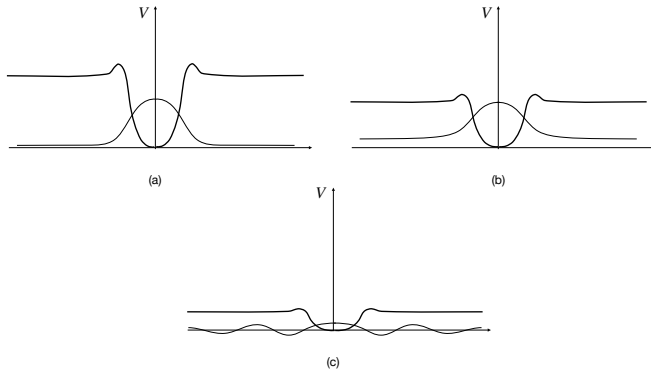
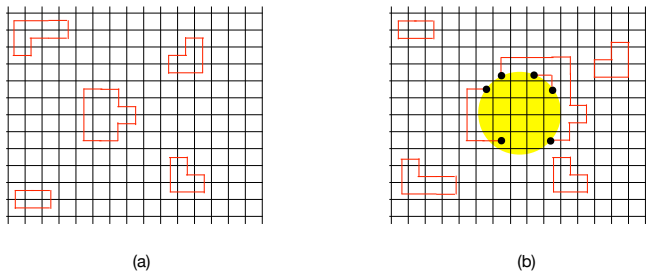
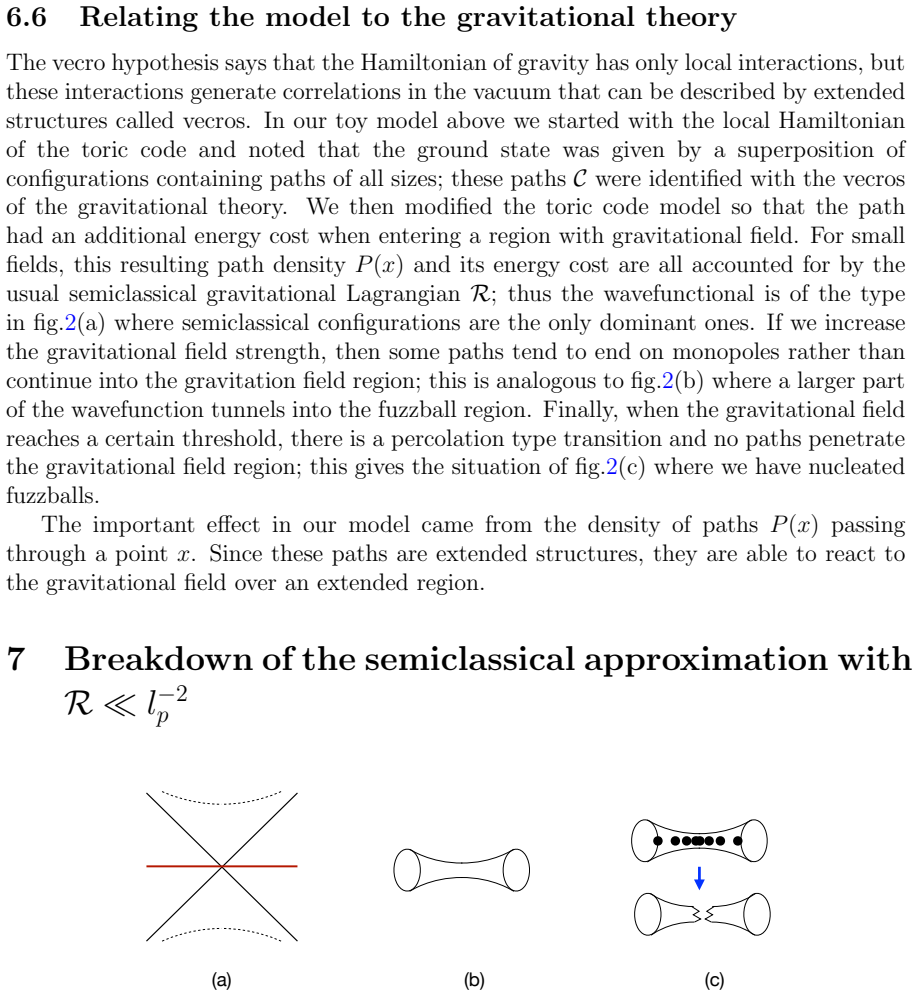
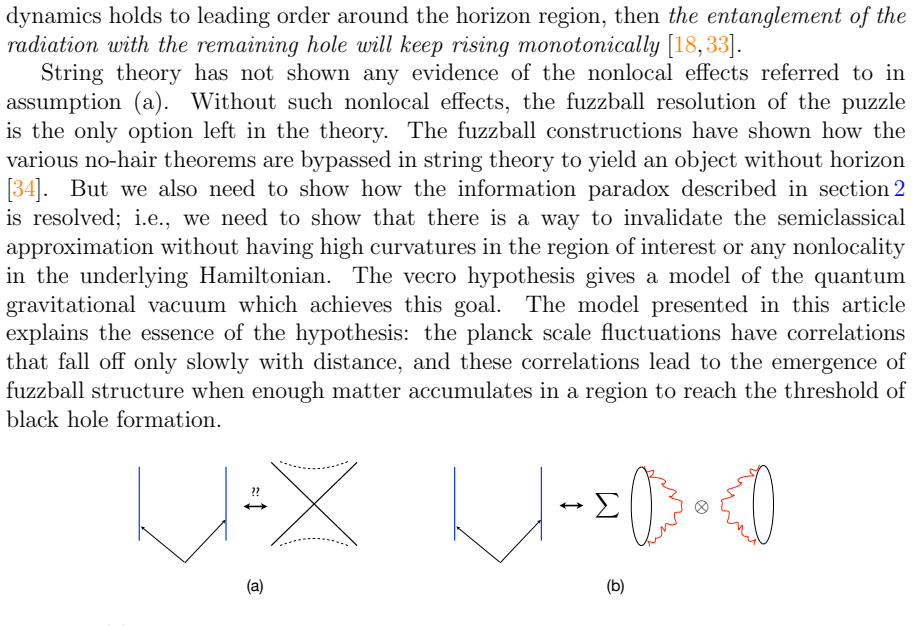
The vecro hypothesis proposes a structure of the gravitational vacuum that can accomplish this task. In the lattice model the Hamiltonian is completely local, but the vacuum exhibits correlations among Planck-scale fluctuations which fall off relatively slowly with distance. These extended-scale correlations are able to feel around the region where a closed trapped surface is about to form, and to react by nucleating fuzzball structure that destroys semiclassical spacetime.
What carries the argument
The vecro hypothesis realized in a lattice model whose local Hamiltonian nevertheless produces vacuum correlations among Planck-scale fluctuations that decay slowly with distance.
If this is right
- The information paradox is resolved by vacuum-driven nucleation of non-semiclassical structure rather than by high-curvature effects.
- Semiclassical spacetime is destroyed before a classical black hole horizon can form.
- The vacuum can respond to global geometry even while all local curvatures remain small.
- Fuzzball formation replaces the interior of what would have been a black hole.
Where Pith is reading between the lines
- The same vacuum correlations could alter the description of other regions where trapped surfaces are expected, such as in cosmological collapse.
- Black hole evaporation would proceed from a fuzzball configuration rather than from a semiclassical horizon.
- Gravitational wave signals from merging compact objects might carry imprints of pre-nucleation vacuum correlations.
Load-bearing premise
The lattice model accurately captures the essential structure of the gravitational vacuum, including the existence and slow fall-off of correlations among Planck-scale fluctuations.
What would settle it
A calculation or measurement showing that gravitational vacuum correlations fall off too rapidly to detect an impending trapped surface or that no fuzzball nucleation occurs in a collapsing configuration.
Figures


read the original abstract
The black hole information paradox challenges us to do something that is seemingly impossible: find a violation of the semiclassical approximation in a region where all curvatures are low. The vecro hypothesis proposes a structure of the gravitational vacuum that can accomplish this task. In this article we explain the hypothesis, and give a lattice model to describe the essence of its idea. The Hamiltonian of the model is completely local, but the vacuum exhibits correlations among planck scale fluctuations which fall off relatively slowly with distance. These extended-scale correlations are able to `feel around' the region where a closed trapped surface is about to form, and to react by nucleating fuzzball structure that destroys semiclassical spacetime.
Editorial analysis
A structured set of objections, weighed in public.
Referee Report
Summary. The paper proposes the vecro hypothesis as a resolution to the black hole information paradox. It posits that the gravitational vacuum contains correlations among Planck-scale fluctuations that fall off slowly with distance; these are illustrated via a lattice model whose Hamiltonian is completely local. The extended correlations are claimed to detect the incipient formation of a closed trapped surface and nucleate fuzzball structure, thereby destroying the semiclassical spacetime description in a low-curvature region.
Significance. If the hypothesis holds and the lattice model captures essential features of the gravitational vacuum, the work would supply a concrete mechanism for information preservation during black hole evaporation without requiring high-curvature violations of semiclassical gravity. The explicit construction of a local Hamiltonian yielding long-range vacuum correlations is a positive step toward making the idea quantitatively testable.
major comments (2)
- [Abstract / lattice model] Abstract and lattice-model description: the manuscript states that the local Hamiltonian produces vacuum correlations with relatively slow spatial fall-off, yet supplies neither the explicit form of the Hamiltonian nor a derivation of the two-point function; without these the claim that the correlations can 'feel around' an incipient trapped surface remains an assertion rather than a computed result.
- [Abstract / vecro hypothesis] Nucleation mechanism: the central assertion that the correlations 'react by nucleating fuzzball structure' is presented as an interpretive consequence of the model rather than a dynamical outcome obtained by evolving the lattice system or matching onto Einstein gravity; this step is load-bearing for the resolution of the information paradox but is not derived.
Simulated Author's Rebuttal
We thank the referee for the thoughtful review and for recognizing the potential significance of the vecro hypothesis. We address the two major comments below, providing clarifications and indicating revisions where appropriate.
read point-by-point responses
-
Referee: [Abstract / lattice model] Abstract and lattice-model description: the manuscript states that the local Hamiltonian produces vacuum correlations with relatively slow spatial fall-off, yet supplies neither the explicit form of the Hamiltonian nor a derivation of the two-point function; without these the claim that the correlations can 'feel around' an incipient trapped surface remains an assertion rather than a computed result.
Authors: We agree that an explicit Hamiltonian and derivation of the two-point function would strengthen the presentation. The lattice model in the manuscript is intended to capture the essential conceptual features (locality of H together with slow fall-off of vacuum correlations), but the referee is correct that the current text does not supply the explicit operator form or the explicit computation. In the revised version we will add the explicit lattice Hamiltonian (a sum of nearest-neighbor and next-nearest-neighbor terms on a cubic lattice) and the resulting two-point function, obtained by standard diagonalization in momentum space, to demonstrate the 1/r^2 decay at large separation. This will make the 'feeling around' statement a direct consequence of the computed correlator rather than an assertion. revision: yes
-
Referee: [Abstract / vecro hypothesis] Nucleation mechanism: the central assertion that the correlations 'react by nucleating fuzzball structure' is presented as an interpretive consequence of the model rather than a dynamical outcome obtained by evolving the lattice system or matching onto Einstein gravity; this step is load-bearing for the resolution of the information paradox but is not derived.
Authors: The nucleation step is indeed part of the vecro hypothesis itself rather than a dynamical result derived from the lattice model. The lattice construction is offered only to exhibit the existence of a local Hamiltonian whose vacuum nevertheless possesses the required long-range correlations; the subsequent claim that these correlations trigger fuzzball nucleation when a trapped surface forms is the physical proposal that resolves the information paradox. We do not claim to have performed a dynamical evolution or a matching to Einstein gravity in the present work. In the revision we will add a paragraph in the discussion section that explicitly labels this step as the central hypothesis and outlines the open problem of constructing the corresponding dynamical process. revision: partial
Circularity Check
No significant circularity; model illustrates hypothesis without reduction to inputs
full rationale
The manuscript frames the vecro hypothesis as an explanatory proposal for resolving the information paradox and supplies a lattice model whose local Hamiltonian is explicitly constructed to yield the slow spatial fall-off of Planck-scale correlations. The subsequent claim that these correlations can detect an incipient trapped surface and nucleate fuzzball structure is offered as an interpretive consequence of the model's design rather than a derived dynamical outcome from Einstein gravity or string theory. No equations, fitted parameters, or self-citations are presented in a load-bearing role that would make any result equivalent to its inputs by construction. The work remains self-contained as a hypothesis illustration, with no internal reduction identified.
Axiom & Free-Parameter Ledger
axioms (1)
- ad hoc to paper The gravitational vacuum possesses correlations among Planck-scale fluctuations that fall off relatively slowly with distance.
invented entities (2)
-
vecro
no independent evidence
-
fuzzball structure
no independent evidence
Reference graph
Works this paper leans on
-
[1]
S. W. Hawking, Commun. Math. Phys.43, 199-220 (1975) [erratum: Commun. Math. Phys.46, 206 (1976)] doi:10.1007/BF02345020
-
[2]
Susskind, [arXiv:hep-th/9309145 [hep-th]]
L. Susskind, [arXiv:hep-th/9309145 [hep-th]]
-
[3]
EXTREMAL BLACK HOLES AND ELEMENTARY STRING STATES
A. Sen, Mod. Phys. Lett. A10, 2081-2094 (1995) doi:10.1142/S0217732395002234 [arXiv:hep-th/9504147 [hep-th]]. 19
work page internal anchor Pith review Pith/arXiv arXiv doi:10.1142/s0217732395002234 2081
-
[4]
Microscopic Origin of the Bekenstein-Hawking Entropy
A. Strominger and C. Vafa, Phys. Lett. B379, 99-104 (1996) doi:10.1016/0370-2693(96)00345-0 [arXiv:hep-th/9601029 [hep-th]]
work page internal anchor Pith review Pith/arXiv arXiv doi:10.1016/0370-2693(96)00345-0 1996
-
[5]
J. M. Maldacena, Adv. Theor. Math. Phys.2, 231-252 (1998) doi:10.4310/ATMP.1998.v2.n2.a1 [arXiv:hep-th/9711200 [hep-th]]
work page internal anchor Pith review Pith/arXiv arXiv doi:10.4310/atmp.1998.v2.n2.a1 1998
-
[6]
S. D. Mathur, Nucl. Phys. B529, 295-320 (1998) doi:10.1016/S0550-3213(98)00336-8 [arXiv:hep-th/9706151 [hep-th]]
work page internal anchor Pith review Pith/arXiv arXiv doi:10.1016/s0550-3213(98)00336-8 1998
-
[7]
AdS/CFT duality and the black hole information paradox
O. Lunin and S. D. Mathur, Nucl. Phys. B623, 342-394 (2002) doi:10.1016/S0550-3213(01)00620-4 [arXiv:hep-th/0109154 [hep-th]]
work page internal anchor Pith review Pith/arXiv arXiv doi:10.1016/s0550-3213(01)00620-4 2002
-
[8]
J. M. Maldacena and L. Maoz, JHEP12, 055 (2002) doi:10.1088/1126-6708/2002/12/055 [arXiv:hep-th/0012025 [hep-th]]
work page internal anchor Pith review Pith/arXiv arXiv doi:10.1088/1126-6708/2002/12/055 2002
-
[9]
The fuzzball proposal for black holes
K. Skenderis and M. Taylor, Phys. Rept.467, 117-171 (2008) doi:10.1016/j.physrep.2008.08.001 [arXiv:0804.0552 [hep-th]]
work page internal anchor Pith review Pith/arXiv arXiv doi:10.1016/j.physrep.2008.08.001 2008
-
[10]
I. Bena, S. Giusto, R. Russo, M. Shigemori and N. P. Warner, JHEP05, 110 (2015) doi:10.1007/JHEP05(2015)110 [arXiv:1503.01463 [hep-th]]
work page internal anchor Pith review Pith/arXiv arXiv doi:10.1007/jhep05(2015)110 2015
-
[11]
I. Bena, S. Giusto, E. J. Martinec, R. Russo, M. Shigemori, D. Turton and N. P. Warner, Phys. Rev. Lett.117, no.20, 201601 (2016) doi:10.1103/PhysRevLett.117.201601 [arXiv:1607.03908 [hep-th]]
work page internal anchor Pith review Pith/arXiv arXiv doi:10.1103/physrevlett.117.201601 2016
-
[12]
Non-supersymmetric smooth geometries and D1-D5-P bound states
V. Jejjala, O. Madden, S. F. Ross and G. Titchener, Phys. Rev. D71, 124030 (2005) doi:10.1103/PhysRevD.71.124030 [arXiv:hep-th/0504181 [hep-th]]
work page internal anchor Pith review Pith/arXiv arXiv doi:10.1103/physrevd.71.124030 2005
-
[13]
S. D. Mathur, Fortsch. Phys.53, 793-827 (2005) doi:10.1002/prop.200410203 [arXiv:hep-th/0502050 [hep-th]]
work page internal anchor Pith review Pith/arXiv arXiv doi:10.1002/prop.200410203 2005
-
[14]
S. D. Mathur, doi:10.1142/S0218271820300098 [arXiv:2001.11057 [hep-th]]
-
[15]
S. D. Mathur, Int. J. Mod. Phys. D30, no.14, 2141001 (2021) doi:10.1142/S0218271821410017 [arXiv:2105.06963 [hep-th]]
-
[16]
S. D. Mathur, Int. J. Mod. Phys. D33, no.15, 2440002 (2024) doi:10.1142/S0218271824400029 [arXiv:2405.08945 [hep-th]]
-
[17]
S. D. Mathur, Int. J. Mod. Phys. D34, no.16, 2543005 (2025) doi:10.1142/S0218271825430059 [arXiv:2505.10368 [hep-th]]
-
[18]
S. D. Mathur, Class. Quant. Grav.26, 224001 (2009) doi:10.1088/0264-9381/26/22/224001 [arXiv:0909.1038 [hep-th]]. 20
work page internal anchor Pith review Pith/arXiv arXiv doi:10.1088/0264-9381/26/22/224001 2009
-
[19]
S. D. Mathur and M. Mehta, in A. Akil and C. Bambi, eds.,The Black Hole Information Paradox: A Fifty-Year Journey, Springer Series in Astrophysics and Cosmology, Springer Singapore (2025), doi:10.1007/978-981-96-6170-1 [ISBN: 978-981-96-6169-5]. [arXiv:2412.09495 [hep-th]]
-
[20]
A. Y. Kitaev, Annals Phys.303, 2-30 (2003) doi:10.1016/S0003-4916(02)00018-0 [arXiv:quant-ph/9707021 [quant-ph]]
work page internal anchor Pith review Pith/arXiv arXiv doi:10.1016/s0003-4916(02)00018-0 2003
-
[21]
Topological entanglement entropy
A. Kitaev and J. Preskill, Phys. Rev. Lett.96, 110404 (2006) doi:10.1103/PhysRevLett.96.110404 [arXiv:hep-th/0510092 [hep-th]]
work page internal anchor Pith review Pith/arXiv arXiv doi:10.1103/physrevlett.96.110404 2006
-
[22]
Entanglement entropy and correlations in loop quantum gravity
A. Feller and E. R. Livine, Class. Quant. Grav.35, no.4, 045009 (2018) doi:10.1088/1361-6382/aaa27c [arXiv:1710.04473 [gr-qc]]
work page internal anchor Pith review Pith/arXiv arXiv doi:10.1088/1361-6382/aaa27c 2018
-
[23]
Bulk Locality and Quantum Error Correction in AdS/CFT
A. Almheiri, X. Dong and D. Harlow, JHEP04, 163 (2015) doi:10.1007/JHEP04(2015)163 [arXiv:1411.7041 [hep-th]]
work page internal anchor Pith review Pith/arXiv arXiv doi:10.1007/jhep04(2015)163 2015
-
[24]
Holographic quantum error-correcting codes: Toy models for the bulk/boundary correspondence
F. Pastawski, B. Yoshida, D. Harlow and J. Preskill, JHEP06, 149 (2015) doi:10.1007/JHEP06(2015)149 [arXiv:1503.06237 [hep-th]]
work page internal anchor Pith review Pith/arXiv arXiv doi:10.1007/jhep06(2015)149 2015
-
[25]
A. Krishna and D. Poulin, Phys. Rev. Res.2, no.2, 023116 (2020) doi:10.1103/PhysRevResearch.2.023116 [arXiv:1909.07419 [quant-ph]]
-
[26]
S. D. Mathur, [arXiv:1506.04342 [hep-th]]
-
[27]
S. R. Das and A. Jevicki, Mod. Phys. Lett. A5, 1639-1650 (1990) doi:10.1142/S0217732390001888
-
[28]
Polchinski, [arXiv:hep-th/9411028 [hep-th]]
J. Polchinski, [arXiv:hep-th/9411028 [hep-th]]
-
[29]
S. R. Das and S. D. Mathur, Phys. Lett. B365, 79-86 (1996) doi:10.1016/0370-2693(95)01307-5 [arXiv:hep-th/9507141 [hep-th]]
work page internal anchor Pith review Pith/arXiv arXiv doi:10.1016/0370-2693(95)01307-5 1996
- [30]
-
[31]
S. D. Mathur and M. Mehta, Int. J. Mod. Phys. D32, no.14, 2341003 (2023) doi:10.1142/S0218271823410031 [arXiv:2305.12003 [hep-th]]
-
[32]
S. D. Mathur and M. Mehta, Class. Quant. Grav.41, no.23, 235011 (2024) doi:10.1088/1361-6382/ad869e [arXiv:2402.13166 [hep-th]]
-
[33]
B. Guo, M. R. R. Hughes, S. D. Mathur and M. Mehta, Turk. J. Phys.45, no.6, 281-365 (2021) doi:10.3906/fiz-2111-13 [arXiv:2111.05295 [hep-th]]
-
[34]
G. W. Gibbons and N. P. Warner, Class. Quant. Grav.31, 025016 (2014) doi:10.1088/0264-9381/31/2/025016 [arXiv:1305.0957 [hep-th]]. 21
work page internal anchor Pith review Pith/arXiv arXiv doi:10.1088/0264-9381/31/2/025016 2014
-
[35]
The entropy of bulk quantum fields and the entanglement wedge of an evaporating black hole
A. Almheiri, N. Engelhardt, D. Marolf and H. Maxfield, JHEP12, 063 (2019) doi:10.1007/JHEP12(2019)063 [arXiv:1905.08762 [hep-th]]
work page internal anchor Pith review Pith/arXiv arXiv doi:10.1007/jhep12(2019)063 2019
-
[36]
The Page curve of Hawking radiation from semiclassical geometry
A. Almheiri, R. Mahajan, J. Maldacena and Y. Zhao, JHEP03, 149 (2020) doi:10.1007/JHEP03(2020)149 [arXiv:1908.10996 [hep-th]]
work page internal anchor Pith review Pith/arXiv arXiv doi:10.1007/jhep03(2020)149 2020
-
[37]
Replica wormholes and the black hole interior
G. Penington, S. H. Shenker, D. Stanford and Z. Yang, JHEP03, 205 (2022) doi:10.1007/JHEP03(2022)205 [arXiv:1911.11977 [hep-th]]
work page internal anchor Pith review Pith/arXiv arXiv doi:10.1007/jhep03(2022)205 2022
-
[38]
D. Marolf and H. Maxfield, JHEP08, 044 (2020) doi:10.1007/JHEP08(2020)044 [arXiv:2002.08950 [hep-th]]
-
[39]
H. Liu and S. Vardhan, PRX Quantum2, no.1, 010344 (2021) doi:10.1103/PRXQuantum.2.010344 [arXiv:2008.01089 [hep-th]]. 22
discussion (0)
Sign in with ORCID, Apple, or X to comment. Anyone can read and Pith papers without signing in.