Beyond Drug Discovery: The Nanotechnology Molecular Optimization (NMO) Benchmark
Pith reviewed 2026-06-30 06:45 UTC · model grok-4.3
The pith
The NMO benchmark shows advanced generative models underperform simpler approaches on physics-based nanotechnology tasks.
A machine-rendered reading of the paper's core claim, the machinery that carries it, and where it could break.
Core claim
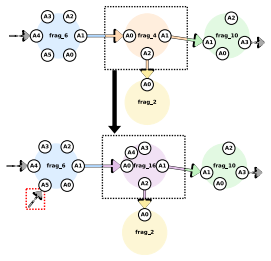
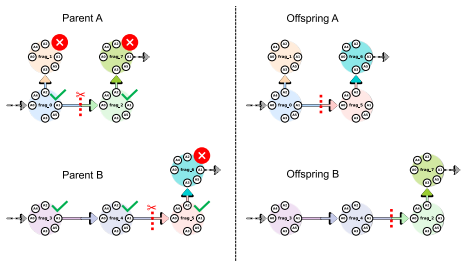
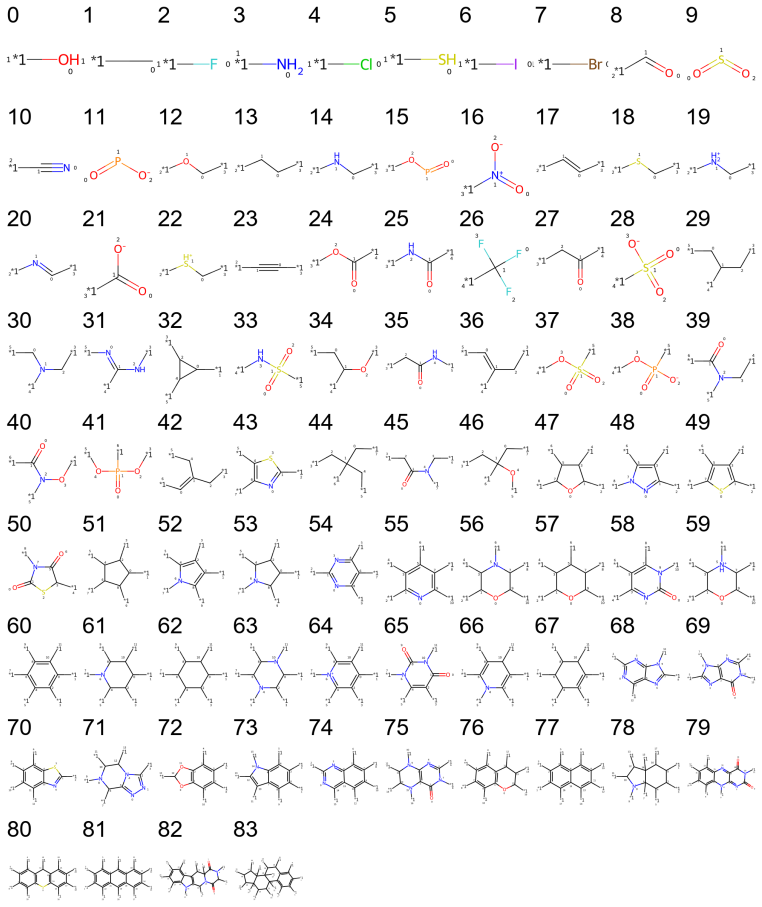
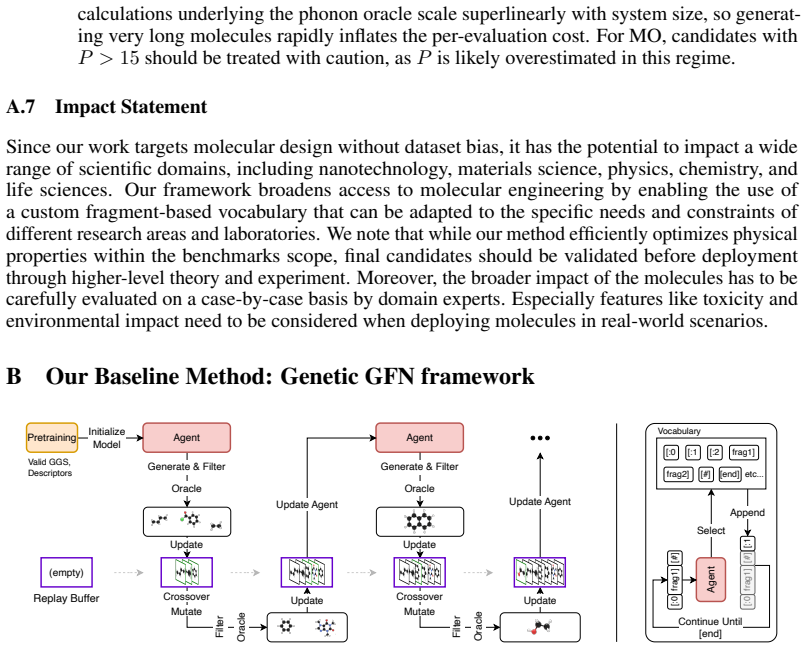
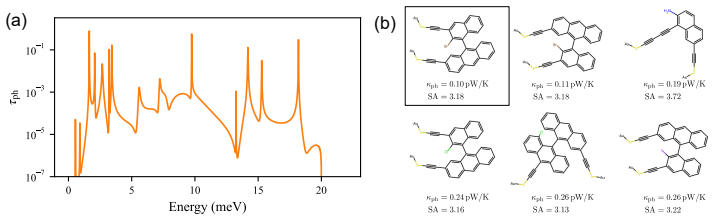
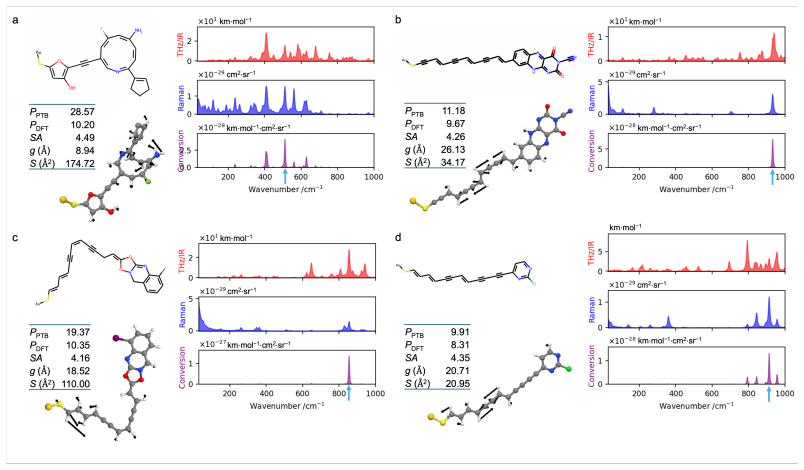
The NMO Benchmark acts as both an ML testbed and a nanotechnology discovery engine by replacing proxy oracles with quantum simulations and enforcing strict protocols that prioritize scientific utility. The physics-based tasks impose hard structural constraints and rugged fitness landscapes that pose fundamentally new requirements on generative models. Advanced molecular optimization methods underperform much simpler approaches, yet a new baseline method that introduces a novel representation for modeling structural constraints and a domain-agnostic pretraining strategy surpasses prior state-of-the-art physical properties and reveals previously unknown structural motifs.
What carries the argument
The NMO Benchmark suite that uses quantum simulations as oracles under strict protocols, together with the new baseline method's novel representation for modeling structural constraints and domain-agnostic pretraining strategy.
If this is right
- Generative models must acquire new capabilities to navigate rugged fitness landscapes and hard structural constraints in physics-based domains.
- Eliminating pharmaceutical dataset bias through domain-agnostic pretraining improves performance on non-drug molecular targets.
- Machine learning optimization can directly contribute to uncovering new structural motifs relevant to nanotechnology.
- Strict evaluation protocols can reduce overfitting to benchmarks and steer research toward genuine scientific utility.
Where Pith is reading between the lines
- Benchmark designs that embed domain-specific oracles and constraints could be adapted to other scientific areas such as catalysis or materials discovery.
- The newly identified structural motifs offer concrete candidates for laboratory synthesis and device testing in nanotechnology.
- Domain-agnostic pretraining approaches may improve transferability of molecular models across multiple application fields beyond the original training distribution.
Load-bearing premise
Quantum simulations serve as faithful oracles for real nanotechnology targets and the strict protocols successfully prioritize scientific utility without introducing selection biases or overfitting risks.
What would settle it
Synthesizing and physically testing the top molecules found by the NMO baseline and comparing their measured properties against the quantum simulation scores; large mismatches would show the benchmark does not translate to real targets.
Figures



read the original abstract
Generative molecular design is shaped by simple proxy benchmarks for drug-like properties and models pretrained on large pharmaceutical datasets. This combination yields strong benchmark metrics but limits transferability to domains structurally distinct from drug discovery. To overcome this limitation and drive discovery toward real, scientifically grounded targets, we introduce the Nanotechnology Molecular Optimization (NMO) Benchmark, which bridges machine learning (ML) and quantum materials science. NMO acts simultaneously as a rigorous testbed for the ML community and a discovery engine for nanotechnology research. The suite replaces proxy oracles with quantum simulations and introduces strict protocols that prioritize scientific utility over leaderboard-oriented overfitting. The physics-based NMO tasks impose hard structural constraints and rugged fitness landscapes, posing fundamentally new requirements on generative models. Notably, advanced molecular optimization methods underperform much simpler approaches on the NMO tasks. We develop a new baseline method identifying the critical components to solve the NMO tasks, including a novel representation for modeling structural constraints and a domain-agnostic pretraining strategy to eliminate pharmaceutical dataset bias. Our results surpass state-of-the-art physical properties and reveal previously unknown structural motifs, offering new insights for the nanotechnology community and demonstrating that ML can drive genuine scientific discovery.
Editorial analysis
A structured set of objections, weighed in public.
Referee Report
Summary. The paper introduces the Nanotechnology Molecular Optimization (NMO) Benchmark as a replacement for drug-like proxy tasks, using quantum simulations as oracles together with strict protocols to enforce scientific utility. It reports that advanced generative molecular optimization methods underperform simpler baselines on these tasks, presents a new baseline incorporating a novel structural-constraint representation and domain-agnostic pretraining, and claims that the resulting models surpass prior state-of-the-art physical properties while revealing previously unknown structural motifs.
Significance. If the quantum oracles and protocols are shown to be faithful, the benchmark could usefully redirect generative modeling research toward rugged, constraint-heavy landscapes outside pharmaceutical chemical space and provide a concrete demonstration of ML-driven discovery in nanotechnology. The reported performance reversal and motif discovery would then constitute a substantive contribution.
major comments (2)
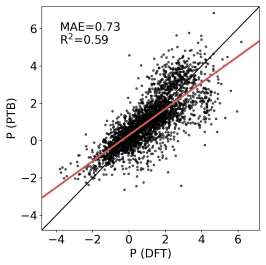
- [Abstract] Abstract: the central claim that 'advanced molecular optimization methods underperform much simpler approaches' and that the new baseline 'surpass[es] state-of-the-art physical properties' is presented without any quantitative metrics, tables, or section references, preventing assessment of effect sizes or controls for the claimed reversal.
- [Abstract] Abstract: the assertion that quantum simulations replace proxy oracles and that the introduced protocols 'prioritize scientific utility' is not accompanied by any validation (correlation with experiment, sensitivity analysis of simulation parameters, or ablation of protocol rules), which is load-bearing for both the performance claims and the 'previously unknown structural motifs' discovery claim.
minor comments (1)
- [Abstract] The abstract uses the phrase 'domain-agnostic pretraining strategy to eliminate pharmaceutical dataset bias' without defining the pretraining corpus or the bias metric employed.
Simulated Author's Rebuttal
We thank the referee for the constructive feedback. We address each major comment below and will revise the manuscript to improve clarity and support for the claims made in the abstract.
read point-by-point responses
-
Referee: [Abstract] Abstract: the central claim that 'advanced molecular optimization methods underperform much simpler approaches' and that the new baseline 'surpass[es] state-of-the-art physical properties' is presented without any quantitative metrics, tables, or section references, preventing assessment of effect sizes or controls for the claimed reversal.
Authors: We agree that the abstract would be strengthened by including quantitative metrics. In the revised version, we will incorporate specific performance numbers (e.g., the magnitude of underperformance by advanced methods relative to baselines and the improvements in physical properties achieved by the new baseline) along with explicit references to the relevant tables and result sections. This will enable direct assessment of effect sizes and controls. revision: yes
-
Referee: [Abstract] Abstract: the assertion that quantum simulations replace proxy oracles and that the introduced protocols 'prioritize scientific utility' is not accompanied by any validation (correlation with experiment, sensitivity analysis of simulation parameters, or ablation of protocol rules), which is load-bearing for both the performance claims and the 'previously unknown structural motifs' discovery claim.
Authors: We will add a sensitivity analysis of simulation parameters and an ablation study of the protocol rules to the methods and results sections to provide direct support for the protocols' utility. The quantum oracles are based on established quantum chemistry methods standard in the field; however, direct correlation with wet-lab experiments lies outside the computational scope of this benchmark paper and would require a separate experimental study. The structural motifs were identified via the optimization trajectories and cross-validated with additional quantum calculations. revision: partial
Circularity Check
No significant circularity in derivation chain
full rationale
The paper introduces the NMO benchmark by replacing proxy oracles with quantum simulations and presents a new baseline method with a novel representation and domain-agnostic pretraining. No equations, fitted parameters renamed as predictions, or self-citation chains are described that would reduce any claimed result or motif discovery to the inputs by construction. All central claims (performance reversal, new structural motifs) are framed as empirical outcomes on the introduced tasks rather than tautological redefinitions or self-referential fits. The derivation is therefore self-contained against external benchmarks.
Axiom & Free-Parameter Ledger
Reference graph
Works this paper leans on
-
[1]
TARTARUS: A benchmarking platform for realistic and practical inverse molecular design,
A. Nigam, R. Pollice, G. Tom, K. Jorner, J. Willes, L. Thiede, A. Kundaje, and A. Aspuru- Guzik, “TARTARUS: A benchmarking platform for realistic and practical inverse molecular design,” inAdvances in Neural Information Processing Systems (NeurIPS), vol. 36, 2023
2023
-
[2]
GenMol: A drug discovery generalist with discrete diffusion,
S. Lee, K. Kreis, S. P. Veccham, M. Liu, D. Reidenbach, Y . Peng, S. G. Paliwal, W. Nie, and A. Vahdat, “GenMol: A drug discovery generalist with discrete diffusion,” in International Conference on Machine Learning (ICML), 2025
2025
-
[3]
Refine drugs, don’t complete them: Uniform-source discrete flows for fragment-based drug discovery,
B. Kaech, L. Wyss, K. Borgwardt, and G. Grasso, “Refine drugs, don’t complete them: Uniform-source discrete flows for fragment-based drug discovery,” in The Fourteenth International Conference on Learning Representations (ICLR), 2026
2026
-
[4]
Molecule generation with fragment retrieval augmentation,
S. Lee, K. Kreis, S. P. Veccham, M. Liu, D. Reidenbach, S. Paliwal, A. Vahdat, and W. Nie, “Molecule generation with fragment retrieval augmentation,” inAdvances in Neural Information Processing Systems (NeurIPS), 2024
2024
-
[5]
Sample efficiency matters: a benchmark for practical molecular optimization,
W. Gao, T. Fu, J. Sun, and C. Coley, “Sample efficiency matters: a benchmark for practical molecular optimization,” Advances in Neural Information Processing Systems (NeurIPS), vol. 35, 2022
2022
-
[6]
Evaluation gaps in machine learning practice,
B. Hutchinson, N. Rostamzadeh, C. Greer, K. Heller, and V . Prabhakaran, “Evaluation gaps in machine learning practice,” in Proceedings of the 2022 ACM Conference on Fairness, Accountability, and Transparency, 2022, p. 1859–1876
2022
-
[7]
Self-assembled monolayers of thiolates on metals as a form of nanotechnology,
J. C. Love, L. A. Estroff, J. K. Kriebel, R. G. Nuzzo, and G. M. Whitesides, “Self-assembled monolayers of thiolates on metals as a form of nanotechnology,”Chemical Reviews, vol. 105, no. 4, pp. 1103–1170, 2005
2005
-
[8]
Design and synthesis of an exceptionally stable and highly porous metal-organic framework,
H. Li, M. Eddaoudi, M. O’Keeffe, and O. M. Yaghi, “Design and synthesis of an exceptionally stable and highly porous metal-organic framework,”Nature, vol. 402, no. 6759, pp. 276–279, 1999
1999
-
[9]
Phonon interference in single-molecule junctions,
S. C. Yelishala, Y . Zhu, P. Martinez, H. Chen, M. Habibi, G. Prampolini, J. C. Cuevas, W. Zhang, J. Vilhena, and L. Cui, “Phonon interference in single-molecule junctions,”Nature Materials, vol. 24, pp. 1258–1264, 2025
2025
-
[10]
Tuning phonon transmission via single-atom substituents,
Y . Luan, M. Blaschke, Y . Isshiki, J. Guan, F. Pauly, E. Meyhofer, and P. Reddy, “Tuning phonon transmission via single-atom substituents,”Nature Materials, 2026
2026
-
[11]
Full thermoelectric characterization of a single molecule,
A. Gemma, F. Tabatabaei, U. Drechsler, A. Zulji, H. Dekkiche, N. Mosso, T. Niehaus, M. R. Bryce, S. Merabia, and B. Gotsmann, “Full thermoelectric characterization of a single molecule,”Nature Communications, vol. 14, no. 1, p. 3868, 2023
2023
-
[12]
Detecting mid-infrared light by molecular frequency upconversion in dual-wavelength nanoantennas,
A. Xomalis, X. Zheng, R. Chikkaraddy, Z. Koczor-Benda, E. Miele, E. Rosta, G. A. E. Vandenbosch, A. Mart´ınez, and J. J. Baumberg, “Detecting mid-infrared light by molecular frequency upconversion in dual-wavelength nanoantennas,”Science, vol. 374, no. 6572, pp. 1268–1271, 2021
2021
-
[13]
A. Tripp and J. M. Hern´andez-Lobato, “Genetic algorithms are strong baselines for molecule generation,”arXiv preprint arXiv:2310.09267, 2023
-
[14]
A graph-based genetic algorithm and generative model/monte carlo tree search for the exploration of chemical space,
J. H. Jensen, “A graph-based genetic algorithm and generative model/monte carlo tree search for the exploration of chemical space,” Chemical Science, vol. 10, no. 12, pp. 3567–3572, 2019
2019
-
[15]
Genetic-guided GFlowNets for sample efficient molecular optimization,
H. Kim, M. Kim, S. Choi, and J. Park, “Genetic-guided GFlowNets for sample efficient molecular optimization,” in Advances in Neural Information Processing Systems (NeurIPS), vol. 37, 2024
2024
-
[16]
Gotta be safe: a new framework for molecular design,
E. Noutahi, C. Gabellini, M. Craig, J. S. C. Lim, and P. Tossou, “Gotta be safe: a new framework for molecular design,”Digital Discovery, vol. 3, pp. 796–804, 2024. 11
2024
-
[17]
Molecular de-novo design through deep reinforcement learning,
M. Olivecrona, T. Blaschke, O. Engkvist, and H. Chen, “Molecular de-novo design through deep reinforcement learning,”Journal of Cheminformatics, vol. 9, no. 1, 2017
2017
-
[18]
Flow network based generative models for non-iterative diverse candidate generation,
E. Bengio, M. Jain, M. Korablyov, D. Precup, and Y . Bengio, “Flow network based generative models for non-iterative diverse candidate generation,” in Advances in Neural Information Processing Systems (NeurIPS), vol. 34, 2021
2021
-
[19]
Biological sequence design with GFlowNets,
M. Jain, E. Bengio, A. Hernandez-Garcia, J. Rector-Brooks, B. F. Dossou, C. A. Ekbote, J. Fu, T. Zhang, M. Kilgour, D. Zhang et al., “Biological sequence design with GFlowNets,” in International Conference on Machine Learning (ICML), 2022, pp. 9786–9801
2022
-
[20]
Scaling deep learning for materials discovery,
A. Merchant, S. Batzner, S. S. Schoenholz, M. Aykol, G. Cheon, and E. D. Cubuk, “Scaling deep learning for materials discovery,”Nature, vol. 624, no. 7990, pp. 80–85, 2023
2023
-
[21]
Structural constraint integration in a generative model for the discovery of quantum materials,
R. Okabe, M. Cheng, A. Chotrattanapituk, M. Mandal, K. Mak, D. C´ordova Carrizales, N. T. Hung, X. Fu, B. Han, Y . Wang, W. Xie, R. J. Cava, T. S. Jaakkola, Y . Cheng, and M. Li, “Structural constraint integration in a generative model for the discovery of quantum materials,” Nature Materials, 2025
2025
-
[22]
Inverse design of metal-organic frameworks using deep dreaming approaches,
C. Cleeton and L. Sarkisov, “Inverse design of metal-organic frameworks using deep dreaming approaches,”Nature Communications, vol. 16, no. 1, p. 4806, 2025
2025
-
[23]
Revealing molecule-internal mechanisms that control phonon heat transport through single-molecule junctions by a genetic algorithm,
M. Blaschke and F. Pauly, “Revealing molecule-internal mechanisms that control phonon heat transport through single-molecule junctions by a genetic algorithm,”ACS Nano, vol. 19, no. 36, pp. 32 093–32 107, 2025
2025
-
[24]
Designing mechanosensitive molecules from molecular building blocks: A genetic algorithm-based approach,
M. Blaschke and F. Pauly, “Designing mechanosensitive molecules from molecular building blocks: A genetic algorithm-based approach,” The Journal of Chemical Physics, vol. 159, no. 2, p. 024126, 2023
2023
-
[25]
Molecular screening for terahertz detection with machine-learning-based methods,
Z. Koczor-Benda, A. L. Boehmke, A. Xomalis, R. Arul, C. Readman, J. J. Baumberg, and E. Rosta, “Molecular screening for terahertz detection with machine-learning-based methods,” Physical Review X, vol. 11, p. 041035, 2021
2021
-
[26]
Generative design of functional organic molecules for terahertz radiation detection,
Z. Koczor-Benda, S. Chaudhuri, J. Gilkes, F. Bartucca, L. Li, and R. J. Maurer, “Generative design of functional organic molecules for terahertz radiation detection,”Digital Discovery, vol. 4, pp. 2852–2863, 2025
2025
-
[27]
Symmetry-adapted generation of 3d point sets for the targeted discovery of molecules,
N. Gebauer, M. Gastegger, and K. Sch ¨utt, “Symmetry-adapted generation of 3d point sets for the targeted discovery of molecules,”Advances in Neural Information Processing Systems (NeurIPS), vol. 32, 2019
2019
-
[28]
SMILES, a chemical language and information system. 1. introduction to methodology and encoding rules,
D. Weininger, “SMILES, a chemical language and information system. 1. introduction to methodology and encoding rules,”Journal of Chemical Information and Computer Sciences, vol. 28, no. 1, pp. 31–36, 1988
1988
-
[29]
Self-referencing embed- ded strings (SELFIES): A 100% robust molecular string representation,
M. Krenn, F. H¨ase, A. Nigam, P. Friederich, and A. Aspuru-Guzik, “Self-referencing embed- ded strings (SELFIES): A 100% robust molecular string representation,”Machine Learning: Science and Technology, vol. 1, no. 4, p. 045024, 2020
2020
-
[30]
Group SELFIES: a robust fragment-based molecular string representation,
A. H. Cheng, A. Cai, S. Miret, G. Malkomes, M. Phielipp, and A. Aspuru-Guzik, “Group SELFIES: a robust fragment-based molecular string representation,” Digital Discovery, vol. 2, no. 3, pp. 748–758, 2023
2023
-
[31]
Improving the reliability of molecular string representations for generative chemistry,
E. Reboul, Z. Wefers, H. Prabakaran, J. Waldispuhl, and A. Taly, “Improving the reliability of molecular string representations for generative chemistry,”Journal of Chemical Information and Modeling, vol. 65, no. 19, pp. 10 221–10 238, 2025
2025
-
[32]
On the art of compiling and using ’drug-like’ chemical fragment spaces,
J. Degen, C. Wegscheid-Gerlach, A. Zaliani, and M. Rarey, “On the art of compiling and using ’drug-like’ chemical fragment spaces,”ChemMedChem, vol. 3, no. 10, pp. 1503–1507, 2008
2008
-
[33]
Extended tight-binding quantum chemistry methods,
C. Bannwarth, E. Caldeweyher, S. Ehlert, A. Hansen, P. Pracht, J. Seibert, S. Spicher, and S. Grimme, “Extended tight-binding quantum chemistry methods,” WIREs Computational Molecular Science, vol. 11, no. 2, p. e1493, 2021. 12
2021
-
[34]
Estimation of synthetic accessibility score of drug-like molecules based on molecular complexity and fragment contributions,
P. Ertl and A. Schuffenhauer, “Estimation of synthetic accessibility score of drug-like molecules based on molecular complexity and fragment contributions,” Journal of Cheminformatics, vol. 1, 2009
2009
-
[35]
Nanoscale thermal transport. II. 2003–2012,
D. G. Cahill, P. V . Braun, G. Chen, D. R. Clarke, S. Fan, K. E. Goodson, P. Keblinski, W. P. King, G. D. Mahan, A. Majumdaret al., “Nanoscale thermal transport. II. 2003–2012,”Applied Physics Reviews, vol. 1, no. 1, p. 011305, 2014
2003
-
[36]
A brief history of molecular electronics,
M. Ratner, “A brief history of molecular electronics,”Nature Nanotechnology, vol. 8, no. 6, pp. 378–381, 2013
2013
-
[37]
Thermoelectricity in molecular junctions,
P. Reddy, S.-Y . Jang, R. A. Segalman, and A. Majumdar, “Thermoelectricity in molecular junctions,”Science, vol. 315, no. 5818, pp. 1568–1571, 2007
2007
-
[38]
Terahertz technology and its applications,
A. Y . Pawar, D. D. Sonawane, K. B. Erande, and D. V . Derle, “Terahertz technology and its applications,”Drug Invention Today, vol. 5, no. 2, pp. 157–163, 2013
2013
-
[39]
Molecular platform for frequency upconversion at the single-photon level,
P. Roelli, D. Martin-Cano, T. J. Kippenberg, and C. Galland, “Molecular platform for frequency upconversion at the single-photon level,”Physical Review X, vol. 10, p. 031057, 2020
2020
-
[40]
Continuous-wave frequency up- conversion with a molecular optomechanical nanocavity,
W. Chen, P. Roelli, H. Hu, S. Verlekar, S. P. Amirtharaj, A. I. Barreda, T. J. Kippenberg, M. Kovylina, E. Verhagen, A. Mart´ınez, and C. Galland, “Continuous-wave frequency up- conversion with a molecular optomechanical nanocavity,” Science, vol. 374, no. 6572, pp. 1264–1267, 2021
2021
-
[41]
Syba: Bayesian estimation of synthetic accessibility of organic compounds,
M. V orˇsil´ak, M. Kol ´aˇr, I. ˇCmelo, and D. Svozil, “Syba: Bayesian estimation of synthetic accessibility of organic compounds,”Journal of Cheminformatics, vol. 12, no. 1, p. 35, 2020
2020
-
[42]
Learning to scale logits for temperature-conditional GFlownets,
M. Kim, J. Ko, T. Yun, D. Zhang, L. Pan, W. C. Kim, J. Park, E. Bengio, and Y . Bengio, “Learning to scale logits for temperature-conditional GFlownets,” inForty-first International Conference on Machine Learning (ICML), 2024
2024
-
[43]
QGFN: Controllable greediness with action values,
E. Lau, S. Lu, L. Pan, D. Precup, and E. Bengio, “QGFN: Controllable greediness with action values,”Advances in Neural Information Processing Systems (NeurIPS), vol. 37, 2024
2024
-
[44]
Relative trajectory balance is equivalent to Trust-PCL,
T. Deleu, P. Nouri, Y . Bengio, and D. Precup, “Relative trajectory balance is equivalent to Trust-PCL,” 2nd edition of Frontiers in Probabilistic Inference: Learning meets Sampling, 2025
2025
-
[45]
Adaptive divergence regularized policy optimization for fine-tuning generative models,
J. Fan, T. Wei, C. Cheng, Y . Chen, and G. Liu, “Adaptive divergence regularized policy optimization for fine-tuning generative models,” inThe Thirty-ninth Annual Conference on Neural Information Processing Systems (NeurIPS), 2025
2025
-
[46]
A roadmap for molecular thermoelectricity,
A. Gemma and B. Gotsmann, “A roadmap for molecular thermoelectricity,” Nature Nanotechnology, vol. 16, no. 12, pp. 1299–1301, 2021
2021
-
[47]
G-xTB: a general-purpose extended tight-binding electronic structure method for the elements H to Lr (Z= 1–103),
T. Froitzheim, M. M¨uller, A. Hansen, and S. Grimme, “G-xTB: a general-purpose extended tight-binding electronic structure method for the elements H to Lr (Z= 1–103),” 2025
2025
-
[48]
Thermal conductance of single-molecule junctions,
L. Cui, S. Hur, Z. A. Akbar, J. C. Kl ¨ockner, W. Jeong, F. Pauly, S.-Y . Jang, P. Reddy, and E. Meyhofer, “Thermal conductance of single-molecule junctions,”Nature, vol. 572, no. 7771, pp. 628–633, 2019
2019
-
[49]
Thermal transport through single-molecule junctions,
N. Mosso, H. Sadeghi, A. Gemma, S. Sangtarash, U. Drechsler, C. Lambert, and B. Gotsmann, “Thermal transport through single-molecule junctions,” Nano Letters, vol. 19, no. 11, pp. 7614–7622, 2019
2019
-
[50]
Tuning the thermal conductance of molecular junctions with interference effects,
J.-C. Kloeckner, J. C. Cuevas, and F. Pauly, “Tuning the thermal conductance of molecular junctions with interference effects,”Physical Review B, vol. 96, no. 24, p. 245419, 2017
2017
-
[51]
Rules of connectivity-dependent phonon interference in molecular junctions,
L. Zheng, E. Norouzi Farahani, A. H. S. Daaoub, S. Sangtarash, and H. Sadeghi, “Rules of connectivity-dependent phonon interference in molecular junctions,” Nano Letters, vol. 25, no. 16, pp. 6524–6529, 2025. 13
2025
-
[52]
Phonon interference effects in molecular junctions,
T. Markussen, “Phonon interference effects in molecular junctions,”The Journal of Chemical Physics, vol. 139, no. 24, p. 244101, 2013
2013
-
[53]
Absence of backscattering in the quantum Hall effect in multiprobe conductors,
M. B¨uttiker, “Absence of backscattering in the quantum Hall effect in multiprobe conductors,” Physical Review B, vol. 38, no. 14, p. 9375, 1988
1988
-
[54]
J. C. Cuevas and E. Scheer, Molecular Electronics, 2nd ed. World Scientific, 2017
2017
-
[55]
Nonequilibrium Green’s function method for quantum thermal transport,
J.-S. Wang, B. K. Agarwalla, H. Li, and J. Thingna, “Nonequilibrium Green’s function method for quantum thermal transport,”Frontiers of Physics, vol. 9, pp. 673–697, 2014
2014
-
[56]
First-principles calculation of the thermo- electric figure of merit for [2,2]paracyclophane-based single-molecule junctions,
M. B¨urkle, T. J. Hellmuth, F. Pauly, and Y . Asai, “First-principles calculation of the thermo- electric figure of merit for [2,2]paracyclophane-based single-molecule junctions,” Physical Review B, vol. 91, no. 16, p. 165419, 2015
2015
-
[57]
Anharmonic phonon flow through molecular-sized junctions,
N. Mingo, “Anharmonic phonon flow through molecular-sized junctions,”Physical Review B, vol. 74, no. 12, p. 125402, 2006
2006
-
[58]
Mechanical properties and formation mechanisms of a wire of single gold atoms,
G. Rubio-Bollinger, S. R. Bahn, N. Agra ¨ıt, K. W. Jacobsen, and S. Vieira, “Mechanical properties and formation mechanisms of a wire of single gold atoms,”Physical Review Letters, vol. 87, no. 2, p. 026101, 2001
2001
-
[59]
Electrical properties and mechanical stability of anchoring groups for single-molecule electronics,
R. Frisenda, S. Tarkuc ¸, E. Gal´an, M. L. Perrin, R. Eelkema, F. C. Grozema, and H. S. van der Zant, “Electrical properties and mechanical stability of anchoring groups for single-molecule electronics,”Beilstein Journal of Nanotechnology, vol. 6, no. 1, pp. 1558–1567, 2015
2015
-
[60]
Mechanoelectric sensitivity reveals destructive quantum interference in single-molecule junctions,
S. van der Poel, J. Hurtado-Gallego, M. Blaschke, R. L´opez-Nebreda, A. Gallego, M. Mayor, F. Pauly, H. S. van der Zant, and N. Agra¨ıt, “Mechanoelectric sensitivity reveals destructive quantum interference in single-molecule junctions,” Nature Communications, vol. 15, no. 1, p. 10097, 2024
2024
-
[61]
Lower limit of thermal conductivity: diffusion versus localization,
A. Majumdar, “Lower limit of thermal conductivity: diffusion versus localization,”Microscale Thermophysical Engineering, vol. 2, no. 1, pp. 5–9, 1998
1998
-
[62]
dxtb—an efficient and fully differentiable framework for extended tight-binding,
M. Friede, C. H¨olzer, S. Ehlert, and S. Grimme, “dxtb—an efficient and fully differentiable framework for extended tight-binding,” The Journal of Chemical Physics, vol. 161, no. 6, 2024
2024
-
[63]
Cluster-based density-functional approach to quantum transport through molecular and atomic contacts,
F. Pauly, J. K. Viljas, U. Huniar, M. H¨afner, S. Wohlthat, M. B¨urkle, J. C. Cuevas, and G. Sch¨on, “Cluster-based density-functional approach to quantum transport through molecular and atomic contacts,”New Journal of Physics, vol. 10, no. 12, p. 125019, 2008
2008
-
[64]
Applicability of the wide-band limit in DFT-based molecular transport calculations,
C. Verzijl, J. Seldenthuis, and J. Thijssen, “Applicability of the wide-band limit in DFT-based molecular transport calculations,”The Journal of Chemical Physics, vol. 138, no. 9, p. 094102, 2013
2013
-
[65]
Highly convergent schemes for the calculation of bulk and surface Green functions,
M. P. L. Sancho, J. M. L. Sancho, J. M. L. Sancho, and J. Rubio, “Highly convergent schemes for the calculation of bulk and surface Green functions,”Journal of Physics F: Metal Physics, vol. 15, no. 4, p. 851, Apr. 1985
1985
-
[66]
A three-tiered hierarchical computational framework bridging molecular systems and junction-level charge transport,
X. Ji, Q. Qi, Y . Chen, C. Zhou, and X. Yu, “A three-tiered hierarchical computational framework bridging molecular systems and junction-level charge transport,”Journal of Chemical Theory and Computation, vol. 21, no. 6, pp. 2961–2976, 2025
2025
-
[67]
DFTB+, a sparse matrix-based implementation of the DFTB method,
B. Aradi, B. Hourahine, and T. Frauenheim, “DFTB+, a sparse matrix-based implementation of the DFTB method,” The Journal of Physical Chemistry A, vol. 111, no. 26, pp. 5678–5684, 2007
2007
-
[68]
How substituents tune quantum interference in meta-OPE3 molecular junctions to control thermoelectric transport,
S. Yan, Y . Luan, H. Xu, H. Fan, L. Martin, A. K. Gupta, H. Linke, E. Meyhofer, P. Reddy, F. Paulyet al., “How substituents tune quantum interference in meta-OPE3 molecular junctions to control thermoelectric transport,”Nanoscale, vol. 16, no. 29, pp. 13 905–13 914, 2024
2024
-
[69]
Quantum interference enhances the performance of single- molecule transistors,
Z. Chen, I. M. Grace, S. L. Woltering, L. Chen, A. Gee, J. Baugh, G. A. D. Briggs, L. Bogani, J. A. Mol, C. J. Lambert et al., “Quantum interference enhances the performance of single- molecule transistors,”Nature Nanotechnology, vol. 19, no. 7, pp. 986–992, 2024. 14
2024
-
[70]
Density functional theory and the band gap problem,
J. P. Perdew, “Density functional theory and the band gap problem,”International Journal of Quantum Chemistry, vol. 28, no. S19, pp. 497–523, 1985
1985
-
[71]
Generalized gradient approximation made simple,
J. P. Perdew, K. Burke, and M. Ernzerhof, “Generalized gradient approximation made simple,” Physical Review Letters, vol. 77, no. 18, pp. 3865–3868, 1996
1996
-
[72]
Oligoyne molecular junctions for efficient room temperature thermoelectric power generation,
H. Sadeghi, S. Sangtarash, and C. J. Lambert, “Oligoyne molecular junctions for efficient room temperature thermoelectric power generation,”Nano Letters, vol. 15, no. 11, pp. 7467–7472, 2015
2015
-
[73]
Quantum and phonon interference-enhanced molecular-scale thermoelectricity,
H. Sadeghi, “Quantum and phonon interference-enhanced molecular-scale thermoelectricity,” The Journal of Physical Chemistry C, vol. 123, no. 20, pp. 12 556–12 562, 2019
2019
-
[74]
33 unresolved questions in nanoscience and nanotechnology,
C. A. Mirkin, S. H. Petrosko, N. Artzi, K. Aydin, A. Biaggne et al., “33 unresolved questions in nanoscience and nanotechnology,”ACS Nano, vol. 19, no. 36, pp. 31 933–31 968, 2025
2025
-
[75]
Extreme nanophotonics from ultrathin metallic gaps,
J. J. Baumberg, J. Aizpurua, M. H. Mikkelsen, and D. R. Smith, “Extreme nanophotonics from ultrathin metallic gaps,”Nature Materials, vol. 18, no. 7, pp. 668–678, 2019
2019
-
[76]
Le Ru and P
E. Le Ru and P. Etchegoin,Principles of Surface-Enhanced Raman Spectroscopy: and related plasmonic effects. Elsevier, 2008
2008
-
[77]
Molecular vibration explorer: an online database and toolbox for surface-enhanced frequency conversion and infrared and Raman spectroscopy,
Z. Koczor-Benda, P. Roelli, C. Galland, and E. Rosta, “Molecular vibration explorer: an online database and toolbox for surface-enhanced frequency conversion and infrared and Raman spectroscopy,”The Journal of Physical Chemistry A, vol. 126, no. 28, pp. 4657–4663, 2022
2022
-
[78]
A non-self-consistent tight-binding electronic structure potential in a polarized double-ζ basis set for all spd-block elements up to Z= 86,
S. Grimme, M. M¨uller, and A. Hansen, “A non-self-consistent tight-binding electronic structure potential in a polarized double-ζ basis set for all spd-block elements up to Z= 86,”The Journal of Chemical Physics, vol. 158, no. 12, p. 124111, 2023
2023
-
[79]
Density-functional exchange-energy approximation with correct asymptotic behavior,
A. D. Becke, “Density-functional exchange-energy approximation with correct asymptotic behavior,”Physical Review A, vol. 38, no. 6, p. 3098, 1988
1988
-
[80]
Development of the Colle-Salvetti correlation-energy formula into a functional of the electron density,
C. Lee, W. Yang, and R. G. Parr, “Development of the Colle-Salvetti correlation-energy formula into a functional of the electron density,”Physical Review B, vol. 37, no. 2, p. 785, 1988
1988
discussion (0)
Sign in with ORCID, Apple, or X to comment. Anyone can read and Pith papers without signing in.