Recognition: unknown
Extreme events in MLC circuit
Pith reviewed 2026-05-09 22:33 UTC · model grok-4.3
The pith
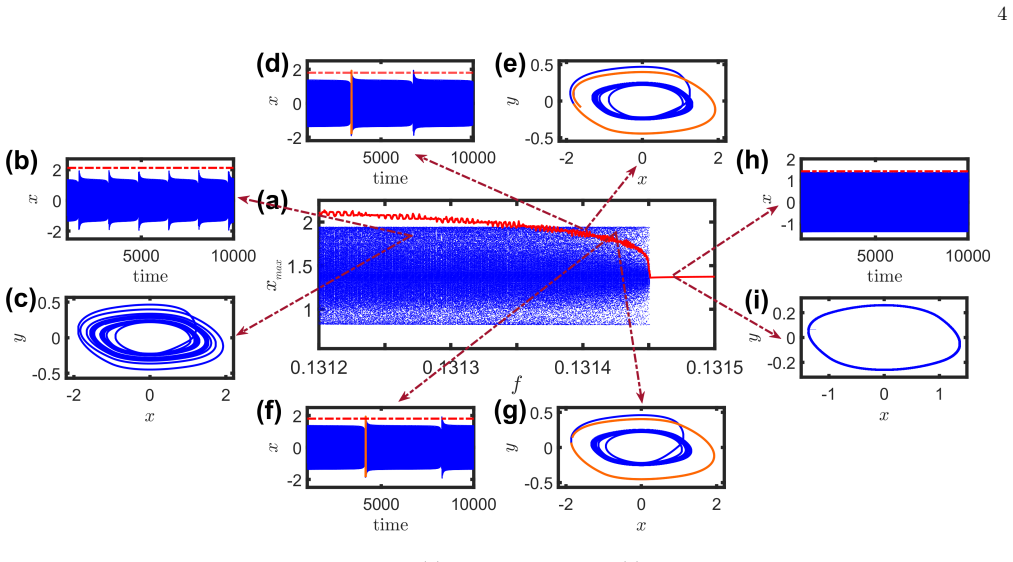
Extreme events emerge in the MLC circuit when the chaotic attractor expands largely along the period-merging intermittency route due to the external periodic force.
A machine-rendered reading of the paper's core claim, the machinery that carries it, and where it could break.
Core claim
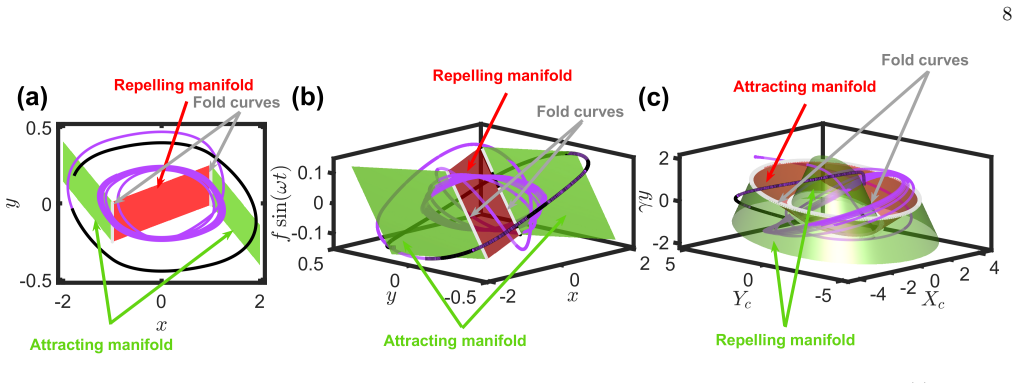
The paper claims that the large expansion of the chaotic attractor following the period-merging intermittency route plays the crucial role as the precursor behind the emergence of extreme events in the MLC circuit. The prevalence of a force field due to the externally applied periodic force creates the dynamical synergy that compels the chaotic trajectory to be largely deviated from its residing space. This large deviation is interpreted as extreme events, with supporting explanations from the decomposition of the phase space in stable and unstable manifolds concerning slow-fast dynamics and using Floquet multipliers. The rare occurrences are statistically analyzed using extreme value theory
What carries the argument
The force field induced by the external periodic force that drives large deviations of the chaotic trajectory in the MLC circuit, facilitated by attractor expansion via period-merging intermittency.
If this is right
- The external periodic force is identified as the dominant cause creating the dynamical synergy for extreme events.
- Analysis of stable and unstable manifolds and Floquet multipliers both confirm the mechanism of large trajectory excursions.
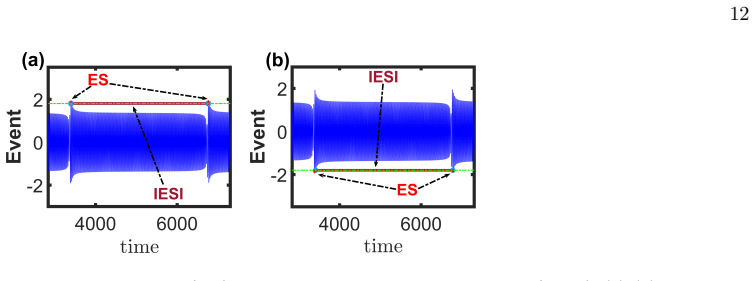
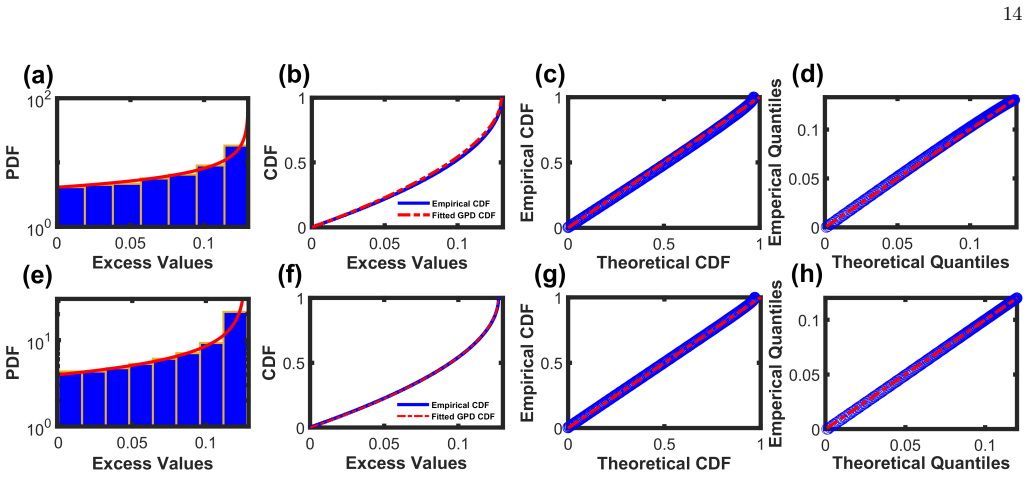
- Extreme events can be characterized statistically with generalized Pareto distribution for excess values and generalized extreme value distribution for inter-event intervals.
- The mechanism explains two different types of extreme events defined in the system.
Where Pith is reading between the lines
- Tuning the amplitude or frequency of the external force might offer a way to suppress or control the occurrence of extreme events in such circuits.
- The approach of using manifold decomposition and Floquet theory could be applied to study extreme events in other driven chaotic systems.
- If the intermittency route is general, similar attractor expansions might precede extremes in a broader class of nonautonomous oscillators.
Load-bearing premise
The definitions chosen for the two types of extreme events and the conclusion that the external force is the dominant cause do not change with small adjustments to thresholds or other parameters.
What would settle it
A direct test would be to simulate or experiment with the MLC circuit at zero amplitude of the external periodic force and check if the large attractor expansion and extreme events both disappear.
Figures







read the original abstract
The Murali-Lakshmanan-Chua (MLC) circuit is a well-recognized prominent nonlinear, nonautonomous, and dissipative electronic circuit having a versatile chaotic nature. Unraveling the dynamical synergy responsible for the genesis of extreme events in nonlinear dynamical systems is a prolific and spellbinding research area. The present study unveils the dynamical exposition of emerging extreme events in the MLC circuit concerning two different events being defined in the system. The large expansion of the chaotic attractor following the PM intermittency route plays the crucial role as the precursor behind the emergence of extreme events in the system. Our main finding reveals the prevalence of a force field due to the presence of externally applied periodic force in the system that creates the dynamical synergy that compels the chaotic trajectory traversing in its phase space to be largely deviated from the residing space, and this large deviation shows the signature of extreme events. Apart from the force field explication, we explored another two dynamical aspects that also interpret the mechanism behind the genesis of extreme events as the large deflection of the chaotic trajectory in the system: the decomposition of the phase space in stable and unstable manifolds concerning slow-fast dynamics and using Floquet multipliers. These two different aspects of calculations of the stable and unstable manifolds explicate the large excursion of the chaotic trajectory as extreme events from two different perspectives. We also analyzed the rare occurrences of the extreme events statistically using extreme value theory: the threshold \textit{excess values} follow the generalized Pareto distribution, and the inter-extreme-spike-intervals follow the generalized extreme value distribution.
Editorial analysis
A structured set of objections, weighed in public.
Referee Report
Summary. The manuscript examines the emergence of extreme events in the Murali-Lakshmanan-Chua (MLC) circuit. It identifies the large expansion of the chaotic attractor following the PM intermittency route as the key precursor, driven by an externally applied periodic force that creates a force field causing large trajectory deviations. Complementary mechanisms are analyzed via decomposition of phase space into stable and unstable manifolds under slow-fast dynamics and via Floquet multipliers. Statistically, threshold excess values are shown to follow the generalized Pareto distribution while inter-extreme-spike intervals follow the generalized extreme value distribution.
Significance. If the central claims are rigorously supported, the work provides a multi-perspective dynamical account of extreme events in a canonical nonautonomous chaotic circuit, linking attractor expansion, external forcing, and geometric structures. The combination of intermittency analysis, manifold/Floquet calculations, and extreme-value statistics is a constructive approach that could inform similar studies in other dissipative systems.
major comments (2)
- [Definition of extreme events and force-field section] The definitions of the two extreme events and the assertion that the external periodic force is the dominant cause (abstract and the section introducing the force-field mechanism) require explicit robustness checks; small variations in amplitude thresholds or forcing parameters can alter event identification, and no such sensitivity analysis is presented to confirm the conclusions are not threshold-dependent.
- [PM intermittency and attractor expansion analysis] The claim that the PM intermittency route produces the large attractor expansion as precursor (abstract and the dynamical exposition section) is central yet lacks a direct comparison to the unforced MLC circuit or a parameter sweep showing that extreme events vanish without the force; this leaves open whether the synergy is uniquely due to the external drive.
minor comments (2)
- [Abstract] The abstract uses non-standard phrasing such as 'prolific and spellbinding research area'; replace with more conventional scientific language.
- [Throughout manuscript] Ensure the acronym 'PM intermittency' is defined on first use and that all figure captions explicitly state the parameter values and thresholds employed.
Simulated Author's Rebuttal
We thank the referee for the careful reading and constructive comments on our manuscript. We address the major concerns point by point below, agreeing that additional checks will strengthen the work, and we will incorporate the suggested analyses in the revised version.
read point-by-point responses
-
Referee: [Definition of extreme events and force-field section] The definitions of the two extreme events and the assertion that the external periodic force is the dominant cause (abstract and the section introducing the force-field mechanism) require explicit robustness checks; small variations in amplitude thresholds or forcing parameters can alter event identification, and no such sensitivity analysis is presented to confirm the conclusions are not threshold-dependent.
Authors: We agree that explicit robustness checks are needed to confirm that event identification and the force-field mechanism are not artifacts of specific threshold choices. In the revised manuscript we will add a dedicated sensitivity analysis subsection. This will include varying the amplitude thresholds for both types of extreme events by ±5% and ±10% around the nominal values, recomputing the threshold-excess statistics, and verifying that the generalized Pareto distribution fit remains valid with comparable shape parameters. We will likewise test small perturbations (±5%) in forcing amplitude and frequency, recomputing the force-field deviations and attractor expansions to show that the dominant role of the external periodic drive persists. revision: yes
-
Referee: [PM intermittency and attractor expansion analysis] The claim that the PM intermittency route produces the large attractor expansion as precursor (abstract and the dynamical exposition section) is central yet lacks a direct comparison to the unforced MLC circuit or a parameter sweep showing that extreme events vanish without the force; this leaves open whether the synergy is uniquely due to the external drive.
Authors: We accept that an explicit comparison to the unforced case would make the necessity of the external drive clearer. In the revision we will add a new subsection that simulates the MLC circuit with the periodic forcing term set identically to zero while retaining all other parameters. These runs will show that the PM intermittency route is not observed, the attractor remains confined without large expansions, and no extreme events occur. We will further include a one-parameter sweep over forcing amplitude, demonstrating that extreme events and the associated attractor expansion appear only above a critical forcing strength, thereby confirming that the external drive is essential for the reported synergy. revision: yes
Circularity Check
No significant circularity detected
full rationale
The paper defines extreme events via amplitude thresholds in the MLC circuit, then characterizes their occurrence through numerical simulation of attractor expansion along the PM intermittency route, external periodic force effects, stable/unstable manifold decomposition, and Floquet analysis. Statistical modeling via generalized Pareto and extreme value distributions is applied post-identification as descriptive fitting to the observed tails and intervals, not as a derivation that re-uses the defining thresholds or parameters to generate the events themselves. No load-bearing self-citation, self-definitional loop, or fitted-input-renamed-as-prediction appears in the derivation chain; the central claims rest on independent dynamical observations and standard EVT application.
Axiom & Free-Parameter Ledger
axioms (1)
- domain assumption The MLC circuit equations and the external periodic forcing produce a chaotic attractor whose expansion can be tracked via standard bifurcation routes.
Reference graph
Works this paper leans on
-
[1]
Defining extreme events: A cross-disciplinary review.Earth’s Future, 6(3):441–455, 2018
Lauren E McPhillips, Heejun Chang, Mikhail V Chester, Yaella Depietri, Erin Friedman, Nancy B Grimm, John S Kominoski, Timon McPhearson, Pablo M´ endez-L´ azaro, Emma J Rosi, et al. Defining extreme events: A cross-disciplinary review.Earth’s Future, 6(3):441–455, 2018
2018
-
[2]
Extreme rotational events in a forced- damped nonlinear pendulum.Chaos: An Interdisciplinary Journal of Nonlinear Science, 33(6), 2023
Tapas Kumar Pal, Arnob Ray, Sayantan Nag Chowdhury, and Dibakar Ghosh. Extreme rotational events in a forced- damped nonlinear pendulum.Chaos: An Interdisciplinary Journal of Nonlinear Science, 33(6), 2023
2023
-
[3]
Extreme events in two coupled chaotic oscillators
S Sudharsan, Tapas Kumar Pal, Dibakar Ghosh, and J¨ urgen Kurths. Extreme events in two coupled chaotic oscillators. Physical Review E, 111(3):034214, 2025
2025
-
[4]
Extreme events: Mechanisms and prediction.Applied Mechanics Reviews, 71(5):050801, 2019
Mohammad Farazmand and Themistoklis P Sapsis. Extreme events: Mechanisms and prediction.Applied Mechanics Reviews, 71(5):050801, 2019
2019
-
[5]
A universal mechanism of extreme events and critical phenomena.Scientific reports, 6(1):21612, 2016
JH Wu and Q Jia. A universal mechanism of extreme events and critical phenomena.Scientific reports, 6(1):21612, 2016. 22
2016
-
[6]
Extreme events in dynamical systems and random walkers: A review.Physics Reports, 966:1–52, 2022
Sayantan Nag Chowdhury, Arnob Ray, Syamal K Dana, and Dibakar Ghosh. Extreme events in dynamical systems and random walkers: A review.Physics Reports, 966:1–52, 2022
2022
-
[7]
Minimal universal laser network model: Synchronization, extreme events, and multistability.Nonlinear Engineering, 13(1):20240044, 2024
Mahtab Mehrabbeik, Fatemeh Parastesh, Karthikeyan Rajagopal, Sajad Jafari, Matjaz Perc, and Riccardo Meucci. Minimal universal laser network model: Synchronization, extreme events, and multistability.Nonlinear Engineering, 13(1):20240044, 2024
2024
-
[8]
Effects of coupling on extremely multistable fractional-order systems.Chinese Journal of Physics, 87:246–255, 2024
Karthikeyan Rajagopal, Fatemeh Parastesh, Hamid Reza Abdolmohammadi, Sajad Jafari, Matjaˇ z Perc, and Eva Kle- menˇ ciˇ c. Effects of coupling on extremely multistable fractional-order systems.Chinese Journal of Physics, 87:246–255, 2024
2024
-
[9]
John Wiley & Sons, 2016
Valerio Lucarini, Davide Faranda, Jorge Miguel Milhazes de Freitas, Mark Holland, Tobias Kuna, Matthew Nicol, Mike Todd, Sandro Vaienti, et al.Extremes and recurrence in dynamical systems. John Wiley & Sons, 2016
2016
-
[10]
Extreme value laws in dynamical systems under physical observables.Physica D: nonlinear phenomena, 241(5):497–513, 2012
Mark P Holland, Renato Vitolo, Pau Rabassa, Alef E Sterk, and Henk W Broer. Extreme value laws in dynamical systems under physical observables.Physica D: nonlinear phenomena, 241(5):497–513, 2012
2012
-
[11]
Statistical physics and dynamical systems perspectives on geophysical extreme events.Physical Review E, 110(4):041001, 2024
Davide Faranda, Gabriele Messori, Tommaso Alberti, Carmen Alvarez-Castro, Th´ eophile Caby, Leone Cavicchia, Erika Coppola, Reik V Donner, Berengere Dubrulle, Vera Melinda Galfi, et al. Statistical physics and dynamical systems perspectives on geophysical extreme events.Physical Review E, 110(4):041001, 2024
2024
-
[12]
Extreme statistics and extreme events in dynamical models of turbulence.Physical Review E, 109(5):055106, 2024
Xander M de Wit, Giulio Ortali, Alessandro Corbetta, Alexei A Mailybaev, Luca Biferale, and Federico Toschi. Extreme statistics and extreme events in dynamical models of turbulence.Physical Review E, 109(5):055106, 2024
2024
-
[13]
Pattern change of precipitation extremes in svalbard.Scientific Reports, 15(1):8754, 2025
Dhiman Das, R Athulya, Tanujit Chakraborty, Arnob Ray, Chittaranjan Hens, Syamal K Dana, Dibakar Ghosh, and Nuncio Murukesh. Pattern change of precipitation extremes in svalbard.Scientific Reports, 15(1):8754, 2025
2025
-
[14]
Complexity measure of extreme events.Chaos: An Interdisciplinary Journal of Nonlinear Science, 34(12), 2024
Dhiman Das, Arnob Ray, Chittaranjan Hens, Dibakar Ghosh, Md Kamrul Hassan, Artur Dabrowski, Tomasz Kapitaniak, and Syamal K Dana. Complexity measure of extreme events.Chaos: An Interdisciplinary Journal of Nonlinear Science, 34(12), 2024
2024
-
[15]
Nisarg Vyas and M. S. Santhanam. Extreme events of quantum walks on networks.Phys. Rev. E, 113:044302, Apr 2026
2026
-
[16]
Advent of extreme events in predator popu- lations.Scientific Reports, 10(1):10613, 2020
Sudhanshu Shekhar Chaurasia, Umesh Kumar Verma, and Sudeshna Sinha. Advent of extreme events in predator popu- lations.Scientific Reports, 10(1):10613, 2020
2020
-
[17]
Impact of coupling on neuronal extreme events: Mitigation and enhancement.Chaos: An Interdisciplinary Journal of Nonlinear Science, 33(8), 2023
Anupama Roy and Sudeshna Sinha. Impact of coupling on neuronal extreme events: Mitigation and enhancement.Chaos: An Interdisciplinary Journal of Nonlinear Science, 33(8), 2023
2023
-
[18]
Dynamical indicators for the prediction of bursting phenomena in high-dimensional systems.Physical Review E, 94(3):032212, 2016
Mohammad Farazmand and Themistoklis P Sapsis. Dynamical indicators for the prediction of bursting phenomena in high-dimensional systems.Physical Review E, 94(3):032212, 2016
2016
-
[19]
Prediction of occurrence of extreme events using machine learning.The European Physical Journal Plus, 137(1):16, 2021
J Meiyazhagan, S Sudharsan, A Venkatesan, and M Senthilvelan. Prediction of occurrence of extreme events using machine learning.The European Physical Journal Plus, 137(1):16, 2021
2021
-
[20]
Model-free prediction of emergence of extreme events in a parametrically driven nonlinear dynamical system by deep learning.The European Physical Journal B, 94(8):156, 2021
J Meiyazhagan, S Sudharsan, and M Senthilvelan. Model-free prediction of emergence of extreme events in a parametrically driven nonlinear dynamical system by deep learning.The European Physical Journal B, 94(8):156, 2021
2021
-
[21]
Mitigation of extreme events in an excitable system.The European Physical Journal Plus, 139(3):203, 2024
R Shashangan, S Sudharsan, A Venkatesan, and M Senthilvelan. Mitigation of extreme events in an excitable system.The European Physical Journal Plus, 139(3):203, 2024
2024
-
[22]
Emergence and mitigation of extreme events in a parametrically driven system with velocity-dependent potential.The European Physical Journal Plus, 136(1):129, 2021
S Sudharsan, A Venkatesan, P Muruganandam, and M Senthilvelan. Emergence and mitigation of extreme events in a parametrically driven system with velocity-dependent potential.The European Physical Journal Plus, 136(1):129, 2021
2021
-
[23]
Extreme events: dynamics, statistics and prediction.Nonlinear Processes in Geophysics, 18(3):295–350, 2011
M Ghil, Pascal Yiou, St´ ephane Hallegatte, BD Malamud, P Naveau, A Soloviev, P Friederichs, V Keilis-Borok, D Kon- drashov, V Kossobokov, et al. Extreme events: dynamics, statistics and prediction.Nonlinear Processes in Geophysics, 18(3):295–350, 2011
2011
-
[24]
Themistoklis P Sapsis. New perspectives for the prediction and statistical quantification of extreme events in high- dimensional dynamical systems.Philosophical Transactions of the Royal Society A: Mathematical, Physical and Engineering Sciences, 376(2127), 2018
2018
-
[25]
Critical exponents for crisis-induced intermittency
Celso Grebogi, Edward Ott, Filipe Romeiras, and James A Yorke. Critical exponents for crisis-induced intermittency. Physical Review A, 36(11):5365, 1987
1987
-
[26]
Chaotic attractors in crisis.Physical Review Letters, 48(22):1507, 1982
Celso Grebogi, Edward Ott, and James A Yorke. Chaotic attractors in crisis.Physical Review Letters, 48(22):1507, 1982
1982
-
[27]
Crises, sudden changes in chaotic attractors, and transient chaos.Physica D: Nonlinear Phenomena, 7(1-3):181–200, 1983
Celso Grebogi, Edward Ott, and James A Yorke. Crises, sudden changes in chaotic attractors, and transient chaos.Physica D: Nonlinear Phenomena, 7(1-3):181–200, 1983
1983
-
[28]
Intermittent large deviation of chaotic trajectory in ikeda map: Signature of extreme events.Chaos: An Interdisciplinary Journal of Nonlinear Science, 29(4), 2019
Arnob Ray, Sarbendu Rakshit, Dibakar Ghosh, and Syamal K Dana. Intermittent large deviation of chaotic trajectory in ikeda map: Signature of extreme events.Chaos: An Interdisciplinary Journal of Nonlinear Science, 29(4), 2019
2019
-
[29]
Understanding the origin of extreme events in el ni˜ no southern oscillation.Physical Review E, 101(6):062210, 2020
Arnob Ray, Sarbendu Rakshit, Gopal K Basak, Syamal K Dana, and Dibakar Ghosh. Understanding the origin of extreme events in el ni˜ no southern oscillation.Physical Review E, 101(6):062210, 2020
2020
-
[30]
Parametric excitation induced extreme events in mems and li´ enard oscillator.Chaos: An Interdisciplinary Journal of Nonlinear Science, 30(8), 2020
R Suresh and VK Chandrasekar. Parametric excitation induced extreme events in mems and li´ enard oscillator.Chaos: An Interdisciplinary Journal of Nonlinear Science, 30(8), 2020
2020
-
[31]
Symmetrical emergence of extreme events at multiple regions in a damped and driven velocity-dependent mechanical system.Physica Scripta, 96(9):095216, 2021
S Sudharsan, A Venkatesan, and M Senthilvelan. Symmetrical emergence of extreme events at multiple regions in a damped and driven velocity-dependent mechanical system.Physica Scripta, 96(9):095216, 2021
2021
-
[32]
Extreme events in the higgs oscillator: A dynamical study and forecasting approach
M Wasif Ahamed, R Kavitha, V Chithiika Ruby, M Sathish Aravindh, A Venkatesan, and M Lakshmanan. Extreme events in the higgs oscillator: A dynamical study and forecasting approach
-
[33]
Extreme events in deterministic dynamical systems.Physical review letters, 97(21):210602, 2006
Catherine Nicolis, V Balakrishnan, and Gr´ egoire Nicolis. Extreme events in deterministic dynamical systems.Physical review letters, 97(21):210602, 2006
2006
-
[34]
Universal nonlinear dynamics in damped and driven physical systems: From pendula via josephson junctions to power grids.Physics Reports, 1147:1–112, 2025
Subrata Ghosh, Linuo Xue, Arindam Mishra, Suman Saha, Dawid Dudkowski, Syamal K Dana, Tomasz Kapitaniak, J¨ urgen Kurths, Peng Ji, and Chittaranjan Hens. Universal nonlinear dynamics in damped and driven physical systems: From pendula via josephson junctions to power grids.Physics Reports, 1147:1–112, 2025
2025
-
[35]
Extreme 23 events in a network of heterogeneous josephson junctions.Physical Review E, 101(3):032209, 2020
Arnob Ray, Arindam Mishra, Dibakar Ghosh, Tomasz Kapitaniak, Syamal K Dana, and Chittaranjan Hens. Extreme 23 events in a network of heterogeneous josephson junctions.Physical Review E, 101(3):032209, 2020
2020
-
[36]
Extreme events in a complex network: Interplay between degree distribution and repulsive interaction
Arnob Ray, Timo Br¨ ohl, Arindam Mishra, Subrata Ghosh, Dibakar Ghosh, Tomasz Kapitaniak, Syamal K Dana, and Chittaranjan Hens. Extreme events in a complex network: Interplay between degree distribution and repulsive interaction. Chaos: An Interdisciplinary Journal of Nonlinear Science, 32(12), 2022
2022
-
[37]
Multistability, noise, and attractor hopping: The crucial role of chaotic saddles.Physical Review E, 66(1):015207, 2002
Suso Kraut and Ulrike Feudel. Multistability, noise, and attractor hopping: The crucial role of chaotic saddles.Physical Review E, 66(1):015207, 2002
2002
-
[38]
Cavalcante, Marcos Ori´ a, Didier Sornette, Edward Ott, and Daniel J Gauthier
Hugo LD de S. Cavalcante, Marcos Ori´ a, Didier Sornette, Edward Ott, and Daniel J Gauthier. Predictability and sup- pression of extreme events in a chaotic system.Physical Review Letters, 111(19):198701, 2013
2013
-
[39]
Synchronization to extreme events in moving agents.New Journal of Physics, 21(7):073048, 2019
Sayantan Nag Chowdhury, Soumen Majhi, Mahmut Ozer, Dibakar Ghosh, and Matjaˇ z Perc. Synchronization to extreme events in moving agents.New Journal of Physics, 21(7):073048, 2019
2019
-
[40]
Distance dependent competitive interactions in a frustrated network of mobile agents.IEEE Transactions on Network Science and Engineering, 7(4):3159–3170, 2020
Sayantan Nag Chowdhury, Soumen Majhi, and Dibakar Ghosh. Distance dependent competitive interactions in a frustrated network of mobile agents.IEEE Transactions on Network Science and Engineering, 7(4):3159–3170, 2020
2020
-
[41]
Extreme events in globally coupled chaotic maps.Journal of Physics: Complexity, 2(3):035021, 2021
Sayantan Nag Chowdhury, Arnob Ray, Arindam Mishra, and Dibakar Ghosh. Extreme events in globally coupled chaotic maps.Journal of Physics: Complexity, 2(3):035021, 2021
2021
-
[42]
Classification of bifurcations and routes to chaos in a variant of murali– lakshmanan–chua circuit.International Journal of Bifurcation and Chaos, 12(04):783–813, 2002
Kathamuthu Thamilmaran and M Lakshmanan. Classification of bifurcations and routes to chaos in a variant of murali– lakshmanan–chua circuit.International Journal of Bifurcation and Chaos, 12(04):783–813, 2002
2002
-
[43]
Mixed-mode oscillations with multiple time scales.Siam Review, 54(2):211–288, 2012
Mathieu Desroches, John Guckenheimer, Bernd Krauskopf, Christian Kuehn, Hinke M Osinga, and Martin Wechselberger. Mixed-mode oscillations with multiple time scales.Siam Review, 54(2):211–288, 2012
2012
-
[44]
Singular hopf bifurcation in systems with two slow variables.SIAM Journal on Applied Dynamical Systems, 7(4):1355–1377, 2008
John Guckenheimer. Singular hopf bifurcation in systems with two slow variables.SIAM Journal on Applied Dynamical Systems, 7(4):1355–1377, 2008
2008
-
[45]
Rigorous numerics in floquet theory: computing stable and unstable bundles of periodic orbits.SIAM Journal on Applied Dynamical Systems, 12(1):204–245, 2013
Roberto Castelli and Jean-Philippe Lessard. Rigorous numerics in floquet theory: computing stable and unstable bundles of periodic orbits.SIAM Journal on Applied Dynamical Systems, 12(1):204–245, 2013
2013
-
[46]
Parameterization of invariant manifolds for periodic orbits i: Efficient numerics via the floquet normal form.SIAM Journal on Applied Dynamical Systems, 14(1):132–167, 2015
Roberto Castelli, Jean-Philippe Lessard, and Jason D Mireles James. Parameterization of invariant manifolds for periodic orbits i: Efficient numerics via the floquet normal form.SIAM Journal on Applied Dynamical Systems, 14(1):132–167, 2015
2015
-
[47]
Springer, 2001
Stuart Coles, Joanna Bawa, Lesley Trenner, and Pat Dorazio.An introduction to statistical modeling of extreme values, volume 208. Springer, 2001
2001
-
[48]
Towards a general theory of extremes for observables of chaotic dynamical systems.Journal of statistical physics, 154(3):723–750, 2014
Valerio Lucarini, Davide Faranda, Jeroen Wouters, and Tobias Kuna. Towards a general theory of extremes for observables of chaotic dynamical systems.Journal of statistical physics, 154(3):723–750, 2014
2014
-
[49]
Statistics of extreme events in fluid flows and waves.Annual Review of Fluid Mechanics, 53(1):85– 111, 2021
Themistoklis P Sapsis. Statistics of extreme events in fluid flows and waves.Annual Review of Fluid Mechanics, 53(1):85– 111, 2021
2021
-
[50]
Universal behaviour of extreme value statistics for selected ob- servables of dynamical systems.Journal of statistical physics, 147(1):63–73, 2012
Valerio Lucarini, Davide Faranda, and Jeroen Wouters. Universal behaviour of extreme value statistics for selected ob- servables of dynamical systems.Journal of statistical physics, 147(1):63–73, 2012
2012
-
[51]
Extreme value statistics of the total energy in an intermediate-complexity model of the midlatitude atmospheric jet
Mara Felici, Valerio Lucarini, Antonio Speranza, and Renato Vitolo. Extreme value statistics of the total energy in an intermediate-complexity model of the midlatitude atmospheric jet. part i: Stationary case.Journal of the atmospheric sciences, 64(7):2137–2158, 2007
2007
-
[52]
Extreme value theory and return time statistics for dispersing billiard maps and flows, lozi maps and lorenz-like maps.Ergodic Theory and Dynamical Systems, 31(5):1363–1390, 2011
Chinmaya Gupta, Mark Holland, and Matthew Nicol. Extreme value theory and return time statistics for dispersing billiard maps and flows, lozi maps and lorenz-like maps.Ergodic Theory and Dynamical Systems, 31(5):1363–1390, 2011
2011
-
[53]
Numerical convergence of the block-maxima approach to the generalized extreme value distribution.Journal of statistical physics, 145(5):1156–1180, 2011
Davide Faranda, Valerio Lucarini, Giorgio Turchetti, and Sandro Vaienti. Numerical convergence of the block-maxima approach to the generalized extreme value distribution.Journal of statistical physics, 145(5):1156–1180, 2011
2011
discussion (0)
Sign in with ORCID, Apple, or X to comment. Anyone can read and Pith papers without signing in.