Recognition: unknown
Statistics of a multi-factor function from its Fourier transform
Pith reviewed 2026-05-08 02:56 UTC · model grok-4.3
The pith
The mth moment of a multi-factor function equals a sum of Fourier coefficient products where indices annihilate under group addition.
A machine-rendered reading of the paper's core claim, the machinery that carries it, and where it could break.
Core claim
The paper establishes the m-Coefficient/Index Annihilation Theorem, which states that the mth population moment of f is equal to a sum over all m-tuples of Fourier coefficients such that the corresponding indices sum to zero in the group G. This provides a direct way to obtain statistics like mean, variance, skew, and kurtosis in the Fourier domain without returning to the original function values.
What carries the argument
The m-Coefficient/Index Annihilation Theorem, which expresses moments as filtered products of Fourier coefficients based on index summation to zero.
If this is right
- The mean involves only the zero-frequency Fourier coefficient.
- Variance, skew, and kurtosis each expand into sums over specific multi-coefficient products obeying the annihilation condition.
- The index-sum filter can reveal which combinations of the n underlying factors interact in the statistics.
- The formulas double as feasibility constraints inside search or optimization algorithms that operate in the Fourier domain.
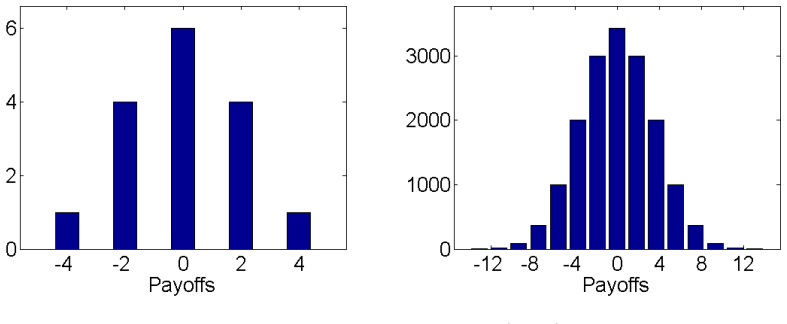
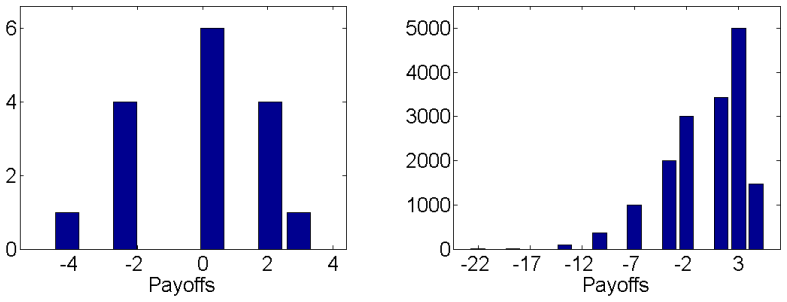
- On the hypercube Z_2^n the same construction recovers the known skewness and kurtosis of binomial distributions.
Where Pith is reading between the lines
- If the Fourier transform is sparse, only a small fraction of possible m-tuples need to be evaluated, making higher moments tractable for large n.
- The annihilation condition may translate into selection rules for other transforms or for continuous groups when suitable decay conditions hold.
- The approach supplies a frequency-domain route to the classical moment problem, linking coefficient support directly to distribution shape.
- In applications such as circuit design or experimental planning, one could prescribe desired moments by choosing which Fourier coefficients are allowed to be nonzero.
Load-bearing premise
The function must be defined on a finite abelian group and its Fourier transform must satisfy the standard inversion and convolution properties of group Fourier analysis.
What would settle it
For a small group such as Z_2^2 and a simple function like the product of the two coordinates, compute the second moment both by direct enumeration over the four group elements and by summing the qualifying Fourier coefficient products, then check for numerical agreement.
Figures

read the original abstract
For a phenomenon $\boldsymbol{f}$ that is a function of $n$ factors, defined on a finite abelian group $G$, we derive its population statistics solely from its Fourier transform $\hat{\boldsymbol{f}}$. Our main result is an \textit{$m$-Coefficient/Index Annihilation Theorem}: the $m$th moment of $\boldsymbol{f}$ becomes a series of terms, each with precisely $m$ Fourier coefficients --- and surprisingly, the coefficient \textit{indices} in each term sum to zero under group addition. This condition acts like a filter, limiting which terms appear in the Fourier domain, and can reveal deeper relationships between the variables driving $\boldsymbol{f}$. These techniques can also be used as an analytical/design tool, or as a feasibility constraint in search algorithms. For functions defined on $\mathbb{Z}_2^n$, we show how the skew, kurtosis, etc. of a binomial distribution can be derived from the Fourier domain. Several other examples are presented.
Editorial analysis
A structured set of objections, weighed in public.
Referee Report
Summary. The manuscript derives population statistics (specifically the m-th moment) of a function f defined on a finite abelian group G directly from its Fourier transform. The central result is the m-Coefficient/Index Annihilation Theorem, which expresses the moment as a sum of products of exactly m Fourier coefficients whose indices sum to the identity under the group operation. Concrete illustrations are given for functions on Z_2^n, including explicit derivations of skewness, kurtosis, and other moments for binomial distributions.
Significance. The result recasts standard moment calculations in the Fourier domain and supplies a filtering condition on coefficient indices that may prove useful for analyzing multi-factor phenomena or imposing constraints in search algorithms. Credit is due for the explicit Z_2^n examples that connect the abstract theorem to familiar distributions; however, the underlying derivation is a direct consequence of character orthogonality and does not introduce new mathematical machinery.
minor comments (3)
- [Theorem statement] §3 (or equivalent theorem statement): include the precise normalization constants for the Fourier transform and its inverse so that the moment expressions can be verified numerically without ambiguity.
- [Examples] Z_2^n examples: the binomial-distribution calculations would be clearer if the Fourier coefficients of the underlying indicator or probability functions were written explicitly before substituting into the annihilation formula.
- [Notation] Notation: the symbol for the group operation and the dual group should be introduced once and used consistently; occasional shifts between additive and multiplicative notation obscure the index-sum condition.
Simulated Author's Rebuttal
We thank the referee for their careful reading of the manuscript and for recommending minor revision. We address the substantive points from the significance assessment below.
read point-by-point responses
-
Referee: The underlying derivation is a direct consequence of character orthogonality and does not introduce new mathematical machinery.
Authors: We agree that the proof of the m-Coefficient/Index Annihilation Theorem follows directly from the standard orthogonality relations for characters on finite abelian groups. Our contribution is the explicit formulation of the theorem itself, which isolates the index annihilation condition (the m indices summing to the identity) as a filtering criterion on the Fourier coefficients that appear in the moment expansion. This filter is useful for multi-factor functions, as it reveals which combinations of factors contribute to a given moment and can serve as a constraint in search or design algorithms. The Z_2^n examples, including explicit derivations of skewness and kurtosis for binomial distributions, illustrate this utility in a concrete statistical setting. While no new machinery is claimed, the recasting supplies a practical tool for computing and interpreting population statistics directly from the Fourier transform. revision: no
-
Referee: Credit is due for the explicit Z_2^n examples that connect the abstract theorem to familiar distributions.
Authors: We appreciate the referee's recognition of the Z_2^n examples. These derivations show how the annihilation theorem recovers standard moment formulas (skewness, kurtosis, etc.) for binomial distributions while remaining entirely in the Fourier domain, thereby demonstrating the theorem's applicability to familiar statistical objects. revision: no
Circularity Check
No significant circularity; derivation follows from standard orthogonality
full rationale
The claimed m-Coefficient/Index Annihilation Theorem is obtained by substituting the inverse Fourier transform into the definition of the m-th moment, expanding the product, and applying the standard character orthogonality relation on finite abelian groups (the sum over g is nonzero only when the m indices sum to the identity). This is a direct algebraic consequence of the usual Fourier setup and requires no fitted parameters, self-referential definitions, or load-bearing self-citations. The Z_2^n examples for skew and kurtosis are likewise obtained by the same expansion without reducing to the paper's own inputs by construction.
Axiom & Free-Parameter Ledger
axioms (1)
- standard math Fourier transform on finite abelian groups satisfies the usual inversion and convolution theorems
Reference graph
Works this paper leans on
-
[1]
Galton,Natural Inheritance, ser
F. Galton,Natural Inheritance, ser. Natural Inheritance. Macmillan and Co., 1889, vol. 42; v. 590. [Online]. Available: https://books.google.com/books?id= pGIVAAAAYAAJ
-
[2]
Taleb,Statistical Consequences of Fat Tails: Real World Preasymptotics, Epistemology, and Applications (Revised Edition), ser
N. Taleb,Statistical Consequences of Fat Tails: Real World Preasymptotics, Epistemology, and Applications (Revised Edition), ser. The Technical Incerto Collection. STEM Academic Press, 2023. [Online]. Available: https://books. google.com/books?id=9b8P0AEACAAJ
2023
-
[3]
Tutorial on higher-order statistics (spectra) in signal processing and system theory: Theoretical results and some applications,
J. M. Mendel, “Tutorial on higher-order statistics (spectra) in signal processing and system theory: Theoretical results and some applications,”Proceedings of the IEEE, vol. 79, no. 3, pp. 278–305, 1991
1991
-
[4]
Bibliography on higher-order statistics,
A. Swami, G. B. Giannakis, and G. Zhou, “Bibliography on higher-order statistics,”Signal Processing, vol. 60, no. 1, pp. 65–126, 1997. [Online]. Available: https://www.sciencedirect.com/science/article/pii/S0165168497000650
1997
-
[5]
On the Fourier transform of a quantitative trait: Implications for compressive sensing,
S. Doro and M. A. Herman, “On the Fourier transform of a quantitative trait: Implications for compressive sensing,”Journal of Theoretical Biology, vol. 540, p. 110985, 2022. [Online]. Available: https://www.sciencedirect.com/science/article/ pii/S0022519321004057
2022
-
[6]
Stable signal recovery from incomplete and inaccurate measurements,
E. J. Cand` es, J. Romberg, and T. Tao, “Stable signal recovery from incomplete and inaccurate measurements,”Comm. Pure Appl. Math., vol. 59, pp. 1207–1223, 2006
2006
-
[7]
C. Gross, M. Iwen, L. K¨ ammerer, and T. Volkmer, “Sparse Fourier transforms on rank-1 lattices for the rapid and low-memory approximation of functions of many variables,”Sampl. Theory Signal Process. Data Anal., vol. 20, no. 1, 2022. [Online]. Available: https://doi.org/10.1007/s43670-021-00018-y
-
[8]
Delsarte,An Algebraic Approach to the Association Schemes of Coding Theory, ser
P. Delsarte,An Algebraic Approach to the Association Schemes of Coding Theory, ser. Philips journal of research / Supplement. N.V. Philips’ Gloeilampenfabrieken, 1973
1973
-
[9]
History and solution of the phase problem in the theory of structure determination of crystals from X-ray diffraction measurements,
E. Wolf, “History and solution of the phase problem in the theory of structure determination of crystals from X-ray diffraction measurements,” inAdvances in Imaging and Electron Physics, P. W. Hawkes, Ed. Elsevier, 2011, vol. 165, ch. 7, 39 pp. 283–325. [Online]. Available: https://www.sciencedirect.com/science/article/ pii/B9780123858610000075
2011
-
[10]
The interaction algorithm and practical Fourier analysis,
I. J. Good, “The interaction algorithm and practical Fourier analysis,”Journal of the Royal Statistical Society: Series B (Methodological), vol. 20, no. 2, pp. 361–372, 1958
1958
-
[11]
Nikias and A
C. Nikias and A. Petropulu,Higher-order Spectra Analysis: A Nonlinear Signal Processing Framework, ser. Prentice-Hall signal processing series. PTR Prentice Hall, 1993
1993
-
[12]
D. R. Brillinger and P. R. Krishnaiah,Time series in the frequency domain, ser. Handbook of statistics; v.3. Amsterdam: North-Holland, 1983
1983
-
[13]
M. B. Priestley,Non-linear and non-stationary time series analysis. London: Academic Press, 1988
1988
-
[14]
An algorithm for the machine calculation of com- plex Fourier series,
J. W. Cooley and J. W. Tukey, “An algorithm for the machine calculation of com- plex Fourier series,”Mathematics of Computation, vol. 19, pp. 297–301, 1965
1965
-
[15]
Spivak,A Comprehensive Introduction to Differential Geometry, ser
M. Spivak,A Comprehensive Introduction to Differential Geometry, ser. A Comprehensive Introduction to Differential Geometry. Publish or Perish, Incorporated, 1979, no. v. 2. [Online]. Available: https://books.google.com/books? id=m6UrAAAAYAAJ
1979
-
[16]
Morbidelli,Modern Celestial Mechanics: Aspects of Solar System Dynamics, ser
A. Morbidelli,Modern Celestial Mechanics: Aspects of Solar System Dynamics, ser. Advances in Astronomy and Astrophysics. Taylor & Francis, 2002, vol. 5
2002
- [17]
-
[18]
Terras,Fourier analysis on finite groups and applications, ser
A. Terras,Fourier analysis on finite groups and applications, ser. London Mathe- matical Society student texts; 43. Cambridge: Cambridge University Press, 1999
1999
-
[19]
Horn and C
R. Horn and C. Johnson,Topics in Matrix Analysis. Cambridge University Press,
-
[20]
Available: https://books.google.com/books?id=LeuNXB2bl5EC
[Online]. Available: https://books.google.com/books?id=LeuNXB2bl5EC
-
[21]
K. J. Horadam,Hadamard Matrices and Their Applications. Princeton University Press, 2007
2007
-
[22]
Quantum simulations of one dimensional quantum systems,
R. D. Somma, “Quantum simulations of one dimensional quantum systems,”Quan- tum Information & Computation, vol. 16, no. 13-14, pp. 1125–1168, Oct. 2016. 40
2016
-
[23]
R. A. Horn and C. R. Johnson,Matrix Analysis. Cambridge University Press, 1985
1985
-
[24]
Berlekamp, J
E. Berlekamp, J. H. Conway, and R. K. Guy,Winning Ways for Your Mathematical Plays (4 vols.), 2nd ed. A. K. Peters, 2000
2000
-
[25]
Curry and R
H. Curry and R. Feys,Combinatory Logic, ser. Combinatory Logic. North- Holland Publishing Company, 1958, no. v. 1. [Online]. Available: https: //books.google.com/books?id=qrstAAAAMAAJ
1958
-
[26]
F. L. G. Frege,Grundgesetze der Arithmetik Vol. (Band 1). Verlag Hermann Pohle, 1893
-
[27]
¨Uber die Bausteine der mathematischen Logik,
M. Sch¨ onfinkel, “¨Uber die Bausteine der mathematischen Logik,”Mathematische Annalen, vol. 92, pp. 305–316, September 1924
1924
-
[28]
Wolfram,Combinators: A Centennial View
S. Wolfram,Combinators: A Centennial View. Wolfram Media, Incorporated,
-
[29]
Available: https://books.google.com/books?id=yz0yzgEACAAJ
[Online]. Available: https://books.google.com/books?id=yz0yzgEACAAJ
-
[30]
J. Baez and M. Stay,Physics, Topology, Logic and Computation: A Rosetta Stone. Berlin, Heidelberg: Springer Berlin Heidelberg, 2011, pp. 95–172. [Online]. Available: https://doi.org/10.1007/978-3-642-12821-9 2
-
[31]
Handy formulas for binomial moments,
M. Skorski, “Handy formulas for binomial moments,”Modern Stochastics: Theory and Applications, vol. 12, no. 1, pp. 27–41, 2025
2025
-
[32]
Learning the pattern of epistasis linking genotype and phenotype in a protein,
F. J. Poelwijk, M. Socolich, and R. Ranganathan, “Learning the pattern of epistasis linking genotype and phenotype in a protein,”Nature communications, vol. 10, no. 1, p. 4213, 2019
2019
-
[33]
A deeper look at gene network synergies via Fourier analysis,
M. A. Herman and C. B. Ogbunugafor, “A deeper look at gene network synergies via Fourier analysis,”(in preparation), 2026
2026
-
[34]
T. G. Raben, L. Lello, E. Widen, and S. D. H. Hsu,From Genotype to Phenotype: Polygenic Prediction of Complex Human Traits. New York, NY: Springer US, 2022, pp. 421–446. [Online]. Available: https://doi.org/10.1007/978-1-0716-2205-6 15
-
[35]
On the combinatorics of cumulants,
G.-C. Rota and J. Shen, “On the combinatorics of cumulants,”J. Comb. Theory Ser. A, vol. 91, no. 1, pp. 283–304, Jul 2000. 41
2000
-
[36]
Rota,Twelve problems in probability no one likes to bring up
G.-C. Rota,Twelve problems in probability no one likes to bring up. Milano: Springer Milan, 2001, pp. 57–93. [Online]. Available: https: //doi.org/10.1007/978-88-470-2107-5 5
-
[37]
Statistical distributions of submodular functions which are sparse in the Fourier domain: Generalization of Stobbe’s inequalities,
S. Doro and M. A. Herman, “Statistical distributions of submodular functions which are sparse in the Fourier domain: Generalization of Stobbe’s inequalities,”(in preparation), 2026
2026
-
[38]
Theory of resonant interaction of wave packets in nonlinear media,
V. E. Zakharov and S. V. Manakov, “Theory of resonant interaction of wave packets in nonlinear media,”Zh. Eksp. Teor. Fiz., vol. 69, no. 5, pp. 1654–1673, 11 1975. [Online]. Available: https://www.osti.gov/biblio/4098358 42
discussion (0)
Sign in with ORCID, Apple, or X to comment. Anyone can read and Pith papers without signing in.