Recognition: 2 theorem links
· Lean TheoremDemocratizing Measurement of Critical Mobile Infrastructure: Security and Privacy in an Increasingly Centralized Communication Ecosystem
Pith reviewed 2026-05-12 04:06 UTC · model grok-4.3
The pith
Open-source platforms enable independent measurements of mobile network security and privacy without operator cooperation.
A machine-rendered reading of the paper's core claim, the machinery that carries it, and where it could break.
Core claim
This dissertation shows that new approaches for independent, scalable, and reproducible measurements of mobile communication systems are possible without requiring cooperation from network or platform operators. The key is designing, implementing, and open-sourcing measurement platforms that allow controlled experiments across cellular radio networks, operator-provided services, and OTT messaging applications.
What carries the argument
Open-source measurement platforms that enable controlled experiments across cellular radio networks, operator-provided services, and OTT messaging applications.
If this is right
- Researchers gain the ability to run controlled experiments on cellular radio networks without operator approval.
- Reproducible studies of security and privacy in roaming, virtual operators, and zero-rating become feasible.
- Analysis of how OTT services like WhatsApp and Signal bypass operator channels can be conducted at scale.
- Geographically diverse measurements of mobile infrastructure are now more accessible to independent parties.
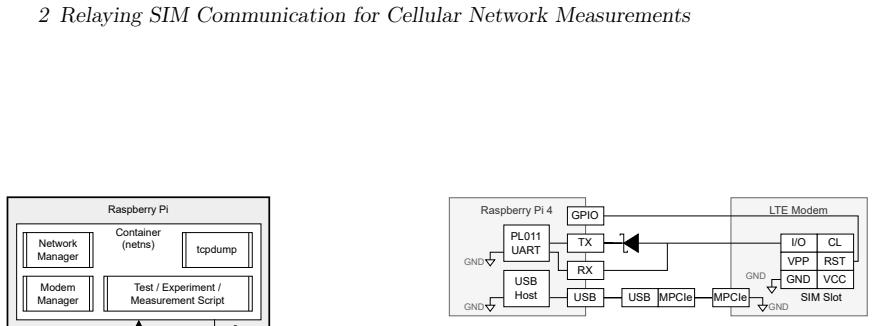
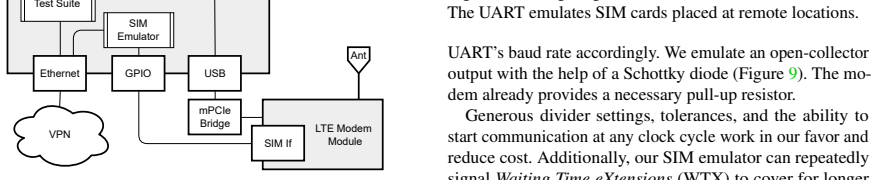
Where Pith is reading between the lines
- Widespread use of these tools could pressure operators to improve transparency on their own.
- The platforms might be extended to test emerging features such as 5G slicing or additional VoWiFi variants.
- Open availability of the code enables community-driven additions for new regions or services.
Load-bearing premise
Independent, scalable measurements can be performed effectively without operator cooperation and will yield reproducible insights into security and privacy.
What would settle it
Deploying the open-sourced platforms in multiple locations and observing that they cannot reliably access or measure the targeted network features, or that results fail to reproduce consistently across trials.
Figures













read the original abstract
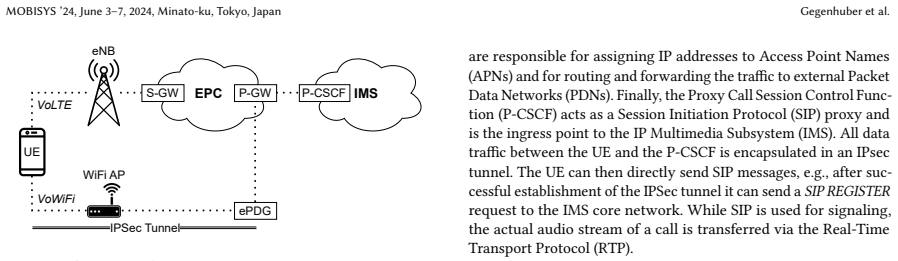
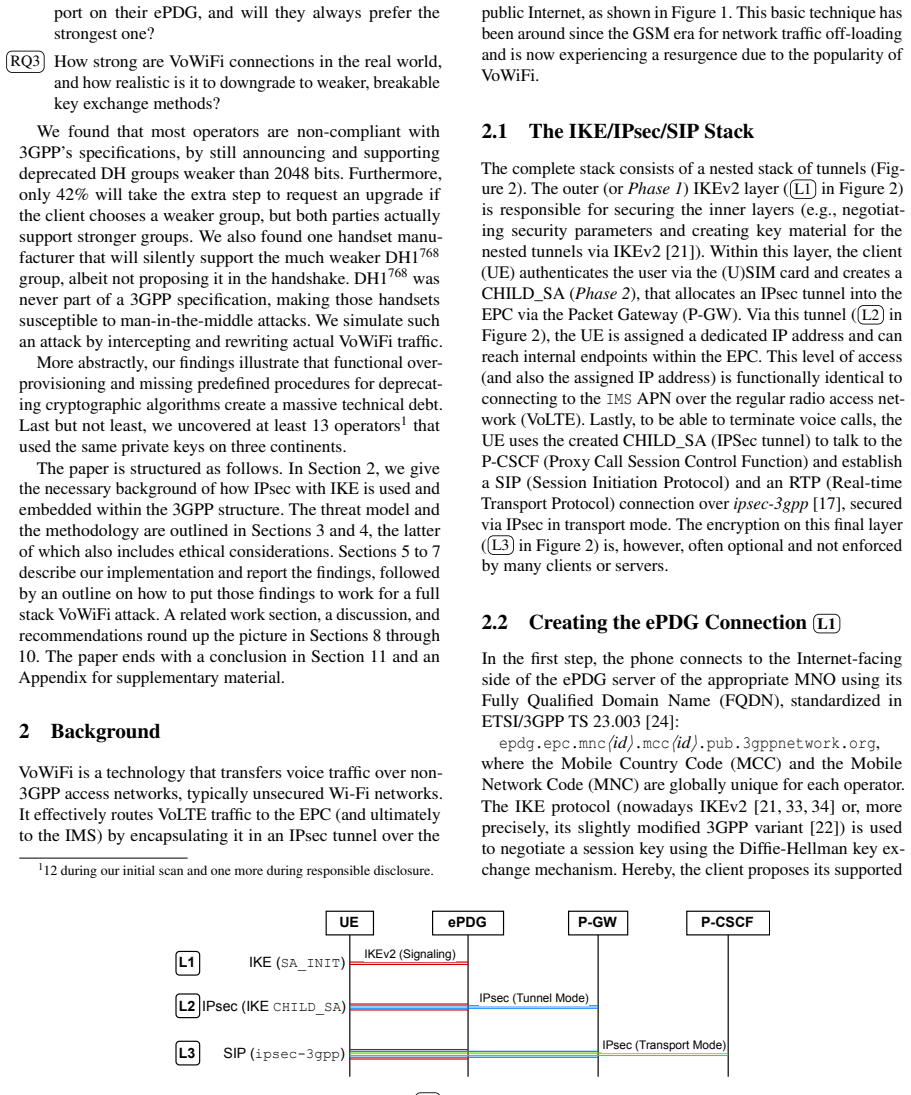
Cellular networks serve as the backbone of global communication, providing critical access to telephony and the Internet, often in regions lacking alternatives. However, the growing complexity of these networks, driven by architectural innovations (e.g., Voice over IP, eSIMs) and commercial dynamics (e.g., roaming, virtual operators, zero-rating), remains poorly understood due to the lack of open, scalable, and geographically diverse measurement tools and independent measurement studies. Moreover, access to mobile networks today is no longer limited to the traditional radio interface. Technologies like Voice-over-WiFi (VoWiFi) offer alternative connectivity paths via third-party Internet infrastructure, extending operator reach into environments with limited cellular coverage. At the same time, over-the-top (OTT) messaging services such as WhatsApp and Signal have become central to modern communication, accounting for a substantial share of global messaging and voice traffic while bypassing traditional operator-controlled channels entirely. This dissertation addresses these challenges by introducing new approaches for independent, scalable, and reproducible measurements of mobile communication systems without requiring cooperation from network or platform operators. We design, implement, and open-source measurement platforms that enable controlled experiments across cellular radio networks, operator-provided services, and OTT messaging applications.
Editorial analysis
A structured set of objections, weighed in public.
Referee Report
Summary. The manuscript claims that the growing complexity of cellular networks (driven by VoIP, eSIMs, roaming, VoWiFi, and OTT services such as WhatsApp and Signal) is poorly understood due to the absence of open, scalable measurement tools. It addresses this by designing, implementing, and open-sourcing measurement platforms that enable independent, controlled, scalable, and reproducible experiments on cellular radio networks, operator-provided services, and OTT messaging applications without requiring cooperation from network or platform operators.
Significance. If the platforms deliver the claimed controlled experiments and reproducible insights, the work would be significant for the field of mobile network measurement. It would lower barriers to independent research on security and privacy in an increasingly centralized ecosystem, complementing operator-internal studies with geographically diverse, open data. The explicit open-sourcing of the platforms is a concrete strength that supports community validation and extension.
major comments (2)
- [Abstract and experimental evaluation sections] The central claim that the platforms 'enable controlled experiments' across cellular radio networks rests on the unverified assumption that cellular variability (signal strength, cell load, roaming state, eSIM provisioning, VoWiFi handoff) can be isolated without operator cooperation. No quantitative reproducibility metrics (e.g., variance across repeated trials, operators, or locations) are referenced to substantiate this; this is load-bearing for the reproducibility and scalability assertions.
- [Methods and evaluation chapters] The manuscript does not appear to include statistical controls or instrumentation details that would allow isolation of operator-specific behaviors from environmental confounders. Without such controls, the assertion that measurements are 'controlled' and yield reproducible security/privacy insights cannot be evaluated.
minor comments (2)
- [Introduction] Clarify the exact scope of 'OTT messaging applications' covered and whether the platforms include any baseline comparisons against existing tools (e.g., prior cellular measurement frameworks).
- [Software release section] Ensure all open-sourced components are accompanied by build instructions and example datasets so that independent reproduction is immediately feasible.
Simulated Author's Rebuttal
We thank the referee for the constructive feedback and the recommendation for major revision. The comments highlight important areas where we can strengthen the presentation of our measurement platforms' capabilities for controlled and reproducible experiments. We address each major comment below and describe the planned revisions.
read point-by-point responses
-
Referee: [Abstract and experimental evaluation sections] The central claim that the platforms 'enable controlled experiments' across cellular radio networks rests on the unverified assumption that cellular variability (signal strength, cell load, roaming state, eSIM provisioning, VoWiFi handoff) can be isolated without operator cooperation. No quantitative reproducibility metrics (e.g., variance across repeated trials, operators, or locations) are referenced to substantiate this; this is load-bearing for the reproducibility and scalability assertions.
Authors: We agree that the current manuscript does not include quantitative reproducibility metrics such as variance across repeated trials. The platforms enable controlled experiments primarily through open-source scripting of device configurations, automated test execution, and detailed state logging (e.g., signal strength and roaming indicators), which standardize the measurement process across runs. In the revised manuscript, we will add a new subsection in the evaluation chapter presenting results from repeated trials, including standard deviations and comparisons across locations and operators. We will also explicitly discuss the limitations of isolating variables like cell load without operator cooperation, clarifying that the tools support reproducible methodology rather than perfect environmental isolation. revision: yes
-
Referee: [Methods and evaluation chapters] The manuscript does not appear to include statistical controls or instrumentation details that would allow isolation of operator-specific behaviors from environmental confounders. Without such controls, the assertion that measurements are 'controlled' and yield reproducible security/privacy insights cannot be evaluated.
Authors: The methods chapter currently describes the core instrumentation, including APIs for network state capture and logging mechanisms. To address this, we will expand it with additional details on how we mitigate confounders, such as repeating experiments at varied times of day, using multiple device models, and logging environmental variables for post-hoc analysis. We will also include a discussion of statistical controls employed in the presented case studies. These additions will allow readers to better evaluate the degree of control and reproducibility achievable with the platforms. revision: yes
Circularity Check
No circularity: tool-building paper with no derivations or self-referential reductions
full rationale
The paper's core contribution is the design, implementation, and open-sourcing of measurement platforms for cellular networks, operator services, and OTT apps, enabling independent experiments without operator cooperation. No equations, fitted parameters, predictions, or derivation chains appear in the provided text. The claims are empirical and implementation-focused rather than mathematical, so no step reduces to its own inputs by construction, self-citation, or renaming. External validation is possible via the released platforms and experiments, keeping the work self-contained.
Axiom & Free-Parameter Ledger
Lean theorems connected to this paper
-
IndisputableMonolith/Foundation/RealityFromDistinction.leanreality_from_one_distinction unclear?
unclearRelation between the paper passage and the cited Recognition theorem.
We design, implement, and open-source measurement platforms that enable controlled experiments across cellular radio networks, operator-provided services, and OTT messaging applications.
-
IndisputableMonolith/Cost/FunctionalEquation.leanwashburn_uniqueness_aczel unclear?
unclearRelation between the paper passage and the cited Recognition theorem.
MobileAtlas: Geographically Decoupled Measurements in Cellular Networks
What do these tags mean?
- matches
- The paper's claim is directly supported by a theorem in the formal canon.
- supports
- The theorem supports part of the paper's argument, but the paper may add assumptions or extra steps.
- extends
- The paper goes beyond the formal theorem; the theorem is a base layer rather than the whole result.
- uses
- The paper appears to rely on the theorem as machinery.
- contradicts
- The paper's claim conflicts with a theorem or certificate in the canon.
- unclear
- Pith found a possible connection, but the passage is too broad, indirect, or ambiguous to say the theorem truly supports the claim.
Reference graph
Works this paper leans on
-
[1]
Global Network Interference Detection Over the RIPE Atlas Network
Collin Anderson, Philipp Winter, and Roya. Global Network Interference Detection Over the RIPE Atlas Network . In Workshop on Free and Open Communications on the Internet (FOCI) , 2014
work page 2014
-
[2]
Bluetooth SIM Access Profile Specification . Technical report, 3GPP, 2003
work page 2003
-
[3]
Gabriel K. Gegenhuber. Security and Privacy Measurements in Cellular Networks: Novel Approaches in a Global Roaming Context . In 32nd ACM Conference on Computer and Communications Security (CCS) , 2025
work page 2025
-
[4]
Gabriel K. Gegenhuber and Philipp \'E . Frenzel. Scanywhere: Distributed Internet Scanning Leveraging Commercial VPN Subscriptions . In 9th Network Traffic Measurement and Analysis Conference (TMA) , 2025
work page 2025
-
[5]
Gabriel K. Gegenhuber, Philipp \'E . Frenzel, and Adrian Dabrowski. SIMulator: SIM Tracing on a (Pico-)Budget . In 18th ACM Conference on Security and Privacy in Wireless and Mobile Networks (WiSec) , 2025
work page 2025
-
[6]
Gabriel K. Gegenhuber, Philipp \'E . Frenzel, Maximilian G \"u nther, Johanna Ullrich, and Aljosha Judmayer. Hey there! You are using WhatsApp: Enumerating Three Billion Accounts for Security and Privacy . In 33rd Annual Network and Distributed System Security Symposium (NDSS) , 2026
work page 2026
-
[7]
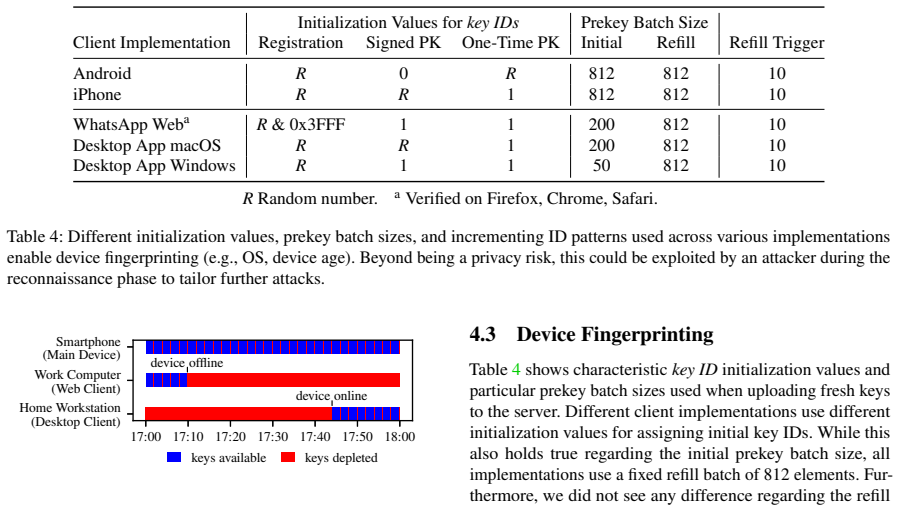
Gabriel K. Gegenhuber, Philipp \'E . Frenzel, Maximilian G \"u nther, and Aljosha Judmayer. Prekey Pogo: Investigating Security and Privacy Issues in WhatsApp's Handshake Mechanism . In 19th USENIX WOOT Conference on Offensive Technologies (WOOT) , 2025
work page 2025
-
[8]
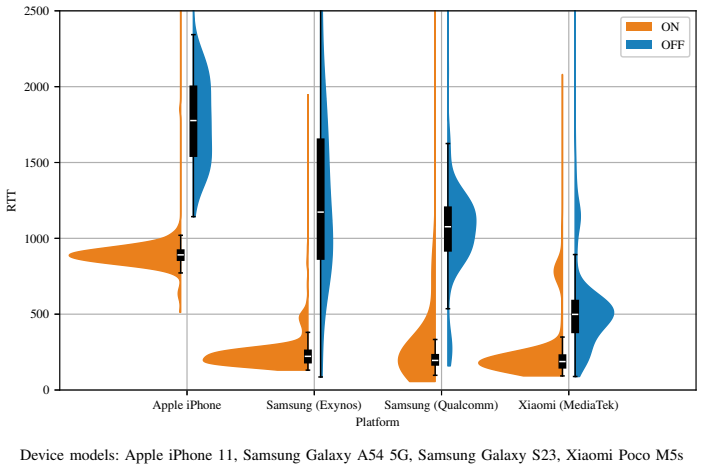
Gabriel K. Gegenhuber, Philipp \'E . Frenzel, and Edgar Weippl. Never Gonna Give You Up: Exploring Deprecated NULL Ciphers in Commercial VoWiFi Deployments . In 17th ACM Conference on Security and Privacy in Wireless and Mobile Networks (WiSec) , 2024
work page 2024
-
[9]
Gabriel K. Gegenhuber, Philipp É. Frenzel, and Edgar Weippl. Why E.T. Can't Phone Home: A Global View on IP-based Geoblocking at VoWiFi . In Proceedings of the 22nd Annual International Conference on Mobile Systems, Applications, and Services (MobiSys 2024) , 2024
work page 2024
-
[10]
Gegenhuber, Maximilian G \"u nther, Markus Maier, Aljosha Judmayer, Florian Holzbauer, Philipp \'E
Gabriel K. Gegenhuber, Maximilian G \"u nther, Markus Maier, Aljosha Judmayer, Florian Holzbauer, Philipp \'E . Frenzel, and Johanna Ullrich. Careless Whisper: Exploiting Silent Delivery Receipts to Monitor Users on Mobile Instant Messengers . In 28th International Symposium on Research in Attacks, Intrusions and Defenses (RAID) , 2025
work page 2025
-
[11]
Gegenhuber, Florian Holzbauer, Philipp \'E
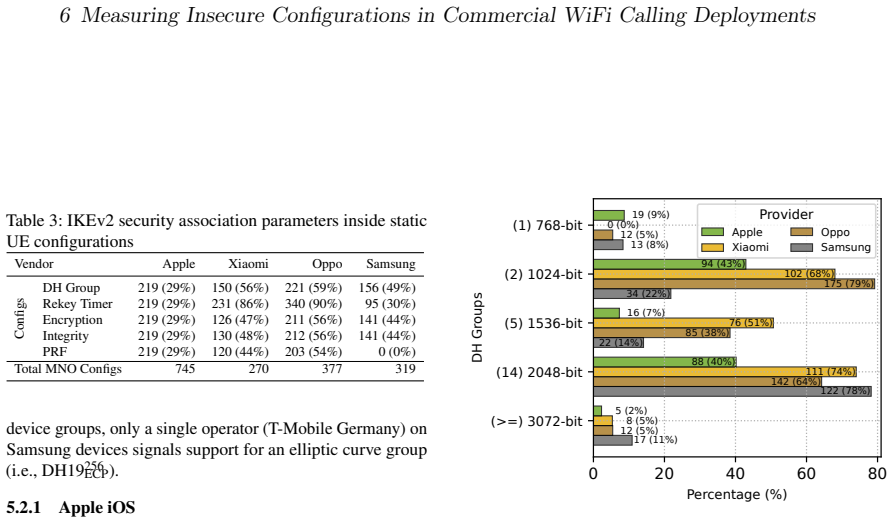
Gabriel K. Gegenhuber, Florian Holzbauer, Philipp \'E . Frenzel, Edgar Weippl, and Adrian Dabrowski. Diffie-Hellman Picture Show: Key Exchange Stories from Commercial VoWiFi Deployments . In 33rd USENIX Security Symposium (USENIX Security) , 2024
work page 2024
-
[12]
Gegenhuber, Leonid Liadveikin, Florian Holzbauer, and Sebastian Strobl
Gabriel K. Gegenhuber, Leonid Liadveikin, Florian Holzbauer, and Sebastian Strobl. A Relay a Day Keeps the AirTag Away: Practical Relay Attacks on Apple's AirTags . In 41st Annual Computer Security Applications Conference (ACSAC) , 2025
work page 2025
-
[13]
Gabriel K. Gegenhuber, Markus Maier, Florian Holzbauer, Wilfried Mayer, Georg Merzdovnik, Edgar Weippl, and Johanna Ullrich. An extended view on measuring tor as-level adversaries . Computers & Security , 132:103302, 2023
work page 2023
-
[14]
Gegenhuber, Wilfried Mayer, and Edgar Weippl
Gabriel K. Gegenhuber, Wilfried Mayer, and Edgar Weippl. Zero-Rating, One Big Mess: Analyzing Differential Pricing Practices of European MNOs . In IEEE Global Communications Conference (GLOBECOM) , 2022
work page 2022
-
[15]
Gegenhuber, Wilfried Mayer, Edgar Weippl, and Adrian Dabrowski
Gabriel K. Gegenhuber, Wilfried Mayer, Edgar Weippl, and Adrian Dabrowski. MobileAtlas: Geographically Decoupled Measurements in Cellular Networks for Security and Privacy Research . In 32nd USENIX Security Symposium (USENIX Security) , 2023
work page 2023
-
[16]
Not that Simple: Email Delivery in the 21st Century
Florian Holzbauer, Johanna Ullrich, Martina Lindorfer, and Tobias Fiebig. Not that Simple: Email Delivery in the 21st Century . In USENIX Annual Technical Conference (USENIX ATC) , 2022
work page 2022
-
[17]
Standard, International Organization for Standardization, Geneva, CH, November 2006
ISO/IEC 7816-3:2006 - Identification cards — Integrated circuit cards — Part 3: Cards with contacts — Electrical interface and transmission protocols . Standard, International Organization for Standardization, Geneva, CH, November 2006
work page 2006
-
[18]
RIPE Atlas: A Global Internet Measurement Network
RIPE NCC Staff . RIPE Atlas: A Global Internet Measurement Network . Internet Protocol Journal , 18(3), 2015
work page 2015
-
[19]
The State of Mobile Internet Connectivity 2024
Matthew Shanahan and Kalvin Bahia. The State of Mobile Internet Connectivity 2024 . Technical report, GSM Association, 2024
work page 2024
discussion (0)
Sign in with ORCID, Apple, or X to comment. Anyone can read and Pith papers without signing in.