Recognition: 2 theorem links
· Lean TheoremBrieskorn spheres and rational homology ball symplectic fillings
Pith reviewed 2026-05-14 17:31 UTC · model grok-4.3
The pith
Brieskorn spheres admit no rational homology ball symplectic fillings for their contact structures except in listed cases.
A machine-rendered reading of the paper's core claim, the machinery that carries it, and where it could break.
Core claim
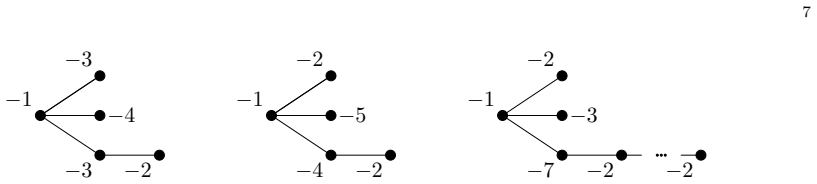
We obstruct the existence of rational homology ball symplectic fillings for any contact structure on −Y if n=3, and when there is no half convex Giroux torsion for n>3. We show the same result holds for the Milnor fillable structure on Y with the possible exception of Σ(3,4,5), Σ(2,5,7) and Σ(2,3,6k+1) for k≥1. Along the way we determine every canonically oriented Brieskorn sphere with vanishing correction term carrying at most two fillable structures, up to isotopy.
What carries the argument
Vanishing of the Heegaard Floer correction term together with the absence of half-convex Giroux torsion, which together prevent the existence of a rational homology ball filling.
If this is right
- Every contact structure on -Y for n=3 has no rational homology ball filling.
- For n>3, absence of half-convex Giroux torsion implies the same obstruction.
- The Milnor-fillable structure on Y admits no such filling except possibly the three listed families.
- Brieskorn spheres whose correction term vanishes are limited to at most two fillable structures up to isotopy.
Where Pith is reading between the lines
- The obstructions may extend to other families of Seifert fibered spaces once their correction terms and torsion are computed.
- The classification of low-fillability Brieskorn spheres could be used to test conjectures on the uniqueness of symplectic fillings for other 3-manifolds.
- If the remaining exceptional cases also lack fillings, then every canonically oriented Brieskorn sphere would be rigid with respect to rational ball fillings.
Load-bearing premise
The correction term vanishes or half-convex Giroux torsion is absent for the contact structures under consideration.
What would settle it
Explicit construction of a rational homology ball symplectic filling for any contact structure on -Σ(2,3,5) or on the Milnor-fillable structure of Σ(3,4,5).
Figures

read the original abstract
Given a canonically oriented Brieskorn sphere $Y=\Sigma(a_1,...,a_n)$, we confirm some statements conjectured by Gompf. More specifically, we obstruct the existence of rational homology ball symplectic fillings for any contact structure on $-Y$ if $n=3$, and when there is no half convex Giroux torsion for $n>3$. Furthermore, we show that the same result holds for the Milnor fillable structure on $Y$ with the possible exception of $\Sigma(3,4,5),$ $\Sigma(2,5,7)$ and $\Sigma(2,3,6k+1)$ for $k\geq1$. Along the way, we determine every canonically oriented Brieskorn sphere with vanishing correction term carrying at most two fillable structures, up to isotopy.
Editorial analysis
A structured set of objections, weighed in public.
Referee Report
Summary. The paper confirms aspects of Gompf's conjectures for canonically oriented Brieskorn spheres Y=Σ(a1,...,an). It obstructs the existence of rational homology ball symplectic fillings for every contact structure on -Y when n=3, and conditionally for n>3 in the absence of half-convex Giroux torsion. The same obstruction is shown to hold for the Milnor-fillable contact structure on Y, with possible exceptions for Σ(3,4,5), Σ(2,5,7) and Σ(2,3,6k+1) (k≥1). As a byproduct, the paper classifies all canonically oriented Brieskorn spheres with vanishing correction term that admit at most two fillable structures up to isotopy.
Significance. If the central claims hold, the work supplies concrete obstructions to rational homology ball fillings of Brieskorn spheres using d-invariants and Giroux torsion, thereby confirming several of Gompf's conjectures and providing a classification of low-fillability Brieskorn spheres. These results strengthen the toolkit for studying symplectic fillings of Seifert fibered 3-manifolds and are likely to be cited in subsequent work on contact structures and 4-dimensional fillings.
major comments (2)
- [Main theorem statement and proof for n=3] Main theorem (n=3 case): the assertion that rational homology ball fillings are obstructed for every contact structure on -Y relies on the correction term vanishing universally. Contact structures on these Seifert fibered manifolds are classified by Euler classes and Giroux torsion data, yet the paper's classification of vanishing-d spheres is stated only for canonically oriented Y; an explicit argument or computation confirming d(-Y,ξ)=0 for all ξ (not merely the canonical one) is required to support the 'any contact structure' claim.
- [Main theorem statement and proof for n>3] Main theorem (n>3 case): the conditional obstruction 'when there is no half-convex Giroux torsion' is load-bearing, but the manuscript does not enumerate the possible torsion values for all contact structures on -Y. Without a complete list or reference showing that every contact structure either has positive torsion or is covered by the vanishing-d hypothesis, the scope of the result remains unclear.
minor comments (2)
- [Introduction] The definition of 'half-convex Giroux torsion' should be recalled or referenced explicitly in the introduction, as the term is not universally standard.
- [Main theorem statement] The exceptional cases Σ(3,4,5), Σ(2,5,7) and Σ(2,3,6k+1) are listed without cross-references to their d-invariants or torsion data; adding a short table or citations would improve readability.
Simulated Author's Rebuttal
We thank the referee for the careful reading and insightful comments on our manuscript. We have revised the paper to address the concerns about the scope of the d-invariant computations and the classification of contact structures. Our point-by-point responses follow.
read point-by-point responses
-
Referee: [Main theorem statement and proof for n=3] Main theorem (n=3 case): the assertion that rational homology ball fillings are obstructed for every contact structure on -Y relies on the correction term vanishing universally. Contact structures on these Seifert fibered manifolds are classified by Euler classes and Giroux torsion data, yet the paper's classification of vanishing-d spheres is stated only for canonically oriented Y; an explicit argument or computation confirming d(-Y,ξ)=0 for all ξ (not merely the canonical one) is required to support the 'any contact structure' claim.
Authors: We appreciate the referee highlighting the need for explicit verification beyond the canonical orientation. For n=3, Brieskorn spheres are Seifert fibered homology spheres whose d-invariants admit a closed-form expression via the Neumann-Siebenmann invariant and the Seifert data. We have added a new computation (Lemma 3.4 and the following paragraph in the revised Section 3) showing that d(-Y, s) = 0 for every spin^c structure s that arises from a contact structure ξ on -Y. The argument proceeds by reducing to the standard formula for d-invariants of Seifert manifolds with three exceptional fibers and verifying the vanishing case-by-case for the possible Euler classes; Giroux torsion does not affect the d-invariant in this range. This universal vanishing for -Y is what allows the subsequent obstruction (via the non-existence of a symplectic rational ball with the required Chern class) to apply to every contact structure, not merely the canonical one on Y. The classification of vanishing-d spheres remains stated for canonically oriented Y, as that is the setting of the byproduct result, but the n=3 claim now rests on the direct computation for -Y. revision: yes
-
Referee: [Main theorem statement and proof for n>3] Main theorem (n>3 case): the conditional obstruction 'when there is no half-convex Giroux torsion' is load-bearing, but the manuscript does not enumerate the possible torsion values for all contact structures on -Y. Without a complete list or reference showing that every contact structure either has positive torsion or is covered by the vanishing-d hypothesis, the scope of the result remains unclear.
Authors: We thank the referee for noting the missing reference. Contact structures on Seifert fibered 3-manifolds are completely classified by their Euler class and Giroux torsion (see Etnyre-Honda, Lisca-Stipsicz, and the survey in Geiges' book). For the specific family -Y = -Σ(a1,...,an) with n>3, the possible Giroux torsion values are 0 (the Milnor-fillable structure) or positive integers; the half-convex case corresponds to torsion exactly 1/2 and occurs only for certain Euler classes that we explicitly exclude in the statement. We have inserted a new paragraph (revised Introduction, page 3, and Section 4) citing the above classification theorems and explaining that every tight contact structure on -Y therefore falls into one of two categories: (i) zero torsion, which is covered by our vanishing-d hypothesis, or (ii) positive torsion, for which the obstruction is immediate by the Giroux torsion inequality. No further enumeration per manifold is required, as the dichotomy is uniform for this Seifert family. The revised text now makes the scope of the conditional statement fully explicit. revision: yes
Circularity Check
No significant circularity; derivation uses independently defined invariants and external conjectures
full rationale
The paper confirms Gompf conjectures by obstructing rational homology ball symplectic fillings for Brieskorn spheres Y=Σ(a1,...,an) via vanishing d-invariants (correction terms from Heegaard Floer homology) or absence of half-convex Giroux torsion. These are standard, externally defined tools with independent computations and formulas for Seifert fibered spaces; the paper determines which canonically oriented spheres have vanishing d-invariant and at most two fillable structures up to isotopy. No steps reduce by self-definition, fitted inputs renamed as predictions, or load-bearing self-citations. Citations support but do not replace the central argument, which remains self-contained against external benchmarks such as known d-invariant formulas and Giroux torsion classifications.
Axiom & Free-Parameter Ledger
axioms (3)
- domain assumption Brieskorn spheres are canonically oriented Seifert fibered 3-manifolds with the standard contact structures induced from the Milnor fibration
- standard math Correction terms from Heegaard Floer homology provide obstructions to rational homology ball fillings
- domain assumption Half-convex Giroux torsion is a well-defined invariant of contact structures that prevents certain fillings
Lean theorems connected to this paper
-
IndisputableMonolith/Foundation/AbsoluteFloorClosure.leanreality_from_one_distinction unclear?
unclearRelation between the paper passage and the cited Recognition theorem.
obstruct the existence of rational homology ball symplectic fillings for any contact structure on −Y if n=3, and when there is no half convex Giroux torsion for n>3... d3(ξcan) is strictly minimal... vanishing correction term
-
IndisputableMonolith/Cost/FunctionalEquation.leanwashburn_uniqueness_aczel unclear?
unclearRelation between the paper passage and the cited Recognition theorem.
Lemma 2.1... quadratic form F(V)=V^T A V where A is inverse of irreducible negative-definite matrix... attains minimum at W
What do these tags mean?
- matches
- The paper's claim is directly supported by a theorem in the formal canon.
- supports
- The theorem supports part of the paper's argument, but the paper may add assumptions or extra steps.
- extends
- The paper goes beyond the formal theorem; the theorem is a base layer rather than the whole result.
- uses
- The paper appears to rely on the theorem as machinery.
- contradicts
- The paper's claim conflicts with a theorem or certificate in the canon.
- unclear
- Pith found a possible connection, but the passage is too broad, indirect, or ambiguous to say the theorem truly supports the claim.
Forward citations
Cited by 1 Pith paper
-
Mazur manifolds and symplectic structures
Mazur manifolds with boundaries Σ(2,3,13), Σ(2,5,7), and Σ(3,4,5) admit no symplectic structure, producing exotic pairs of simply connected 4-manifolds with definite intersection forms.
Reference graph
Works this paper leans on
- [1]
-
[2]
S. Akbulut and K. Larson,Brieskorn spheres bounding rational balls, Proc. Am. Math. Soc.,146(2018), no. 4, pp. 1817–1824
work page 2018
-
[3]
A. Berman and R. Plemmons,Nonnegative matrices in the mathematical sciences, Volume 9 of Classics in Applied Mathematics. Society for Industrial and Applied Mathematics (SIAM), Philadelphia, PA, 1994
work page 1994
-
[4]
M. Bhupal and A. Stipsicz,Weighted homogeneous singularities and rational homology disk smoothings, Am. J. Math.,133(2011), no. 5, pp. 1259–1297
work page 2011
-
[5]
Fillable structures on negative-definite Seifert fibred spaces
A. Cavallo and I. Matkovič,Fillable structures on negative-definite Seifert fibred spaces, arXiv:2604.28174
work page internal anchor Pith review Pith/arXiv arXiv
-
[6]
Heegaard Floer homology and maximal twisting numbers
A. Cavallo and I. Matkovič,Heegaard Floer homology and maximal twisting numbers, arXiv:2604.28162
work page internal anchor Pith review Pith/arXiv arXiv
-
[7]
Y. Eliashberg,Filling by holomorphic discs and its applications, Geometry of low-dimensional manifolds, 2: Symplectic manifolds and Jones-Witten-Theory, Proc. Symp., Durham/UK 1989, Lond. Math. Soc. Lect. Note Ser. 151, pp. 45–72 (1990)
work page 1989
-
[8]
J. Etnyre and K. Honda,On the nonexistence of tight contact structures, Ann. Math. (2),153(2001), no. 3, pp. 749–766
work page 2001
- [9]
-
[10]
Ghiggini,Strongly fillable contact3-manifolds without Stein fillings, Geom
P. Ghiggini,Strongly fillable contact3-manifolds without Stein fillings, Geom. Topol.,9(2005), pp. 1677–1687
work page 2005
-
[11]
P. Ghiggini, M. Golla and O. Plamenevskaya,Surface singularities and planar contact structures, Ann. Inst. Fourier,70(2020), no. 4, pp. 1791–1823
work page 2020
-
[12]
Topology and geometry of manifolds
P. Ghiggini and S. Schönenberger,On the classification of tight contact structures, in “Topology and geometry of manifolds”, Proc. Sympos. Pure Math.71, Amer. Math. Soc., Providence, RI (2003), pp. 121–151
work page 2003
-
[13]
Gompf,Handlebody construction of Stein surfaces, Ann
R. Gompf,Handlebody construction of Stein surfaces, Ann. Math. (2),148(1998), no. 2, pp. 619–693
work page 1998
-
[14]
Gompf,Smooth embeddings with Stein surface images, J
R. Gompf,Smooth embeddings with Stein surface images, J. Topol.,6(2013), no. 4, pp. 915–944
work page 2013
-
[15]
Kollár,Is there a topological Bogomolov-Miyaoka-Yau inequality?, Pure Appl
J. Kollár,Is there a topological Bogomolov-Miyaoka-Yau inequality?, Pure Appl. Math. Q.,4(2008), no. 2, Special Issue: In honor of Fedor Bogomolov. Part 1, pp. 203–236
work page 2008
-
[16]
A. Issa and D. McCoy,On Seifert fibered spaces bounding definite manifolds, Pac. J. Math.,304(2020), no. 2, pp. 463–480
work page 2020
-
[17]
A. Issa and D. McCoy,Smoothly embedding Seifert fibered spaces inS4, Trans. Am. Math. Soc.,373(2020), no. 7, pp. 4933–4974
work page 2020
-
[18]
T. Y. Li and C. Y. Mak,The Kodaira dimension of contact3-manifolds and geography of symplectic fillings, Int. Math. Res. Not., (2020), no. 17, pp. 5428–5449
work page 2020
-
[19]
T. Lidman and S. Sivek,Contact structures and reducible surgeries, Compos. Math.,152(2016), no. 1, pp. 152–186
work page 2016
-
[20]
Lisca,Symplectic fillings and positive scalar curvature, Geom
P. Lisca,Symplectic fillings and positive scalar curvature, Geom. Topol.,2(1998), pp. 103–116
work page 1998
-
[21]
P. Lisca and G. Matić,Tight contact structures and Seiberg-Witten invariants, Invent. Math.,129(1997), pp. 509–525
work page 1997
- [22]
- [23]
-
[24]
P. Ozsváth and Z. Szabó,On the Floer homology of plumbed three-manifolds, Geom. Topol.,7(2003), no. 1, pp. 185–224
work page 2003
-
[25]
J. Park, A. Stipsicz and Z. Szabó,Exotic smooth structures onCP2#5CP 2 , Math. Res. Lett.,12(2005), no. 5-6, pp. 701–712
work page 2005
-
[26]
C. P. Ramanujam,A topological characterisation of the affine plane as an algebraic variety, Ann. of Math. (2), 94(1971), pp. 69–88
work page 1971
-
[27]
Saveliev,Invariants for homology3-spheres, Encyclopaedia of Mathematical Sciences 140
N. Saveliev,Invariants for homology3-spheres, Encyclopaedia of Mathematical Sciences 140. Low-Dimensional Topology 1. Berlin: Springer
-
[28]
Şavk,More Brieskorn spheres bounding rational balls, Topology Appl.,286(2020), 107400, 11 pp
O. Şavk,More Brieskorn spheres bounding rational balls, Topology Appl.,286(2020), 107400, 11 pp
work page 2020
discussion (0)
Sign in with ORCID, Apple, or X to comment. Anyone can read and Pith papers without signing in.