Some Essential Constructive Foundations for Systems and Control
Pith reviewed 2026-06-27 17:47 UTC · model grok-4.3
The pith
Existence claims for trajectories, controls, and solutions must include finite data and approximation operations to carry computational meaning.
A machine-rendered reading of the paper's core claim, the machinery that carries it, and where it could break.
Core claim
By beginning with blocks, multiblocks, representable sets, regular functions, and certified integrals in finite-dimensional Euclidean spaces and developing a set-first integration route, constructive counterparts are obtained for the functional extremum-value theorem, selector extraction for multifunctions, Filippov-type and viable solutions of differential inclusions, regular probability densities, controlled Markov chains, and empirical density certificates.
What carries the argument
The set-first integration route from blocks, multiblocks, representable sets, regular functions, and certified integrals that renders computational content explicit in existential statements.
If this is right
- The functional extremum-value theorem supplies finite data and an approximation operation.
- Selector extraction for multifunctions yields procedures that approximate selectors to any precision.
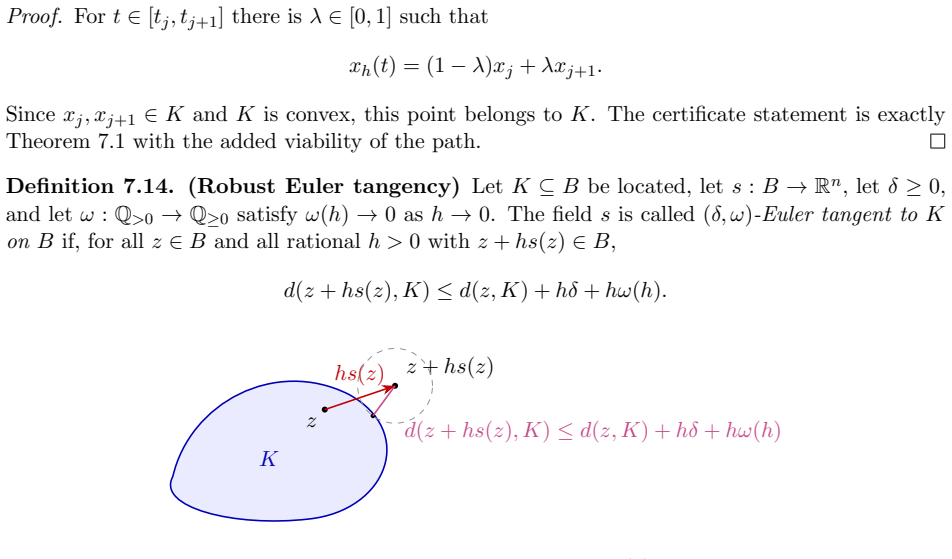
- Filippov-type and viable solutions of differential inclusions come with finite data for computation.
- Regular probability densities and empirical density certificates are constructively verifiable.
- Controlled Markov chains admit constructive properties with explicit computational content.
Where Pith is reading between the lines
- The finite-dimensional base could be checked on concrete low-dimensional control examples to confirm that the approximation operations remain effective.
- The same geometric starting point might support constructive versions of related results such as reachability or stability certificates.
- Empirical density certificates could be combined with sampling-based methods to produce certified statistical bounds.
Load-bearing premise
The set-first integration route developed from elementary geometric data in finite-dimensional Euclidean spaces can be applied to produce constructive versions of the functional extremum-value theorem, selector extraction, Filippov-type solutions, viable solutions, and the applications to Markov chains and densities.
What would settle it
Demonstrating that at least one of the listed results, such as viable solutions of differential inclusions, admits no finite data set together with an operation that computes approximations to arbitrary precision when built from the geometric constructs and integration route.
Figures





read the original abstract
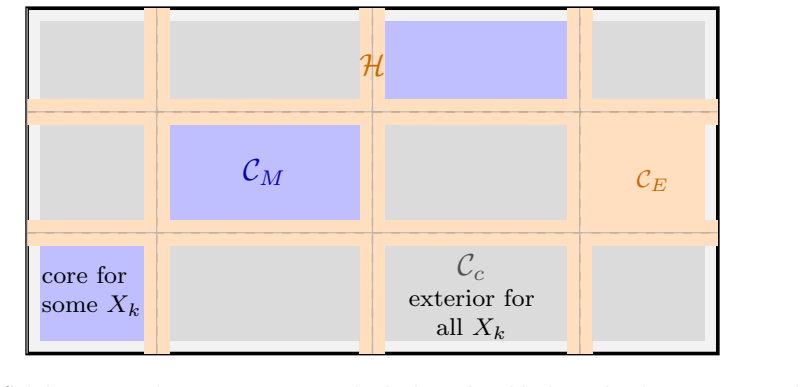
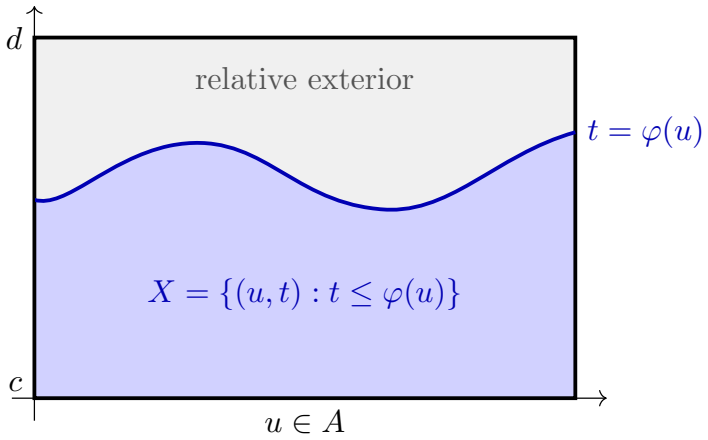
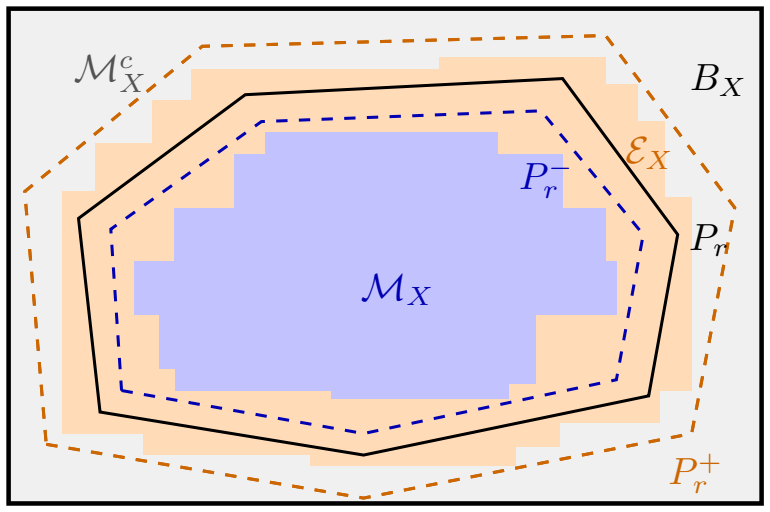
This work develops several constructive foundations for systems and control within Bishop-style constructive mathematics. For an engineer, the guiding principle is that an object claimed to exist, such as a trajectory, an optimal control law, a selector, or a viable solution, should come with finite data and an operation computing approximations to any prescribed precision. The style remains close to classical analysis, but existential statements are organized so that their computational content is visible. The paper begins with elementary geometric data in finite-dimensional Euclidean spaces: blocks, multiblocks, representable sets, regular functions, and certified integrals. This set-first integration route is meant to complement, rather than replace, abstract constructive integration theories such as Daniell-type or integration-space approaches. The developed apparatus is then applied to a constructive functional extremum-value theorem, selector extraction for multifunctions, Filippov-type and viable solutions of differential inclusions, regular probability densities, controlled Markov chains, and empirical density certificates. A short account of resolvent projectors and linear stability is included for completeness.
Editorial analysis
A structured set of objections, weighed in public.
Referee Report
Summary. The paper develops Bishop-style constructive foundations for systems and control. It begins from elementary geometric primitives (blocks, multiblocks, representable sets, regular functions, certified integrals) in finite-dimensional Euclidean spaces and employs a set-first integration route to obtain constructive versions of the functional extremum-value theorem, selector extraction for multifunctions, Filippov-type and viable solutions of differential inclusions, together with applications to regular probability densities, controlled Markov chains, empirical density certificates, resolvent projectors, and linear stability.
Significance. If the constructions are correct, the work supplies explicit finite data and approximation operators for objects whose existence is asserted in control theory, directly addressing the engineering requirement that claimed trajectories, selectors, or viable solutions be accompanied by computable approximations to arbitrary precision. The set-first route complements rather than replaces abstract constructive integration theories and could support more rigorous numerical implementations.
minor comments (1)
- The abstract lists applications but does not name the principal theorems or key lemmas; a one-sentence preview of the main constructive statements would improve readability.
Simulated Author's Rebuttal
We thank the referee for the positive assessment of the manuscript, the recognition of its engineering relevance, and the recommendation to accept. The report accurately captures the set-first constructive route and its intended complementarity with abstract integration theories.
Circularity Check
No significant circularity
full rationale
The paper develops its apparatus from elementary geometric data (blocks, multiblocks, representable sets, regular functions, certified integrals) in finite-dimensional Euclidean spaces and extends this set-first integration route to constructive versions of the extremum-value theorem, selector extraction, Filippov/viable solutions, densities, and Markov chains. No step reduces by definition to its own outputs, no fitted parameters are relabeled as predictions, and no load-bearing premise rests on a self-citation chain. The work is self-contained against external benchmarks in Bishop-style constructive mathematics.
Axiom & Free-Parameter Ledger
Reference graph
Works this paper leans on
-
[1]
and Hunt, Jonathan J
Lillicrap, Timothy P. and Hunt, Jonathan J. and Pritzel, Alexander and Heess, Nicolas and Erez, Tom and Tassa, Yuval and Silver, David and Wierstra, Daan , booktitle =. Continuous control with deep reinforcement learning. , year =
-
[2]
Peter Henderson and Riashat Islam and Philip Bachman and Joelle Pineau and Doina Precup and David Meger , title =. 2019 , archiveprefix =. 1709.06560 , groups =
Pith/arXiv arXiv 2019
-
[3]
International Conference on Learning Representations , year=
Implementation Matters in Deep RL: A Case Study on PPO and TRPO , author=. International Conference on Learning Representations , year=
-
[4]
Hiroki Furuta and Tadashi Kozuno and Tatsuya Matsushima and Yutaka Matsuo and Shixiang Shane Gu , title =. 2021 , archiveprefix =. 2103.17258 , groups =
arXiv 2021
-
[5]
Tom Le Paine and Cosmin Paduraru and Andrea Michi and Caglar Gulcehre and Konrad Zolna and Alexander Novikov and Ziyu Wang and Nando de Freitas , title =. 2020 , archiveprefix =. 2007.09055 , groups =
arXiv 2020
-
[6]
Mengjiao Yang and Bo Dai and Ofir Nachum and George Tucker and Dale Schuurmans , title =. 2020 , archiveprefix =. 2012.06919 , groups =
arXiv 2020
-
[7]
Large Batch Optimization for Deep Learning: Training BERT in 76 minutes , year =
Yang You and Jing Li and Sashank Reddi and Jonathan Hseu and Sanjiv Kumar and Srinadh Bhojanapalli and Xiaodan Song and James Demmel and Kurt Keutzer and Cho-Jui Hsieh , booktitle =. Large Batch Optimization for Deep Learning: Training BERT in 76 minutes , year =
-
[8]
Alexander Nikulin and Vladislav Kurenkov and Denis Tarasov and Dmitry Akimov and Sergey Kolesnikov , title =. 2023 , archiveprefix =. 2211.11092 , groups =
arXiv 2023
-
[9]
Dmitriy Akimov and Vladislav Kurenkov and Alexander Nikulin and Denis Tarasov and Sergey Kolesnikov , title =. 2023 , archiveprefix =. 2211.11096 , groups =
arXiv 2023
-
[10]
Alexander Nikulin and Vladislav Kurenkov and Denis Tarasov and Sergey Kolesnikov , title =. 2023 , archiveprefix =. 2301.13616 , groups =
arXiv 2023
-
[11]
Adversarial robustness against the union of multiple perturbation models , year =
Maini, Pratyush and Wong, Eric and Kolter, Zico , booktitle =. Adversarial robustness against the union of multiple perturbation models , year =
-
[12]
Robustifying reinforcement learning agents via action space adversarial training , year =
Tan, Kai Liang and Esfandiari, Yasaman and Lee, Xian Yeow and Sarkar, Soumik and others , booktitle =. Robustifying reinforcement learning agents via action space adversarial training , year =
-
[13]
Jha, Sumit Kumar and Roy, Sayan Basu and Bhasin, Shubhendu , journal =. Direct Adaptive Optimal Control for Uncertain Continuous-Time LTI Systems Without Persistence of Excitation , year =. doi:10.1109/TCSII.2018.2799625 , groups =
-
[14]
Automatica , title =
Zanon, Mario and Gros, S. Automatica , title =. 2022 , pages =
2022
-
[15]
Safe intermittent reinforcement learning with static and dynamic event generators , year =
Yang, Yongliang and Vamvoudakis, Kyriakos G and Modares, Hamidreza and Yin, Yixin and Wunsch, Donald C , journal =. Safe intermittent reinforcement learning with static and dynamic event generators , year =
-
[16]
Safe Reinforcement Learning-Based Robust Approximate Optimal Control for Hypersonic Flight Vehicles , year =
Shi, Lei and Wang, Xuesong and Cheng, Yuhu , journal =. Safe Reinforcement Learning-Based Robust Approximate Optimal Control for Hypersonic Flight Vehicles , year =
-
[17]
The divergence of reinforcement learning algorithms with value-iteration and function approximation , year =
Fairbank, Michael and Alonso, Eduardo , booktitle =. The divergence of reinforcement learning algorithms with value-iteration and function approximation , year =
-
[18]
Luca Gualtieri and Erwin Rauch and Renato Vidoni , journal =. Development and validation of guidelines for safety in human-robot collaborative assembly systems , year =. doi:10.1016/j.cie.2021.107801 , groups =
-
[19]
Provably global convergence of actor-critic: A case for linear quadratic regulator with ergodic cost , year =
Yang, Zhuoran and Chen, Yongxin and Hong, Mingyi and Wang, Zhaoran , booktitle =. Provably global convergence of actor-critic: A case for linear quadratic regulator with ergodic cost , year =
-
[20]
Concrete Problems in AI Safety , year =
Dario Amodei and Chris Olah and Jacob Steinhardt and Paul Christiano and John Schulman and Dan Mané , journal =. Concrete Problems in AI Safety , year =
-
[21]
Wei, Qinglai and Song, Ruizhuo and Liao, Zehua and Li, Benkai and Lewis, Frank L. , journal =. Discrete-Time Impulsive Adaptive Dynamic Programming , year =. doi:10.1109/TCYB.2019.2906694 , groups =
-
[22]
Su, Hanguang and Zhang, Huaguang and Jiang, He and Wen, Yinlei , journal =. Decentralized Event-Triggered Adaptive Control of Discrete-Time Nonzero-Sum Games Over Wireless Sensor-Actuator Networks With Input Constraints , year =. doi:10.1109/TNNLS.2019.2953613 , groups =
-
[23]
Zhang, Huaguang and Zhang, Kun and Xiao, Geyang and Jiang, He , journal =. Robust Optimal Control Scheme for Unknown Constrained-Input Nonlinear Systems via a Plug-n-Play Event-Sampled Critic-Only Algorithm , year =. doi:10.1109/TSMC.2018.2889377 , groups =
-
[24]
Jha, Sumit Kumar and Roy, Sayan Basu and Bhasin, Shubhendu , journal =. Initial Excitation-Based Iterative Algorithm for Approximate Optimal Control of Completely Unknown LTI Systems , year =. doi:10.1109/TAC.2019.2912828 , groups =
-
[25]
Kontoudis, George P. and Vamvoudakis, Kyriakos G. , journal =. Kinodynamic Motion Planning With Continuous-Time Q-Learning: An Online, Model-Free, and Safe Navigation Framework , year =. doi:10.1109/TNNLS.2019.2899311 , groups =
-
[26]
Machine learning based-distributed optimal control algorithm for multiple nonlinear agents with input constraints , year =
Luy, Nguyen Tan and Dang, Nguyen Thanh and Minh, Dang Quang and Vinh, Tran Hong , booktitle =. Machine learning based-distributed optimal control algorithm for multiple nonlinear agents with input constraints , year =
-
[27]
Local Policy Optimization for Trajectory-Centric Reinforcement Learning , year =
Kolaric, Patrik and Jha, Devesh K and Raghunathan, Arvind U and Lewis, Frank L and Benosman, Mouhacine and Romeres, Diego and Nikovski, Daniel , booktitle =. Local Policy Optimization for Trajectory-Centric Reinforcement Learning , year =
-
[28]
and Levinson, N
Coddington, E. and Levinson, N. , publisher =. Theory of. 1955 , groups =
1955
-
[29]
and Border, K
Aliprantis, D. and Border, K. , publisher =. Infinite. 2006 , edition =
2006
-
[30]
, journal =
Davis, M. , journal =. The Early History of Automated Deduction , year =
-
[31]
and Geuvers, H
Cruz-Filipe, L. and Geuvers, H. and Wiedijk, F. , booktitle =. C-CoRN, the constructive Coq repository at Nijmegen , year =
-
[32]
, title =
Wiedijk, F. , title =. 2008 , groups =
2008
-
[33]
Program extraction in constructive analysis , year =
Schwichtenberg, Helmut , booktitle =. Program extraction in constructive analysis , year =
-
[34]
and Van der Weegen, E
Spitters, B. and Van der Weegen, E. , journal =. Type classes for mathematics in type theory , year =
-
[35]
Loveland, D. W. , publisher =. Automated. 2014 , groups =
2014
-
[36]
Proof- and program-extraction system Minlog , year =
Schwichtenberg, H and others , journal =. Proof- and program-extraction system Minlog , year =
-
[37]
Early history and perspectives of automated deduction , year =
Bibel, Wolfgang , booktitle =. Early history and perspectives of automated deduction , year =
-
[38]
, journal =
Geuvers, H. , journal =. Proof assistants: History, ideas and future , year =
-
[39]
Julien, N. and Pa. Theorem Proving in Higher Order Logics , title =. 2009 , organization =
2009
-
[40]
, journal =
Schwichtenberg, H. , journal =. Minlog reference manual , year =
-
[41]
and Wainer, S
Schwichtenberg, H. and Wainer, S. , publisher =. Proofs and Computations , year =
-
[42]
and Cast
Bertot, Y. and Cast. 2013 , groups =
2013
-
[43]
, journal =
Turing, A. , journal =. On computable numbers, with an application to the Entscheidungsproblem , year =
-
[44]
, publisher =
Weihrauch, K. , publisher =. Computability,. 1987 , groups =
1987
-
[45]
, booktitle =
Weihrauch, K. , booktitle =. A foundation for Computable Analysis , year =
-
[46]
and Brattka, V
Ziegler, M. and Brattka, V. , booktitle =. A computable spectral theorem , year =
-
[47]
and Brattka, V
Ziegler, M. and Brattka, V. , journal =. Computability in linear algebra , year =
-
[48]
, publisher =
Weihrauch, K. , publisher =. Computable. 2012 , groups =
2012
-
[49]
Complexity Theory of Real Functions , year =
Ko, Ker-I , publisher =. Complexity Theory of Real Functions , year =
-
[50]
, publisher =
Bishop, E. , publisher =. Foundations of. 1967 , volume =
1967
-
[51]
Beeson, M. J. , publisher =. Foundations of. 1980 , volume =
1980
-
[52]
and Bridges, D
Berger, J. and Bridges, D. and Schuster, P. , journal =. 2006 , number =
2006
-
[53]
and Richman, F
Bridges, D. and Richman, F. , publisher =. 1987 , volume =
1987
-
[54]
Bridges, D. S. , journal =. 2007 , number =
2007
-
[55]
and Richman, F
Bridges, D. and Richman, F. and Schuster, P. , journal =. Trace-class operators , year =
-
[56]
, journal =
Ishihara, H. , journal =. 1992 , pages =
1992
-
[57]
, school =
Lietz, P. , school =. 2005 , groups =
2005
-
[58]
and Quitt
Lombardi, H. and Quitt. Finitely Generated Projective Modules , title =. 2014 , number =
2014
-
[59]
, journal =
Richman, F. , journal =. 2000 , number =
2000
-
[60]
and Richman, F
Mines, R. and Richman, F. and Ruitenburg, W. , publisher =. A. 1988 , groups =
1988
-
[61]
and Richman, F
Bridges, D. and Richman, F. and Yuchuan, W. , journal =. Sets, complements and boundaries , year =
-
[62]
, journal =
Tanaka, Y. , journal =. 2012 , number =
2012
-
[63]
2011 , volume =
Strict. 2011 , volume =
2011
-
[64]
, school =
Waaldijk, F. , school =. Modern. 1996 , groups =
1996
-
[65]
Constructivism in Mathematics, Vol 2 , year =
Troelstra, Anne Sjerp and Van Dalen, Dirk , publisher =. Constructivism in Mathematics, Vol 2 , year =
-
[66]
Chan, Yuen-Kwok , title =. 2019 , archiveprefix =. 1906.01803 , groups =
Pith/arXiv arXiv 2019
-
[67]
Being Constructive in Doing Mathematics , year =
Havea, Robin and Paea, Sione , journal =. Being Constructive in Doing Mathematics , year =
-
[68]
A brief history of automatic control , year =
Bennett, Stuart , journal =. A brief history of automatic control , year =
-
[69]
and Lall, S
Wang, T.-C. and Lall, S. and West, M. , booktitle =. Polynomial level-set methods for nonlinear dynamical systems analysis , year =
-
[70]
Camilli, F. and Gr. SIAM J. Control and Opt. , title =. 2008 , number =
2008
-
[71]
and Mazenc, F
Malisoff, M. and Mazenc, F. , publisher =. Constructions of strict. 2009 , groups =
2009
-
[72]
and She, Z
Ratschan, S. and She, Z. , journal =. Providing a basin of attraction to a target region of polynomial systems by computation of Lyapunov-like functions , year =
-
[73]
Ahmadi, A. A. and Krstic, M. and Parrilo, P. , booktitle =. A globally asymptotically stable polynomial vector field with no polynomial Lyapunov function , year =
-
[74]
and Korda, M
Henrion, D. and Korda, M. , journal =. Convex computation of the region of attraction of polynomial control systems , year =
-
[75]
and Hafstein, S
Baier, R. and Hafstein, S. , booktitle =. Numerical computation of Control. 2014 , pages =
2014
-
[76]
and Hafstein, S
Giesl, P. and Hafstein, S. , journal =. Computation and verification of. 2015 , number =
2015
-
[77]
and Hafstein, S
Giesl, P. and Hafstein, S. , journal =. Review on computational methods for. 2015 , number =
2015
-
[78]
Baier, R. and Gr. Discrete and Continuous Dynamical Systems-Series B , title =. 2012 , number =
2012
-
[79]
and Fabiani, F
Bianchini, F. and Fabiani, F. and Grammatico, S. , booktitle =. On merging constraint and optimal control-. 2018 , organization =
2018
-
[80]
, journal =
Yannelis, N. , journal =. Equilibria in noncooperative models of competition , year =
discussion (0)
Sign in with ORCID, Apple, or X to comment. Anyone can read and Pith papers without signing in.