Noise Tradeoffs, Stationary Information Flow, and Structural Balance in Unit-Birth Networks
Pith reviewed 2026-05-20 19:44 UTC · model grok-4.3
The pith
Stochastic biochemical control networks cannot suppress intrinsic noise below Poisson levels simultaneously across multiple components.
A machine-rendered reading of the paper's core claim, the machinery that carries it, and where it could break.
Core claim
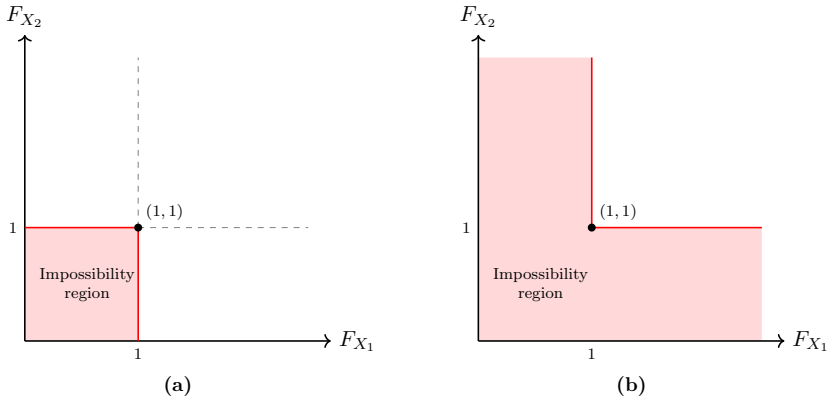
Under explicit hypotheses on moments, mean birth rates, and total-rate growth, the formal information-flow identities can be rigorously justified for continuous-time Markov chains on the non-negative integer lattice in which each component is produced by unit births at state-dependent rates and degraded linearly; this proves the conjecture of fundamental limits on simultaneous intrinsic noise suppression across components. A uniform positive lower bound on birth rates together with at-most-linear total growth dominated by the weakest degradation rate suffices to verify the hypotheses via Foster-Lyapunov methods. Under a signed monotonicity condition satisfied by structurally balanced signed-
What carries the argument
Stationary information-theoretic decomposition via formal information-flow identities for unit-birth Markov chains.
If this is right
- The information-flow identities hold rigorously once the moment and rate-growth hypotheses are met.
- The 2019 conjecture on simultaneous noise-suppression limits is proved for these models.
- Structurally balanced signed interaction networks have associated stationary distributions, yielding the termwise bound F_{X_i} ≥ 1 for every component.
- Sub-Poissonian noise in the signed-monotone subclass requires a frustrated interaction topology.
Where Pith is reading between the lines
- The same information-flow approach may extend to reaction networks with nonlinear degradation or multi-unit births to uncover broader noise bounds.
- Synthetic biology circuit designers could use the frustration requirement as a topology filter when targeting low-noise multi-component behavior.
- Numerical sampling of small signed-monotone networks could directly test the association property and the resulting termwise Fano bounds.
- Analogous tradeoffs might appear in non-biochemical stochastic systems such as queueing networks or population models with similar birth-death structure.
Load-bearing premise
Birth rates admit a uniform positive lower bound and total rates grow at most linearly, dominated by the weakest degradation rate.
What would settle it
An explicit unit-birth network satisfying the moment and growth hypotheses yet possessing two or more stationary Fano factors strictly less than one would falsify the claimed tradeoff.
Figures

read the original abstract
In 2019, Paulsson and collaborators conjectured that stochastic biochemical control networks have fundamental limits on how much intrinsic noise can be simultaneously suppressed across multiple components. Ripsman, Kell, and Hilfinger recently proposed a formal proof strategy for unit-birth models based on a stationary information-theoretic decomposition. Here, we provide a rigorous mathematical justification for this argument. We consider continuous-time Markov chains on $\Z^N_{\ge 0}$ in which each component is degraded linearly and produced in unit births at a state-dependent rate depending on the other components but not on itself. Noise in component $i$ is measured by the Fano factor $F_{X_i}$, the ratio of stationary variance to mean, with Poisson value $1$ as baseline. Our first contribution is to isolate explicit hypotheses on moments, mean birth rates, and total-rate growth under which the formal information-flow identities can be rigorously justified. Following the proof outline of Ripsman, Kell, and Hilfinger, we then prove the conjecture. Our second contribution is to make these hypotheses checkable: a uniform positive lower bound on the birth rates and at-most-linear total growth dominated by the weakest degradation rate suffices, via Foster--Lyapunov methods. Our third contribution is a structural strengthening. Under a signed monotonicity condition on the rate functions, satisfied by structurally balanced signed interaction networks, we prove that the stationary distribution is associated with respect to the corresponding signed partial order. This upgrades the global tradeoff to the termwise bound $F_{X_i}\ge 1$ for every $i$. Hence, within the signed-monotone subclass, sub-Poissonian noise requires a frustrated interaction topology.
Editorial analysis
A structured set of objections, weighed in public.
Referee Report
Summary. This paper rigorously justifies a formal proof strategy for the 2019 conjecture by Paulsson and collaborators that stochastic biochemical control networks have fundamental limits on simultaneous suppression of intrinsic noise across multiple components. For continuous-time Markov chains on the non-negative integer lattice with unit births at state-dependent rates and linear degradation, the authors isolate explicit hypotheses on moments, mean birth rates, and total-rate growth under which stationary information-flow identities hold. They prove the conjecture under these hypotheses, show that a uniform positive lower bound on birth rates and at-most-linear total growth (dominated by the weakest degradation rate) suffice to verify the hypotheses via Foster-Lyapunov methods, and establish a structural strengthening: under signed monotonicity (satisfied by structurally balanced signed interaction networks), the stationary distribution is associated, implying termwise Fano factor bounds F_{X_i} ≥ 1.
Significance. If the central claims hold, the work is significant for providing the first rigorous mathematical foundation for information-theoretic decompositions in analyzing noise tradeoffs in stochastic biochemical networks. The explicit isolation of hypotheses, their verification via standard Foster-Lyapunov techniques under checkable conditions, and the upgrade to termwise bounds via structural balance are strengths that could influence future research in mathematical biology and applied probability. The paper follows the outline of Ripsman, Kell, and Hilfinger but supplies independent justification.
major comments (1)
- [Abstract] Abstract (second contribution paragraph): The claim that a uniform positive lower bound on the birth rates together with at-most-linear total growth dominated by the weakest degradation rate suffices, via Foster-Lyapunov methods, to verify the higher-moment hypotheses needed for the information-flow identities is load-bearing for the second contribution. Standard Foster-Lyapunov arguments on Z_+^N typically yield positive recurrence and first-moment bounds when the drift of a linear test function is negative outside a compact set. However, the information-flow identities require control of stationary expectations involving products or quadratic terms; it is not immediate that the stated linear-growth condition produces a negative drift for a quadratic Lyapunov function without additional restrictions on the birth-rate functions or the dimension N.
minor comments (2)
- [Structural strengthening] Clarify the precise statement of the signed monotonicity condition and the corresponding signed partial order in the structural strengthening section.
- Add a brief remark on how the Fano factor is normalized relative to the Poisson baseline of 1 when defining the noise measures.
Simulated Author's Rebuttal
We thank the referee for the careful reading, the positive evaluation of the significance of the work, and for highlighting a point in the abstract where greater clarity would strengthen the presentation. We respond to the major comment below and will incorporate revisions to address it.
read point-by-point responses
-
Referee: [Abstract] Abstract (second contribution paragraph): The claim that a uniform positive lower bound on the birth rates together with at-most-linear total growth dominated by the weakest degradation rate suffices, via Foster-Lyapunov methods, to verify the higher-moment hypotheses needed for the information-flow identities is load-bearing for the second contribution. Standard Foster-Lyapunov arguments on Z_+^N typically yield positive recurrence and first-moment bounds when the drift of a linear test function is negative outside a compact set. However, the information-flow identities require control of stationary expectations involving products or quadratic terms; it is not immediate that the stated linear-growth condition produces a negative drift for a quadratic Lyapunov function without additional restrictions on the birth-rate functions or the dimension N.
Authors: We appreciate the referee's observation that control of quadratic moments is not automatic from linear-drift arguments. In the manuscript (Section 4), we explicitly construct a quadratic Lyapunov function V(x) = sum_{i=1}^N x_i^2 / mu_i, where mu_i denotes the degradation rate of component i, and exploit the hypothesis that the total birth rate grows at most linearly with a coefficient strictly smaller than the smallest mu_i. Under the uniform positive lower bound on birth rates, the generator applied to V yields a negative drift outside a compact set because the quadratic degradation terms dominate the cross terms arising from the linear growth of the total rate; the resulting bound on E[sum X_i^2] is then used to justify the higher-moment hypotheses required for the information-flow identities. We agree that the abstract statement is too terse on this point and will revise the second contribution paragraph to include a one-sentence indication of the weighted quadratic test function and the role of the weakest degradation rate in controlling the drift. revision: yes
Circularity Check
No significant circularity; independent rigorous justification of information-flow identities
full rationale
The paper isolates explicit hypotheses on moments, mean birth rates, and total-rate growth, then rigorously justifies the formal information-flow identities and proves the conjecture under those hypotheses using Foster-Lyapunov methods to verify checkable conditions (uniform positive lower bound on birth rates and at-most-linear total growth). It follows an outline from Ripsman, Kell, and Hilfinger but supplies new, independent mathematical content rather than reducing any central claim to a fit, self-definition, or load-bearing self-citation. No equations or steps reduce by construction to inputs; the derivation is self-contained as a proof in math.PR.
Axiom & Free-Parameter Ledger
axioms (2)
- standard math Continuous-time Markov chains on non-negative integer lattice with linear degradation and state-dependent unit births admit a unique stationary distribution under the stated rate-growth conditions.
- standard math Foster-Lyapunov drift conditions suffice to verify moment bounds and positive recurrence.
Reference graph
Works this paper leans on
- [1]
-
[2]
Anderson, Daniele Cappelletti, Masanori Koyama, and Thomas G Kurtz
David F. Anderson, Daniele Cappelletti, Masanori Koyama, and Thomas G Kurtz. Non- explosivity of stochastically modeled reaction networks that are complex balanced.Bulletin of mathematical biology, 80(10):2561–2579, 2018
work page 2018
-
[3]
David F. Anderson and Thomas G. Kurtz.Stochastic analysis of biochemical systems, volume
-
[4]
David Angeli, Patrick De Leenheer, and Eduardo D. Sontag. Monotone and near-monotone biochemical networks.Systems and Synthetic Biology, 1:117–136, 2007. 34
work page 2007
-
[5]
Nicolas E. Buchler and Frederick R. Cross. Protein sequestration generates a flexible ultra- sensitive response in a genetic network.Molecular systems biology, 5:272, 2009
work page 2009
-
[6]
Campos, Simone Bruno, Yi Fu, Domitilla Del Vecchio, and Ruth J
Felipe A. Campos, Simone Bruno, Yi Fu, Domitilla Del Vecchio, and Ruth J. Williams. Com- parison theorems for stochastic chemical reaction networks.Bulletin of Mathematical Biology, 85(5):39, 2023
work page 2023
-
[7]
Patrick De Leenheer, David Angeli, and Eduardo D. Sontag. Monotone chemical reaction networks.Journal of Mathematical Chemistry, 41:295–314, 2007
work page 2007
-
[8]
Douglas Down, Sean P. Meyn, and Richard L. Tweedie. Exponential and uniform ergodicity of markov processes.The Annals of Probability, 23(4):1671–1691, 1995
work page 1995
-
[9]
Michael B. Elowitz and Stanislas Leibler. A synthetic oscillatory network of transcriptional regulators.Nature, 403(6767):335–338, 2000
work page 2000
-
[10]
Michael B. Elowitz, Arnold J. Levine, Eric D. Siggia, and Peter S. Swain. Stochastic gene expression in a single cell.Science, 297(5584):1183–1186, 2002
work page 2002
-
[11]
Esary, Frank Proschan, and David W
James D. Esary, Frank Proschan, and David W. Walkup. Association of random variables, with applications.The Annals of Mathematical Statistics, 38(5):1466–1474, 1967
work page 1967
- [12]
-
[13]
On the notion of balance of a signed graph.Michigan Mathematical Journal, 2(2):143–146, 1953
Frank Harary. On the notion of balance of a signed graph.Michigan Mathematical Journal, 2(2):143–146, 1953
work page 1953
-
[14]
Bo Henry Lindqvist. Association of probability measures on partially ordered spaces.Journal of Multivariate Analysis, 26(2):111–132, 1988
work page 1988
-
[15]
Harley H. McAdams and Adam Arkin. Stochastic mechanisms in gene expression.Proceedings of the National Academy of Sciences, 94(3):814–819, 1997
work page 1997
-
[16]
James R. Norris.Markov chains. Number 2. Cambridge university press, 1998
work page 1998
-
[17]
Summing up the noise in gene networks.Nature, 427(6973):415–418, 2004
Johan Paulsson. Summing up the noise in gene networks.Nature, 427(6973):415–418, 2004
work page 2004
-
[18]
Jeremy E. Purvis and Galit Lahav. Encoding and decoding cellular information through signaling dynamics.Cell, 152(5):945–956, 2013
work page 2013
-
[19]
Arjun Raj and Alexander Van Oudenaarden. Nature, nurture, or chance: stochastic gene expression and its consequences.Cell, 135(2):216–226, 2008
work page 2008
-
[20]
Ryan Ripsman, Brayden Kell, and Andreas Hilfinger. Using stationary information flows to prove kinetic uncertainty relations in biochemical control systems.arXiv preprint arXiv:2512.20887, 2025
-
[21]
Shen-Orr, Ron Milo, Shmoolik Mangan, and Uri Alon
Shai S. Shen-Orr, Ron Milo, Shmoolik Mangan, and Uri Alon. Network motifs in the tran- scriptional regulation network of escherichia coli.Nature genetics, 31(1):64–68, 2002
work page 2002
-
[22]
Hal L. Smith.Monotone Dynamical Systems: An Introduction to the Theory of Competitive and Cooperative Systems. American Mathematical Society, 1995. 35
work page 1995
-
[23]
Intrinsic noise in gene regulatory networks
Mukund Thattai and Alexander Van Oudenaarden. Intrinsic noise in gene regulatory networks. Proceedings of the National Academy of Sciences, 98(15):8614–8619, 2001
work page 2001
-
[24]
John J. Tyson, Katherine C. Chen, and Bela Novak. Sniffers, buzzers, toggles and blinkers: dynamics of regulatory and signaling pathways in the cell.Current opinion in cell biology, 15(2):221–231, 2003
work page 2003
-
[25]
Jiawei Yan, Andreas Hilfinger, Glenn Vinnicombe, and Johan Paulsson. Kinetic uncertainty relations for the control of stochastic reaction networks.Physical review letters, 123(10):108101, 2019. 36
work page 2019
discussion (0)
Sign in with ORCID, Apple, or X to comment. Anyone can read and Pith papers without signing in.