pith.machine review for the scientific record.sign in
q-bio.PE
Populations and Evolution
Population dynamics, spatio-temporal and epidemiological models, dynamic speciation, co-evolution, biodiversity, foodwebs, aging; molecular evolution and phylogeny; directed evolution; origin of life
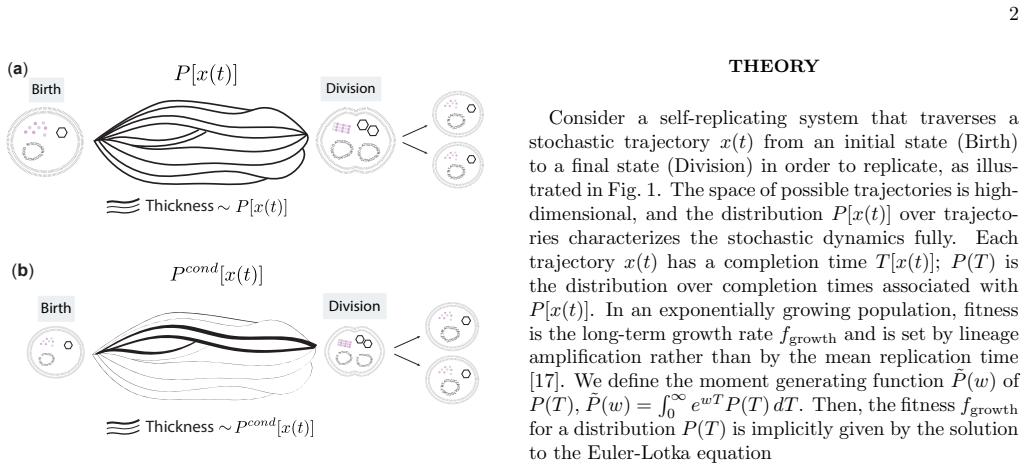
Biological systems perform complex multi-step processes in a reproducible way despite underlying stochasticity. The standard explanation is micromanagement by molecular machinery that recognizes and corrects specific errors. Here we study conditioning, a qualitatively different strategy in which attempts failing a coarse criterion are destroyed and do not leave a physical record. The surviving, i.e., conditioned, ensemble is narrower and therefore more ordered. We model conditioning through stochastic resets in a ''socks-before-shoes'' model of a growing population, where $n$ actions must be completed in any order to replicate and any replication attempt not finished by a threshold time is discarded. We find that resets impose hierarchical temporal ordering of the $n$ actions without microscopic control over which action happens when. When disorder carries a sufficient time penalty, this ordering is free: the fastest-growing population is automatically the most ordered, with no direct selection for order required. Save points, at which verified progress is preserved across resets, allow conditioning to scale to complex multi-step processes. Conditioning provides a minimal route to reliable behavior, requiring only a clock rather than molecular machinery that recognizes specific errors. For the right class of processes, it pays for itself.
Complex microbial habitats see the spatial competition of different clonal bacterial populations that switch between different phenotypes. Here, we determine the effect of this subpopulation structure on the invasion of one species by another in a minimal model of two competing species: one species switches, both stochastically and in response to its competitor, to a persister phenotype resilient to competition. Surprisingly, our combined analytical and numerical results show that this phenotypic switching has no effect on the speed of the travelling wave by which the competitors invade the first population. Conversely, we discover that phenotypic switching can speed up the wave by which this population invades their competitors. Our results thus suggest, counterintuitively, that bacterial persistence can be an offensive, rather than defensive ecological strategy.
Analytical probability distributions show noise-driven transitions and non-monotonic fear effects that reconcile conflicting ecological data
abstractclick to expand
Traditional population models that include predator-prey interactions attribute demographic changes directly to predation-related effects. However, predator-induced fear in prey has increasingly been recognised as an important factor shaping population dynamics. In this study, we propose a cubic population model in which fear acts through two distinct functional channels for a single-species population exhibiting the Allee effect. In this model, fear reduces the intrinsic growth rate through a multiplicative suppression mechanism while also playing an integrated role in modulating the growth and interaction dynamics by rescaling the saturation structure of the Holling type III interaction term. The stochastic extension of the model is described by a Langevin formalism containing correlated additive and multiplicative Gaussian noise, and the steady state probability distribution (SSPD) is analytically obtained using the corresponding Fokker-Planck equation. The analytical solution is validated by numerical simulations. The SSPD reveals both noise-induced transitions and fear-controlled regime changes between low- and high-density states, with the two-channel effect of fear producing structural competition and non-monotonic changes in the distribution. These are analysed through phenomenological bifurcation (P-bifurcation) diagrams and three-dimensional distribution surfaces. Additionally, statistical properties, parameter sensitivity, and escape dynamics are investigated through normalised moments, Fisher information, and mean first-passage time (MFPT) calculations. Notably, our model treats fear as an independent control parameter and provides a natural explanation for several conflicting empirical findings in the literature on fear-mediated population dynamics, while also offering an analytical basis for conservation biology and ecosystem management.
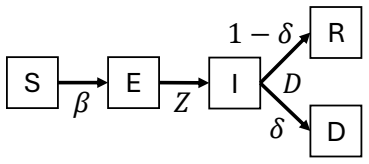
The emergence of a hantavirus variant aboard a commercial cruise ship presents a significant public health concern. This study develops a discrete-time stochastic Susceptible-Exposed-Infectious-Recovered-Dead model to estimate transmission dynamics, hidden exposed infections, and outbreak risk among passengers and crew. Epidemiological parameters and latent disease states were inferred using an Ensemble Adjustment Kalman Filter calibrated to reported case data from WHO and ECDC situation reports. The estimated basic reproduction number was 2.76, with a 95\% confidence interval of 2.52-2.99, indicating substantial potential for sustained onboard transmission before strict quarantine measures. Simulations further suggest that several exposed individuals may remain unidentified during the early outbreak phase, creating a hidden reservoir that symptom-based surveillance alone may fail to detect. These findings highlight the importance of rapid surveillance, widespread testing, targeted quarantine, and active monitoring of exposed individuals in confined travel settings. The proposed modeling framework can support timely outbreak assessment and intervention planning for infectious-disease events in similarly dense and spatially constrained populations.
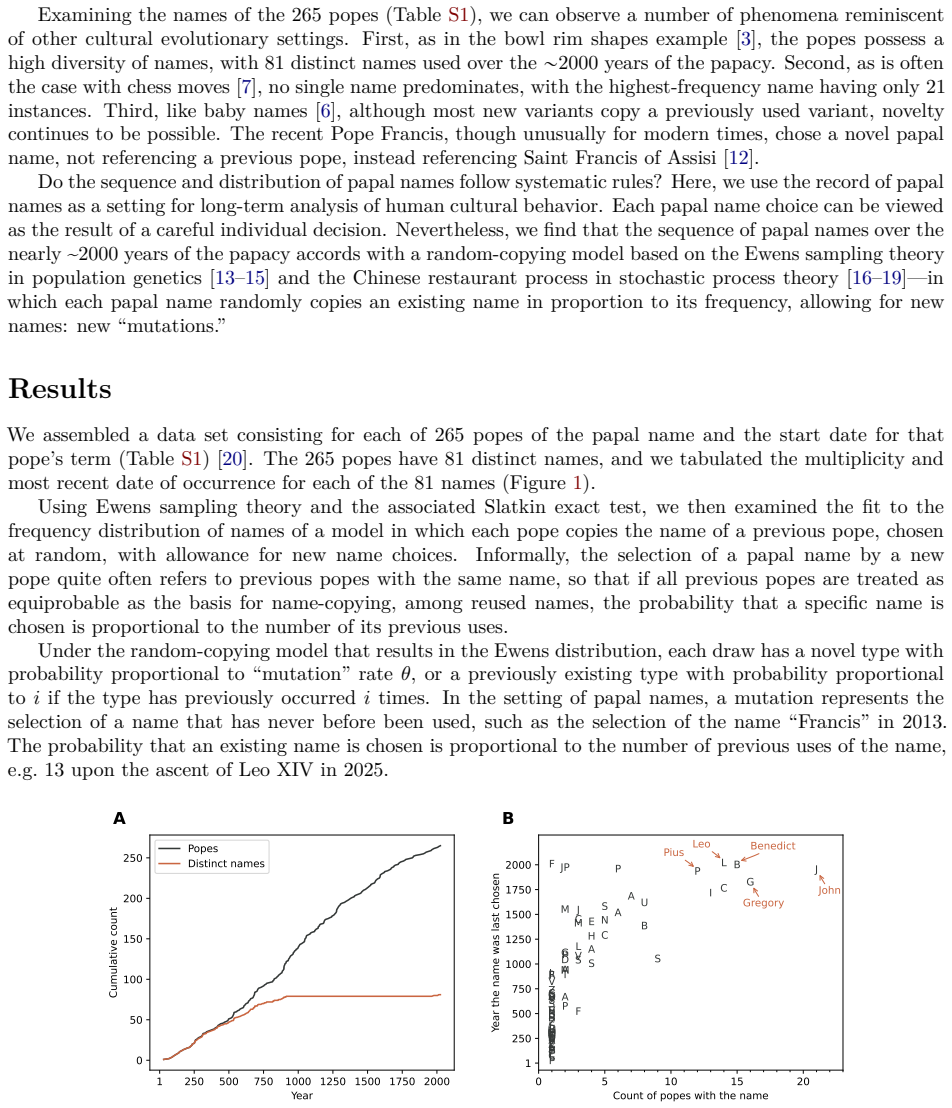
The study of cultural evolution seeks to understand the processes by which behavioral variants are chosen in cultures over time, often as the result of large numbers of individual human choices. The selection of new popes, each of whom chooses a papal name -- typically reusing previous names in reference to previous popes -- is among the longest ongoing cultural processes taking place in a single human institution. Here, we use the record of papal names as a setting for long-term analysis of human cultural behavior. Although papal name choices are careful individual decisions, we find that the long-term sequence of papal names accords with predictions of a family of models developed in population genetics and stochastic processes -- Ewens sampling theory and the Chinese restaurant process -- which in the case of papal names amounts to randomly copying an existing name in proportion to its frequency, with the possibility of innovation of new names (mutations). Hence, despite the consideration that enters into choices of individual papal names, aggregate cultural behavior in a 2000-year old human process can potentially be described with simple laws. We discuss instances in which particular historical events might have caused temporary deviations from the random-copying model.
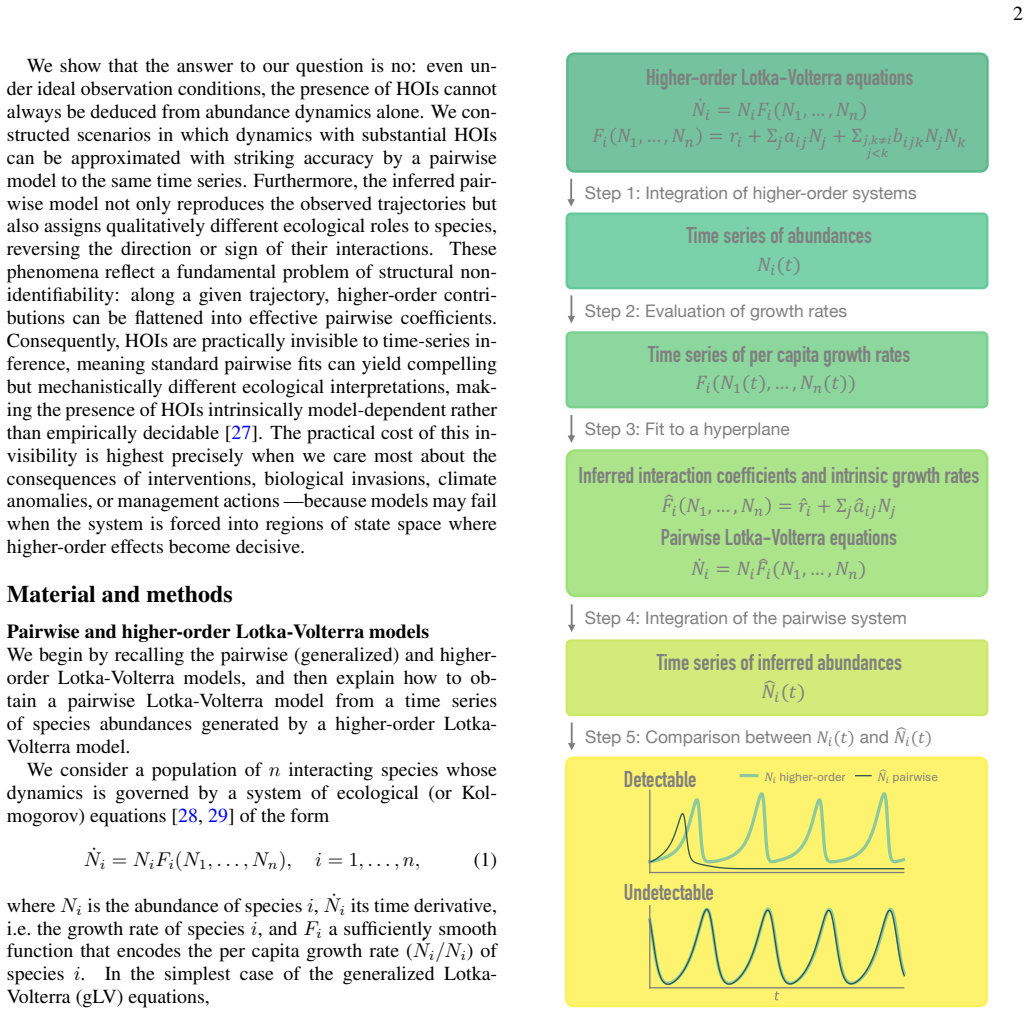
Higher-order interactions are increasingly recognized as a key component of ecological dynamics. However, we show that higher-order Lotka-Volterra dynamics can, in some scenarios, be accurately reproduced by effective pairwise models fitted to the same abundance time series. Consequently, higher-order interactions cannot, in general, be inferred from time-series data alone. We further identify a fundamental problem of mechanistic identifiability, whereby distinct interaction mechanisms generate nearly indistinguishable dynamics, potentially leading to accurate yet misleading ecological interpretations. Our results highlight the need to complement time-series data with additional ecological information to infer interaction structure reliably.
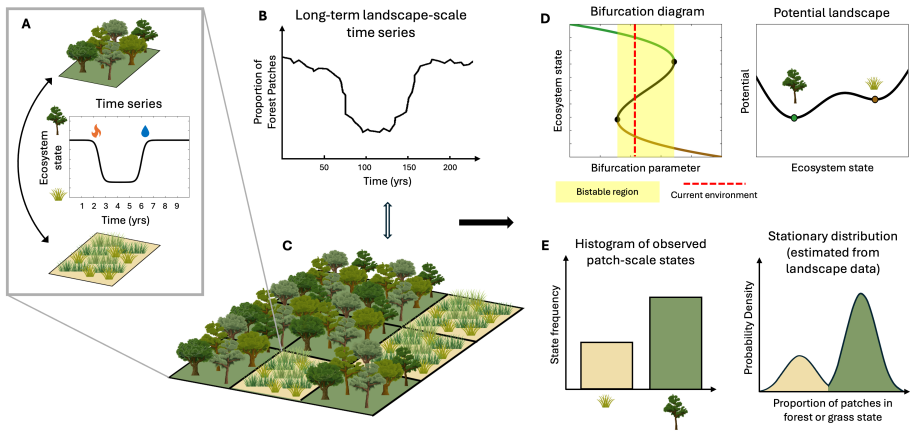
Multiple stable states - the coexistence of two or more distinct ecological configurations under identical environmental conditions - have attracted sustained interest in ecology, yet the field still lacks a unified framework connecting ecological mechanisms to dynamical models. Here, we review empirical and theoretical approaches to multiple stable states, synthesising perspectives on stability, tipping, hysteresis, and transient dynamics, and contextualise these within a common mathematical framework. Drawing on examples of well-known ecosystem models, we highlight the central and necessary role of positive feedback loops and identify other common, unifying features of ecological systems that exhibit multiple stable states. We further discuss the relationship between stable and transient dynamics, the roles of spatial and temporal scales in feedback identification, and the implications for ecological restoration and management. We conclude with open questions and challenges for the field, including extending multistability theory to persistent-transient frameworks and harnessing emerging data-collection technologies to sharpen empirical inference.
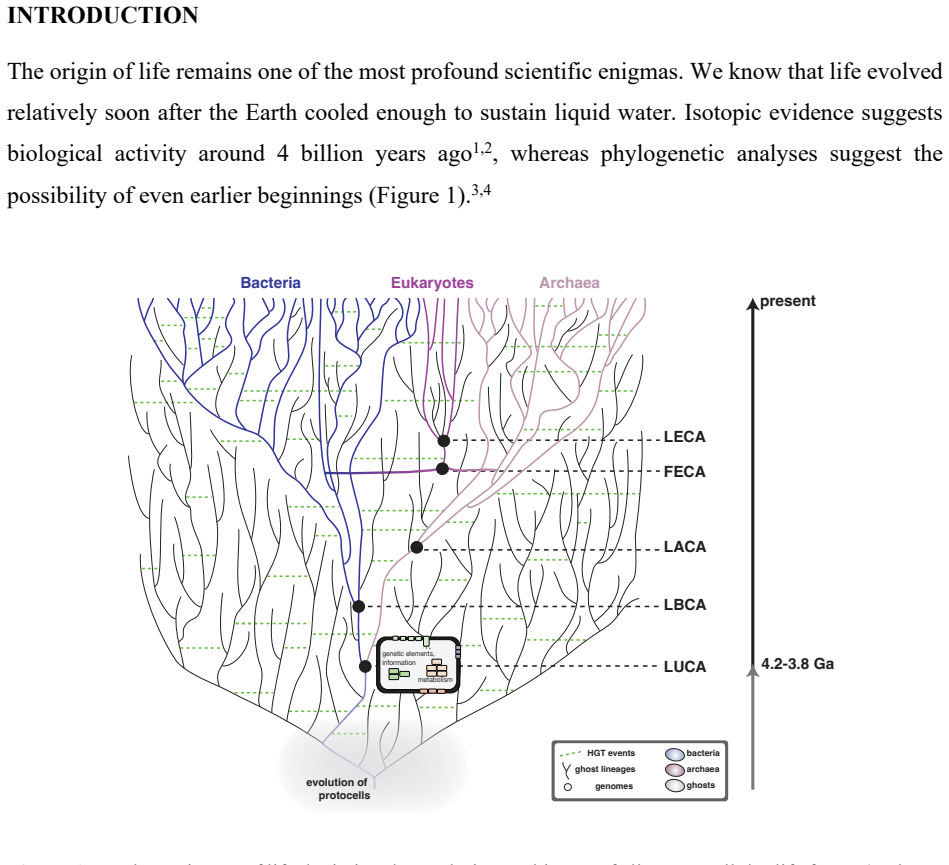
The origin of life is often framed primarily as a chemical problem, yet life's defining feature is evolution. Advances in geochemistry, prebiotic chemistry, and molecular biology have produced diverse scenarios for the emergence of genomes, metabolism, and cellular compartments on the early Earth, but most of these models lack a population-genetics framework. Here, we argue that origin-of-life research must expand from asking simply how life began to exploring how it evolved from pre-biological systems. Synthesizing evidence from comparative genomics, phylogenetics, biochemistry, and geoscience, we emphasize that the last universal common ancestor (LUCA) was already a complex, ecologically adapted population far removed from the starting point of life, implying a deep pre-LUCA evolutionary history. We highlight how population genetics, ecology, and synthetic biology can constrain origin-of-life scenarios by making explicit the roles of selection, drift, mutation, horizontal gene transfer, parasites, and compartmentalization in shaping early communities. Finally, we outline an evolutionary research agenda spanning protometabolic and autocatalytic networks, protocells, the emergence of translation, and the transition to DNA genomes, in which qualitative models can now be buttressed and formalized by evolution-driven hypotheses subject to testing using theory and laboratory experiments, including those with synthetic cells.
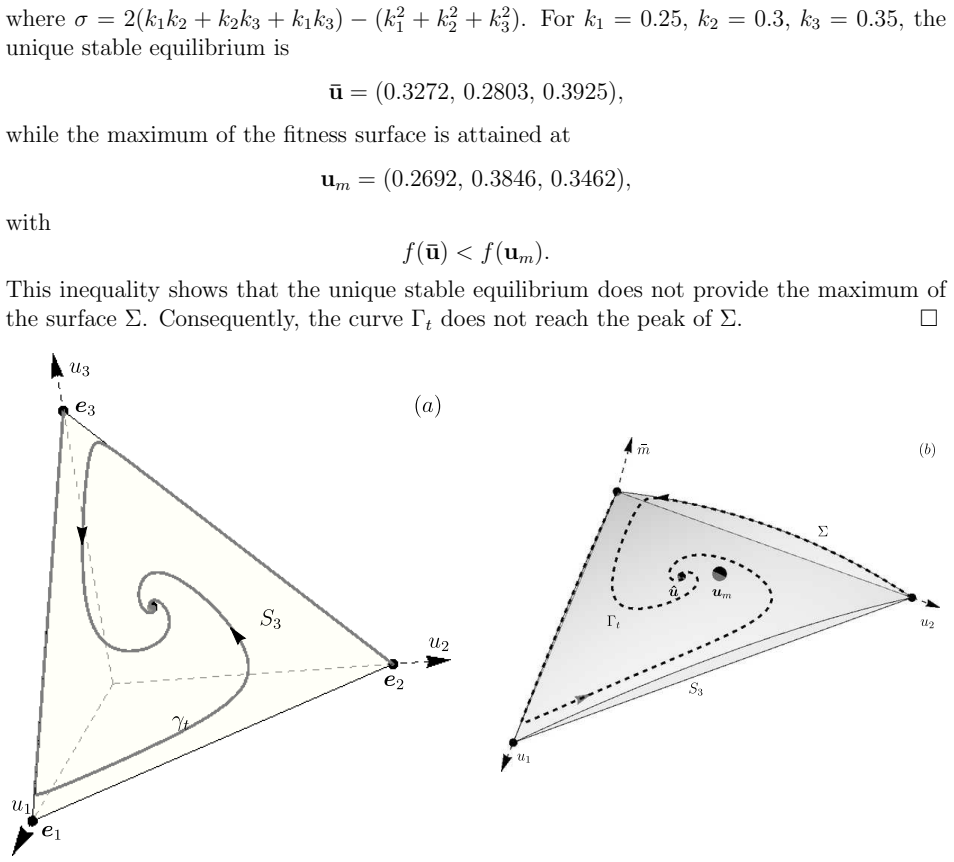
We study the geometry of the mean fitness surface of replicator systems and its relationship to evolutionary trajectory dynamics. Using the symmetric--antisymmetric decomposition of the fitness landscape matrix, we derive an explicit formula for the rate of change of mean fitness and establish necessary conditions for its monotonicity along trajectories. In general, replicator trajectories do not reach the maximum of the fitness surface, even in the presence of a unique asymptotically stable equilibrium. We characterise, in terms of the symmetric and antisymmetric parts of the fitness matrix, the precise conditions under which an equilibrium coincides with a local extremum of the fitness surface. Circulant matrices are identified as a natural and nontrivial class satisfying these conditions. We establish a two-way connection between fitness surface maxima and evolutionarily stable states: evolutionary stability implies a local fitness maximum, and the converse holds under the identified structural conditions. When the unique asymptotically stable equilibrium is a local maximum, it is evolutionarily stable and realises the global maximum of the fitness surface; an unstable equilibrium forces the global maximum to the boundary of the simplex. The framework is extended to general Lotka--Volterra systems, where an analogue of mean fitness is shown to share the same extremal properties. Results are illustrated through six examples spanning autocatalytic and hypercyclic replication, a parametric family exhibiting Andronov--Hopf bifurcation and heteroclinic cycles, and the Eigen quasispecies model.
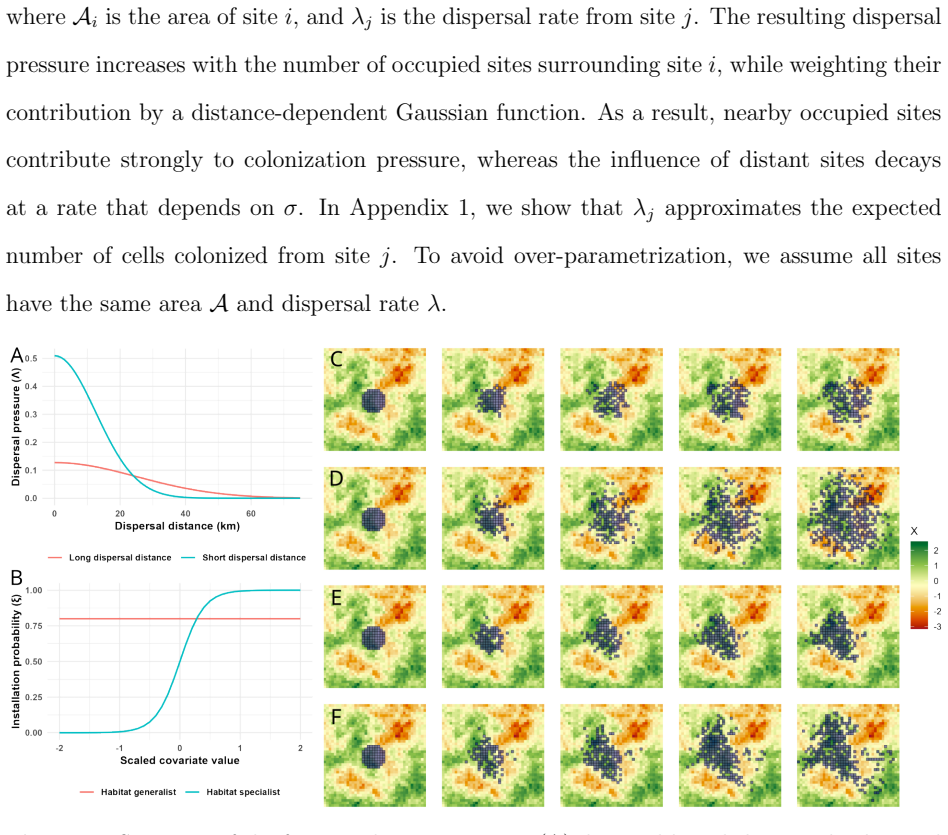
Failing to account for ecological processes such as dispersal and connectivity when modeling distributions can lead to biased inference about environmental drivers and reduced predictive performance. Spatial dynamic occupancy models are promising to study range dynamics while accounting for dispersal and connectivity, but they currently rely on restrictive formulations of the colonization process, and computational constraints prevent their application at large spatial scales. Here, we propose a process-based dynamic occupancy model to study the distribution of range-expanding species while accounting for connectivity and effects of the environment. We introduce a formulation based on dispersal-pressure that provides a flexible and ecologically interpretable representation of the colonization process, and develop a computational approach based on sparse distance matrices that enables its application to national and transnational scales. We conducted a simulation study that showed unbiased parameter estimation across various ecological scenarios. We also applied our model to two range-expanding carnivores offering complementary insights: the grey wolf and the Eurasian otter. Our model revealed contrasting colonization dynamic, with wolves primarily constrained by altitude and forest cover while otters where only marginally affected by the environment, suggesting that their distribution is limited by dispersal history rather than habitat preferences. By explicitly disentangling the influence of dispersal and environment on distributions, our model provides better insight into occupancy-environment relationships under non-equilibrium conditions, and help identifies what limits species distributions. In light of the increasing availability of large-scale biodiversity data, our framework offers opportunities to study range dynamics using mechanistic approaches across entire landscapes.
The genetic code and symbolic language create unstable transitions that make advanced technological societies vanishingly rare.
abstractclick to expand
The Great Filter hypothesis proposes that the emergence of technological societies capable of interstellar travel depends on a small number of exceptionally hard and highly improbable steps. Traditional versions of this hypothesis enumerate such "hard steps" along the trajectory from inanimate matter to complex technological societies, but diverge in their explanations for why these particular steps should be so improbable. The theory of Major Evolutionary Transitions also faces challenges in identifying which steps should be considered universally "hard" across different evolutionary pathways. In contrast, we argue that two deeply structural obstacles dominate the evolutionary landscape: the coding threshold associated with the origin of the genetic code, and the language threshold associated with the emergence of symbolic communication. We examine the developmental precursors of both transitions and analyze the underlying algorithmic bottlenecks: points at which evolving systems separate code from function, while entangling them within information hierarchies. Using a game-theoretic analysis of coupled signaling and coordination dynamics, we then argue that the corresponding multichannel games exhibit unstable equilibria that render the transitions intrinsically difficult. We conjecture that the so-called Great Filter is best understood not as a sequence of isolated improbable events, but as a nested structure of tangled information hierarchies. Under this interpretation, the rarity of advanced societies follows from the difficulty of crossing these coding thresholds in a competitive noisy environment. This perspective reframes the Great Filter as an algorithmic property of evolving systems, highlighting why only a vanishingly small fraction of life may ever traverse the path toward technological societies capable of interstellar travel.
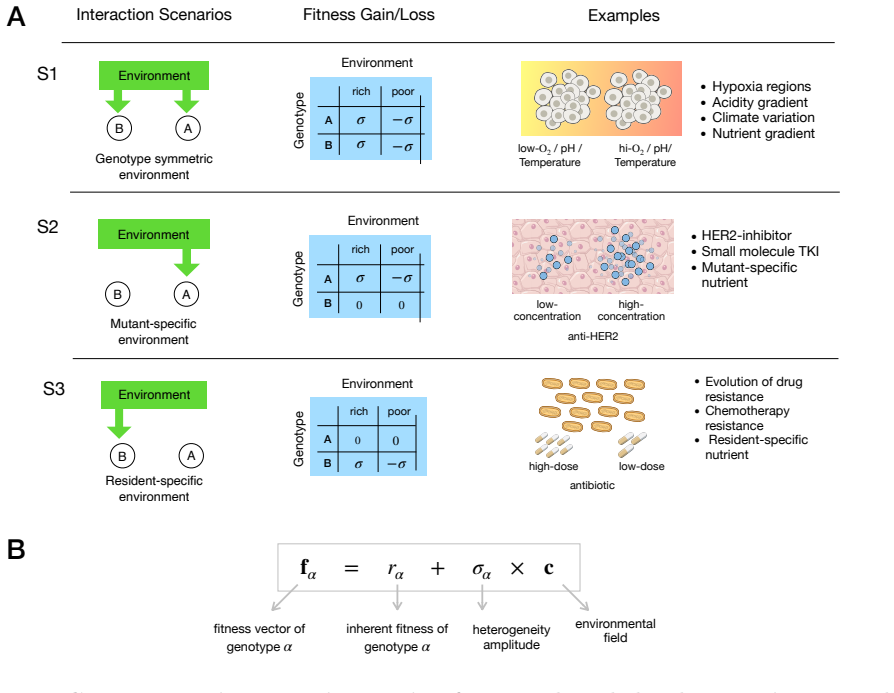
Spatial environmental variation can either amplify or suppress the fixation of beneficial mutants in structured populations, yet the interplay of ecological factors and spatial structure in determining which outcome occurs remains theoretically unresolved. Here, we develop a unified framework for selection on lattice graphs with environmental heterogeneity, in which mutant and resident fitness depend on the local environmental state. Across three common classes of genotype-environment interactions and a wide range of spatial arrangements of environmental states, we identify two governing principles. Genotype specificity determines the direction of the effect: heterogeneity amplifies selection when it modulates resident fitness, but suppresses selection when it modulates mutant fitness, with genotype-symmetric modulation producing weaker amplification. Spatial arrangement determines the magnitude: intermixed versus clustered environments tune the strength of amplification or suppression without reversing the direction of the effect. Together, these principles reconcile disparate theoretical results and provide predictive criteria for adaptation in heterogeneous landscapes, from microbial communities to somatic evolution and cancer.
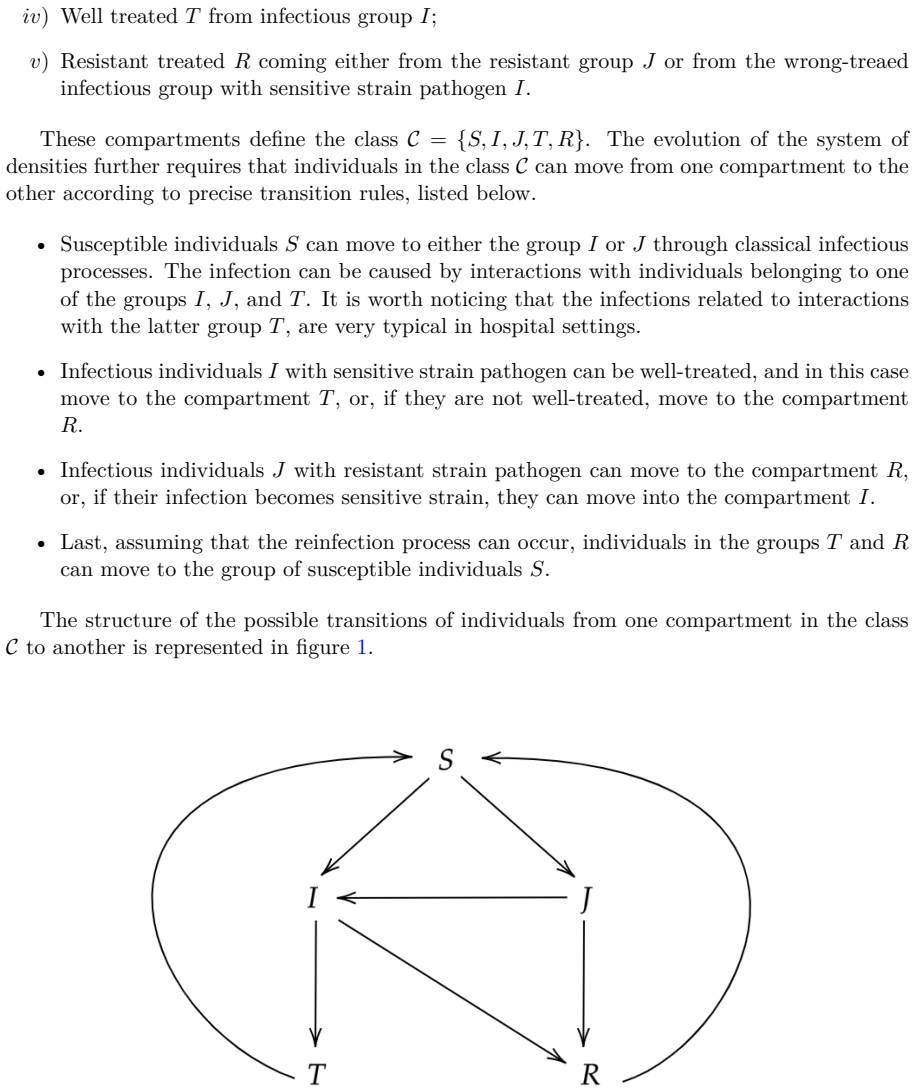
We introduce and discuss a kinetic framework describing the time evolution of the statistical distributions of a population divided into the compartments of susceptible, infectious, recovered, and resistant in the presence of a microbial infection driven by susceptible infectious interactions. Our main objective is to quantify the impact of excessive and inappropriate antimicrobial use, which accelerates the spread of resistance by enabling a fraction of infectious individuals to transition into the resistant compartment. The model consists of a system of Boltzmann type equations capturing binary interactions between susceptible and infectious individuals, complemented by linear redistribution operators that represent recovery, the development of resistance, and reinfection processes. In the grazing collision limit, we show that this Boltzmann system is well approximated by a system of coupled Fokker Planck equations. This limiting description allows for a more tractable analysis of the dynamics, including the characterization of the long-time behavior of the population densities. Our analysis highlights how interaction terms drive the system toward a stable equilibrium and quantifies the effects of inappropriate antimicrobial use on the distribution of resistant individuals. Overall, the results offer a multiscale perspective that bridges kinetic theory with classical epidemic modeling.
Closed-form distributions enable joint Ne inference and show selection biases tract lengths upward
abstractclick to expand
Identity by descent (IBD) tracts and runs of homozygosity (ROH) are related concepts that refer to the autozygosity in chromosome segments. However the formal relationship between their length distributions remains to be established. Here we present a coalescent framework that unifies these two concepts within a single analytical development. Starting from a Wright-Fisher model, we derive closed-form probability density functions for IBD tract lengths and extend these to the observable distribution of ROH lengths. This is achieved by explicitly modelling the displacement of ROH limits from true recombination breakpoints to the nearest heterozygous marker site. Mutation, gene conversion, finite marker density, and variable marker heterozygosity are incorporated as parameters in the theory that link IBD tracts to ROH. We show that the chromosome segment homozygosity (CSH) statistic emerges as a special case. This enables demographic information from IBD tracts and ROHs to be combined into a framework for inferring effective population size. Finally, we incorporate the quantitative genetic theory of background selection into the IBD length distribution, to show how selection introduces a systematic upward bias in apparent tract lengths. This demonstrates that no single Ne value can account for the entire IBD length distribution under selection. The application of this theory to the detection of selection signatures in the genome is illustrated using the example of the local selective sweep associated with lactase persistence in human populations.
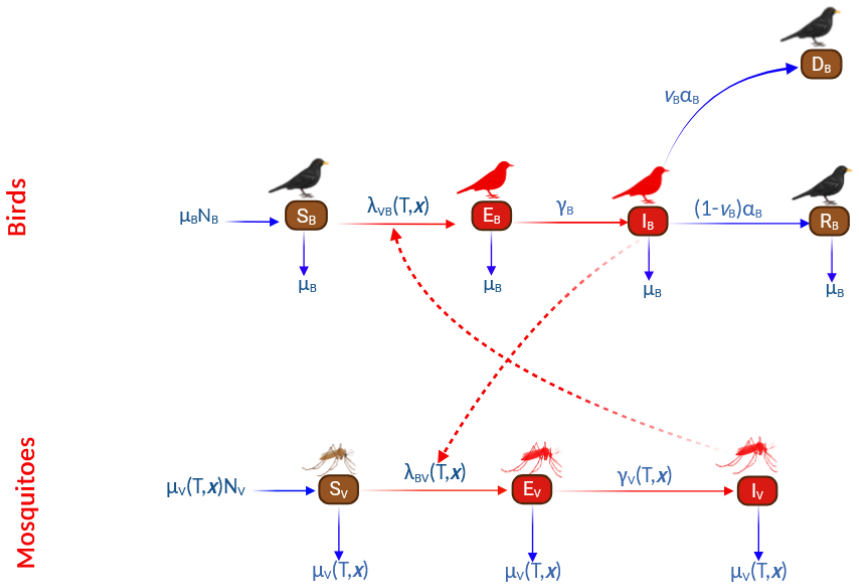
Usutu virus (USUV) is a flavivirus of the Japanese encephalitis complex transmitted between \textit{Culex} mosquitoes and birds, a transmission pattern similar to that of the West Nile virus (WNV). In Germany, the first case of USUV was detected in 2010 in mosquitoes collected in the town of Weinheim, and by 2018 the virus had spread to almost the entire country. Interestingly, the infection front exhibited a clockwise rotational spread pattern throughout the years, a pattern completely different from that of the WNV. This clockwise progression corresponded closely with the spatial temperature gradient, suggesting that warmer regions probably facilitated faster viral amplification and onward transmission. Understanding the drivers that influence the spreading patterns of arboviruses is important as it guides surveillance and implementation of control strategies. In this study, we develop a reaction-diffusion partial differential equation (PDE) model to investigate the spatial spread of USUV in Germany within an extended domain that includes some neighbouring countries (Belgium, the Netherlands, and Luxembourg), thereby capturing cross-border transmission processes. Mosquito parameters, i.e., extrinsic incubation rate, mortality and biting rates, are temperature-driven, as temperature plays an important role in the activity of mosquitoes. Our model qualitatively reproduced the main spatial trends of USUV in Germany and surrounding countries. The heterogeneous spread pattern arises from the interplay of diffusion and spatially varying temperature, which together may influence determine regions with higher transmission potential.
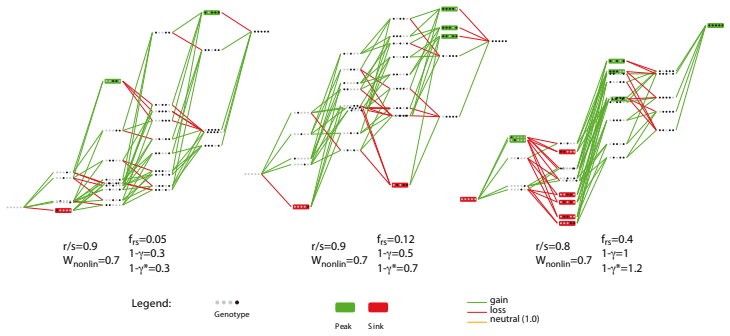
Fitness landscapes provide a quantitative framework for understanding how natural selection shapes evolutionary trajectories. A central feature of these landscapes is their number of local optima, which determines whether fitness-increasing evolution can proceed towards a global optimum or become trapped on suboptimal peaks. Although multiple peaks are known to require reciprocal sign epistasis, the quantitative relationship between epistasis and number of peaks remains incompletely understood. Here, we show that for a broad class of unstructured fitness landscapes, i.e. isotropic Gaussian random fields, the expected number of local optima is determined by a single local measure of epistasis: the correlation of fitness effects. This provides a baseline prediction for the number of peaks in typical unstructured landscapes and links peak density directly to the amount of reciprocal sign epistasis. This baseline changes when epistatic interactions are structured. We show that clustering interactions within blocks of loci slightly increases the number of local optima. In contrast, strong heterogeneity between loci, where only a small subset of loci participate in epistatic interactions, causes the number of peaks to collapse. These results show that the number of local optima is governed not only by the overall strength of epistasis, but also by how epistatic interactions are distributed across the genotype space. Our framework therefore reconciles the central role of reciprocal sign epistasis with the observation that landscapes with similar amounts of epistasis can differ substantially in ruggedness, and provides a guide to the range of peak numbers expected in typical landscapes.
We extend the $N$ branching Brownian motions model of population invasion to higher-order asexual reproduction. Increasing reproduction order leads to qualitative changes: invasion fronts generically cease to exist beyond binary reproduction; and in the binary case itself, their speed becomes diffusion-independent. Ternary reproduction shows critical behavior, with collapse into a strongly localized `invasion bullet' in the supercritical regime, diffusive spreading in the subcritical regime, and a continuous family of fronts at criticality. These results suggest that the dominance of division and binary reproduction in nature reflects fundamental constraints on invasion dynamics.
A fundamental problem in protobiological dynamics is to understand how chemically generated polymers can form persistent sequence distributions before the emergence of replication. We study deterministic polymer growth in which each finite sequence is followed along its genealogical structure. The system pictures an open polymerization cascade in which each polymer is produced from a unique precursor and lost by degradation and further extension. Setting fixed activated precursors, we show global well-posedness, positivity, uniqueness of a strictly positive equilibrium, and exponential convergence to an explicit steady state distribution. Under an additional uniform decay condition, this convergence becomes global exponential stability in a uniform norm.
We then couple the polymerization to a shared environmental resource with logistic growth and depletion by two activated precursors. In the resulting binary polymerization competition model, the equilibrium structure is governed by a three-dimensional core subsystem. We prove that strictly positive equilibria exist exactly above a sharp resource threshold. At the threshold the equilibrium is unique, while above it two positive branches appear. The lower branch is unstable and the upper branch is locally stable. For the complete infinite system, we exhibit positivity, global componentwise existence, a priori bounds, and under persistence and dominance assumptions, global exponential stability.
Finally, we introduce template directed replication through a replicator term. The pre-replicative equilibrium continues only under neutral fitness, and heterogeneous fitness removes it as an equilibrium of the replicated system.
Phylogenetic trees are the primary framework for conveying evolutionary relationships. While many tools exist for visualizing phylogenetic trees, most are limited to static graphics, require coding expertise, or are developed for a specific website and not easily reusable or extensible. To address these limitations, we developed heat-tree, a collection of software packages in JavaScript, R, and Python for interactive visualization, manipulation, and editing of phylogenetic trees and their associated metadata. Heat-tree allows for the creation of customizable, web-compatible tree visualizations that can be easily embedded in R Markdown, Jupyter Notebooks, and Quarto documents, as well as directly in HTML/JavaScript applications and websites. The package supports radial and rectangular tree layouts, automated translation of metadata values into visual encodings on the tree, interactive tree editing, and export capabilities for publication-quality figures. All visualization parameters are definable programmatically or interactively using the comprehensive graphical user interface included with each visualization. Heat-tree was designed to be a user-friendly software package for interactive tree viewing, manipulation, editing, and self-contained, embeddable visualization across software environments.
A single model shows that the curvature of provisioning benefits decides whether shared resources are overexploited, abandoned, or used at a
abstractclick to expand
The tragedy of the commons has traditionally been framed as a problem of resource overuse driven by self-interested exploitation. In contrast, growing empirical evidence shows that insufficient use or abandonment of natural resources, known as underuse, can also lead to ecological degradation and loss of ecosystem services. Despite its relevance, underuse has rarely been examined within evolutionary theories of resource use. Here, we develop a simple eco-evolutionary model that integrates both provisioning and non-provisioning ecosystem services to analyze the evolution of resource-use strategies. Using adaptive dynamics, we investigate how individual resource use evolves while altering resource abundance. The model shows that overuse and underuse arise naturally as alternative evolutionary outcomes of the same underlying process, alongside intermediate use and evolutionary branching. We derive analytical conditions for the existence, number, and stability of evolutionarily singular strategies, and show that the qualitative evolutionary fate is primarily determined by the shape of provisioning benefits. Only when provisioning benefits increase in a concave manner does evolutionary dynamics converge to a unique intermediate strategy that is continuously stable. In contrast, convex increasing benefits generate a broader range of outcomes: overuse, underuse, bi-stability, and evolutionary branching. By explicitly comparing the continuously stable strategy with the socially optimal strategy, we further quantify how their deviations depend on the valuation of non-provisioning services. Our results provide a theoretical framework for viewing the common-pool resource dilemmas as intrinsically two-sided evolutionary problems, and offer a baseline for future studies exploring interventions to address overuse and underuse simultaneously.
Epidemics have shaped human history, often with devastating consequences, motivating the development of mathematical models to understand and control their dynamics. Among the many aspects of epidemic behavior, the conditions that lead to epidemic extinction stand out as a central-if not the fundamental-question in epidemic modeling. In this work, we study epidemic extinction in a continuous SIRS (Susceptible-Infected-Recovered-Susceptible) model governed by a system of ordinary differential equations (ODEs). The model includes vaccination as a time-dependent process and considers the reinfection of recovered individuals through waning immunity. We analyze how different parameter regimes -- particularly infection, recovery, and immunity loss rates -- affect the persistence or extinction of the epidemic. Special attention is given to the limitations of continuous population models, in which the infected fraction can fall below the equivalent of a single individual, leading to nonphysical outcomes such as unrealistically long persistence or artificial secondary peaks. By comparing the continuous SIRS dynamics with expected real-world thresholds for extinction, we highlight the importance of incorporating stochasticity or discrete effects to accurately describe epidemic fade-out.
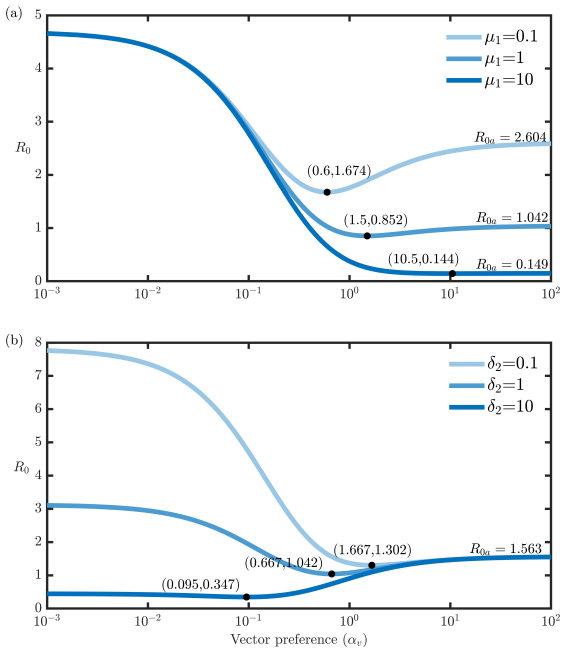
Vector-borne diseases often infect multiple host species, increasing the likelihood of disease persistence due to the presence of multiple reservoirs. Vector biting patterns and feeding preferences can shift in response to selective pressures introduced by disease control interventions, altering the dynamics of transmission. In this paper, we develop a mathematical model that couples host diversity and adaptive vector behavior with vector-borne disease transmission dynamics, focusing on a system with two hosts and a vector population exhibiting preference for one host. We derive the basic reproduction number, $R_0$, a threshold that determines the existence of two equilibria in our model, and obtain conditions that can lead to the long-term persistence of the disease. Our analysis suggests that shortening the infectious period of the vector's preferred host is an effective control strategy. We also identified a threshold that determines whether shifting vector preference toward a non-preferred host amplifies or reduces the disease burden on the primary preferred host. Our results show that protective measures for the preferred host can trigger adaptive shifts in vector preferences, reducing disease prevalence in that host. However, this shift may lead to an increase in overall host prevalence.
Metric from abundance maps shows varied dispersal strategies lower risk more than abundance alone predicts.
abstractclick to expand
Predicting species persistence within ecological communities is a fundamental challenge for both empirical and theoretical ecology. Existing methods span from mechanistic models, whose parameters are difficult to estimate from data, to statistical tools whose context-specific parameters are less interpretable. Here, we present a general framework, grounded in the statistical physics of complex systems, that integrates the key processes governing species survival into a single measurable quantity: the competitive balance. This metric quantifies a focal species' vulnerability beyond its abundance by incorporating the diversity of dispersal strategies and the structure of interspecific interactions within the community. Crucially, it can be inferred from spatial abundance data, thus circumventing the need to estimate species traits or dispersal parameters. Our results reveal that greater heterogeneity in dispersal strategies reduces vulnerability for a given abundance. Although we validate the framework using tropical and temperate forest data, it can be applied to a range of different ecosystems, providing a systemic and interpretable tool for assessing a context-dependent species vulnerability that accounts for its interactions with the entire community.
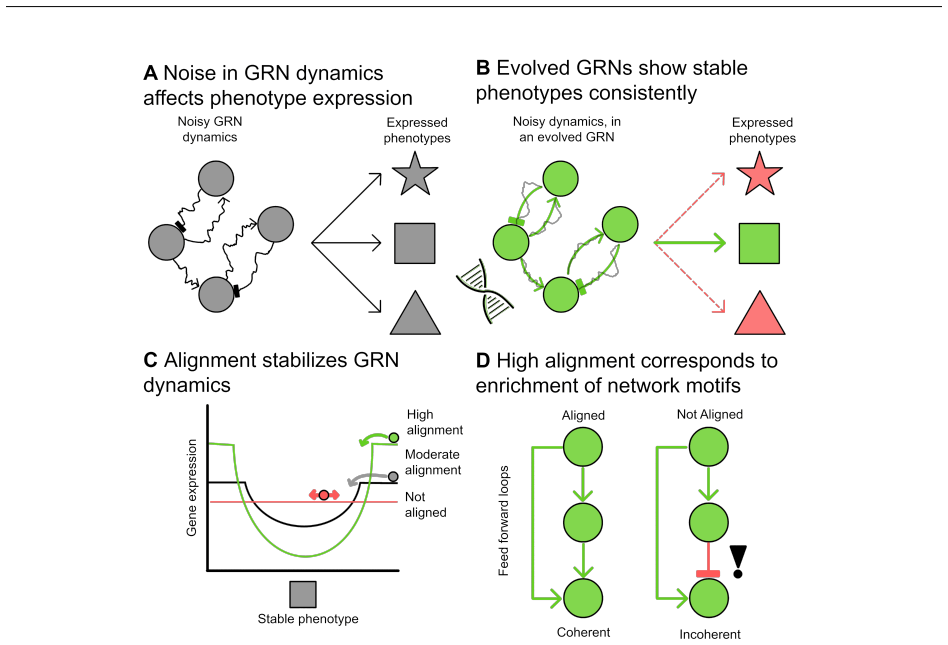
The evolutionary origins of structural features in reconstructed gene-regulatory networks (GRNs) remain poorly understood, especially given the random aspects of gene expression. Here, we extend a classical model of GRN evolution to allow a single network to express a distribution of phenotypes through noisy developmental dynamics. Inspired by Hopfield networks, we introduce an alignment score that quantifies the cohesion of gene-gene interactions in the network to support a target stable phenotype. Overall, evolved populations optimized their fitness and reduced the length of their developmental paths. Increased noise levels promoted alignment, enriched coherent feedforward and positive feedback loops relative to non-evolved and noiseless controls, and buffered against mutational perturbations. Alignment provides intuitive interpretations because an increased number of appropriately signed gene-gene interactions is more redundant and thus more robust against developmental noise and mutations. Together, these results demonstrate that cell-to-cell variability exerts strong selective pressure, driving the evolution of aligned, robust, and motif-enriched GRN architectures.
Black Sigatoka disease (BSD), also known as black leaf streak disease, is an airborne fungal infection caused by \textit{Pseudocercospora fijiensis} that severely impacts global banana and plantain production. Its persistence and resistance to eradication make it one of the most challenging plant diseases to manage. In this paper, we propose a deterministic pathogen-host model to describe BSD dynamics. Due to dual transmission pathways (ascospores and conidia) and mate limitation in sexual reproduction, the model exhibits a backward bifurcation: a stable endemic equilibrium coexists with the disease-free equilibrium for certain parameter values in which the basic reproduction number, $\mathcal{R}_0$, is less than 1. This phenomenon explains why control strategies that solely reduce $\mathcal{R}_0$ below one may fail. For the backward bifurcation regime, we perform sensitivity analysis of the endemic equilibrium using normalized forward sensitivity indices, Latin Hypercube Sampling, and Partial Rank Correlation Coefficients. Results indicate that effective control must extend beyond $\mathcal{R}_0$ reduction and prioritize (1) limiting production of new susceptible leaves during high-risk periods and (2) developing and deploying disease-resistant plant varieties. To incorporate transmission variability, we also formulate a stochastic version of the model using the Stochastic Simulation Algorithm (SSA). Extensive numerical simulations compare stochastic realizations with deterministic predictions and quantify variability in disease dynamics. To identify the principal drivers of persistence and variability, we analyze the endemic equilibrium using Sobol's variance-based sensitivity method, which highlights the role of nonlinear parameter interactions in shaping variability.
Models using experimental mosquito EIP distributions produce lower but longer outbreaks than exponential assumptions, with little change in
abstractclick to expand
Dengue virus transmission models commonly assume an exponential distribution for the mosquito extrinsic incubation period (EIP), potentially oversimplifying biological variability. We developed a stochastic mechanistic dengue transmission model comparing epidemic dynamics under commonly assumed exponential (EXP) versus experimentally derived (ED) EIP distributions. Our results show that using an experimentally derived EIP distribution delays and flattens epidemic peaks, resulting in lower but more prolonged peaks, slightly prolongs crisis durations, and reduces peak intensity compared to the exponential assumption, while outbreak probability remains largely unaffected. These differences are modulated by mosquito mortality and human recovery principally. Incorporating experimentally informed EIP distributions enhances the biological realism of models and may improve predictions of dengue epidemic dynamics, informing more effective vector control strategies and public health responses.
Mosquito vector competence is usually represented as a process in which once virus is detected in saliva, mosquitoes are assumed to remain infectious for life, implying an irreversible transition to the transmitting state. However, some experiments report declines in the proportion of transmitting mosquitoes at late times post-exposure, suggesting transmission capacity may not be permanent. To investigate this hypothesis, we extended a previously developed stochastic intra-vector viral dynamics model by introducing transmission states allowing either permanent cessation or temporary interruption of transmission. We fitted three competing models to data from 52 vector competence conditions covering chikungunya, dengue, Zika, West Nile, and Rift Valley fever viruses, using Approximate Bayesian Computation with Sequential Monte Carlo inference. Among the 10 experimental conditions showing decline in transmitter proportions, models allowing exit from the transmitting state provided a better fit in 7 cases, with clear improvement in 5. In these cases, allowing interruption of transmission increased posterior estimates of the proportion of mosquitoes that crossed all intra-mosquito barriers, whereas estimates of infected and disseminated state durations were largely unchanged. In cases where intermittent transmission was selected, its performance was similar to that of permanent cessation with non-transmitting periods lasting several days. These results indicate that the assumption of lifelong mosquito infectiousness does not always provide the best explanation for vector competence data and may lead to underestimation of the proportion of mosquitoes that become capable of transmission. Incorporating time-varying transmission competence into intra-vector models could improve interpretation of vector competence experiments and refine epidemiological representations of arbovirus transmission.
Tuberculosis (TB) is an airborne disease caused by the pathogen Mycobacterium tuberculosis. In 2023, according to the World Health Organization, it ''probably'' replaced COVID-19 as the leading cause of death from an infectious agent globally; in the nineteenth century, one in seven of all humans deaths were as a result of tuberculosis. More than 10 million people are diagnosed with TB every year. The majority of cases in adults occur in males (62.5% of all global adult cases in 2023, compared to 37.5% in females). The main reasons for males suffering from a higher burden of global TB cases, compared to females, is likely to be a combination of within-host factors, such as differences in immune response, and population-scale factors, such as likelihood of completing treatment. To investigate the impact different scales have in determining this higher TB burden in males, we have developed a gender/sex-stratified multiscale framework. We have learnt ordinary differential equations (ODEs) to capture the average output of an agent-based within-host model, and used the resulting equations to describe the within-host scales of the multiscale framework. We evolve the population demographics at the between-host scale using ODEs, and link the scales with stochastic coupling functions. We have considered counterfactual scenarios to elucidate the impact of sex and gender on the infectious disease dynamics of TB. This paper is intended to provide a proof-of-concept for the development and implementation of the presented multiscale framework.
It preserves distances among original taxa and matches reference trees more closely than other methods on vertebrate data sets.
abstractclick to expand
Comparative analyses of phylogenetic trees typically require identical taxon sets, however, in practice, trees often include distinct but overlapping taxa. Pruning non-shared leaves discards phylogenetic signal, whereas tree completion can preserve both taxa and branch-length information. This work introduces a polynomial-time algorithm for set-wide completion of phylogenetic trees with partial taxon overlap. The proposed method identifies and extracts maximal completion subtrees that frequently appear across the source trees and constructs a weighted majority-rule consensus. Branch lengths are scaled using rates derived from common leaves. Each consensus subtree is inserted at the position that minimizes the quadratic distance error measured against information from the source trees, with candidate positions restricted to the original branches of the target tree. We demonstrate that the algorithm runs in polynomial time and preserves distances among the original taxa, yielding a unique completion that is order-independent with respect to the processing order of target trees. An experimental evaluation on amphibians, mammals, sharks, and squamates shows that the proposed method consistently achieves the lowest distance to the subset reference trees across subsets among all methods, in both topology and branch lengths.
An open-source Python implementation of the proposed algorithm and the biological datasets utilized in this study are publicly available at: https://github.com/tahiri-lab/overlap-treeset-completion/.
Compartmental epidemic models, grounded in mass-action kinetics, often assume homogeneous mixing. Although this neglects network structure, recent results show that for Poisson random graphs, the classical SIR model, especially the susceptible decay curve, matches the susceptible decay dynamics of its network counterpart. Motivated by this, we investigate whether the extended SIRI model with relapse from the recovered class admits a similar correspondence. SIRI dynamics arise in sevaral scenarios like spread of diseases with reactivation and behavioral contagion with relapse. We derive parameter relationships under which the pairwise SIRI model on a Poisson network closely follows the mass-action ODE trajectories. When transmission per contact is small relative to recovery, the susceptible and infectious trajectories of both systems align. This establishes conditions under which nonlinear SIRI dynamics on networks can be effectively approximated by tractable mean-field equations.
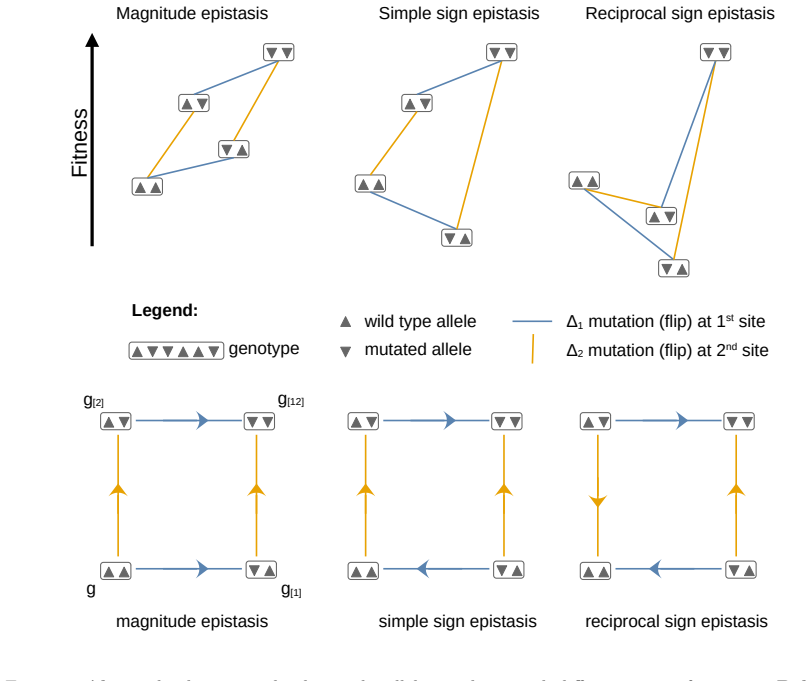
In epistatic fitness landscapes, the fitness effect of a mutation depends on the genetic background and may even switch between deleterious and beneficial depending on the presence of another mutation. Epistatic interactions may cause both mutations to change the sign of each other's fitness effects (reciprocal sign epistasis) or only one mutation to do so (simple sign epistasis). Both these forms of epistasis influence evolutionary trajectories. While reciprocal sign epistasis has been associated with multi-peaked landscapes and their ruggedness, the role and relative frequency of simple sign epistasis in fitness landscapes have not been systematically investigated. Here, we prove that the presence of simple sign epistasis is associated with evolutionary detours, i.e., indirect, longer fitness-increasing paths to fitness peaks that include back-mutations. We also show that in experimentally resolved, weakly epistatic landscapes, simple sign epistasis occurs much more frequently than reciprocal sign epistasis. This result is consistent with the theoretical predictions we derive for most landscape models, with the exception of the block model and of landscapes dominated by pairwise allelic incompatibilities, such as RNA stability landscapes. Our results suggest that detours represent a general feature of evolutionary trajectories in weakly epistatic landscapes.
Different strains competing for a common pool of susceptible individuals is a key problem in mathematical epidemiology. To address this problem, we investigate a two-strain model within a Susceptible-Infected-Recovered (SIR) framework. While classical deterministic theory predicts that the basic reproduction number fully determines selection, we show that stochastic effects play a key role in the dynamics. We discover that stochastic fluctuations can reverse the deterministic advantage even far from the quasi-neutral regime. Further, we find that stochasticity drastically reduces fixation times from years, in the deterministic case, to days. The fixation time is non-linearly proportional to the noise intensity and the distance from the quasi-neutral regime, following a universal rule obtained from a scaling law. The nature of the problem and the equations allow us to interpret the competition as a dynamical evolution around an effective potential, with the potential barrier corresponding to the unstable manifold associated with the coexistence. Even in a stable situation of dominance of one strain, the noise can induce crossings through the potential. We find that the reversal can occur even far from the quasi-neutral regime with significant probability.
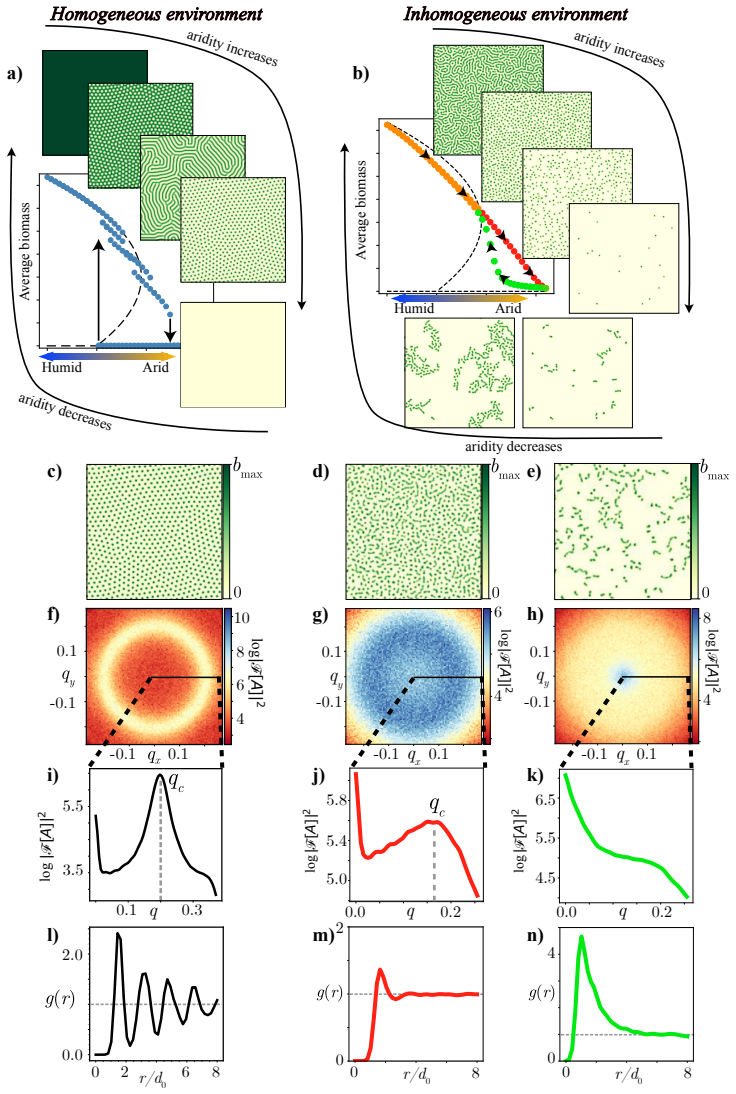
Due to climatic changes, excessive grazing, and deforestation, semi-arid and arid ecosystems are vulnerable to desertification and land degradation. As aridity increases, vegetation cover often self-organizes into spatial patterns before collapsing to bare soil. While recent theoretical work has established that spatially heterogeneous yet isotropic environments induce a smooth hysteresis loop -- yielding either periodic (hexagonal) patterns during degradation or disordered (clustered) patterns during recovery -- empirical validation of this physical footprint at a global scale has been lacking. Here, we present an extensive empirical validation using remote sensing across eight distinct global ecosystems, coupled with historical bio-climatic databases. We demonstrate that the spatial morphology of vegetation patches acts as a direct physical footprint of the ecosystem's historical aridity trend. Our results show that ecosystems experiencing increasing aridity display periodic arrays with a defined wavelength, whereas those recovering under decreasing aridity exhibit scale-free clustering. This framework provides a non-destructive, robust satellite-based indicator for diagnosing whether a dryland ecosystem is on a degradation or recovery pathway.
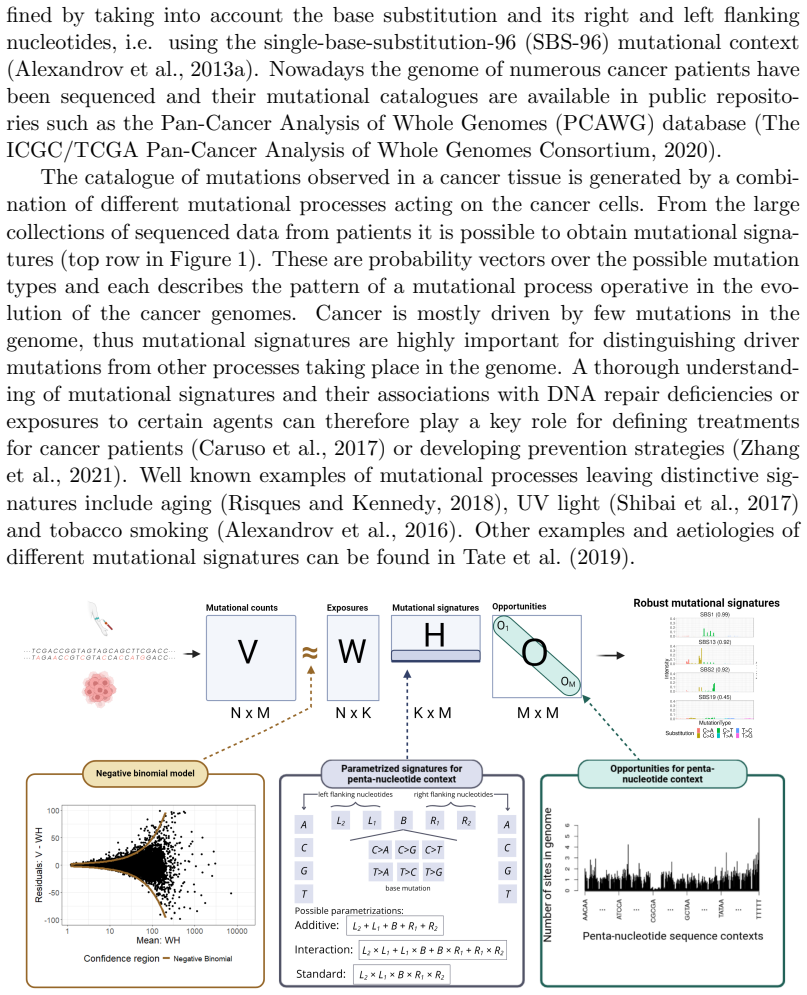
Mutational signatures describe the pattern of mutations over the different mutation types. Each mutation type is determined by a base substitution and the flanking nucleotides to the left and right of that base substitution. Due to the widespread interest in mutational signatures, several efforts have been devoted to the development of methods for robust and stable signature estimation. Here, we combine various extensions of the standard framework to estimate mutational signatures. These extensions include (a) incorporating opportunities to the analysis, (b) allowing for extended sequence contexts, (c) using the Negative Binomial model, and (d) parametrizing the signatures. We show that the combination of these four extensions gives very robust and reliable mutational signatures. In particular, we highlight the importance of including mutational opportunities and parametrizing the signatures when the mutation types describe an extended sequence context with two or three flanking nucleotides to each side of the base substitution.
Tools must fit the questions asked, data collected, and mistakes that matter most in field studies.
abstractclick to expand
Recognizing individual animals over time is central to many ecological and conservation questions, including estimating abundance, survival, movement, and social structure. Recent advances in automated identification from images and even acoustic data suggest that this process could be greatly accelerated, yet their promise has not translated well into ecological practice. We argue that the main barrier is not the performance of the automated methods themselves, but a mismatch between how those methods are typically developed and evaluated, and how ecological data is actually collected, processed, reviewed, and used. Future progress, therefore, will depend less on algorithmic gains alone than on recognizing that the usefulness of automated identification is grounded in ecological context: it depends on what question is being asked, what data are available, and what kinds of mistakes matter. Only by centering these questions can we move toward automated identification of individuals that is not only accurate but also ecologically useful, transparent, and trustworthy.
Biases in molecular evolution can significantly influence evolutionary trajectories. They have been described in a variety of contexts such as development and mutation, but not for acquiring new functions (i.e. emergence). Here, we formalize the term, emergence bias, as the molecular predisposition that, upon mutation, biases a genetic sequence towards or against gaining new functions or causing new phenotypes. These biases have been observed in previous studies for the emergence of promoters, enhancers, and de novo proteins, but never formally characterized as such. In this Perspective piece, we describe these studies and synthesize their findings through the prism of a unifying term, emergence bias, to provide support for this new concept , and speculate on its molecular underpinnings. We believe that emergence biases may play an important role in evolutionary innovations.
The expected meeting time of two random walkers on an undirected graph of size $N$, where at each time step one walker moves and the process stops when they collide, satisfies a system of $\binom{N}{2}$ linear equations. Na\"{i}vely, solving this system takes $O\left(N^{6}\right)$ operations. However, this system of linear equations has nice structure in that it is almost a Sylvester equation, with the obstruction being a diagonal absorption constraint. We give a simple algorithm for solving this system that exploits this structure, leading to $O\left(N^{4}\right)$ operations and $\Theta\left(N^{2}\right)$ space for exact computation of all $\binom{N}{2}$ meeting times. While this practical method uses only standard dense linear algebra, it can be improved (in theory) to $O\left(N^{3}\log^{2}N\right)$ operations by exploiting the Cauchy structure of the diagonal correction. We generalize this result slightly to cover the Poisson equation for the absorbing "lazy" pair walk with an arbitrary source, which can be solved at the same cost, with $O\left(N^{3}\right)$ per additional source on the same graph. We conclude with applications to evolutionary dynamics, giving improved algorithms for calculating fixation probabilities and mean trait frequencies.
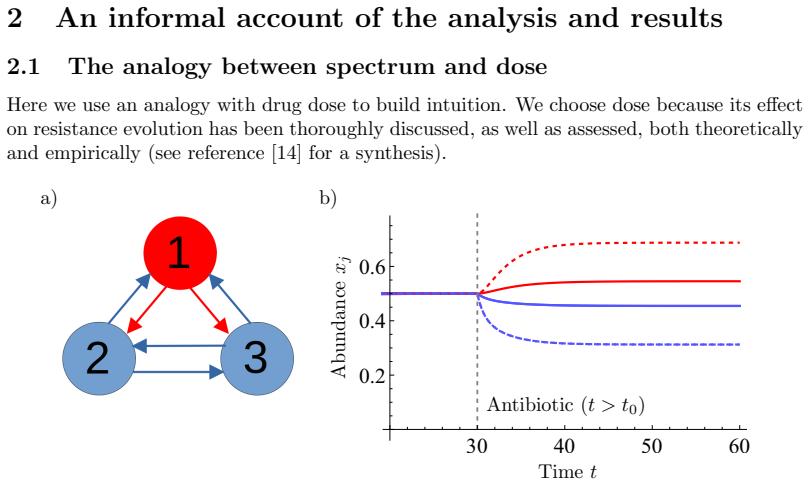
Antibiotic resistance is a major threat to global health. It emerges in multispecies microbial communities under antibiotic exposure. This makes antibiotic spectrum -- a drug's distribution of effects across species -- a potential key parameter in resistance management. However, we currently lack evolutionary theory for resistance dynamics in a multispecies setting. Analysing established community ecology theory, we develop a simple mathematical measure for how one taxon (strain or species) affects another taxon through all direct and indirect interactions in a complex interaction network. Using this, we derive the expected effects of different antibiotic spectra on the abundance of resistant taxa in microbial communities. This furthers our understanding of microbial evolutionary ecology in multispecies communities, and provides a formal theoretical basis for empirical work on optimal antibiotic choice.
Sequence information under mutation-at-birth models supplies the missing details needed for unique phylodynamic inference from trees.
abstractclick to expand
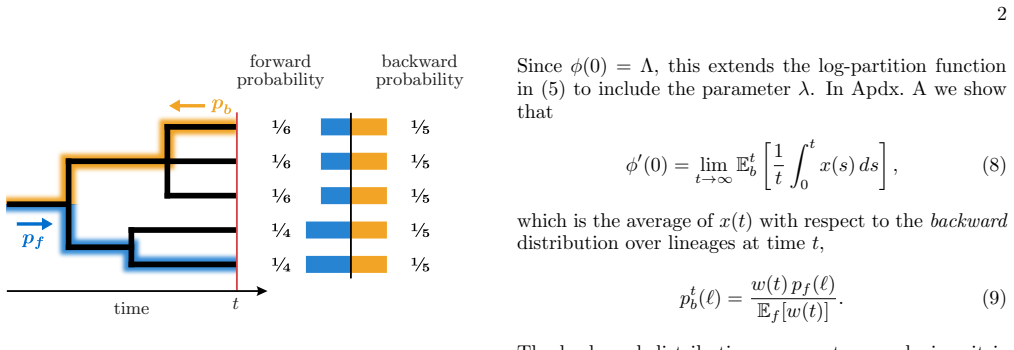
The parameters of many classes of birth-death processes cannot be inferred uniquely from phylogenetic trees: infinitely many parameter combinations yield the same distribution of phylogenetic trees. Here, we show that parameter identifiability can be recovered even for the most general cases of time-dependent rates when additional information on hidden birth events along branches of the reconstructed tree is available. This holds both for models in which individuals are sampled at a single point in time or through time at a time-dependent rate. Moreover, we prove that when mutations occur at birth - assuming two different models for the accumulation of mutations at a birth event - then information about hidden birth events is available in the sequences and thus all parameters of time-dependent birth-death models become identifiable. Thus, phylodynamic inference is identifiable whenever evolutionary models with mutation accumulation at birth (such as at speciation, transmission, or cell division) are plausible.
Fitness landscapes are mappings between genotypes, phenotypes, and fitness that shape evolution. In recent years, empirical work and theoretical models have greatly advanced our understanding of how populations navigate rugged fitness landscapes. Here, we provide a timely review of this field. Its rapidly growing literature employs a wide range of terms, which are sometimes used ambiguously or inconsistently. We therefore begin by defining the major concepts and the field's vocabulary, highlighting our own terminology choices wherever needed. We then review key results on the relationships between epistasis, ruggedness, accessibility, and navigability for genotype-fitness maps, highlighting several complex and sometimes counterintuitive connections that have emerged. Further, we review how the conserved structural properties of the underlying genotype-phenotype map -- that leads to the formation of large connected neutral networks of genotypes -- influence dynamics on fitness landscapes. We then compare the two levels to study landscape navigation -- the level of the genotype-phenotype maps and the level of genotype-fitness maps. Our review leads us to propose a new measure of navigability, based on evolutionary outcomes, that is broadly applicable and overcomes limitations of existing measures. Finally, we review the smaller body of work that relaxes the common assumption of fitness-monotonic paths on static landscapes, and discuss how this can fundamentally change the nature of fitness landscape navigation. Throughout the review, we identify directions for future work to fill existing gaps and to synthesize the disparate strands of research within the field.
Statistical physics can describe the behavior of microbial populations consisting of many heterogeneous individuals. A direct consequence is the existence of phase transitions, where the behavior of a population changes discontinuously upon a small perturbation. While such phase transitions have often been proposed in biology, connecting observed behavior to the underlying physics has remained challenging. We show how phase transitions naturally arise in microbial population dynamics and highlight their connection with genealogies. We rigorously demonstrate the existence of a first-order phase transition in a model of bacterial plasmid engineering and find a strict lower bound on the number of plasmids that can be stably maintained in a population.
The spread of infectious disease is strongly influenced by social dynamics. In addition to infection risk, individuals vaccination decisions depend on prevailing social behavior: high infection levels and widespread vaccination can increase vaccine uptake, which in turn suppresses infection. This feedback can generate sustained oscillations in disease prevalence and vaccination behavior. Here, we study two such populations undergoing the same behavioral epidemiological limit cycle and introduce weak coupling between them through social influence. We show that coupling leads to synchronization of disease dynamics between the two groups. Moreover, we find that different payoff sensitivity may lead to synchronization or anti synchronization.
Gene-sharing networks provide a powerful framework to study the evolution of viruses and mobile genetic elements. These bipartite networks, which link genes to the genomes that contain them, exhibit characteristic degree distributions: a scale-free distribution for genes and an exponential-like decay for genomes. Here, we propose a mechanistic model that explains these patterns through fundamental evolutionary processes including horizontal gene transfer, capture of new genes, emergence of new genomes, and gene loss. Using a mean-field approximation, we derive analytical expressions for the asymptotic gene and genome degree distributions, recapitulating a power-law distribution for genes and an exponential distribution for genomes. Numerical simulations validate these predictions and yield parameter values that closely fit empirical data from dsDNA viruses, RNA viruses, and prokaryotic pangenomes. This simple model with only two parameters provides a generative framework for bipartite gene-sharing networks, offering qualitative and quantitative insights into the main evolutionary forces driving genome plasticity. Setting the gene loss rate to zero, the gene and genome degree distributions of the model closely fit the empirically observed distributions. Thus, evolution of viruses appears to be dominated by gene gain, in agreement with the results of independent reconstructions of viral evolution.
Cooperation is central to the organization of complex biological and social systems. Most theoretical models assume homogeneous environments; in reality, populations inhabit spatially varying landscapes in which the payoffs of cooperation differ across space. Here, we introduce a general framework for the evolution of cooperation in complex, heterogeneous environments where the benefit of cooperation depends on local environmental quality. Cooperators in environmentally rich sites confer greater benefits than those on poor sites. We show that whether heterogeneity promotes or suppresses cooperation is determined primarily by the spatial organization of environmental states. Across arbitrary environmental landscapes, a single quantity, the spatial correlation index (SCI), predicts the fixation probability of cooperators. Under weak selection, segregated environments enhance cooperation, whereas highly intermixed, checkerboard-like landscapes suppress it. Beyond fixation probabilities, environmental organization also controls evolutionary timescales: segregated landscapes generate long-lived metastable coexistence, whereas intermixed landscapes lead to faster but less successful fixation of cooperators. Together, these results provide a unifying description of how spatial environmental heterogeneity shapes the evolution of cooperation and suggest measurable predictors of cooperative success in biological and social settings.
In this study, we investigate the application of Semidefinite Programming (SDP) to phylogenetics. SDP is a powerful optimization framework that seeks to optimize a linear objective function over the cone of positive semidefinite matrices. As a convex optimization problem, SDP generalizes linear programming and provides tight relaxations for many combinatorial optimization problems. However, despite its many applications, SDP remains largely unused in computational biology.
We argue that SDP relaxations are particularly well suited for phylogenetic inference. As a proof of concept, we focus on the Balanced Minimum Evolution (BME) problem, a widely used model in distance-based phylogenetics. We propose an algorithm combining an SDP relaxation with a rounding scheme that iteratively converts relaxed solutions into valid tree topologies. Experiments on simulated and empirical datasets show that the method enables accurate phylogenetic reconstruction. The approach is sufficiently general to be extendable to other phylogenetic problems.
Review of deterministic and stochastic approaches shows how to lower global burden from S. pneumoniae and RSV through targeted immunization.
abstractclick to expand
Infectious diseases continue to pose significant public health challenges worldwide, requiring effective prevention and control strategies to mitigate their negative impact. Infectious diseases can be broadly classified into two groups: vaccine-preventable diseases (e.g., measles, polio, influenza, hepatitis B, pneumonia) and vaccine-non-preventable diseases (e.g., HIV/AIDS). Vaccine-preventable disease models are one of the essential tools for understanding infectious disease dynamics, evaluating intervention strategies, and guiding public health policies. In this review article, we explore the recent advancements in modeling two particular vaccine-preventable infectious diseases. Here, we consider both deterministic and stochastic models to comprehensively capture the complexity of disease transmission, vaccine efficacy, and population-level immunity. We highlight the application of these models to the infectious diseases, namely, bacterial and viral pneumonia caused by the bacteria Streptococcus pneumoniae (S. pneumoniae) and the respiratory syncytial virus (RSV). Pneumonia carry a substantial global burden, where modeling has played a crucial role in assessing vaccine impacts and optimizing immunization strategies to minimize the disease burden. By synthesizing recent methodologies and findings, this review provides valuable insights for future research and policy decisions aimed at improving vaccine-preventable disease control for pneumonia caused by S. pneumoniae and RSV.
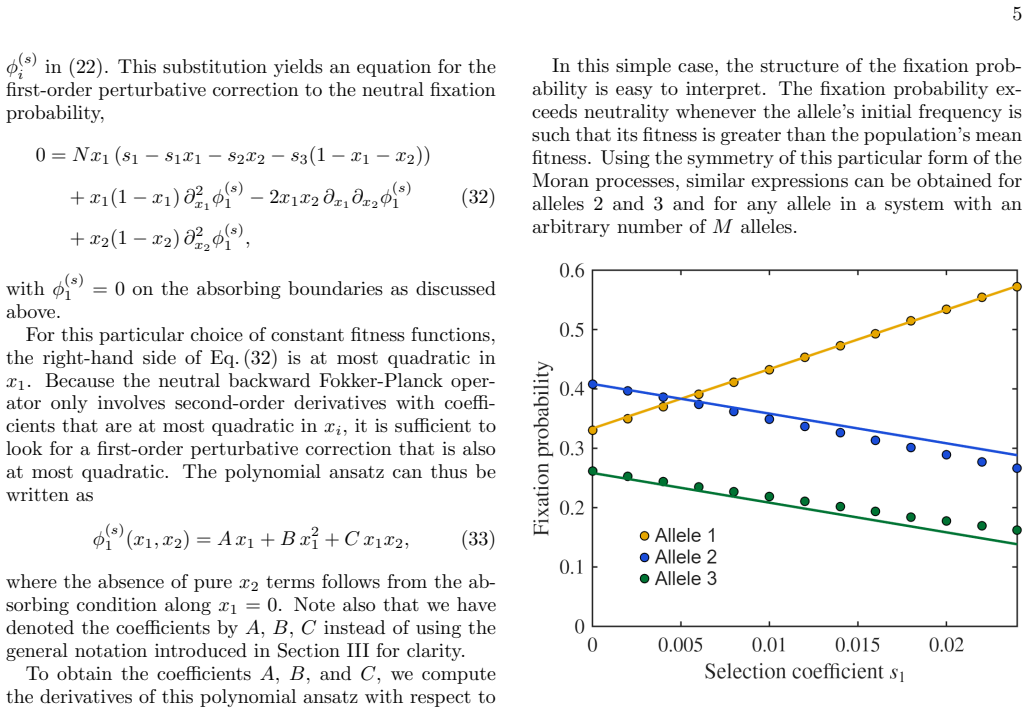
Fixation probabilities are essential for characterizing stochastic evolutionary dynamics, but analytical results remain limited mainly to systems with two competing types. We develop a perturbative framework to compute fixation probabilities in multi-allele Moran processes under weak selection. Exploiting the general structure of the backward Fokker-Planck operator in this regime, we show that fixation probabilities admit a systematic expansion around their neutral solution. We first introduce the framework in a general case with $M$ competing alleles and arbitrary fitness functions, and then apply it to three biologically motivated examples: a simple model of three competing alleles with a constant fitness function, a coordination game in which allele fitness increases with its frequency in the population, and a model of clonal interference between mutualistic alleles. These results extend the analytical understanding of fixation probabilities beyond pairwise interactions, establishing a framework for investigating multi-strategy stochastic evolutionary dynamics.
Analysis of present-day transfer RNA sequences from a bacterium produces a timeline matching the colonization of the universal codon table.
abstractclick to expand
Background/ Objectives: Resolving the origin of the genetic code is fundamental to understanding how life began its journey out of the chemical world. Since its deciphering some 60 years ago, there is still no general theory of the emergence of the genetic code. My objectives are to bring some unique data that might provide some insight into this particular issue. Methods: Because tRNA (transfer RNA) constitutes a crucial piece of the present translational system, having unique structural characteristics, I hypothesized that they might constitute the key elements at the origin of the genetic code and thus decided to compare the primary structure of the tRNAs from a bacterium, Bacillus subtilis. Results: The comparison of the primary structure of the tRNAs from Bacillus subtilis generated a genealogical tree, meaning that the tRNAs were all related and appeared gradually in a precise time sequence. Remarkably, analysis of the various characteristics of this tRNAs tree showed that it very likely reflects the time of entry of amino acids into the Universal Codon Table. Conclusions: These results strongly suggest that the tRNA entity was indeed a major component in the formation of the genetic code and, further, provide a likely scenario for the time sequence of codon colonization of the Universal Codon Table by the various amino acids at the very beginning of life. Also, these data are interpreted in terms of a general theory of the origin of the genetic code I propose, the poly-tRNA theory.
Reanalysis without random matrices identifies mechanisms that allow stability to persist despite added size and interactions.
abstractclick to expand
Over fifty years ago, Robert May applied random matrix theory to show that as ecological systems grow in size, stability decreases. What emerged from this and the critique that followed was decades of what has been called the complexity-stability debate. However, decades of critique over the assumptions that Robert May applied in carrying out his analysis have not been enough to fully dispel the strength of his conclusion and close the debate. Drawing on a mathematical approach that had not yet been fully developed in the early 70s, it is possible to revisit the argument without the use of random matrix techniques, and provide more detailed understanding of the mechanisms that play a deciding role in stability of ecological systems, countering the broad conclusion that led to the complexity-stability debate.
The composition of a polyclonal antibody response is hard to measure experimentally but contains vital information about the robustness of immunity. Here, we argue that the statistics of neutralization titers alone can be used to make quantitative predictions about the composition of the response, circumventing challenges arising through sequencing and monoclonal antibody expression. We show that the response against influenza within a cohort can be either driven by a collective phenomenon where many antibodies contribute to neutralization, or dominated by just a few strong binders, leading to a broad distribution of titers across individuals described by a Gumbel distribution from extreme value theory. Comparing titers across cohorts, we find that Gumbel statistics {accurately describe} individuals prior to an immune challenge. We propose an equilibrium binding model that quantitatively captures titer data and illustrates the structure of the polyclonal response. Our approach extends generically to immune responses to other pathogens.
Infectious disease transmission in human populations has a complex two-way interaction with changes in host behaviour. It is increasingly recognised that incorporating adaptive behavioural change into epidemic models is important for improving understanding of infectious disease dynamics and developing policy-relevant modelling tools. An important aspect of behavioural dynamics is social contagion, where people tend to adopt behaviours exhibited by others around them. In a simple behavioural contagion model, the behaviour uptake rate increases linearly with the number of contacts who have adopted a given behaviour. Here, we explore an epidemic model with complex behavioural contagion, where the behaviour uptake rate is a nonlinear function of the number of behaving contacts. We identify key bifurcation parameters of the model, which include the basic reproduction number $R_0$, the strength of the behavioural effect on disease transmission, and the speed of behaviour uptake relative to behaviour abandonment. We show that, in some regions of parameter space, the model has multiple disease-free equilibria. In this situation, the occurrence of an epidemic in a population with an initially low level of behaviour practice can trigger a self-sustaining increase in behaviour, which then causes the disease to be eliminated. In some cases, while moderate values of $R_0$ lead to the disease becoming endemic, higher values of $R_0$ may lead to behaviour-driven disease elimination. We demonstrate that this mechanism of epidemic-triggered uptake of behaviour leading to disease elimination can occur in the presence and absence of temporary post-infection immunity.
Writing systems are cultural replicators whose evolution has never been studied quantitatively at global scale. We compile the Global Script Database (GSD): 300 writing and notation systems, 50 binary structural characters, and 259 phylogenetic edges spanning 5,400 years. Applying four methods -- phenetics, cladistics, Bayesian inference, and neural network clustering -- we find that scripts exhibit a detectable molecular clock. The best-fitting model (Mk+Gamma strict clock) yields a substitution rate of q = 0.226 substitutions/character/millennium (95% CI: 0.034-1.22; Delta BIC = -4.1 versus relaxed clock; Delta BIC = -1,364.7 versus Mk without rate variation). Political interventions break this clock: deviation from expected divergence times correlates with intervention intensity (Spearman rho = 0.556, p < 10^{-4}), and per-character rate analysis reveals that intervention selectively rewrites deep structural features rather than merely accelerating change (rate profile correlation rho = 0.320). We identify 30 major script replacement events and rank their destructive impact. A ceiling effect suppresses independent invention wherever writing already exists (Fisher's exact OR = 0.054, p < 10^{-6}), and colonial contact predicts script extinction (Cox HR = 5.25, p = 0.0006). The Spanish Empire extinguished the most scripts (6 of 12 contacted, 50%), followed by the Empire of Japan (3 of 9, 33.3%). Feature coding was validated by inter-rater reliability testing with two independent human coders (Cohen's kappa = 0.877; human-LLM kappa = 0.929; Fleiss' kappa = 0.911).
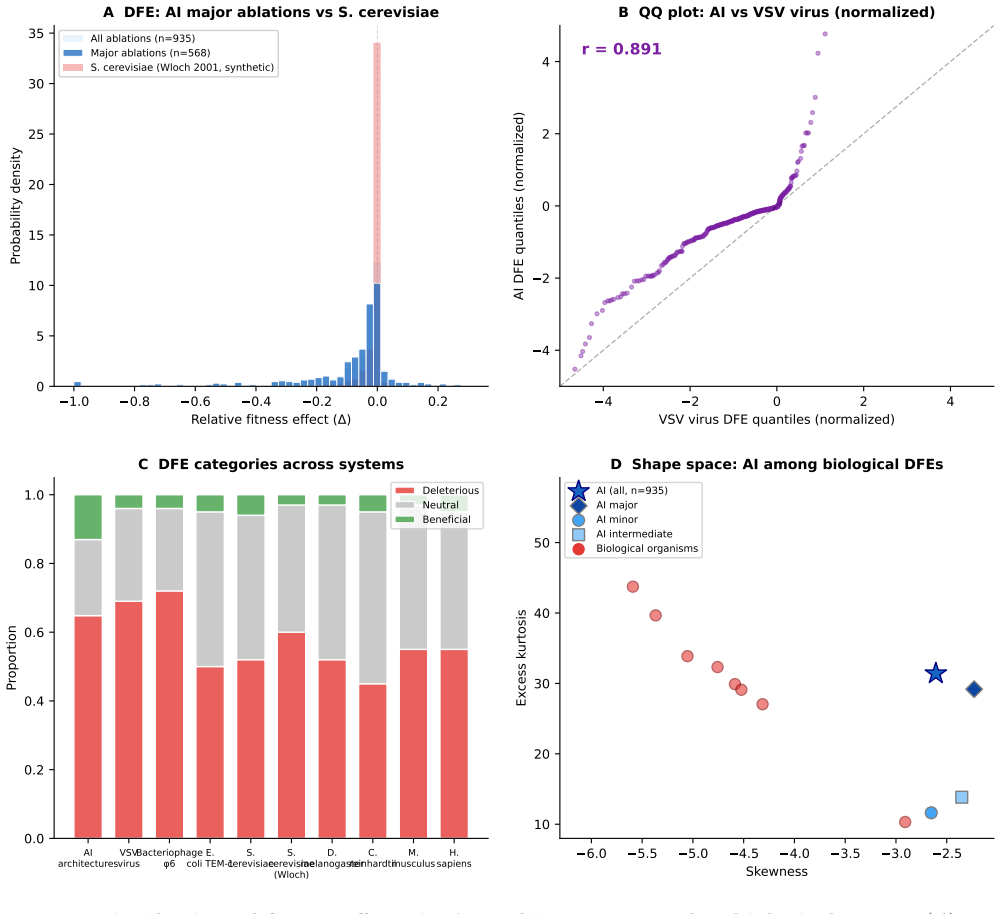
We test whether artificial intelligence architectural evolution obeys the same statistical laws as biological evolution. Compiling 935 ablation experiments from 161 publications, we show that the distribution of fitness effects (DFE) of architectural modifications follows a heavy-tailed Student's t-distribution with proportions (68% deleterious, 19% neutral, 13% beneficial for major ablations, n=568) that place AI between compact viral genomes and simple eukaryotes. The DFE shape matches D. melanogaster (normalized KS=0.07) and S. cerevisiae (KS=0.09); the elevated beneficial fraction (13% vs. 1-6% in biology) quantifies the advantage of directed over blind search while preserving the distributional form. Architectural origination follows logistic dynamics (R^2=0.994) with punctuated equilibria and adaptive radiation into domain niches. Fourteen architectural traits were independently invented 3-5 times, paralleling biological convergences. These results demonstrate that the statistical structure of evolution is substrate-independent, determined by fitness landscape topology rather than the mechanism of selection.
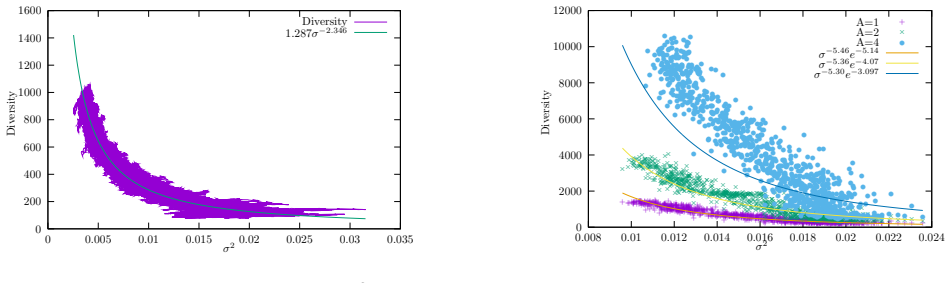
A fragmented landscape reduces the impact of interspecies
connectivity, leading to higher diversity levels than otherwise
possible in a connected landscape. Reconnecting a previously
fragmented landscape initiates an extinction event, preferentially
weeding out more highly connected species. A sequence of
fragmentation-coalescence events will drive the ecosystem to higher
levels of diversity in a ratchet-like effect, than if the landscape
continuously remained connected.
Understanding epidemic dynamics in urban environments requires models that capture interactions across space and time while incorporating biological constraints. In this work, we propose a probabilistic spatiotemporal framework based on pairwise interaction kernels to analyze arboviral transmission using large-scale georeferenced data from Recife, Brazil. The model describes interactions as a function of spatial distance and temporally delayed influence, with parameters estimated via maximum likelihood. Our results reveal a marked asymmetry between spatial and temporal components. The spatial parameter systematically collapses, indicating that spatial proximity does not provide discriminatory information between diseases at the urban scale. In contrast, temporal dynamics exhibit scale-dependent behavior: statistical differentiation between dengue, Zika, and chikungunya emerges only beyond a critical temporal window. We show that unconstrained models primarily capture short-term co-occurrence, leading to apparent but non-robust differences, while biologically constrained models reveal a common underlying transmission structure. Additionally, reconstructed transmission networks exhibit localized and structured interaction patterns consistent with plausible epidemic propagation. These findings demonstrate that epidemic differentiation is not intrinsic, but an emergent phenomenon dependent on temporal scale, highlighting the importance of biologically grounded and scale-aware modeling in spatiotemporal epidemic analysis.
This study investigates the influence of different types of non-pharmaceutical interventions (NPIs) on epidemic progression using SIR compartmental models. We analyze the optimization of two distinct targets: the final epidemic size and the infection peak, particularly how they respond to variations in the initiation time of the NPIs. We derive analytical approximations for the critical points of the infection curve of the standard mean-field SIR model with NPIs, and for the epidemic size, enabling a systematic comparison. The analytical results reveal the existence of six different allowed scenarios for the evolution of the epidemic with a single NPI. Furthermore, by employing degree-based mean-field network models, we distinguish between NPIs that decrease the transmission rate (individual and environmental measures) and those that reduce social contacts (lock down measures). We find that, when assuming equal effects on the reproductive number, the former are more efficient in reducing the final epidemic size. Meanwhile, the effectivities of both types of NPIs differ in reducing primary and secondary peaks. The results for all models consistently confirm that minimizing the infection peak requires earlier implementation of the NPI than minimizing the epidemic size, offering new insights for strategic public health timing.
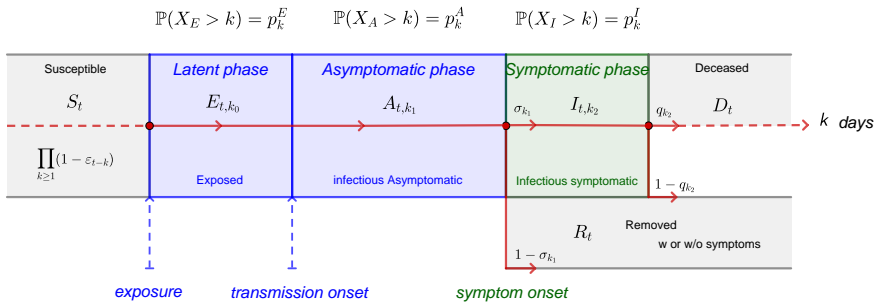
We study the random times between successive cases in a transmission chain of infectious diseases with asymptomatic carriers. We derive the probability distribution of this generation time (in days) from a discrete-time epidemic model with variable infectiousness both along elapsed times and across phases. The introduced non-Markovian model is a compact recursive system featuring random waiting times at each of the three infected stages: latent, asymptomatic, and symptomatic. By rearranging the terms of the basic reproduction number, which represents the expected number of secondary cases produced by an asymptomatic primary case who may eventually develop symptoms, we get to the generation-time probabilities. The expected generation time is a convex combination of the expected generation times before and after the onset of symptoms. Additionally, our analysis reveals that the n-th moment of the generation time is related to the moments up to n-th order of the weighted forward recurrence time at each phase and the moments up to n-th order of the latent period and the incubation period. These weights are the infectiousness along the elapsed times for each transmission phase. Finally, we illustrate several data-driven epidemic scenarios, assuming that infectiousness varies only across phases and discrete Weibull distributions for the waiting times. Each disease analyzed, except measles, exhibits moderate variability in its respective generation time distribution.
Updated CVTree service adds fast rooting and taxonomy checks to support genome-based microbial classification.
abstractclick to expand
CVTree is an alignment-free methodology for inferring species phylogeny and taxonomy. This method allows for the efficient and accurate resolution of evolutionary relationships among large numbers of species based on whole-genome sequence data. Since 2004, we have been continuously providing CVTree web services. Recently, the server has undergone a significant upgrade, culminating in the release of the WebCVTree4 platform. This upgrade encompasses a comprehensive update of the inbuilt genomic database. Concurrently, the core algorithm has been optimized to support online phylogenetic reconstruction for tens of thousands of species, thereby facilitating the construction of genome-based trees of life. Moreover, we have developed a novel algorithm for comparing phylogenetic trees with established taxonomic systems. This algorithm allows for rapid tree rooting, taxonomic annotation, and topology comparison. Through an interactive web-based visualization tool, users can dynamically adjust tree layouts and export high-quality phylogenetic tree figures. This functionality provides robust support for comparative analysis between CVTree-generated phylogeny and taxonomy. As genome sequencing costs continue to decline, research into microbial evolution and the revision of taxonomic frameworks will increasingly rely on whole-genome data. WebCVTree4 will serve as an efficient web-based platform to support studies in microbial phylogenetics and taxonomy, accessible at https://cvtree.online/.
This chapter is an overview of foundational results in the mathematical theory of replicator systems. Its primary aim is to provide a unified framework for the mathematical formalisation of evolutionary processes in the spirit of generalised Darwinism -- that is, for any system in which heredity, variability, and selection can be meaningfully defined, regardless of the specific biological substrate. Starting from the Kolmogorov equations for interacting populations, we derive the replicator equation and examine three canonical regimes: independent, autocatalytic, and hypercyclic replication. The hypercycle is shown to be permanent and to carry evolutionary variability intrinsically. We then survey the quasispecies framework -- the Eigen and Crow--Kimura models -- covering global stability of equilibria, sequence space structure, and the error-threshold phenomenon. Throughout, the emphasis is on the mathematical structures that underlie these models rather than on biological detail, with the goal of making the framework applicable to abstract evolutionary dynamics beyond its original molecular biology context.
Convergent evolution provides powerful evidence for natural selection, yet its molecular basis is typically sought in protein-coding amino acid substitutions. Whether adaptive pressures can drive the convergent evolution of synonymous codon usage bias (CUB) to override phylogenetic history remains a fundamental question. Here, we investigate this within the rapidly radiating fern family Thelypteridaceae by establishing a comparative framework that integrates chloroplast phylogenomics with dimensionality reduction of codon usage, morphological data, and divergence time estimation. Our results reveal that chloroplast CUB patterns are strikingly incongruent with the phylogeny of this family. Instead, they partition species into distinct clusters that strongly correlate with a convergently evolved morphological trait, lamina base architecture, a key adaptation whose radiation we date to the early Neogene. This convergent molecular signal is driven by a specific subset of photosynthesis-related genes (ndhJ, psaA, and psbD), which exhibit a high density of type-specific, third-position codon substitutions. These findings demonstrate that CUB can serve as a powerful, quantifiable indicator of adaptive history, revealing a cryptic layer of molecular convergence linked to the regulation of protein synthesis. Our work providing a new framework for uncovering adaptive histories obscured by complex evolutionary processes.