pith. sign in

arxiv: 2606.12257 · v1 · pith:J67XHSZCnew · submitted 2026-06-10 · 🧮 math.SG · math-ph· math.AT· math.DG· math.MP

Quantum cohomology and split generation in Lagrangian Floer theory

Pith reviewed 2026-06-27 07:22 UTC · model grok-4.3

classification 🧮 math.SG math-phmath.ATmath.DGmath.MP
keywords quantum cohomologyFukaya categorysplit generationLagrangian submanifoldsHochschild cohomologyclosed-open mapssymplectic manifoldA-infinity category
0
0 comments X

The pith

If the map from quantum cohomology of a symplectic manifold X to the Hochschild cohomology of the Fukaya category built from a finite collection of Lagrangians is injective, then that collection split-generates every other Lagrangian equipp

A machine-rendered reading of the paper's core claim, the machinery that carries it, and where it could break.

The paper builds a cyclic filtered strictly unital curved A∞ category from any finite collection of Lagrangian submanifolds in a compact symplectic manifold and equips it with closed-open and open-closed maps to and from quantum cohomology. It proves that injectivity of the quantum-cohomology-to-Hochschild-cohomology map forces the given collection to split-generate the full Fukaya category of all other Lagrangians with weak bounding cochains. The same injectivity also yields isomorphisms identifying the Hochschild homology and cohomology of the category with the quantum cohomology of the ambient manifold. This extends an earlier result that held only for exact symplectic manifolds.

Core claim

Given a finite collection of Lagrangian submanifolds in a compact symplectic manifold X, the authors construct a cyclic filtered strictly unital curved A∞ category L and develop closed-open and open-closed maps. They prove that whenever the induced map from the quantum cohomology of X to the Hochschild cohomology of L is injective, every other Lagrangian equipped with a weak bounding cochain lies in the split-generated subcategory of L, and the Hochschild homology and cohomology of L are isomorphic to the quantum cohomology of X.

What carries the argument

The closed-open map from quantum cohomology of X to Hochschild cohomology of the Fukaya category L, together with its open-closed counterpart.

If this is right

  • Any Lagrangian submanifold equipped with a weak bounding cochain lies in the split-generated subcategory of the Fukaya category built from the given collection.
  • The Hochschild homology of the Fukaya category is isomorphic to the quantum cohomology of X.
  • The Hochschild cohomology of the Fukaya category is isomorphic to the quantum cohomology of X.
  • The same conclusions hold on any compact symplectic manifold, not only on exact ones.

Where Pith is reading between the lines

These are editorial extensions of the paper, not claims the author makes directly.

  • The criterion supplies a practical test for split generation once the relevant map can be computed explicitly in examples.
  • When the map is injective the Fukaya category becomes a faithful algebraic model whose invariants are completely determined by closed-string data.
  • The result suggests that quantum cohomology can serve as a complete invariant for deciding which Lagrangians generate the full category under split generation.

Load-bearing premise

The cyclic filtered strictly unital curved A∞ category and the closed-open and open-closed maps are well-defined and satisfy the required algebraic and analytic properties on a general compact symplectic manifold.

What would settle it

An explicit compact symplectic manifold X, a finite collection L of Lagrangians, and another Lagrangian M with weak bounding cochain such that the quantum-to-Hochschild map is injective yet M does not lie in the split-generated subcategory of L.

Figures

Figures reproduced from arXiv: 2606.12257 by H. Ohta, K. Fukaya, K.Ono, M. Abouzaid, Y.-G. OH.

Figure 1
Figure 1. Figure 1: Constant map moduli space consists of one point that is a constant map with value p. See [PITH_FULL_IMAGE:figures/full_fig_p065_1.png] view at source ↗
Figure 2
Figure 2. Figure 2: Constant triangle bubbles component, then the perturbation of the moduli space of strip with one marked point can not be compatible with forgetful map of w0 [PITH_FULL_IMAGE:figures/full_fig_p066_2.png] view at source ↗
Figure 3
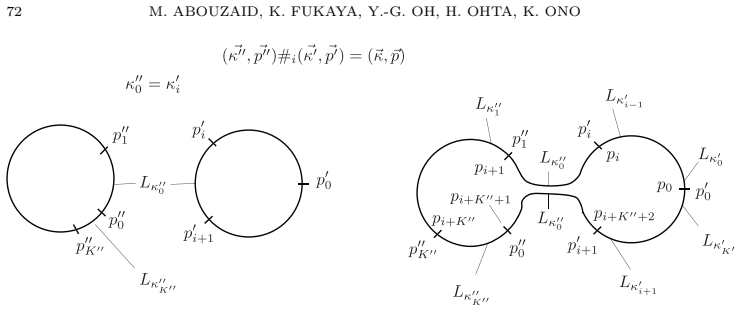
Figure 3. Figure 3: One could restore symmetry by allowing gluing at arbitrary marked [PITH_FULL_IMAGE:figures/full_fig_p070_3.png] view at source ↗
Figure 3
Figure 3. Figure 3: Gluing in Definition 9.12 in terms of additional marked points along each interval zizi+1, but we can describe the effect of the degenerations on relative homotopy classes without introducing these marked points, as follows: Definition 9.14. Suppose (⃗κ′ , ⃗p′ ) ∈ SeqK′ , (⃗κ′′, ⃗p′′) ∈ SeqK′′ . We assume κ ′ i = κ ′′ 0 . Then we define (⃗κ′′, ⃗p′′)#i(⃗κ′ , ⃗p′ ) = (⃗κ, ⃗p) (9.6) where ⃗κ = (κ ′ 0 , . . . … view at source ↗
Figure 4
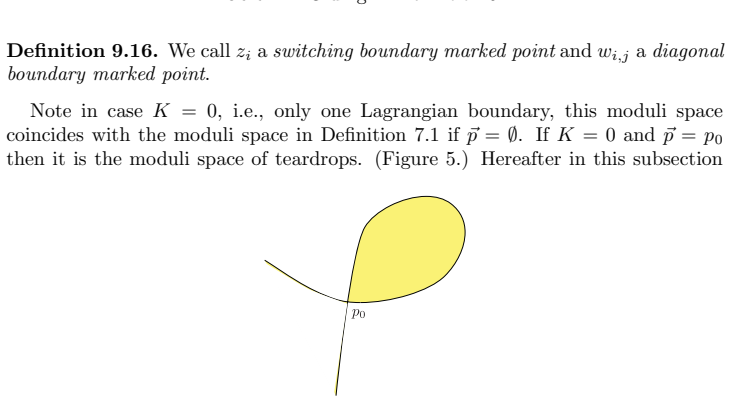
Figure 4. Figure 4: Gluing in Definition 9.14 Definition 9.16. We call zi a switching boundary marked point and wi,j a diagonal boundary marked point. Note in case K = 0, i.e., only one Lagrangian boundary, this moduli space coincides with the moduli space in Definition 7.1 if ⃗p = ∅. If K = 0 and ⃗p = p0 then it is the moduli space of teardrops. ( [PITH_FULL_IMAGE:figures/full_fig_p072_4.png] view at source ↗
Figure 5
Figure 5. Figure 5: Teardrops we assume ⃗p ̸= ∅. (This is because of the way how we organize the induction to define Kuranishi structures and CF-perturbations. Namely they are fixed already in the case K = 0, ⃗p = ∅ in Section 7.) By evaluating u at z + i and wi,j we obtain an evaluation map ev = (ev+,(evi) K i=0 ) : ◦Mℓ;⃗k ((⃗κ, ⃗p); B) → Xℓ × Y K i=0 L˜ki κi , (9.8) where ev+ = (ev+ 1 , . . . , ev+ ℓ ), evi = (evi,1, . . . … view at source ↗
Figure 6
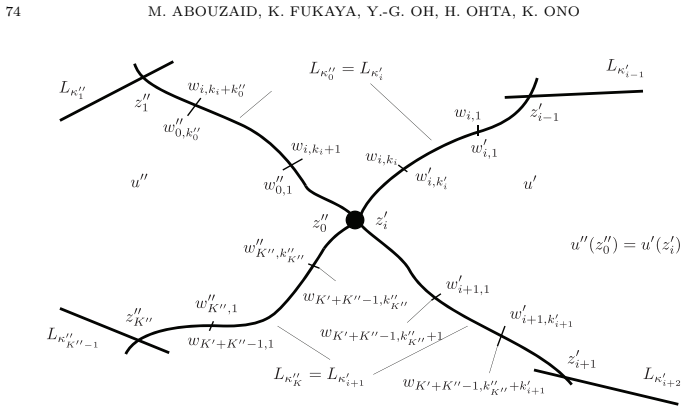
Figure 6. Figure 6: Boundary of Type I (Boundary of Type II): We assume (9.4). Let B′ ∈ Π2(⃗κ′ , ⃗p′ ), B′′ ∈ Π2(⃗κ′′, ⃗p′′) with B′′#i,i+1B′ = B. Let ⃗k ′ = (k ′ 0 , . . . , k′ K′ ), ⃗k ′′ = (k ′′ 0 , . . . , k′′ K′′ ). We define ⃗k = ⃗k ′′#i,i+1⃗k ′ by kj =    k ′ j j = 0, . . . , i − 1, k ′ i + k ′′ 0 , j = i, k ′′ j−i j = i + 1, . . . ,i + K′′ − 1, k ′ i+1 + k ′′ K′′ j = i + K′′ , k ′ j−K′′+1 j = i + K′′ + … view at source ↗
Figure 7
Figure 7. Figure 7: Boundary of Type II {1, . . . , k′ i }, m′′ ∈ {1, . . . , k′′ 0 }. We define ⃗k = ⃗k ′′#i,(m′ ,m′′) ⃗k ′ by kj =    k ′ j j = 0, . . . , i − 1, m′ + k ′′ 0 − m′′ − 1 j = i, k ′′ j−i j = i + 1, . . . ,i + K′′ , m′′ + k ′ i − m′ − 1 j = i + K′′ + 1, k ′ j−K′′−1 j = i + K′′ + 2, . . . , K′ + K′′+1. (See [PITH_FULL_IMAGE:figures/full_fig_p074_7.png] view at source ↗
Figure 8
Figure 8. Figure 8: Boundary of Type III [PITH_FULL_IMAGE:figures/full_fig_p074_8.png] view at source ↗
Figure 9
Figure 9. Figure 9: Forgetful map Red We also put BCF(L form; ⃗κ) = O K i=1 CF(Lκi−1 , Lκi ; F)[1] where CF(Lκi−1 , Lκi ; F) =    M p∈Lκi−1∩Lκi F[p] if Lκi−1 ̸= Lκi , (Ω(L˜ κi ) ⊗ F) ⊕ M p∈(L˜κi×XL˜κi )\L˜κi F[p] if Lκi−1 = Lκi . (9.21) We recall that the immersed Lagrangian Lκi is identified with (L˜ κi , iLκi ), where L˜ κi is an n = 1 2 dimR X dimensional manifold and iLκi : L˜ κi → X is a Lagrangian im￾mersion. N… view at source ↗
Figure 10
Figure 10. Figure 10: (tricom1) forgettable unforgettable [PITH_FULL_IMAGE:figures/full_fig_p096_10.png] view at source ↗
Figure 12
Figure 12. Figure 12: (tricom3) (3) Its normalized boundary is decomposed as ∂([0, 1]|ff | × Mℓ;⃗k ((⃗κ, ⃗p); B; ⃗f) ⊞1 ) =[0, 1]|ff | × ∂(Mℓ;⃗k ((⃗κ, ⃗p); B; ⃗f) ⊞1 ) ∪ ∂([0, 1]|ff | ) × Mℓ;⃗k ((⃗κ, ⃗p); B; ⃗f) ⊞1 . The following compatibility condition holds for their Kuranishi structures. (a) The second factor of the first summand is decomposed as a union of the three types of fiber or direct products (9.9), (9.10), (9.11).… view at source ↗
Figure 13
Figure 13. Figure 13: Definition 10.1 (d). We then can work out the homotopy limit process in the same way as Subsections 9.4 and 9.5 to obtain a structure over Λ0. We denote it by L form c.u. . In fact the notion of cyclic and homotopically unital pseudo-isotopy is defined as follows. Definition 10.18. Let (C,⟨, ⟩, {m C,t k,β}, {c C,t k,β}) be a cyclic pseudo-isotopy between G-gapped filtered A∞ categories C, D. Namely it sat… view at source ↗
Figure 14
Figure 14. Figure 14: Ribbon tree and stable disk We first consider the part which does not contain e + Lκ or fLκ , that is the cyclic A∞ category in Section 9. For a while we also assume that Lκ ̸= Lκ′ for κ ̸= κ ′ . (Namely we exclude the case Lκ = Lκ′ , θκ ̸= θκ′ for a while.) We remove this assumption in Subsection 12.3 [PITH_FULL_IMAGE:figures/full_fig_p108_14.png] view at source ↗
Figure 15
Figure 15. Figure 15: Γ0,K(·),p(·) f b Γ0,K(·),p(·) =    inclusion : H(L˜ κ; F) → Ω(L˜ κ) if Lκ = Lκ′ , p 7→ ® p p = p(e) 0 p ̸= p(e) if Lκ ̸= Lκ′ , (12.8) and m b Γ0,K(·),p(·) = 0. (12.9) The next step of our inductive construction is to consider a tree Γ with exactly one interior vertex v. It has N + 1 exterior edges and ⃗κ(Γ) = ⃗κ(v) ∈ K✿ N+1. We put f b Γ = GLκ ◦ m f.u.b ⃗κ(v),B(v) , m b Γ = ΠLκ ◦ m f.u.b ⃗κ(v),B(v) .… view at source ↗
Figure 16
Figure 16. Figure 16: fΓ and mΓ [PITH_FULL_IMAGE:figures/full_fig_p110_16.png] view at source ↗
Figure 17
Figure 17. Figure 17: Case (ii) [PITH_FULL_IMAGE:figures/full_fig_p118_17.png] view at source ↗
Figure 18
Figure 18. Figure 18: Case (i) 12.6. Relative version. We fix a bulk cohomology class b and a background class st. Let L be a finite collection {(Lκ, θκ, bκ) | κ = 1, 2, . . . }. We take another collection U of {(Uυ, θυ, bυ) | υ = 1, 2, . . . }. Proposition 12.9. Suppose we are given choices to define the structure of unital cyclic filtered A∞ category L with L as the set of objects and U with U as the set of objects. Then we … view at source ↗
Figure 19
Figure 19. Figure 19: Projection Πτ boundary. In other words it is the set of (p, ⃗sp) such that sp,i ≤ τ − 1 holds for at least one i. Definition 13.11. Obstruction bundle data Epˆ (xb) is said to be τ -collared if EΠτ (pˆ)(Πτ (xˆ)) = Epˆ (xb). (13.3) A Kuranishi structure is said to be τ -collared if it is obtained from τ -collared obstruction bundle data. When we replace Mℓ;k+1(L; β) by Mℓ;k+1(L; β) ⊞1 its normalized bounda… view at source ↗
Figure 20
Figure 20. Figure 20: Forgetful map collapses a disk bubble equation ∂ux ∈ Ep(x) this phenomenon does not happen, if we take Ep(x) in an appropriate way. We formulate a few conditions so that the above argument works. Let p ∈ Mℓ;k+1(L; β) and x be in a small neighborhood Up in the ambient set. For each such pair (p, x), we have an open embedding Φˆ p,x : Σx(thick) → Σp. Here Σx(thick) is a thick part. (See footnote 41.) This m… view at source ↗
Figure 21
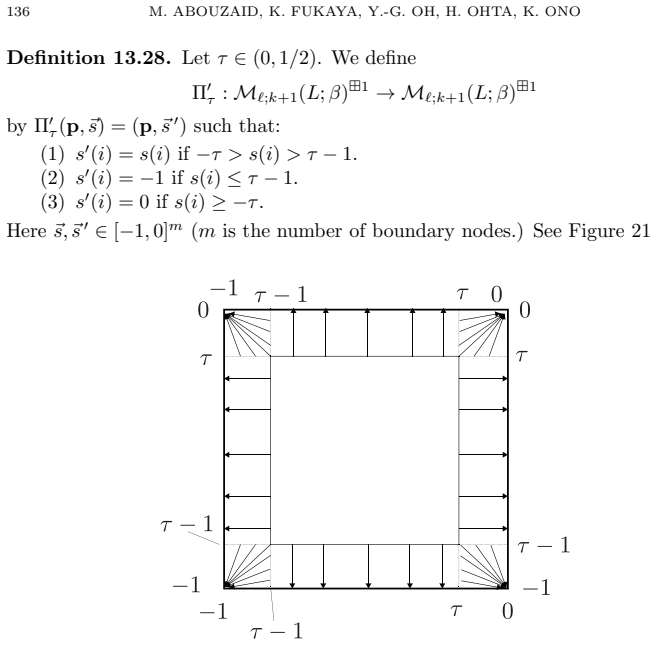
Figure 21. Figure 21: Projection to bi-collar Lemma 13.29. For the above given τ ∈ (0, 1/2), we fix a constant ϵ > 0 with ϵ < τ . There exist functions Mm : [−1, 0]m → [−1, 0] with the following properties. (1) If there exists si = −1 then Mm(⃗s) = −1. (2) Π′ τ ◦ Mm = Mm ◦ Π′ τ . (3) Mm is invariant under the permutation of the factors of the domain. (4) Mm(s1, . . . , sm−1, 0) = Mm−1(s1, . . . , sm−1). (5) Mm is continuous. (… view at source ↗
Figure 22
Figure 22. Figure 22: The level set of M2 Here m is the cardinarity of the set {j | Sp(j) = i}. We define forget⊞1 : Xℓ;k+1(L; β) ⊞1 → Xℓ;0(L; β) ⊞1 (13.15) in the same way. We remark that the notions of ‘preserving triviality’ and ‘support preserving property’ can be defined for the obstruction bundle data of Mℓ;k+1(L; β) ⊞1 in the same way. Then Definition 13.19 (compatibility of the obstruction bundle data with forgetful ma… view at source ↗
Figure 23
Figure 23. Figure 23: G0Mℓ;0(L; β) ⊞1 and U(G0) [PITH_FULL_IMAGE:figures/full_fig_p138_23.png] view at source ↗
Figure 24
Figure 24. Figure 24: G1Mℓ;0(L; β) ⊞1 and U(G1) We first consider the case when m = 0. Note that G0Mℓ;0(L; β) ⊞1 = Mℓ;0(L; β) which is disjoint from ∂Mℓ;0(L; β) ⊞1 . So we can construct required Epˆ (xˆ) on U(G0) as follows. We first define it for pˆ ∈ ∂Mℓ;0(L; β) ⊞1 by (13.5). We construct it for pˆ ∈ G0Mℓ;0(L; β) ⊞1 by Lemma 13.13. Then we extend it to U(G0) by (13.17). Suppose we defined Epˆ (xˆ) for pˆ ∈ U(Gm−1). We use Le… view at source ↗
Figure 25
Figure 25. Figure 25: z is unforgetabble marked point by the above convention. We say p0 is a trivial component if the map up0 is constant and the number of unforgetable marked points is at most two. We say an obstruction bundle data preserves triviality if the restriction of any element of Ep(p) is 0 on trivial components. Using these definitions, we can easily generalize Lemma 13.17 to our situation. We can formulate the com… view at source ↗
Figure 26
Figure 26. Figure 26: p ∈ M5(X, L; β) (Wp, {sp,ϵ}, χp) extends to the CF-perturbations of the two fiber products in (14.4). We can use this fact to extend (Wp, {sp,ϵ}, χp) to a neighborhood of p in M5(X, L; β). (We use the fact that a smooth function defined on the boundary of a mani￾fold with corners can be extended smoothly to its neighborhood. (See [FOOO2, Lemma 7.2.121].)) Then we can use a partition of unity to globally e… view at source ↗
Figure 27
Figure 27. Figure 27: An element of a codimension two stratum z2w2 = r2 and obtain a smooth domain for r1, r2 > 0. However these gluing parameters r1, r2 are not the one in our Kuranishi structure. We consider the map ur1,r2 : D2 → X which is obtained by gluing. (By the assumption such pseudo-holomorphic map with boundary condition L exists uniquely. We fix domains Di ⊂ D2 which can be identified to a part where ui was defined… view at source ↗
Figure 28
Figure 28. Figure 28: H(Γ,v)(T) denote by bf : BCF(L) → BCF(L form uni ) the coalgebra homomorphism induced by f. (See [FOOO1, (3.2.6)].) [PITH_FULL_IMAGE:figures/full_fig_p163_28.png] view at source ↗
Figure 29
Figure 29. Figure 29: J(Γ,v)(T) [PITH_FULL_IMAGE:figures/full_fig_p164_29.png] view at source ↗
Figure 30
Figure 30. Figure 30: 2nd term The idea of the proof is to study the commutator: [d, H(Γ,v)(T)] [PITH_FULL_IMAGE:figures/full_fig_p164_30.png] view at source ↗
Figure 31
Figure 31. Figure 31: 3rd and 4th terms of H(Γ,v)(T) with the de Rham differential d. Recalling that H(Γ,v)(T) is a com￾position of operators assigned to the vertices and the edges of Γ, this commutator is expressed as a sum of the terms arising from the replacement of various opera￾tors assigned to the vertices and edges of Γ for H(T) by their commutators with d. Taking commutators with those assigned to the vertices gives [d… view at source ↗
Figure 32
Figure 32. Figure 32: An object with S 1 symmetry. Lemma 16.7. The moduli space of objects satisfying (2.a), (2.b), (2.c) above coin￾cides with the fiber product (16.8). 92Here ‘bubble’ means an extended disk component such that the 0-th interior marked point is not on it [PITH_FULL_IMAGE:figures/full_fig_p170_32.png] view at source ↗
Figure 33
Figure 33. Figure 33: p is an L∞ module homomorphism [PITH_FULL_IMAGE:figures/full_fig_p180_33.png] view at source ↗
Figure 34
Figure 34. Figure 34: Three points in M1,2 We next consider the forgetful map forget : Mℓ+2;⃗k ((⃗κ, ⃗p, m); B) → M1;2 (19.1) which forgets all but the first two interior marked points and the 0th boundary marked point. In more detail, this map is obtained as follows: let ((Σ, ⃗z+, ⃗z), u) ∈ Mℓ+2;⃗k ((⃗κ, ⃗p, m); B). Namely (Σ, ⃗z+, ⃗z) is a genus zero bordered Riemann surface with one boundary component and marked points ⃗z+,… view at source ↗
Figure 35
Figure 35. Figure 35: An element of (19.6) (2) The fiber [0, 1]|ff | × Mℓ+2;⃗k ((⃗κ, ⃗p, m); B; [Σ0];⃗f) ⊞1 of the moduli space at [Σ0] is a union of fiber products Mcl ℓ ′′+2(α) ev + 0 ×ev + ℓ′+1 ([0, 1]|ff | × Mℓ ′+1;⃗k ((⃗κ, ⃗p, m); B ′ ; ⃗f))⊞1 (19.7) where α#B′ = B, and the union is taken over all (L1, L2) ∈ Shuff(ℓ), and #L1 = ℓ ′ , #L2 = ℓ ′′. The two distinguished interior marked points z + I , z + II are in the first … view at source ↗
Figure 36
Figure 36. Figure 36: An element of (19.7) (3) The fiber [0, 1]|ff | ×Mℓ+2;⃗k ((⃗κ, ⃗p, m); B; [Σ′ ];⃗f) ⊞1 is a union of several fiber products. There are two singular points in the stable curve [Σ′ ]. There are 9 cases. Namely, z + I (resp. z + II ) lies on one of the three types of components similar to the first factors of the products (9.9), (9.10), (9.11), or those on Proposition 10.7. In case when both are similar to (9… view at source ↗
Figure 37
Figure 37. Figure 37: An element of (19.8) The fiber Mℓ+2;⃗k ((⃗κ, ⃗p, m); B; [Σ′′])⊞1 is described in a similar way. For example in (19.8) we exchange I and II. (4) The Kuranishi structures are oriented compatibly with the decompositions in (1), (2) and (3). (5) The Kuranishi structure is compatible with the forgetful map of the boundary marked points labeled by fe, in a similar sense as Proposition 10.7 (8) [PITH_FULL_IMAGE… view at source ↗
Figure 38
Figure 38. Figure 38: J(U)(a) be harmonic forms there. However we can plug in arbitrary forms without changing the formula.104 So mb in the right hand side makes sense. We define K1 ∈ CH∗ (L,L) by K1(a) = X c (−1)✠3m b (a 7;1 c ,(G ′ ◦ m f.u.b )(bf(a 7;2 c ),H(T)(a 7;3 c ),bf(a 7;4 c ), S(bf(a 7;5 c )),bf(a 7;6 c )), a 7;7 c ) 104We do not include d the exterior derivative in it [PITH_FULL_IMAGE:figures/full_fig_p202_38.png] view at source ↗
Figure 39
Figure 39. Figure 39: K1(a) in a similar way as (19.11). We next define K2 ∈ CH∗ (L,L) by K2(a) = X c (−1)✠4m b (a 9;1 c ,(G ′ ◦ m f.u.b )(bf(a 9;2 c ), f(a 9;3 c , J(T)(a 9;4 c ), a 9;5) c ), bf(a 9;6 c ), H(S)(a 9;7 c ),bf(a 9;8 c )), a 9;9 c ) with ✠4 = (deg′ a 9;1 c + deg′ a 9;2 c + deg′ a 9;3 c ) deg T+ (deg′ a 9;1 c +· · ·+ deg′ a 9;6 c )(deg S+ 1). Here H is as in right after Lemma 15.23. Note here we again abuse a nota… view at source ↗
Figure 40
Figure 40. Figure 40: K2(a) Since the formula X c (−1)✠2m b (a 7;1 c ,(G ′ ◦ m f.u.b )(bf(a 7;2 c ), J(T)(a 7;3 c ),bf(a 7;4 c ), J(S)(a 7;5 c ),bf(a 7;6 c ), a 7;7 c ) = M2(J(T), J(S))(a) 106The blue vertex is the (unique) ‘lowest’ vertex such that if we remove it then T and S will be in different connected components [PITH_FULL_IMAGE:figures/full_fig_p204_40.png] view at source ↗
Figure 41
Figure 41. Figure 41: Pairing Z The sum over f 1 , f 2 is taken as follows: we put x (H;2;1) c1 = x c1 1 ⊗ · · · ⊗ x c1 a(c1) , y (H;2;1) c2 = y c2 1 ⊗ · · · ⊗ y c2 b(c2) . We define κ(c1; 1), κ(c1; 2), υ(c2; 1), υ(c2; 2) by x c1 1 ∈ CF(Lκ′ , Lκ(c1;1)), x c1 a(c1) ∈ CF(Lκ′′ , Lκ(c1;2)), y c2 1 ∈ CF(Uυ(c2;1), Uυ′ ), y c2 b(c2) ∈ CF(Uυ(c2;2), Uυ′′ ). Then P f 1,f2 is the sum over f 1 a generator of CF∗ (Lκ(c1;1), Uυ(c2;2)) (20.1… view at source ↗
Figure 42
Figure 42. Figure 42: Left hand side of (20.14). (3) and (4)) in the figure give the first term (resp. the second term) of (20.14). Here we do not distinguish whether 0-th marked point is on the bubble or not. Applying the A∞ relation to the lower (resp. upper) part of [PITH_FULL_IMAGE:figures/full_fig_p208_42.png] view at source ↗
Figure 43
Figure 43. Figure 43: (resp. 44). In other words the sum of the terms corresponding to (a1) (a2) (a3) (a4) [PITH_FULL_IMAGE:figures/full_fig_p208_43.png] view at source ↗
Figure 44
Figure 44. Figure 44: A∞ relation II. Figures 43 and 44 are zero. The terms corresponding to (a3) and (a4) cancel with terms corresponding to (b3) and (b4). On the other hand, (a1), (a2), (b1), (b2) coincide with (1), (3), (2), (4), respectively. Thus the equality (20.14) follows modulo sign. Using the fact the definition of sign for Z is by the Koszul rule, we can check the sign. For example we can check the cancelation with … view at source ↗
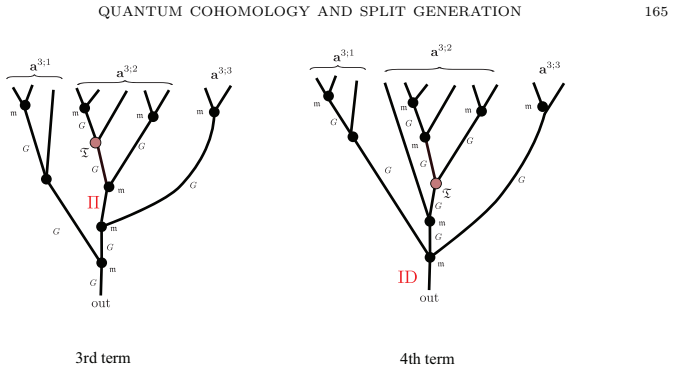
Figure 45
Figure 45. Figure 45: (Σ; ⃗z 1 , ⃗z 2 , ⃗z +) [PITH_FULL_IMAGE:figures/full_fig_p210_45.png] view at source ↗
Figure 47
Figure 47. Figure 47: (Σ2, z2 1 , z2 2 ) It is easy to see from the construction that the forgetful map (20.19) is continuous and is a smooth submersion on each stratum. We remark that (20.19) may not be smooth across strata. See [FOOO1, pp 777-778]. Hereafter we write forget−1 sc (X) ∩ Mann ℓ (⃗κ, ⃗υ; ⃗p, ⃗q; B) (20.20) for the inverse image of a subset X ⊂ Mann (1,1);0 by the map (20.19). We next describe Kuranishi structure… view at source ↗
Figure 46
Figure 46. Figure 46: (Σ1, z1 1 , z1 2 ) [PITH_FULL_IMAGE:figures/full_fig_p213_46.png] view at source ↗
Figure 48
Figure 48. Figure 48: An ele￾ment of (20.21) z 1 0 z 1 1 z 1 K z 2 0 z 2 1 z 2 R w 1 0,1 w 1 0,2 w 1 0,k1 w 2 0,1 w 1 K,k0 w 2 R,r0 w 2 w R,1 2 0,r1 X z+ i . . . Lκ0 X X Uυ0 Uυ1 UυR [PITH_FULL_IMAGE:figures/full_fig_p214_48.png] view at source ↗
Figure 50
Figure 50. Figure 50: An element of (20.22) (d) Let ⃗κ′ , ⃗κ′′ , ⃗p ′ , and ⃗p ′′, satisfy (⃗κ′′, ⃗p ′′)#i,i+1(⃗κ′ , ⃗p ′ ) = (⃗κ, ⃗p) in the sense of (9.4). Let B′′ ∈ Π2(⃗κ′′ , ⃗k ′′) and B′ ∈ Π2(X; ⃗κ′ , ⃗υ, ⃗p ′ , ⃗q) satisfy B′′#i,i+1B′ = B. Let ⃗k ′ = (k ′ 1 , . . . , k′ K′ ) and ⃗k ′′ = (k ′′ 1 , . . . , k′′ K′′ ). We set ⃗k = ⃗k ′′#i,i+1⃗k ′ . Namely kj =    k ′ j j = 0, . . . , i − 1, k ′ i + k ′′ 0 , j … view at source ↗
Figure 51
Figure 51. Figure 51: An element of (20.23) (e) The direct product: ([0, 1]|U f 2 f | × Mℓ ′′;⃗r ′′ ((⃗υ′′, ⃗q ′′); B ′′; U ⃗f 2 ) ⊞1 ) × ([0, 1]|Lff |+|U f 1 f | × Mann (⃗κ,⃗k),(⃗υ′ ,⃗r′);ℓ ′ (⃗p, ⃗q ′ ; B ′ ; L ⃗f, U ⃗f 1 ) ⊞1 ). (20.24) Here the notation etc. are similar to (20.23) but we replace Lκi etc. by Uυi etc. See [PITH_FULL_IMAGE:figures/full_fig_p216_51.png] view at source ↗
Figure 52
Figure 52. Figure 52: An element of (20.24) ⃗k ′′#i,(m′ ,m′′) ⃗k ′ by kj =    k ′ j j = 0, . . . , i − 1, m′ + k ′′ 0 − m′′ − 1 j = i k ′′ j−i j = i + 1, . . . , i + K′′ , m′′ + k ′ i − m′ − 1 j = i + K′′ + 1, k ′ j−K′′−1 j = i + K′′ + 2, . . . , K′ + K′′ + 1. We now consider the fiber product over Lκi ([0, 1]|Lf 2 f | × Mℓ ′′;⃗k ′′ ((⃗κ′′, ⃗p ′′); B ′′; L ⃗f 2 ) ⊞1 ) ev1,m′′ ×ev ∂,2,1 i,m′ ([0, 1]|Lf 1 f |+|U f… view at source ↗
Figure 53
Figure 53. Figure 53: An element of (20.25) X [PITH_FULL_IMAGE:figures/full_fig_p218_53.png] view at source ↗
Figure 54
Figure 54. Figure 54: An element of (20.26) (6) The Kuranishi structure is compatible with the map forgetting the marked points labelled by L ⃗fe, U ⃗fe [PITH_FULL_IMAGE:figures/full_fig_p218_54.png] view at source ↗
Figure 55
Figure 55. Figure 55: An element of (20.27) forget−1 sc (Σ2) ∩ ([0, 1]|Lff |+|U ff | × Mann (⃗κ,⃗k,m1),(⃗υ,⃗r,m2);ℓ (⃗p, ⃗q; B; L ⃗f, U ⃗f) ⊞1 ) = [ ([0, 1]|1ff | × M|L1|;⃗s1 ((⃗ϱ1;(i1,i2,j1,j2) , ⃗o1;(f 1,f2) , m′ 1 ); B1; 1 ⃗f) ⊞1 ) × ([0, 1]|2ff | × M|L2|;⃗s2 ((⃗ϱ2;(i1,i2,j1,j2) , ⃗o2;(f 1,f2) , m′ 2 ); B2; 2 ⃗f) ⊞1 ). (20.31) 1 ⃗f and 2 ⃗f are induced from L ⃗f and U ⃗f in an obviousway. m′ 1 and m′ 2 are chosen so that th… view at source ↗
Figure 56
Figure 56. Figure 56: Σ3 In other words, after taking a normalization Σe3 of the boundary node, we obtain a unit disk with four boundary marked points, z+, z1(0), z−, z2(0), where z+ and z− are the inverse image of the boundary nodes via the normalization. The cross ratio of z+, z1(0), z−, z2(0) is a fixed number depending only on Σ3. We may fix z± = ±1. See [PITH_FULL_IMAGE:figures/full_fig_p229_56.png] view at source ↗
Figure 57
Figure 57. Figure 57: Σ˜ 3 X X X X X X X X X X X X X X X X X [PITH_FULL_IMAGE:figures/full_fig_p230_57.png] view at source ↗
Figure 58
Figure 58. Figure 58: C(j (1), j(2)). Remark 21.7. We define the orientation of C(j (1), j(2)) as follows. We take the index of the operator Du∂ where u is the map part of C(j (1), j(2)). Using the relative spin structure and the orientation of the index Vpi associated to the switching marked points (including p), the index of Du∂ is oriented as follows. We consider the sum Du∂ ⊕ LVpi . Here we order LVpi according to the way … view at source ↗
Figure 59
Figure 59. Figure 59: Annulus with marked point [PITH_FULL_IMAGE:figures/full_fig_p232_59.png] view at source ↗
Figure 60
Figure 60. Figure 60: R action on C(j (1), j(2)) tations is (−1)d8 , with d8 = (j (1) + 1)(k (1) − j (1)) + (j (2) + 1)(k (2) − j (2)). Hence (−1)d7+d8 is also the difference of orientations of C(j (1), j(2)) ⊂ forget−1 sc ([Σ3]) and Mk(1)+1,k(2)+1(p, p; {Lκ (1) i }, {Uκ (2) i }; B; [Σe3], j(1), j(2)). Hence the proof. □ The moduli space Mk(1)+1,k(2)+1(p, p; {Lκ (1) i }, {Uκ (2) i }; B; [Σe3], j(1), j(2)) can be regarded as th… view at source ↗
Figure 61
Figure 61. Figure 61: Mk(1)+1,k(2)+1(p, p; {Lκ (1) i }, {Uκ (2) i }; B; [Σe3], j1, j2) and k (1) + 2 nd marked points in the cyclic order. In [FOOO2, Convention 8.3.1], the R-action fixes 0-th and 1-st marked points. The orientations of the quotient spaces by these R-actions differes by (−1)d10 , where d10 = k (1) + 1. Recall that µ(B2) = (Pk (2) i=0 µ (2) i ). Combining these effects, we obtain Proposition 21.9. □ We write ⃗κ… view at source ↗
Figure 62
Figure 62. Figure 62: Σ4 X X [PITH_FULL_IMAGE:figures/full_fig_p236_62.png] view at source ↗
Figure 63
Figure 63. Figure 63: Σ˜ 4 We set h (s) j,ℓ = h (s) j × · · · × h (s) ℓ [PITH_FULL_IMAGE:figures/full_fig_p236_63.png] view at source ↗
Figure 64
Figure 64. Figure 64: Σ˜ 4 with marked points. For a generator p ∈ CF(Lκ (1) j (1) , Uκ (2) j (2) ), which is represented by an intersec￾tion point p ∈ Lκ (1) j (1) ∩ Uκ (2) j (2) equipped with λep and o(λ), we denote by p ∨ ∈ CF(Uκ (2) j (2) , Lκ (1) j (1) ) such that ⟨p, p∨ ⟩cyc = 1. We define the number M(b ⊗ℓ ; h (1) ⟨j (1)⟩ , 1p, h (2) ⟨j (2)⟩ ; B; [Σe3]) by including ℓ bulk classes b to M(h (1) ⟨j (1)⟩ , 1p, h (2) ⟨j (2)… view at source ↗
Figure 65
Figure 65. Figure 65: Fiber product we use. (*) In the case of [On2, Lemma 4.3] the numbers η1, η2 appearing in its proof are replaced by η1 = [PITH_FULL_IMAGE:figures/full_fig_p241_65.png] view at source ↗
Figure 66
Figure 66. Figure 66: z0 approaches to zk+1. Consider two local sections σ0 and σ1 of the forgetful map forgetz0 : M1;k+2(B;L; R) → M1;k+1(B;L; R) forgetting the marked point z0. We denote an element of x ∈ M1;k+1(B;L; R) by x = [(u(x), z1(x), . . . , zk+1(x))]. We define σ0(x) by adding a constant disk with three boundary marked points at zk+1(x) as in [PITH_FULL_IMAGE:figures/full_fig_p242_66.png] view at source ↗
Figure 67
Figure 67. Figure 67: The vertical map. We start by considering the L bi-module LFU⊗ U UFL, which also comes equipped with a degree 1 map Φ: LFU ⊗ U UFL → L (23.12) given by Equation (23.10) (after swapping the rˆoles of U and L). The cyclic structure also gives rise to a degree 4 − 2n pairing of chain complexes with shifted gradings CF∗ (K, V ) ⊗ CF∗ (U, L) ⊗ CF∗ (L ′ , U′ ) ⊗ CF∗ (V ′ , K′ ) → Λ (23.13) which vanishes whenev… view at source ↗
Figure 68
Figure 68. Figure 68: Theorem 25.1 [PITH_FULL_IMAGE:figures/full_fig_p256_68.png] view at source ↗
Figure 69
Figure 69. Figure 69: (ι ◦ CH(Ψ∨))(x) ∩ y 0-th marked point [PITH_FULL_IMAGE:figures/full_fig_p261_69.png] view at source ↗
Figure 70
Figure 70. Figure 70: x ∩ (ι ◦ CH(Φ∨)(y)) See [PITH_FULL_IMAGE:figures/full_fig_p261_70.png] view at source ↗
Figure 71
Figure 71. Figure 71: Chain homotopy of Diagram (25.12). 25.4. Injectivity of pˆ. In this subsection, we complete the proof of Theorem 1.14 by proving: Proposition 25.8. Under the assumptions of Theorem 1.7, the map pˆ is injective and ˆq is surjective. In order to prove that pˆ is injective, let us consider, for each pair Lagrangian L ∈ L, a Hamiltonian isotopic copy, which we denote L ′ , and we now fix U to be a collection … view at source ↗
Figure 72
Figure 72. Figure 72: ZP Lemma 26.8. ZP (δHx, y) + (−1)deg′ xZP (x, δHy) = 0. where δH is Hochschild derivative. The proof is the same as Lemma 20.7. Actually the bilinear map ZP coincides with Z in case P is a diagonal bi-module over C-C. Lemma 26.8 implies that ZP induces the bilinear map (26.1). Let Φ : D1 → D2 be a quasi-isomorphism of filtered A∞ categories and let P be a C-D2 bi-module. Then we can pull it back by Φ to o… view at source ↗
Figure 73
Figure 73. Figure 73: An element of ◦◦MQT(⃗κ1, ⃗κ2, ⃗ρ; ⃗p1, ⃗p2, ⃗p12; ⃗k1, ⃗k2, ⃗k12; p±∞; E). We define κ ′ i,j so that zi(j) ∈ L˜ κ ′ i,j−1 ×X L˜ κ ′ i,j . We define ρ ′ j so that z12(j) ∈ U˜ ρ ′ j−1 ×X U˜ ρ ′ j . Remark 26.19. The process here is similar to the one in Subsection 9.3. We alert that the role of ⃗κ′ and ⃗κ is opposite between here and Subsection 9.3. We define L ⃗κ′ 1 ,⃗p1 source, L ⃗κ′ 2 ,⃗p2 source and U ⃗… view at source ↗
Figure 74
Figure 74. Figure 74: m H,b m1,k1−m1−1,k|1|m2,k2−m2−1 We now use it to define φ H : Bm1L op[1](c κ (1) 1 , c κ (3) 1 ) ⊗ Lop(c κ (3) 1 , c κ (4) 1 ) ⊗ Bk1−m1−1L op[1](c κ (4) 1 , c κ (2) 1 ) ⊗ Bm2L[1](c κ (2) 2 , c κ (3) 2 ) ⊗ L(c κ (3) 2 , c κ (4) 2 ) ⊗ Bk2−m2−1L op[1](c κ (4) 2 , c κ (1) 2 ) → D2(D2((c κ (2) 1 , c κ (2) 2 ), dσ′ ), D2((c κ (1) 1 , c κ (1) 2 ), dσ)) by φ H(x1 ⊗ x0 ⊗ x2 ⊗ y1 ⊗ y0 ⊗ y2)(w)(z) = (−1)✠m H m1,k1−m… view at source ↗
Figure 75
Figure 75. Figure 75: Bubble at {−1} × √ −1R (d) (e) (f) [PITH_FULL_IMAGE:figures/full_fig_p280_75.png] view at source ↗
Figure 76
Figure 76. Figure 76: Bubble at {+1} × √ −1R (g) (h) (i) [PITH_FULL_IMAGE:figures/full_fig_p280_76.png] view at source ↗
Figure 77
Figure 77. Figure 77: Other types of boundaries. For φ, the boundary of the moduli space, we need to study is (bd1)-(bd4) ap￾pearing right after Definition 26.18. The Hochschild boundary δH ◦ Φ. It is sum of Ä φ H(· · ·) ◦ φ(x (H;k;2) c1 , y (H;k;2) c2 ) ä ⊗ φ(x (H;k;3) c1 , y (H;k;3) c2 ) ⊗ · · · ⊗ φ(x (H;k;k) c1 , y (H;k;k) c2 ), Ä φ(x (H;k;k) c1 , y (H;k;k) c2 ) ◦ φ H(· · ·) ä ⊗ φ(x (H;k;2) c1 , y (H;k;2) c2 ) ⊗ · · · ⊗ φ(x… view at source ↗
Figure 78
Figure 78. Figure 78: ZQT Lemma 26.25. We have ZQCtaut|D2 (Φ(x, y), w) = ZQT(x, w; y). In fact this is immediate from the definition. (We use the fact that D2 is a DG category. Namely all the higher compositions mk, k > 2 vanish.) Proposition 26.26. Suppose p b(x) = [1X] and w ∈ HH∗(U; Λ). Then ZQT(x, w; x) ® = 1 If w = [volU ] ∈ H∗ (U; Λ), = 0 If w ∈ HH∗(U; Λ) and does not contain the term [volU ] [PITH_FULL_IMAGE:figures/fu… view at source ↗
Figure 79
Figure 79. Figure 79: M(⃗κ(1),⃗k(1),m1),(⃗κ(2),⃗k(2),m2),(⃗υ,⃗r,m) (L; U; L; T; E) In the next definition we assume Uρ is transversal to Lκ × Lκ′ . For the proof of Proposition 26.26, we use the case U = diagonal. In such a case we perturb the diagonal a bit so that it is transversal to Lκ × Lκ′ . Definition 26.28. We define ◦M(⃗κ(1),⃗k(1),m1),(⃗κ(2),⃗k(2),m2),(⃗υ,⃗r,m) (L; U; L; T; E) to be the set of equivalence classes of t… view at source ↗
Figure 80
Figure 80. Figure 80: limT→∞ Z b T (x, w; y) Let us define precisely the moduli space of objects which are depicted by [PITH_FULL_IMAGE:figures/full_fig_p285_80.png] view at source ↗
Figure 81
Figure 81. Figure 81: ⟨q b(1X×X), w⟩HH Thus the proof of Theorem 26.5 is completed except orientation and sign issue, which we will discuss in the next subsubsection. 26.6.3. Reflexion principle and orientation. We discuss orientation and sign in this subsubsection. The strategy is to use the reflexion principle to reduce the orienta￾tion of various moduli spaces involved to those we studied in Section 21.1. We first consider … view at source ↗
Figure 82
Figure 82. Figure 82 [PITH_FULL_IMAGE:figures/full_fig_p290_82.png] view at source ↗
read the original abstract

Given a finite collection of Lagrangian submanifolds $\mathscr L$ in a compact symplectic manifold $X$, we construct a cyclic, filtered, strictly unital curved $A_{\infty}$ category $\mathcal L$ and develop Floer theory of closed-open maps and open-closed maps. Using them, we prove that, whenever the map from the quantum cohomology of $X$ to the Hochschild cohomology of the Fukaya category $\mathcal L$ with objects $\mathscr L$ is injective, the following consequences follow: (1) any other Lagrangian submanifold equipped with a weak bounding cochain lies in the category split-generated by $\mathscr L$, and (2) the Hochschild homology and cohomology of the Fukaya category are isomorphic to quantum cohomology. In the exact case a similar result was obtained in [Ab]. We also provide some applications.

Editorial analysis

A structured set of objections, weighed in public.

Desk editor's note, referee report, simulated authors' rebuttal, and a circularity audit. Tearing a paper down is the easy half of reading it; the pith above is the substance, this is the friction.

Referee Report

1 major / 0 minor

Summary. The paper constructs a cyclic, filtered, strictly unital curved A∞ category ℒ from a finite collection of Lagrangian submanifolds in a compact symplectic manifold X, along with closed-open (CO) and open-closed (OC) maps. It proves that injectivity of the map QC(X) → HH^*(ℒ) implies (1) split-generation of any other Lagrangian equipped with a weak bounding cochain by ℒ and (2) isomorphisms HH_*(ℒ) ≅ QC(X) ≅ HH^*(ℒ). This extends a similar result from the exact case treated in [Ab].

Significance. If the constructions of the curved A∞ category and the maps are rigorously established and satisfy the required algebraic identities (including compatibility with curvature, filtration, and strict unitality), the conditional theorem supplies a clean criterion for split-generation in the Fukaya category and identifies its Hochschild invariants with quantum cohomology. The algebraic implication itself is parameter-free once the maps exist, and the extension beyond the exact case would strengthen links between Floer theory and quantum cohomology with applications to mirror symmetry.

major comments (1)
  1. [Construction of ℒ and the maps (likely §§3–5)] The central implication is algebraic once the category ℒ, CO: QC(X) → HH^*(ℒ), and OC are constructed and satisfy the standard identities (CO ∘ OC = id on the image of the unit, compatibility with filtration and curvature). However, the analytic foundations—virtual fundamental chains for moduli spaces of holomorphic disks with boundary on multiple Lagrangians, sphere/disk bubbling, transversality in the presence of curvature, and strict unitality after perturbation—remain the load-bearing step for general (non-exact) compact X. The manuscript must supply explicit verification that these produce a well-defined cyclic filtered strictly unital curved A∞ structure and that the maps obey the needed chain-level relations; without this, the implication does not hold.

Simulated Author's Rebuttal

1 responses · 0 unresolved

We thank the referee for their careful reading and constructive comments. We address the single major comment below, defending the manuscript's treatment of the analytic foundations while remaining open to clarification.

read point-by-point responses
  1. Referee: [Construction of ℒ and the maps (likely §§3–5)] The central implication is algebraic once the category ℒ, CO: QC(X) → HH^*(ℒ), and OC are constructed and satisfy the standard identities (including compatibility with curvature, filtration, and strict unitality). However, the analytic foundations—virtual fundamental chains for moduli spaces of holomorphic disks with boundary on multiple Lagrangians, sphere/disk bubbling, transversality in the presence of curvature, and strict unitality after perturbation—remain the load-bearing step for general (non-exact) compact X. The manuscript must supply explicit verification that these produce a well-defined cyclic filtered strictly unital curved A∞ structure and that the maps obey the needed chain-level relations; without this, the implication does not hold.

    Authors: Sections 3–5 of the manuscript supply the requested explicit verification. Section 3 constructs the cyclic filtered strictly unital curved A∞ category ℒ from the finite collection of Lagrangians, using virtual fundamental chains on moduli spaces of holomorphic disks with boundary on multiple components and addressing sphere/disk bubbling via standard gluing and perturbation arguments adapted to the curved, non-exact setting. Section 4 establishes transversality in the presence of curvature and achieves strict unitality after perturbation, while preserving the filtration. Section 5 defines the CO and OC maps at chain level and verifies the required identities, including CO ∘ OC = id on the image of the unit and compatibility with curvature and filtration. These steps extend the exact-case constructions of [Ab] in a manner that directly supports the algebraic implication. If the referee identifies specific gaps in the chain-level relations or analytic details, we will expand the exposition in a revision. revision: no

Circularity Check

0 steps flagged

Derivation is algebraic implication from constructed objects; no reduction to inputs

full rationale

The paper constructs the cyclic filtered strictly unital curved A∞ category ℒ together with closed-open and open-closed maps on a general compact symplectic manifold X, then proves the stated implication from injectivity of QC(X) → HH^*(ℒ). This implication is algebraic once the objects and maps are in hand and satisfy the listed identities; it does not reduce any claimed consequence to a fitted parameter, self-definition, or prior result by the paper's own equations. The reference to the exact-case result in [Ab] is noted only for context and is not invoked to justify the general-case constructions or the implication itself. No load-bearing step matches any of the enumerated circularity patterns.

Axiom & Free-Parameter Ledger

0 free parameters · 2 axioms · 0 invented entities

Only the abstract is available, so the ledger records the minimal background assumptions visible in the statement.

axioms (2)
  • domain assumption Existence of a compact symplectic manifold X containing the given finite collection of Lagrangian submanifolds
    Standard setup invoked in the first sentence of the abstract.
  • domain assumption The Fukaya category of X can be realized as a cyclic filtered strictly unital curved A∞ category
    Invoked when the category L is constructed from the collection L.

pith-pipeline@v0.9.1-grok · 5696 in / 1442 out tokens · 25042 ms · 2026-06-27T07:22:37.780124+00:00 · methodology

discussion (0)

Sign in with ORCID, Apple, or X to comment. Anyone can read and Pith papers without signing in.

Reference graph

Works this paper leans on

86 extracted references · 28 canonical work pages · 11 internal anchors

  1. [1]

    Abouzaid, A geometric criterion for generating the Fukaya category , Publ

    M. Abouzaid, A geometric criterion for generating the Fukaya category , Publ. Math. Inst. Hautes \'Etudes Sci. No. 112 (2010), 191--240

  2. [2]

    Abouzaid and N

    M. Abouzaid and N. Bottman, Functoriality in categorical symplectic geometry , Bull. Amer. Math. Soc. (N.S.) 61 (2024), no. 4, 525--608

  3. [3]

    Abouzaid and I

    M. Abouzaid and I. Smith, Homological mirror symmetry for the 4-torus , Duke Math. J. 152 (2010), no. 3, 373--440; MR2654219

  4. [4]

    Akaho and D

    M. Akaho and D. Joyce, Immersed Lagrangian Floer theory , J. Differential Geom., 86 (2010), no. 3, 381--500

  5. [5]

    Amorim, The K\"unneth theorem for the Fukaya algebra of a product of Lagrangians , Internat

    L. Amorim, The K\"unneth theorem for the Fukaya algebra of a product of Lagrangians , Internat. J. Math. 28 (2017), no. 4, 1750026, 38, arXiv:1407.8436

  6. [6]

    Amorim and J

    L. Amorim and J. Tu, Categorical primitive forms of Calabi-Yau A_ -categories with semi-simple cohomology , Selecta Math. (N.S.) 28 (2022), no. 3, Paper No. 54, 44 pp.; MR4402176

  7. [7]

    Auroux, Mirror symmetry and T-duality in the complement of an anti-canonical divisor , J

    D. Auroux, Mirror symmetry and T-duality in the complement of an anti-canonical divisor , J. Gokova Geom Topol. 1 (2007), 51-59

  8. [8]

    Biran and O

    P. Biran and O. Cornea, Quantum structures for Lagrangian submanifolds , Geometry and Topology 13 (2009), 2881--2991

  9. [9]

    A. I. Bondal and M. M. Kapranov, Framed triangulated categories , Mat. Sb. 181, (1990), no. 5, 669--683. Translated to english as Enhanced triangulated categories , Math. USSR-Sb. 70 (1991), no. 1 , 93--107

  10. [10]

    J. L. Cardy and D. C. Lewellen, Bulk and boundary operators in conformal field theory , Phys. Lett. B 259, No. 3 (1991) 274-278, MR 1107480

  11. [11]

    Cho, Products of Floer cohomology of torus fibers in toric Fano manifolds , Commun

    C.-H. Cho, Products of Floer cohomology of torus fibers in toric Fano manifolds , Commun. Math. Phys. 260 (2005) 613--640, math.SG/0412414

  12. [12]

    Cho, Non-displaceable Lagrangian submanifolds and Floer cohomology with non-unitary line bundle , J

    C.-H. Cho, Non-displaceable Lagrangian submanifolds and Floer cohomology with non-unitary line bundle , J. Geom. Phys. 58 (2008), no. 11, 1465--1476; MR2463805

  13. [13]

    Cho, On the obstructed Lagrangian Floer theory , Adv

    C.-H. Cho, On the obstructed Lagrangian Floer theory , Adv. Math. 229 (2012), no. 2, 804--853

  14. [14]

    Cho and Y.-G

    C.-H. Cho and Y.-G. Oh, Floer cohomology and disc instantons of Lagrangian torus fibers in Fano toric manifolds , Asian J. Math. 10 (2006), 773-814

  15. [15]

    Y. Cho, Y. Kim and Y.-G. Oh, Lagrangian fibers of Gelfand-Cetlin systems , Advances in Mathematics Volume 372 , (2020), 107304, pp56 arXiv:1704.07213

  16. [16]

    Connes, Noncommutative geometry , Academic Press, San Diego, CA, 1994; MR1303779

    A. Connes, Noncommutative geometry , Academic Press, San Diego, CA, 1994; MR1303779

  17. [17]

    Drinfeld, DG quotients of DG categories , J

    V. Drinfeld, DG quotients of DG categories , J. Algebra 272 (2004), no. 2, 643--691

  18. [18]

    J. A. Drozd, Tame and wild matrix problems , Lecture Notes in Math., 832, Springer, Berlin-New York, (1980), 242--258

  19. [19]

    auser Classics, Birkh\

    J.J. Duistermaat, Fourier Integral Operators , Modern Birkh\"auser Classics, Birkh\"auser Boston, 2011

  20. [20]

    Eisenbud, Homological algebra on a complete intersection, with an application to group representations , Trans

    D. Eisenbud, Homological algebra on a complete intersection, with an application to group representations , Trans. Amer. Math. Soc. 26 (1980), no. 1, 35--64

  21. [21]

    Entov and L

    M. Entov and L. Polterovich, Calabi quasimorphism and quantum homology, Int. Math. Res. Not. 2003 , no. 30, (2003) 1635--1676

  22. [22]

    Entov and L

    M. Entov and L. Polterovich, Quasi-states and symplectic intersections , Comment. Math. Helv. 81 (2006), 75-99

  23. [23]

    Entov and L

    M. Entov and L. Polterovich, Rigid subsets of symplectic manifolds , Compositio Math. 145 (2009), 773-826

  24. [24]

    Farber, Morse-Novikov critical point theory, Cohn localization and Dirichlet units , Contemporary Mathematics 1 (1999), 467 - 495

    M. Farber, Morse-Novikov critical point theory, Cohn localization and Dirichlet units , Contemporary Mathematics 1 (1999), 467 - 495

  25. [25]

    Fukaya, Floer homology and mirror symmetry II, Minimal Surfaces, Geometric Analysis and Symplectic Geometry (Baltimore, MD, 1999) Adv

    K. Fukaya, Floer homology and mirror symmetry II, Minimal Surfaces, Geometric Analysis and Symplectic Geometry (Baltimore, MD, 1999) Adv. Stud. Pure Math., 34 (2002), 31--127

  26. [26]

    Fukaya, Cyclic symmetry and adic convergence in Lagrangian Floer theory , Kyoto J

    K. Fukaya, Cyclic symmetry and adic convergence in Lagrangian Floer theory , Kyoto J. Math. 50 (2010) 521-- 590

  27. [27]

    Fukaya, Unobstructed immersed Lagrangian correspondence and filtered A infinity functor , SIGMA Symmetry Integrability Geom

    K. Fukaya, Unobstructed immersed Lagrangian correspondence and filtered A infinity functor , SIGMA Symmetry Integrability Geom. Methods Appl. 21 (2025), Paper No. 031, 284 pp., arXiv:1706.02131

  28. [28]

    Fukaya, Y.-G

    K. Fukaya, Y.-G. Oh, H. Ohta and K. Ono, Lagrangian intersection Floer theory : anomaly and obstruction, Part I AMS/IP Studies in Advanced Mathematics, vol 46.1, Amer. Math. Soc./International Press, 2009

  29. [29]

    Fukaya, Y.-G

    K. Fukaya, Y.-G. Oh, H. Ohta and K. Ono, Lagrangian intersection Floer theory : anomaly and obstruction, Part II AMS/IP Studies in Advanced Mathematics, vol 46.2, Amer. Math. Soc./International Press, 2009

  30. [30]

    Fukaya, Y.-G

    K. Fukaya, Y.-G. Oh, H. Ohta and K. Ono, Lagrangian Floer theory on compact toric manifolds I , Duke Math. J. 151 (2010), 23-174

  31. [31]

    Lagrangian Floer theory on compact toric manifolds II : Bulk deformations

    K. Fukaya, Y.-G. Oh, H. Ohta and K. Ono, Lagrangian Floer theory on compact toric manifolds II; Bulk deformations , Selecta Math. New Series, 17 no. 3, (2011), 609-711. arXiv:0810.5654

  32. [32]

    Derived Categories of Toric Fano 3-Folds via the Frobenius Morphism

    K. Fukaya, Y.-G. Oh, H. Ohta and K. Ono, Toric degeneration and non-displaceable Lagrangian tori in S^2 S^2 , Int. Math. Res. Not. IMRN 2012, no. 13, 2942--2993, doi:10.1093/imrn/rnr128, arXiv:1002.1666

  33. [33]

    Fukaya, Y.-G

    K. Fukaya, Y.-G. Oh, H. Ohta and K. Ono, Lagrangian Floer theory and mirror symmetry on compact toric manifolds, Ast\'erisque 376, Soci\'et\'e Math\'ematique de France, 2016

  34. [34]

    Anti-symplectic involution and Floer cohomology

    K. Fukaya, Y.-G. Oh, H. Ohta and K. Ono, Anti-symplectic involution and Floer cohomology , Geometry and Topology 21 (2017), 1--106, arXiv:0912.2646

  35. [35]

    Spectral invariants with bulk, quasimorphisms and Lagrangian Floer theory

    K. Fukaya, Y.-G. Oh, H. Ohta and K. Ono, Spectral invariants with bulk, quasimorphisms and Lagrangian Floer theory, Mem. Amer. Math. Soc. 260 (2019), no. 1254, x+266 pp, arXiv:1105.5123

  36. [36]

    Fukaya, Y.-G

    K. Fukaya, Y.-G. Oh, H. Ohta and K. Ono, Anchored Lagrangian submanifolds and their Floer theory, Contemp. Math. 527 (2010) 15--54

  37. [37]

    Kuranishi structure, Pseudo-holomorphic curve, and Virtual fundamental chain: Part 1

    K. Fukaya, Y.-G. Oh, H. Ohta and K. Ono, Kuranishi structure, pseudoholomorphic curve and virtual fundamental chain: Part I , Available at arXiv:1503.07631

  38. [38]

    Kuranishi structure, Pseudo-holomorphic curve, and virtual fundamental chain: Part 2

    K. Fukaya, Y.-G. Oh, H. Ohta and K. Ono, Kuranishi structure, pseudoholomorphic curve and virtual fundamental chain: Part II , Available at arXiv:1704.01848

  39. [39]

    Fukaya, Y.-G

    K. Fukaya, Y.-G. Oh, H. Ohta and K. Ono, Exponential decay estimates and smoothness of the moduli space of pseudoholomorphic curves , Memoirs of the American Mathematical Society, 299 (2024) no. 1500 152 pp, arXiv:1603.07026

  40. [40]

    Fukaya, Y.-G

    K. Fukaya, Y.-G. Oh, H. Ohta and K. Ono, Construction of Kuranishi structures on the moduli spaces of pseudo holomorphic disks: I , Surveys in Differential Geometry XXII (2018), 133--190, arXiv:1710.01459

  41. [41]

    Fukaya, Y.-G

    K. Fukaya, Y.-G. Oh, H. Ohta and K. Ono, Construction of Kuranishi structures on the moduli spaces of pseudo holomorphic disks: II , Adv. Math. 442 (2024) Paper No. 109561, 63 pp. arXiv:1808.06106

  42. [42]

    Fukaya, Y.-G

    K. Fukaya, Y.-G. Oh, H. Ohta and K. Ono, Kuranishi structures and Virtual fundamental chains , Springer Monograph in Math. (2020) Springer, Singapore

  43. [43]

    Fukaya, Y.-G

    K. Fukaya, Y.-G. Oh, H. Ohta and K. Ono, Construction of a linear K-system in Hamiltonian Floer theory , J. Fixed Point Theory Appl. 24 (2022), no. 2, Paper No. 39, 110 pp, arXiv:2112.12368

  44. [44]

    Construction of Kuranishi structures on the moduli spaces of pseudo holomorphic disks I, Surveys in Differential Geometry XXII (2018), 133-190

    K. Fukaya, Y.-G. Oh, H. Ohta and K. Ono, Corrigendum of "Construction of Kuranishi structures on the moduli spaces of pseudo holomorphic disks I, Surveys in Differential Geometry XXII (2018), 133-190" Available at arXiv:2403.19683

  45. [45]

    Fukaya and K

    K. Fukaya and K. Ono, Arnold conjecture and Gromov-Witten invariant , Topology 38 (1999), no. 5, 933--1048

  46. [46]

    Symplectic cohomology and duality for the wrapped Fukaya category

    S. Ganatra, Symplectic Cohomology and Duality for the Wrapped Fukaya Category , (2013). Available at arXiv.org/abs/1304.7312

  47. [47]

    Ganatra, Automatically generating Fukaya categories and computing quantum cohomology , Available at arXiv.org/abs/1605.07702

    S. Ganatra, Automatically generating Fukaya categories and computing quantum cohomology , Available at arXiv.org/abs/1605.07702

  48. [48]

    Ganatra, Cyclic homology, S^1 -equivariant Floer cohomology and Calabi-Yau structures , Geom

    S. Ganatra, Cyclic homology, S^1 -equivariant Floer cohomology and Calabi-Yau structures , Geom. Topol. 27 (2023), no. 9, 3461--3584; MR4674834

  49. [49]

    Mirror symmetry: from categories to curve counts

    S. Ganatra, T. Perutz, and N. Sheridan Mirror symmetry: from categories to curve counts , arXiv:1510.03839

  50. [50]

    Lars H\"ormander, Fourier integral operators I , Acta Math., 127 (1971) pp. 79--183

  51. [51]

    Hang Yuan, Family Floer program and non-archimedean SYZ mirror construction Thesis (Ph.D.) State University of New York at Stony Brook, arXiv:2003.06106

  52. [52]

    Hummel, Gromov's Compactness theorem for pseudo-holomorphic Curves , Progress in Mathematics, volume 151, (1997) Birkh\"auser, Basel https://doi.org/10.1007/978-3-0348-8952-0

    C. Hummel, Gromov's Compactness theorem for pseudo-holomorphic Curves , Progress in Mathematics, volume 151, (1997) Birkh\"auser, Basel https://doi.org/10.1007/978-3-0348-8952-0

  53. [53]

    Kajiura, Noncommutative homotopy algebra associated with open strings , Rev

    H. Kajiura, Noncommutative homotopy algebra associated with open strings , Rev. Math. Phys. 19 (2007), 1--99

  54. [54]

    D. B. Kaledin, Spectral sequences for cyclic homology , in Algebra, geometry, and physics in the 21st century , 99--129, Progr. Math., 324, Birkh\"auser/Springer (2017), Cham, ; MR3702384

  55. [55]

    Kassel, A K\"unneth Formula for the Cyclic cohomology of _2 -Graded Algebras , Math

    C. Kassel, A K\"unneth Formula for the Cyclic cohomology of _2 -Graded Algebras , Math. Ann. 275, 683--699 (1986)

  56. [56]

    Kontsevich and Y

    M. Kontsevich and Y. Soibelman, Homological mirror symmetry and torus fibrations Symplectic Geometry and Mirror Symmetry ed. K. Fukaya, Y.-G. Oh, K. Ono and G. Tian, World Sci. Publishing River Edge (2001), 203--263

  57. [57]

    Kontsevich and Y

    M. Kontsevich and Y. S. Soibelman, Deformations of algebras over operads and the Deligne conjecture , in Conf\'erence Mosh\'e Flato 1999, Vol. I (Dijon) , 255--307, Math. Phys. Stud., 21, Kluwer Acad. Publ., Dordrecht, ; MR1805894

  58. [58]

    Kontsevich and Y

    M. Kontsevich and Y. Soibelman, Notes on A_ -algebras, A_ -categories and non-commutative geometry , Homological mirror symmetry , Lecture Notes in Phys., 757 , Springer, Berlin , (2009), 153--219

  59. [59]

    Siu-Cheong Lau, Nai-Chung Conan Leung and Yan-Lung Leon Li, Equivariant Lagrangian correspondence and a conjecture of Teleman , arXiv:2312.13926

  60. [60]

    Lef\`evre-Hasegawa, Sur les A_ cat\'egories , Th\'ese Doctorat Universite Paris 7 2003

    K. Lef\`evre-Hasegawa, Sur les A_ cat\'egories , Th\'ese Doctorat Universite Paris 7 2003

  61. [61]

    Loday, Cyclic homology , Grundlehren der Mathematischen Wissenschaften, vol

    J.-L. Loday, Cyclic homology , Grundlehren der Mathematischen Wissenschaften, vol. 301 (2nd ed.), Berlin, New York: Springer-Verlag, ISBN 978-3-540-63074-6

  62. [62]

    Loday and D

    J.-L. Loday and D. G. Quillen, Cyclic homology and the Lie algebra homology of matrices , Comment. Math. Helv. 59 (1984), no. 4, 569--591; MR0780077

  63. [63]

    J. E. McClure and J. H. Smith, A solution of Deligne's Hochschild cohomology conjecture , in Recent progress in homotopy theory (Baltimore, MD, 2000) , 153--193, Contemp. Math., 293, Amer. Math. Soc., Providence, RI, ; MR1890736

  64. [64]

    S. Ma'u, K. Wehrheim and C. Woodward, A_ functors for Lagrangian correspondences . Selecta Math. (N.S.) 24 (2018), no. 3, 1913--2002

  65. [65]

    Nishinou, Y

    T. Nishinou, Y. Nohara, and K. Ueda, Toric degenerations of Gelfand-Cetlin systems and potential functions. Adv. Math. 224 (2) (2010), 648--706

  66. [66]

    Ohta and F

    H. Ohta and F. Sanda, Meromorphic connections in filtered A_ categories , Pure Appl. Math. Q. 16 (2020), no. 3, 515--556; MR4176531

  67. [67]

    okova Geometry-Topology Conference 2007, 1--14, G\

    K. Ono, A question analogous to the flux conjecture concerning Lagrangian submanifolds , Proceedings of G\"okova Geometry-Topology Conference 2007, 1--14, G\"okova Geometry/Topology Conference (GGT), G\"okova, 2008

  68. [68]

    Ono, Sign convention for A_ operations in Bott-Morse case , SIGMA Symmetry Integrability Geom

    K. Ono, Sign convention for A_ operations in Bott-Morse case , SIGMA Symmetry Integrability Geom. Methods Appl. 21 (2025), Paper No. 030, 16 pp., arXiv:2504.20489

  69. [69]

    D. O. Orlov, Triangulated categories of singularities and D -branes in L andau- G inzburg models , Tr. Mat. Inst. Steklova 246 (2004), Algebr. Geom. Metody, Svyazi i Prilozh., 240--262; translation in Proc. Steklov Inst. Math. 2004, no. 3 (246), 227-248

  70. [70]

    Automatic split-generation for the Fukaya category

    T. Perutz and N. Sheridan, Automatic split-generation for the Fukaya category. Int. Math. Res. Not. IMRS(2023), no. 19, 16708-16747. arrXive. 1510.03848

  71. [71]

    Perutz and N

    T. Perutz and N. Sheridan, Constructing the relative Fukaya category , Journal of symplectic Geometry 21-5 (2023), pp. 997--1076. arXiv:2203.15482

  72. [72]

    The monotone wrapped Fukaya category and the open-closed string map

    A. Ritter and I. Smith, The monotone wrapped Fukaya category and the open-closed string map , Selecta Math. (N.S.) 23 (2017), no. 1, 533-642 arXive.1201.5880

  73. [73]

    Saito, The higher residue pairings K F (k) \ for a family of hypersurface singular points , in Singularities, Part 2 (Arcata, Calif., 1981) , 441--463, Proc

    K. Saito, The higher residue pairings K F (k) \ for a family of hypersurface singular points , in Singularities, Part 2 (Arcata, Calif., 1981) , 441--463, Proc. Sympos. Pure Math., 40, Amer. Math. Soc., Providence, RI, ; MR0713270

  74. [74]

    Sanda, Computation of quantum cohomology from Fukaya categories , International Mathematics Research Notices, Volume 2021, Issue 1, January 2021, Pages 766-800, arXiv:1712.03924

    F. Sanda, Computation of quantum cohomology from Fukaya categories , International Mathematics Research Notices, Volume 2021, Issue 1, January 2021, Pages 766-800, arXiv:1712.03924

  75. [75]

    Seidel, Graded lagrangian submanifolds , Bulletin de la Soci\'et\'e Math\'ematique de France, 128 (2000) no

    P. Seidel, Graded lagrangian submanifolds , Bulletin de la Soci\'et\'e Math\'ematique de France, 128 (2000) no. 1, pp. 103--149

  76. [76]

    Seidel, Fukaya categories and Picard-Lefschetz theory , ETH Lecture Notes series of the European Math

    P. Seidel, Fukaya categories and Picard-Lefschetz theory , ETH Lecture Notes series of the European Math. Soc. 2008

  77. [77]

    Seidel, A_ -subalgebras and natural transformations , Homology, Homotopy Appl

    P. Seidel, A_ -subalgebras and natural transformations , Homology, Homotopy Appl. 10 (2008), no. 2, 83--114

  78. [78]

    Seidel, Homological mirror symmetry for the quartic surface , Mem

    P. Seidel, Homological mirror symmetry for the quartic surface , Mem. Amer. Math. Soc. 236 (2015), no. 1116, vi+129 pp.; MR3364859

  79. [79]

    Sheridan, On the Fukaya category of a Fano hypersurface in projective space , Publications math\`ematiques de l'IHES, (2016), 1--153

    N. Sheridan, On the Fukaya category of a Fano hypersurface in projective space , Publications math\`ematiques de l'IHES, (2016), 1--153

  80. [80]

    Sheridan, Formulae in noncommutative Hodge theory , J

    N. Sheridan, Formulae in noncommutative Hodge theory , J. Homotopy Relat. Struct. 15 (2020), no. 1, 249--299; MR4062886

Showing first 80 references.