pith. machine review for the scientific record. sign in

q-bio.CB

Cell Behavior

Cell-cell signaling and interaction; morphogenesis and development; apoptosis; bacterial conjugation; viral-host interaction; immunology

0
q-bio.CB 2026-05-14 Recognition

3D model checks if cell division rules build plant symmetry

3D mechano-geometric multicellular model of apical stem cell-driven plant morphogenesis

By merging realistic mechanics with growth and division, the framework tests whether orientation alone creates symmetric body plans.

abstract click to expand
The orientation of cell division is a major determinant of three-dimensional plant morphogenesis. Whether and how a simple division orientation rule explains the establishment of symmetric body plans is a fundamental question. Testing such hypotheses is facilitated by a modeling framework that combines realistic three-dimensional cell mechanics, irreversible cell-wall growth, and a deformable tissue geometry. We recently introduced such a framework, a 3D mechano-geometric multicellular model of apical stem cell-driven morphogenesis. Here we document how the model is built from physiological and computational perspectives. We describe the triangulated thin-shell representation of cells, the treatment of turgor pressure, cell-wall elasticity and strain-driven wall growth, the cell-division algorithm together with its two pluggable division-rule implementations, and the remeshing operations that keep the triangulation well-conditioned as cells grow, divide, and deform. The aim of this paper is to make the present model accessible and customizable to experimental plant biologists.
0
0
q-bio.CB 2026-05-08 Recognition

Extrinsic noise required to explain E

Essential Role of Extrinsic Noise in Models of E. coli Division Control

A solved threshold model shows noise and partial reset produce observed fluctuations, with adder emerging only when they balance.

Figure from the paper full image
abstract click to expand
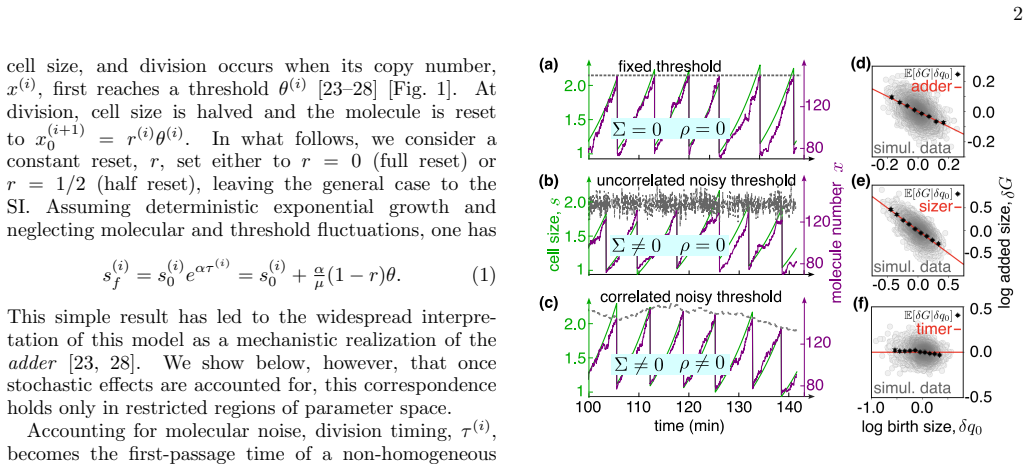
Our understanding of cell division control in bacteria still relies largely on interpreting correlations between phenomenological variables, with limited connection to the underlying molecular mechanisms. Here, we analytically solve a stochastic threshold-accumulation model in which a size-dependent divisor protein triggers division upon reaching a noisy, autocorrelated threshold, quantifying within a unified framework the combined effects of intrinsic and extrinsic noise and key mechanistic parameters such as protein reset and threshold memory. We show that incorporating these elements yields behavior far richer than the commonly assumed adder, spanning a continuum of division strategies from timer to sizer while modulating size fluctuations in a nontrivial fashion. Comparison with single-cell E. coli data shows that extrinsic noise and additional mechanistic ingredients are required to account for the observed size fluctuations. The adder emerges when threshold correlations balance protein reset, generalizing the hypothesis that full reset is necessary to maintain adder control. Our results establish a unified analytical framework linking stochastic molecular processes to emergent division laws, to be used in more complex bacterial cell-cycle models.
1 0
0
q-bio.CB 2026-05-07

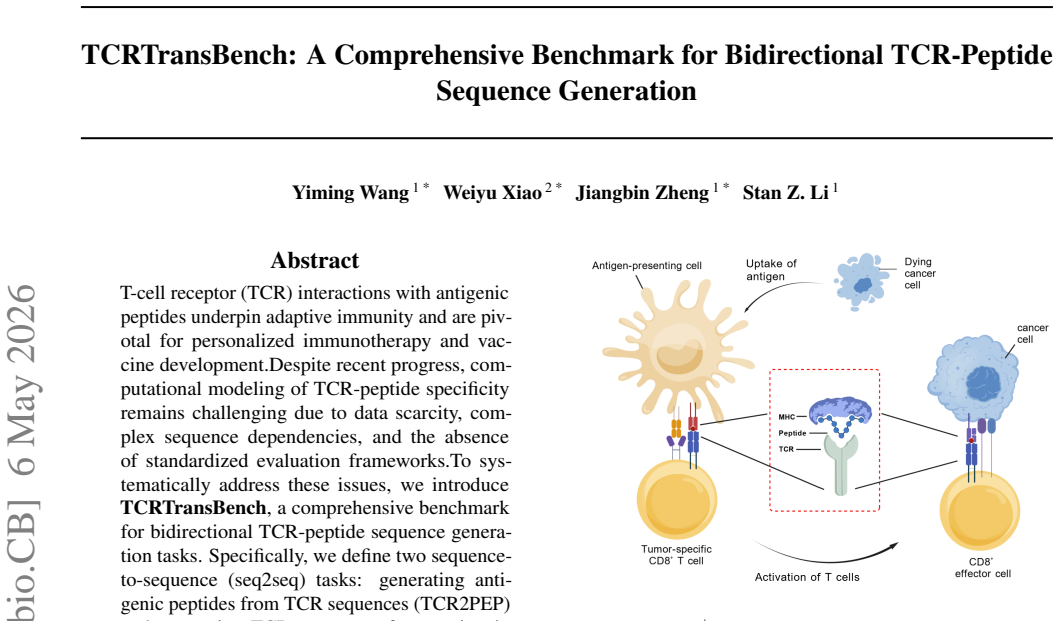
Benchmark sets standards for TCR-peptide sequence generation

TCRTransBench: A Comprehensive Benchmark for Bidirectional TCR-Peptide Sequence Generation

Defines two generation tasks with tens of thousands of validated pairs and metrics covering efficiency, accuracy, and biological plausiblity

Figure from the paper full image
abstract click to expand
T-cell receptor (TCR) interactions with antigenic peptides underpin adaptive immunity and are pivotal for personalized immunotherapy and vaccine development. Despite recent progress, computational modeling of TCR-peptide specificity remains challenging due to data scarcity, complex sequence dependencies, and the absence of standardized evaluation frameworks. To systematically address these issues, we introduce TCRTransBench, a comprehensive benchmark for bidirectional TCR-peptide sequence generation tasks. Specifically, we define two sequence-to-sequence (seq2seq) tasks: generating antigenic peptides from TCR sequences (TCR2PEP) and generating TCR sequences from antigenic peptides (PEP2TCR). Our framework provides a rigorously curated, MHC-free dataset comprising tens of thousands of validated TCR-peptide pairs, along with diverse evaluation metrics that integrate computational efficiency, sequence accuracy, and biological plausibility. Extensive benchmarking across representative neural architectures, including recurrent, convolutional, and transformer-based models, reveals key trade-offs among performance metrics, highlighting the effectiveness of transformers in capturing intricate biological interactions and the necessity of biologically informed evaluation criteria. TCRTransBench establishes standardized tasks, datasets, and evaluation protocols, laying a robust foundation for future computational advances in immunological sequence modeling and therapeutic protein design.
0
0
q-bio.CB 2026-05-06 3 theorems

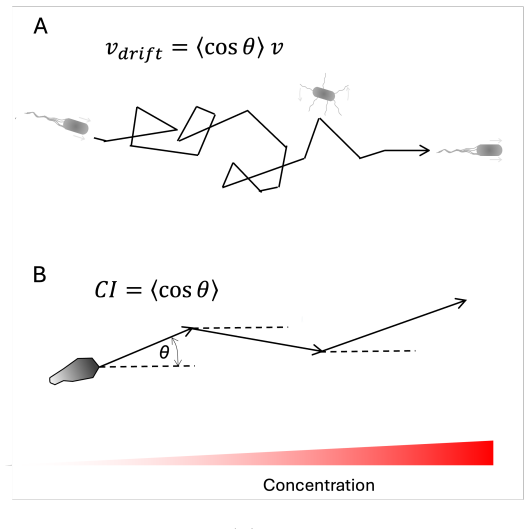
Robust chemotaxis beyond sensing limits: signal, noise, and strategy

Symmetry and time averaging let bacteria perform well even when they use only a small fraction of available signal information.

Figure from the paper full image
abstract click to expand
Bacterial chemotaxis has long been viewed as operating near the physical limits of sensing, as originally articulated by Berg and Purcell. Recent information-theoretic analyses challenge this view, suggesting that Escherichia coli uses only a small fraction of the information available in ligand arrival statistics to bias its motion. How should such low information efficiency be interpreted at the level of behavior? Here, I argue that chemotactic performance is shaped not only by information transmission and noise, but by the strategy of movement itself. Using simple scaling arguments and minimal models, I show how run-and-tumble chemotaxis can remain robust to noise through symmetry and temporal averaging, even when internal information processing is inefficient. Comparing bacterial and eukaryotic chemotaxis highlights how different sensing strategies convert physical limits into observable behavior. These considerations suggest that low information efficiency need not imply poor performance, but may instead reflect an evolved balance between robustness, simplicity, and function.
0
0
q-bio.CB 2026-05-01

Virtual cell models lose accuracy on unseen cells and perturbations

Benchmarking virtual cell models for in-the-wild perturbation response

Strict tests show they recover broad trends but miss specific effects, indicating limited transfer across contexts.

abstract click to expand
Virtual cell (VC) models aim to predict cellular responses to any perturbations in silico and have emerged as a promising approach for drug discovery and precision medicine. Yet, a clear gap still remains: while models routinely reported impressive results on standard benchmarks, it is unclear whether their predictions are truly meaningful in practice. This is mainly due to limitations in current evaluation setups, which are often overly simplified or inconsistent, and do not reflect the complexity and variability of real biological systems. Here, we introduce a standardized and modular benchmarking framework for virtual cell prediction. Our framework evaluates diverse models under in-the-wild challenging scenarios, including unseen cell contexts, unseen perturbations, and cross-dataset generalization, which better reflect practical applications. Our analysis shows that model performance is highly context-dependent and shaped by task design and evaluation criteria. In commonly used setups, performance is often overestimated, and naive dataset aggregation can even reduce performance. When evaluated under more strict conditions, model performance drops markedly, indicating limited robustness to shifts across cellular contexts. In unseen perturbation settings, models including simple linear approaches capture global transcriptional trends but fail to recover fine-grained perturbation-specific effects. In addition, different evaluation metrics focus on different biological properties, leading to substantially different model rankings. Together, our framework provides a more reliable and biologically grounded evaluation, offering clearer guidance for applying virtual cell models in real scenarios.
0
0
q-bio.CB 2026-04-28

Invasive cells coagulate three times faster in melanoma clusters

Quantifying the effect of phenotype on clustering behaviour in melanoma: from monoculture to co-culture

Model fitted to culture data shows phenotype-specific merging rates and higher growth when the two types mix.

abstract click to expand
Melanoma is an aggressive form of skin cancer. Survival rates are excellent if it is detected early but fall markedly if it metastasises. A key step in early tumour progression is the formation of cell clusters, which can promote metastasis. However, the mechanisms driving cell clustering, and the role of phenotypic heterogeneity in the dynamics of these clusters, remain poorly understood. In this work, we propose a system of ordinary differential equations that models cluster formation dynamics within a coagulation-fragmentation-proliferation framework. Using Bayesian inference, we fit this model to in vitro time-lapse microscopy data from two melanoma phenotypes-proliferative and invasive-to uncover the predominant mechanisms driving cluster formation and how these differ between phenotypes. Additionally, we provide preliminary insights into how clustering behaviour in co-cultures contrasts with that observed in monocultures. The model quantifies phenotypic differences in clustering dynamics: invasive cells in monoculture exhibit nearly threefold higher coagulation rates than proliferative cells, whereas proliferative cells display slightly higher proliferation rates. These differences align with known gene expression profiles. When applied to co-culture data, the model predicts hybrid coagulation behaviour of the clusters influenced by both proliferative and invasive cells but dominated by the invasive cells, and an elevated proliferation rate, suggesting a mutually beneficial effect of phenotypic heterogeneity on cell proliferation.
0
0
q-bio.CB 2026-04-22

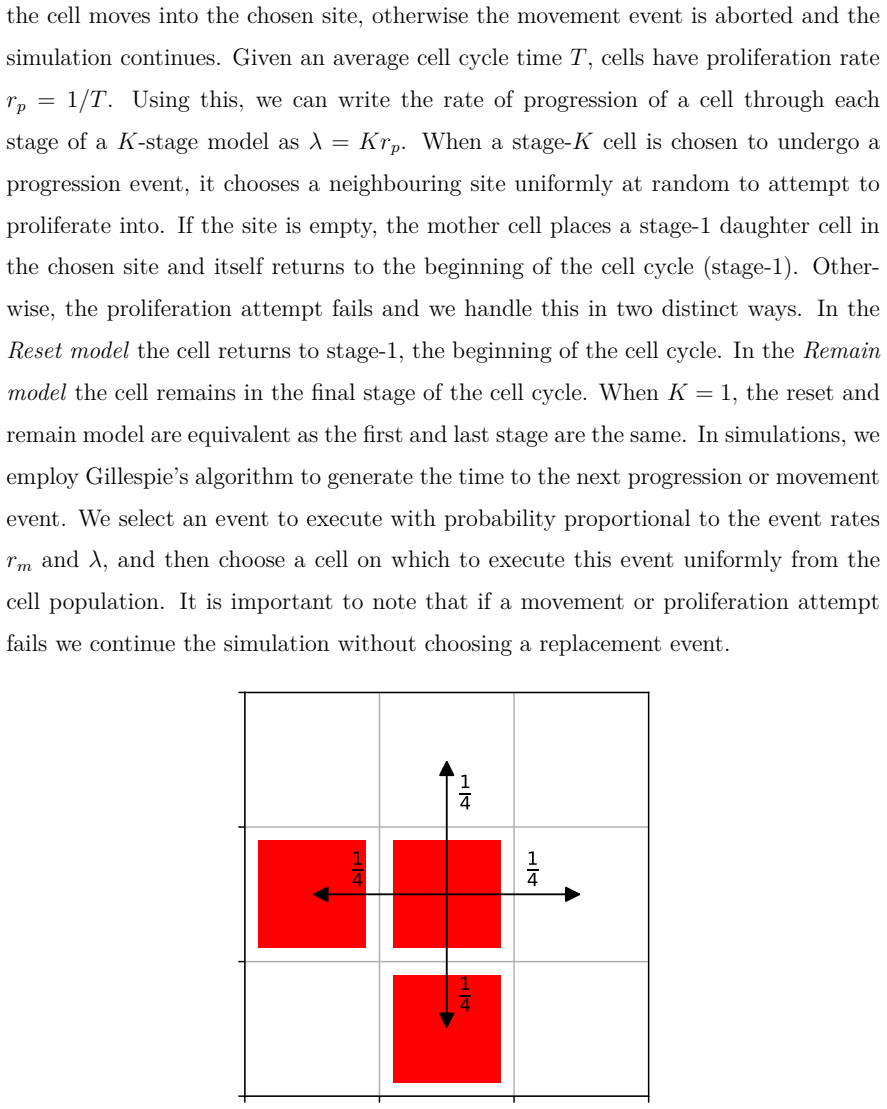
Multi-stage cell cycles improve models of cell proliferation and invasion

Multi-stage volume exclusion models for cell proliferation

Lattice agent-based simulations with myopic sensing derive continuum equations that match averaged growth and wave behavior.

Figure from the paper full image
abstract click to expand
Cell proliferation and cell movement are fundamentally stochastic processes which lead to variability in the growth and spatial structure of cell populations in many biological settings, such as cell invasion, wound healing, and tumour growth. We develop stochastic, on-lattice agent-based models (ABMs) which incorporate volume exclusion, random movement, and multi-stage representations of the cell cycle. The multi-stage framework enables a more realistic representation of true cell cycle time distributions. We also introduce a novel form of myopic behaviour, in which cells sense their local environment when attempting to proliferate. For each ABM, we derive a corresponding continuum partial differential equation (PDE) description under the mean-field approximation. Using numerical simulations, we investigate how different proliferation mechanisms influence population-level dynamics in both the discrete and continuum models. In particular, we consider biologically relevant contexts of growth-to-confluence assays (using uniform initial conditions) and travelling wave behaviour associated with cell invasion. We examine how the PDE solutions compare with the behaviour of the corresponding ABMs averaged over many realisations.
0
0
q-bio.CB 2026-04-21

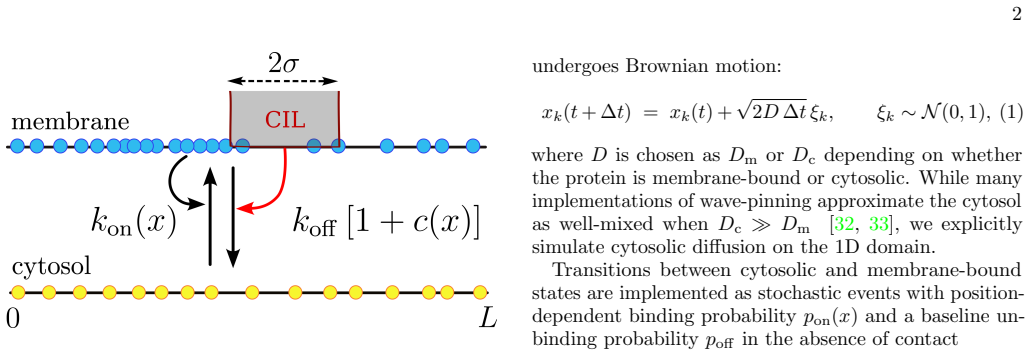
Low molecule counts mask weak contacts in cell collisions

Intrinsic stochasticity in cell polarity and contact inhibition of locomotion

A stochastic model shows that few Rho GTPase proteins let noise override brief contacts during contact inhibition of locomotion, while high

Figure from the paper full image
abstract click to expand
When cells collide, they often exhibit "contact inhibition of locomotion" (CIL), a behavior in which cells repolarize and migrate away from the site of contact. Experimental CIL outcomes are highly variable - why? Here, we develop a minimal stochastic model to quantify how intrinsic noise in cell polarity, arising from the finite number of signaling molecules, influences CIL decision-making. We simulate polarization dynamics by tracking individual Rho GTPase proteins that diffuse and switch stochastically between the cell membrane and cytosol. In the absence of cell-cell contact, the polarity axis diffuses rotationally - the cell's orientation wanders - with a diffusion coefficient that decreases as Rho GTPase copy number increases. Assuming that cell-cell contact inhibits Rho GTPase activation, we investigate how contact geometry, duration, and strength affect CIL sensitivity. At low protein copy number, weak, brief, or spatially narrow contacts are masked by molecular noise. In contrast, at high protein copy number, intrinsic polarity noise is negligible, and randomness in CIL response is more likely to reflect the variability from collision to collision in the cell-cell contact properties.
0
0
q-bio.CB 2026-04-21

Intermediate-uptake T cells gain from dendritic cell clusters

Spatial dynamic modelling to understand how dendritic cell clustering affects T cell activation

Spatial models predict these cells activate more abundantly and heterogeneously than with dispersed dendritic cells.

Figure from the paper full image
abstract click to expand
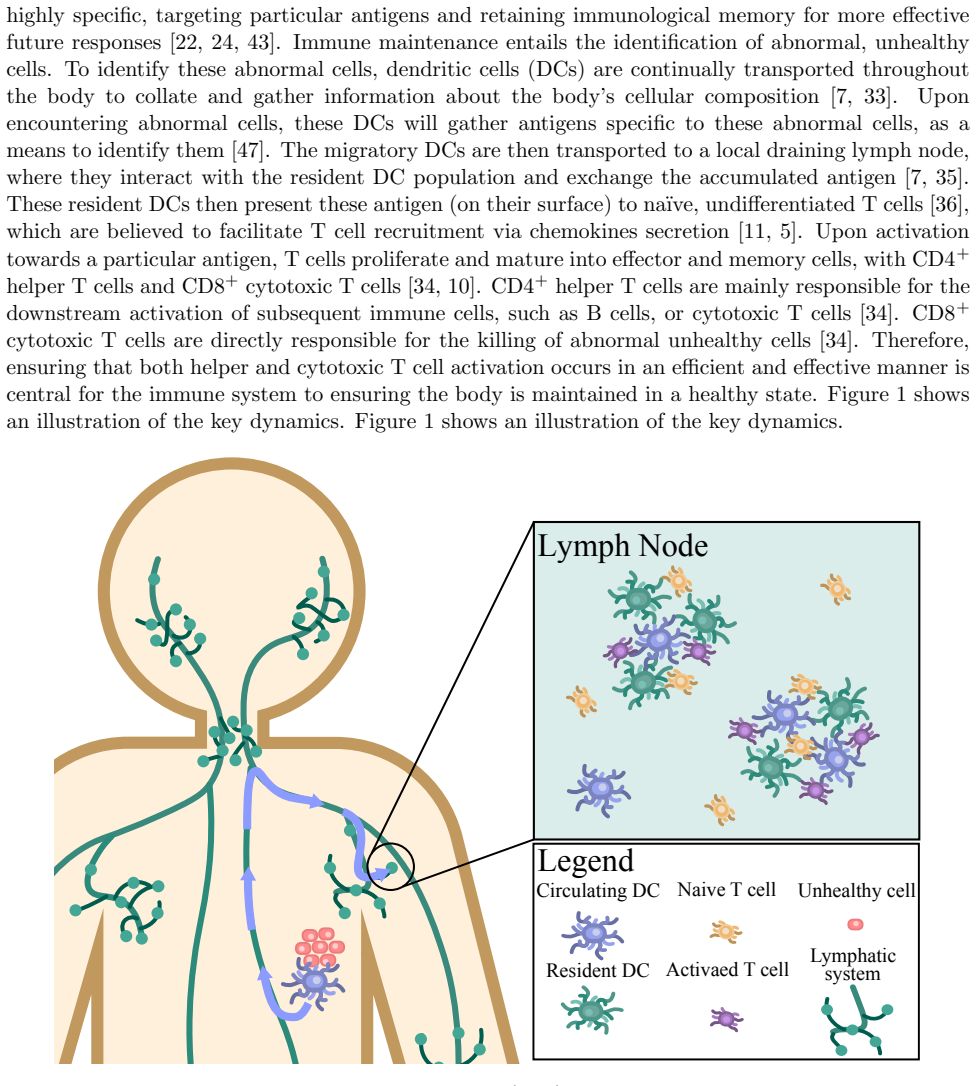
The coordination of the immune system and its components is essential for the body to maintain a healthy status. Recent clinical studies show that breast cancer patients with high Dendritic cell clustering in tumour draining lymph nodes have improved survival outcomes, compared to those with a lower degree of clustering. These results suggest that a specific form of Dendritic cell clustering promotes T cell activation. However, the mechanistic effects of this spatial organisation is unclear. We develop a spatially dynamic model of T cells interacting with Dendritic cells within the lymph node. We present a novel probabilistic agent-based model (ABM) of T cells, and use it to derive the deterministic, phenotypically structured partial differential equation (PS-PDE) of T cell activation and motion. Using the PS-PDE, we derive analytic approximations of the expected T cell stimulation distribution, based on the topology and level of clustering of a given Dendritic cell population. Our analytic approximation enables us to identify T cell characteristics that benefit most from Dendritic cell clustering, to result in an enhanced stimulation distribution. We also perform a sensitivity analysis with our models to identify T cell characteristics that result in desirable T cell activation characteristics, such as rapid T cell activation, and robust heterogeneous T cell activation. Our key findings show that T cells with an intermediate level of stimulation uptake benefit most from higher levels of Dendritic cell clustering, activating with a comparable or greater abundance, and greater heterogeneity, when compared to T cells of a similar characteristic but with a lower level of Dendritic cell clustering.
0
0
q-bio.CB 2026-04-17

Thermodynamic bound sets minimum cost to hold cell ion gradients

Unity and Diversity of Intracellular pH Maintenance Mechanisms

The limit equals leakage dissipation rate and holds regardless of energy source or pump architecture, explaining both universal cytoplasm,

Figure from the paper full image
abstract click to expand
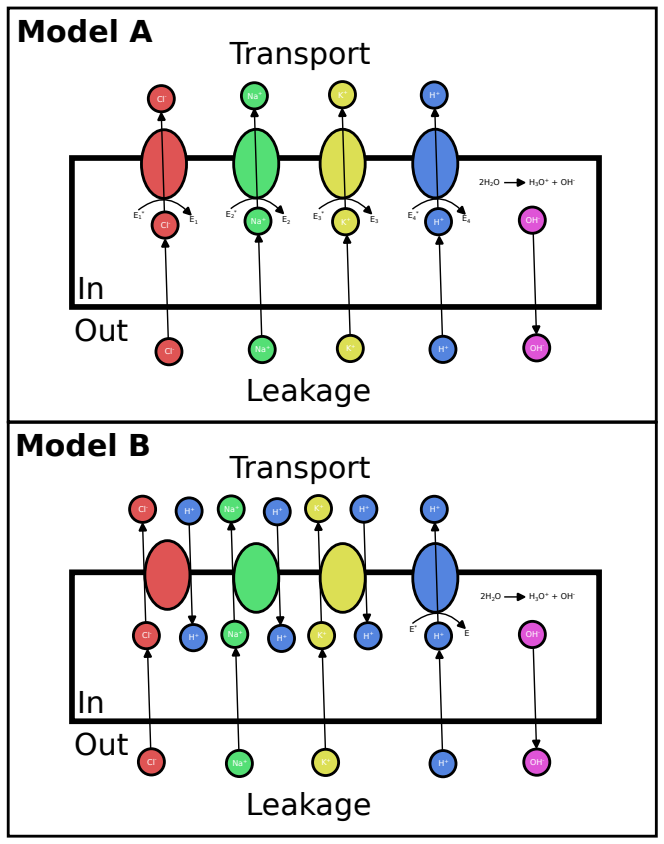
All cells must sustain ionic motive forces (IMFs) -- the electrochemical gradients of permeant ions, together with the membrane potential they produce -- to regulate intracellular pH, drive secondary transport, and power ATP synthesis. Because membranes are imperfectly impermeable, IMFs continuously dissipate through passive leakage, and active transport must compensate at an energetic cost that competes with growth and biosynthesis. How environmental conditions set this cost, and why cells across the tree of life share a common ionic logic yet deploy strikingly diverse transporter repertoires, has lacked a unifying quantitative account. Here we derive a thermodynamic lower bound on the power required to maintain IMFs at steady state. The bound equals the rate of free-energy dissipation by ion leakage, holds across a broad family of electrophysiological models, and is independent of organism, energy source, or transporter architecture. Cost minimization recovers, from first principles, the universal K+-rich, Na+-poor cytoplasm observed across taxa: asymmetric membrane permeabilities alone are sufficient to explain it. The same framework predicts that extremophiles face higher maintenance costs under extreme pH, salinity, and temperature, and that when sustaining a large proton motive force becomes prohibitive, cells should shift to metabolic regimes compatible with smaller PMF, providing a thermodynamic rationale for stress-induced metabolic reconfiguration. Finally, we show that perfect energetic efficiency is unattainable in practice, and that this very imperfection, combined with environmental variability, selects for the diversity of transport architectures observed in nature: each architecture is optimal within a discrete regime of environmental constraints.
0
0
q-bio.CB 2026-04-17

Minimal adhesion model limits follower streams to short cohorts

Cell-cell adhesion cannot sustain extended follower streams in a minimal non-local model of leader-follower migration

Simulations show cohorts stay bounded by interaction range and fall short of extended streams seen in living tissues.

Figure from the paper full image
abstract click to expand
Cell-cell adhesion is widely hypothesised to maintain cohesion within the long streams of follower cells that trail leader subpopulations during collective migration, including in neural crest cell migration, angiogenesis, and cancer cell invasion. Mathematically, non-local advection-diffusion equations provide the canonical continuum framework within which to study such adhesive cell-cell interactions. Here, we study a minimal model of leader-follower migration within this framework, in which leaders migrate at constant velocity while followers are attracted to leaders and to one another over a finite spatial interaction range. Numerical simulations reveal that, although the model can maintain small cohorts of travelling follower cells, the size of these cohorts is limited by the adhesive interaction lengthscale, and is far below what is needed to reproduce the extended streams observed in vivo. This points to a structural limitation of the standard non-local adhesion formulation and highlights the need for the development of extended continuum models capable of sustaining long, coherent migratory streams through purely mass-conserving collective cell movement.
0
0
q-bio.CB 2026-04-08 2 theorems

Marangoni flows cluster Piezo1 near focal adhesions

Marangoni-Driven Redistribution and Activity of Piezo1 Molecules in Epithelial and Cancer Cells

Theoretical model ties surface-tension gradients to uneven channel distribution in epithelial cells versus uniform high activity in cancer.

abstract click to expand
The activity and distribution of Piezo1 molecules, along with the maturity and strength of focal adhesions (FAs), serve as critical factors influencing cell mechanosensing. Notably, migrating epithelial cells and mesenchymal-like cancer cells exhibit significantly different behaviors regarding these elements. In cancer cells, Piezo1 molecules are distributed uniformly, while in epithelial cells, their distribution is heterogeneous. In epithelial cells, Piezo1 molecules tend to group around FAs, a phenomenon that is enhanced by actomyosin contractility. However, a reduction in contractility results in a more uniform distribution of Piezo1 molecules. The expression and activity levels of Piezo1 molecules are markedly higher in cancer cells compared to epithelial cells. The activity of Piezo1 molecules correlates with the intracellular calcium concentration. Despite the extensive experimental studies on the properties of migrating epithelial and mesenchymal-like cancer cells, the physical explanations remain lacking. The primary objective of this theoretical study is to explore: (i) the inhomogeneous distribution of Piezo1 molecules in epithelial cells in relation to the Marangoni effect, (ii) the heightened activity of Piezo1 molecules in cancer cells by specifying the driving force, and (iii) the influence of membrane-mediated interactions among Piezo1 molecules grouped near FAs in epithelial cells on their activity.
0

browse all of q-bio.CB → full archive · search · sub-categories