pith. machine review for the scientific record. sign in

q-bio.OT

Other Quantitative Biology

Work in quantitative biology that does not fit into the other q-bio classifications

0
q-bio.OT 2026-05-11 Recognition

Kurdistan study finds seven hawthorn taxa with major fruit variation

Morpho-Physiological and Genetic Diversity of Crataegus Taxa (Rosaceae) in Selected Locations of Iraqi Kurdistan-Region

Sixty-one accessions vary significantly in weight, size, seeds, pH and moisture, explained by eleven traits.
Figure from the paper full image
abstract click to expand
One of the great phytogeography zones of semi-arid lands in the world is the Kurdistan region of Iraq which hosts many important fruit species due to its geographical location and ecology. Mountain Hawthorn (Crataegus spp.) is a vital wild edible deciduous fruit tree of the genus Crataegus for the region, which is highly beneficial for ornamental, economical, industrial and medicinal uses. In the present study, morphological, phytochemical and molecular marker systems were applied on sixty-one Hawthorn accessions from different locations in the Iraqi Kurdistan region during April 2022 to September 2023. Phenotypic markers have proven to be extremely useful in studies of genetic diversity in Hawthorn genotypes, the results of the present morphological study showed that there are seven taxa (five species, two hybrids) were observed including, Crataegus azarolus, Crataegus meyrei, Crataegus monogyna, Crataegus orientalists, Crataegus pentagyna, Crataegus azarolus x Crataegus meyrei and Crataegus azarolus x Crataegus pentagyna. There was significant variation among different ecotypes in terms of plant type, reproductive stage, and fruit morphology and production uses. Fruit Physio-morphological data revealed a high level of significant variability (P 0.01) among accessions based on the analysis of variance. The most important characteristics for explaining fruit morphological variability `were 11 varbales including fruit weight (FW), fruit length (FL), fruit width (FW), seed length (SL), seed width (SW), number of seeds per fruits (NSF), volume solution (VS), fruit fresh weight (WOF), seed weight (WS), Potentional of hydrogen (pH) and mositure content (MC). They all are significantly different for all the traits measured for the studied accessions.
0
0
q-bio.OT 2026-05-11 Recognition

Statin eligibility drops 3M or rises 21M under 2026 guidelines

Statin Recommendations among US Adults with the 2026 Dyslipidemia Guidelines

The outcome hinges on whether the new 30-year risk pathway is applied, expanding access most for adults aged 40-59.

Figure from the paper full image
abstract click to expand
Importance: The 2026 multisociety dyslipidemia guideline recommended the PREVENT equations in place of the PCE equations, introduced 30-year risk assessment as a new treatment pathway, and lowered risk-based treatment thresholds. The net population impact of these concurrent changes on statin recommendations is unknown. Objective: To estimate changes in statin recommendations under 2026 PREVENT-based dyslipidemia guidelines compared with 2018 PCE-based guidelines. Design and Participants: Cross-sectional analysis of pooled data from NHANES, spanning 2011-2023 and comprising 24,199 participants aged 30-79 years. Main Outcomes and Measures: Number and proportion of US adults receiving or recommended for statin therapy. Results: At the class 1 threshold, the number of US adults receiving or recommended for statin therapy decreased by an estimated 3.0 million (95% CI, 2.3 million to 3.6 million), with larger reductions among Black adults (-4.2 percentage points [pp]), men (-4.0pp), and adults aged 50-69 years (-5.6pp). At the class 2 threshold--which additionally recommends statins for adults aged 30-59 years based on 30-year risk--the number of adults recommended increased by an estimated 20.8 million (95% CI, 19.6 million to 22.0 million), or +11.6pp. The increase was largest among adults aged 50-59 years (+19.7pp) and 40-49 years (+14.8pp). Conclusions: The net population impact of the 2026 dyslipidemia guidelines depends critically on which recommendation class is applied. At the class 1 threshold, statin recommendations decreased modestly; at the class 2 threshold, inclusion of 30-year risk assessment substantially expanded recommendations, particularly among younger adults. These divergent effects underscore the importance of the 30-year risk criterion as a major driver of new eligibility and the need for outcomes and equity monitoring during guideline implementation.
0
0
q-bio.OT 2026-05-08 3 theorems

Rhythms bias binary sequences to form catalytic and information systems

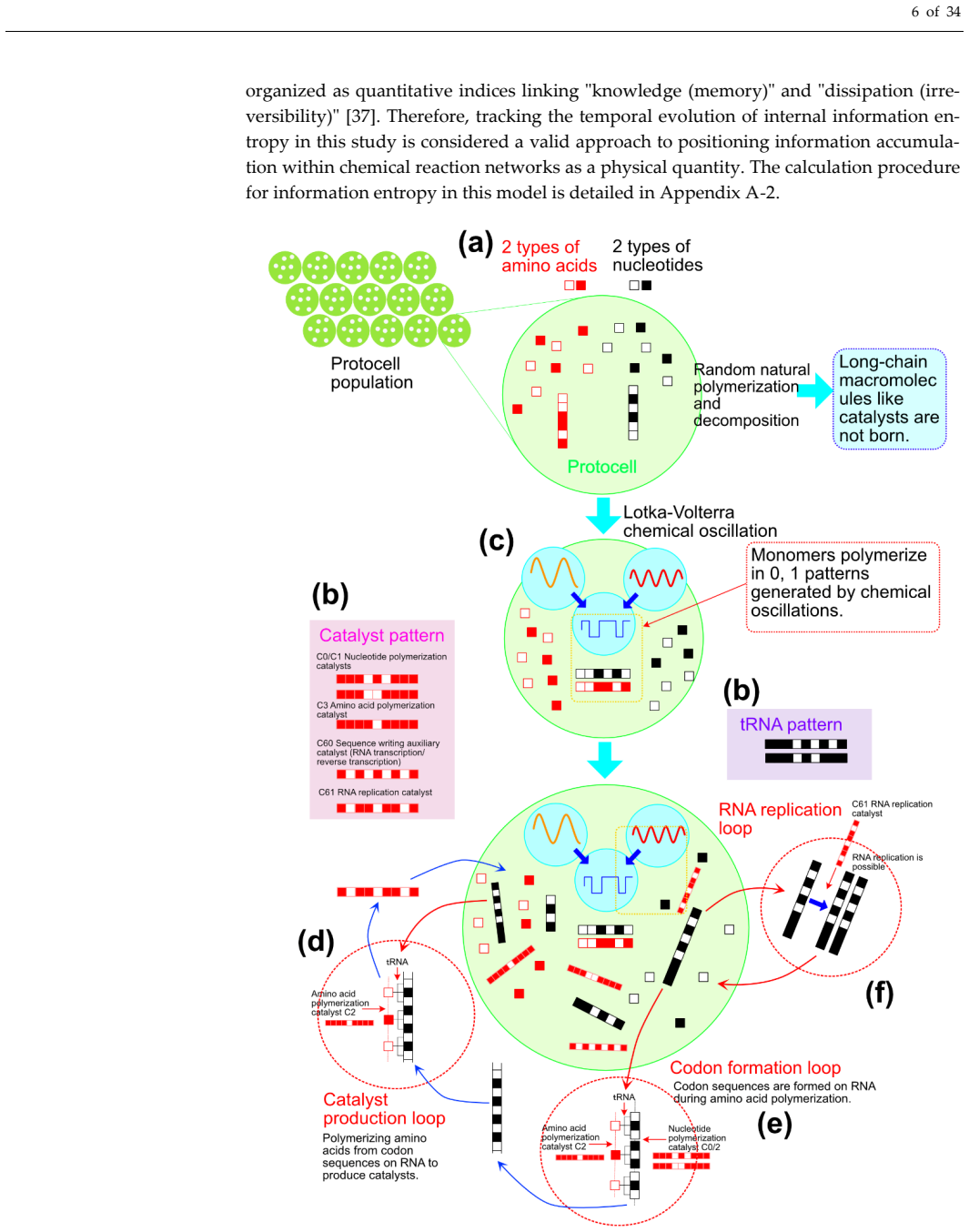
Genetic Information as a "Chord" of Chemical Oscillations: Emergence of Catalyst-RNA Systems Driven by Superposed Rhythms

Simulations link superposed chemical oscillators to higher rates of functional polymer emergence compared with random selection.

Figure from the paper full image
abstract click to expand
A central challenge in the origin of life is understanding how catalytic peptide-like polymers and information-bearing nucleic acid-like polymers emerged as an interde-pendent system. This study constructs a primordial cognitive model incorporating two internal Lotka-Volterra chemical oscillators to investigate, through simulation, whether a catalytic loop, primordial tRNAs, and nucleic acids that record and amplify them, can form through the interaction of polymers represented by binary (0/1) sequences. In this model, a mechanism was introduced where the synthesis of internal oscillations pro-vides a temporal bias for 0/1 selection during polymer elongation, while generated functional sequences are protected, recorded, and re-amplified. Simulation results demonstrated that the proposed cognitive model significantly outperformed a contrast model based on random 0/1 selection in terms of the establishment rate of catalytic loops, the accumulation of functional molecules, polymer elongation, and the reduction of Shannon entropy in sequence distribution. Furthermore, this superiority was generally maintained across sensitivity analyses, including batch calculations with different ran-dom seeds. While this study is a computational model based on abstract binary se-quences and simplified translation/replication rules rather than a direct reconstruction of life's origin, it provides a working hypothesis for the interdependent emergence of catalytic function and information retention by demonstrating that internal oscillations can bias sequence exploration within a framework linking autocatalytic networks, re-cording, and group selection. Future research must verify the generality and empirical validity of this framework by expanding monomer types, evolving into multi-oscillator systems, and establishing correspondences with compartmentalized experimental sys-tems.
0
0
q-bio.OT 2026-05-04

Dynamic systems model treats genes as state and environment as inputs for behavior

DynoSys: A Dynamic Systems Framework for Multimodal Integration of Genetic, Environmental, and Neurobiological Signals

Framework builds harmonized representations from genetic, environmental and brain data to support longitudinal and event-based prediction of

Figure from the paper full image
abstract click to expand
Understanding the development of adolescent behavioral and mental health outcomes requires integrating genetic predisposition, environmental exposures, and neurobiological processes over time. Here, we present a unified quantitative framework that models the human body as a dynamic system, where genetic factors form the foundational state, environmental exposures act as time-varying inputs, the brain might serve as a mediation processor, and behavioral phenotypes emerge as system outputs. Using longitudinal data from the Adolescent Brain Cognitive Development (ABCD) Study, we construct harmonized multi-domain representations across six phenotypes: externalizing behavior, internalizing behavior, and four substance use initiation outcomes (alcohol, nicotine, cannabis, and any substance use). We integrate polygenic risk scores (PRS), multi-domain environmental features, and multimodal neuroimaging representations derived through stability selection and dimensionality reduction. Our framework supports both continuous longitudinal modeling and survival-based event modeling through a unified data structure. We further develop interpretable domain-level representations using principal components, weighted risk scores, and cluster-based summaries. These representations enable downstream modeling using survival analysis, state-space models, and machine learning approaches. This work establishes a scalable and interpretable framework for studying how genetic and environmental factors interact over time to shape behavioral outcomes, providing a foundation for identifying modifiable risk factors and informing early intervention strategies.
0
0
q-bio.OT 2026-05-01

Agentic AI biologists assist with blocked dual-use tasks

BioVeil MATRIX: Uncovering and categorizing vulnerabilities of agentic biological AI scientists

Scaffolding on Biomni raises scores on WMDP biology proxies; new taxonomy with 10 categories maps the agentic risks.

Figure from the paper full image
abstract click to expand
Agentic AI scientists equipped with domain-specific tools are rapidly entering scientific workflows across disciplines, with especially strong uptake in the life sciences where they can be used for literature synthesis, sequence analysis, and experimental planning support. While these systems accelerate biological research, they also introduce risks for dual-use applications that are not captured by current model-centric safety evaluations. We present evidence that current agentic AI scientists, including Biomni and K-Dense, are willing to assist with dual-use tasks that are blocked by base model safeguards. We also found that in a paired evaluation framework for biology and chemistry prompts involving Weapons of Mass Destruction proxies (WMDP), agentic scaffolding of Biomni increased the benchmark performance relative to the underlying standalone model, producing measurable capability uplift. We believe it is necessary to include additional safeguards in existing models and build future tools from the ground up with agentic vulnerabilities in mind. To systematically categorize broader risks, we introduce BioVeil MATRIX, a defensive taxonomy that maps AI-enabled biosecurity risks using 10 tactical categories (TA01--TA10) and 22 different techniques. We propose to use this taxonomy as a baseline for future AI scientist development and generate specialized benchmarks and protocols for red-teaming these vulnerabilities before public deployment. BioVeil MATRIX can be found at: https://bioveilmatrix.com/
0
0
q-bio.OT 2026-05-01

The paper models tumor containment as an anti-percolation process in which preventing…

Tumor containment as an anti-percolation process

Tumor containment framed as anti-percolation, with simulations indicating partial independence of malignant area from connectivity metrics…

abstract click to expand
Percolation theory from statistical physics has been applied to several aspects of tumor progression. Tumor growth on percolation clusters has been used to model spatial expansion, vascular percolation to describe nutrient supply and transport related percolation to investigate drug and gene delivery. At the molecular level, mutational percolation has been employed to account for the emergence of malignant phenotypes, while inverse percolation to represent treatment-induced structural disruption. We examined whether tumor containment can be interpreted as an anti percolation problem, in which spatial expansion depends on the formation of a connected malignant domain. We implemented a spatial simulation with biologically scaled parameters to represent tissue heterogeneity, local growth, cell movement and clearance. We measured both total malignant area and connectivity metrics, including the largest connected component and the probability of forming a spanning cluster. Our results indicate that tumor size and spatial connectivity are partially independent, with configurations of similar size showing different connectivity patterns. A transition from fragmented to connected structures emerged within a limited parameter range, consistent with a threshold like behavior. Incorporating spatial connectivity into quantitative analysis, our approach provides a complementary way to characterize tumor organization. Potential applications include integration of structural descriptors into computational models of tumor growth, design of experimental systems to probe spatial organization and interpretation of therapeutic approaches via connectivity-based metrics.
0
0
q-bio.OT 2026-05-01

Shared parameter component speeds cancer model personalization with scarce data

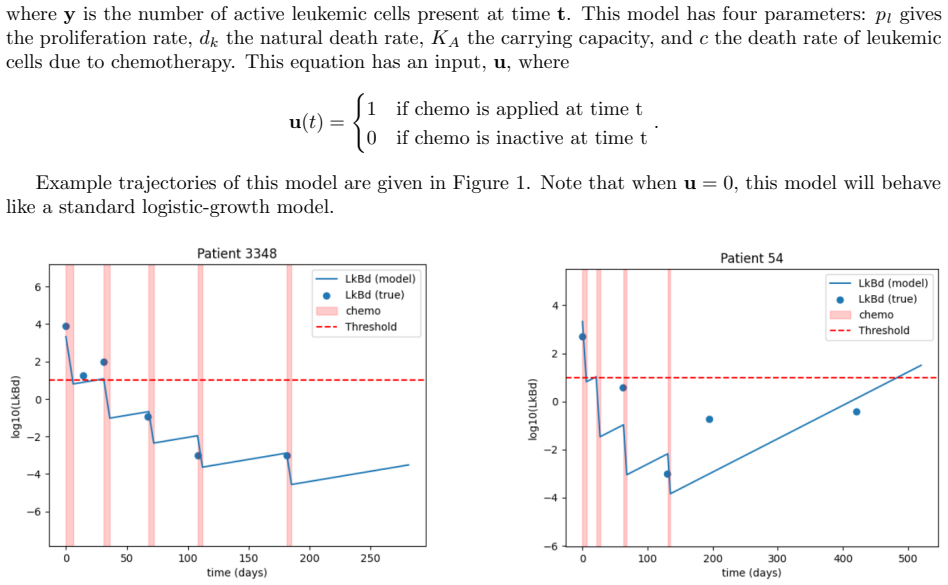
Personalizing Cancer Models under Data Scarcity via Parameter Decomposition

Decomposing parameters lets the population-level part serve as a prior so only the patient-specific part needs fitting to limited new data.

Figure from the paper full image
abstract click to expand
Personalized cancer modeling for clinical applications requires robust and efficient parameter calibration, particularly in settings with limited patient data. This need is especially critical for medical digital twins (MDTs), which are virtual representations of disease continuously updated using longitudinal patient measurements. In this work, we propose a novel parameter personalization framework for dynamical cancer models under data scarcity. Our approach decomposes selected model parameters into a common component, shared across patients, and a personalized component, which is patient-specific and can be updated as new data become available. The common component captures population-level structure and is estimated once, providing an informed prior that enables rapid and accurate personalization. We demonstrate the effectiveness of this framework using synthetic data generated from canonical dynamical systems, such as logistic growth models with optimized treatment interventions. Our results show that parameter decomposition significantly improves calibration performance in limited-data regimes, facilitating fast and reliable personalization and supporting the development of patient-specific cancer models and MDTs.
0
0
q-bio.OT 2026-04-30

Vocal entropy measures outperform static features for spotting depression

Entropy-Dominated Temporal Vocal Dynamics as Digital Biomarkers for Depression Detection

Unpredictability in speech timing and pitch raises AUC from 0.593 to 0.646 on the DAIC-WOZ dataset under strict validation.

Figure from the paper full image
abstract click to expand
Automated depression detection often relies on static aggregation of conversational signals, potentially obscuring clinically meaningful behavioral dynamics. We investigated whether entropy-driven temporal biomarkers improve depression detection beyond standard pooled features using the DAIC-WOZ corpus. Using 142 labeled participants, we reconstructed utterance-level acoustic trajectories and compared pooled temporal baselines, trajectory dynamics, Shannon entropy biomarkers, recurrence quantification, sample entropy, fractal complexity, and coupling biomarkers under leakage-aware validation. Static pooling achieved an AUC of 0.593, trajectory dynamics improved performance to 0.637, and entropy biomarkers produced the strongest statistically significant improvement over pooled baselines (AUC 0.646; nested cross-validated AUC 0.615; permutation p = 0.017). Entropy biomarkers outperformed recurrence, coupling, sample entropy, and fractalbased features, with several biomarkers stable across folds. These findings suggest depression-related signal may lie less in average acoustic levels than in entropy of conversational dynamics, supporting temporally informed digital phenotypes for mental-health assessment.
0
0
q-bio.OT 2026-04-28

OxyPOM is a new biogeochemical model that applies different temperature response…

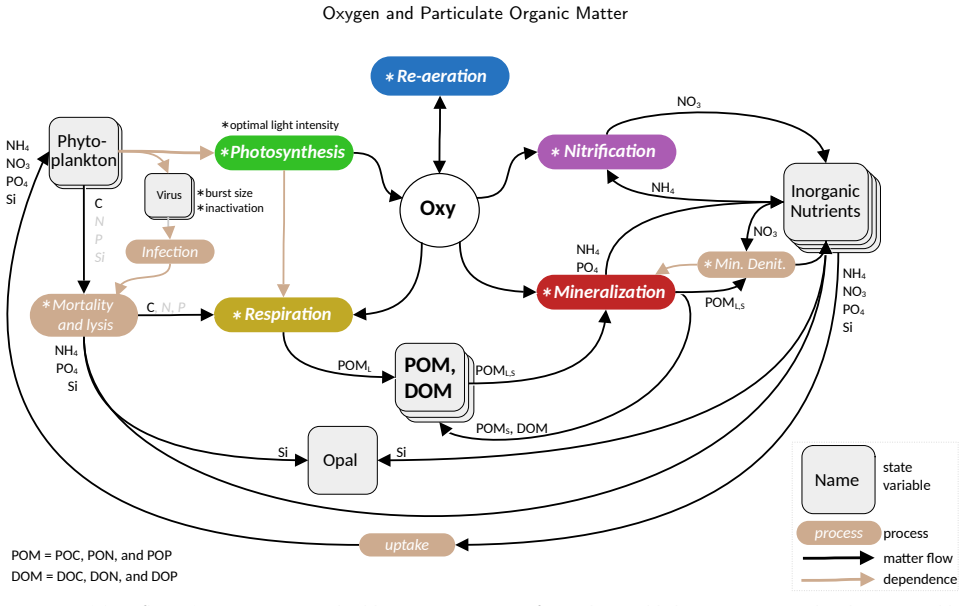
OxyPOM: a biogeochemical model for Oxygen and Particulate Organic Matter dynamics with detailed temperature sensitivity

Uniform sensitivities in oxygen models underestimate particulate organic carbon and overestimate nutrients across seasons in low-oxygenwater

Figure from the paper full image
abstract click to expand
Periods of low dissolved oxygen concentration -- hypoxia and anoxia -- threaten the health of aquatic ecosystems and the services they provide.Hypoxia is strongly influenced by temperature, but the different sensitivities and response functions of oxygen removal and production processes to temperature are not regarded in most models. Here we present OxyPOM -- Oxygen and Particulate Organic Matter, a nuanced temperature-aware process-based biogeochemical model. OxyPOM incorporates nuanced temperature sensitivities for the key oxygen-related processes photosynthesis, re-aeration, respiration, mineralization, and nitrification. Further sensitive variables like optimal light intensity, winter grazing inhibition, and pathogenesis are also represented. Our model was tested in an idealized water column experiment, representing a typical estuarine seasonal low-oxygen environment. Differences between nuanced and uniform temperature sensitivities affect seasonal patterns of oxygen-related processes, resulting in under- or overestimation during different times of the year, particularly with higher differences in summer. While these changes may balance in the overall annual oxygen budget, uniform sensitivities underestimate particulate organic carbon production by up to a factor of four along the year and overestimate nutrient concentrations. This nuanced approach to temperature sensitivity allows us to explore and test new hypotheses related to climate warming and heatwaves, addressing the ecosystem changes demanded by climate change models.
0
0
q-bio.OT 2026-04-27

Microbial networks rewire by sex in three diseases

Differential Analysis of Microbial Interaction Networks

Gene-family association analysis detects interaction shifts between men and women that abundance changes alone do not capture.

Figure from the paper full image
abstract click to expand
Microbiome studies increasingly indicate that disease-associated shifts cannot be understood from compositional changes alone. The functional architecture of microbial communities encoded in patterns of association among microbial gene families may reveal how these systems reorganize across biological conditions. Here, we present a network-based framework for characterizing microbiome rewiring across conditions. The approach combines condition-specific network inference, differential network analysis and pathway enrichment to identify interactions that are gained, lost or altered between groups, with a specific focus on sex-dependent differences. We apply the framework to inflammatory bowel disease, type 2 diabetes and atherosclerotic cardiovascular disease, comparing male and female specific microbial gene-family networks within each disease context. Across these settings, differential networks reveal extensive rewiring of microbial functional interactions, suggesting that microbiome alterations are shaped not only by changes in abundance but also by shifts in community organization. Importantly, pathway enrichment of rewired interactions uncovers functional signals that are not apparent from individual networks alone, highlighting latent disease and sex associated mechanisms. Code, data and supplementary information are available on the web site.
0
0
q-bio.OT 2026-04-27

Framework spots cirrhosis endothelial cells and seven key genes

A multi-stage soft computing framework for complex disease modelling and decision support: A liver cirrhosis case study

Multi-stage model stabilizes features with network analysis, uses CNN on disease maps, and beats standard ML on classification.

Figure from the paper full image
abstract click to expand
Liver cirrhosis is a major global health problem causing millions of deaths annually, and timely detection with aggressive treatment can significantly improve patients' quality of life. Modelling complex diseases from biomedical data is computationally challenging due to high dimensionality, strong feature correlations, noise, and limited labelled samples. Conventional Machine Learning (ML) pipelines often struggle with robustness, interpretability, and generalisation under such conditions. In this study, we propose an ML-driven multi-stage decision framework for complex disease modelling and therapeutic exploration. The framework integrates single-cell transcriptomic profiling, high-dimensional network-based feature stabilisation, multi-model learning, deep representation construction, and post-hoc decision support. Specifically, single-cell sequencing data were analysed to identify key cellular subpopulations, followed by high-dimensional weighted gene co-expression network analysis (hdWGCNA) to stabilise gene modules under sparsity and noise. To enhance non-linear feature interaction modelling, tabular molecular features were restructured into two-dimensional disease maps and analysed using a CNN. Finally, molecular docking was incorporated as a decision-support module to evaluate candidate therapeutic compounds. Using liver cirrhosis as a representative case, the framework identified a disease-associated endothelial subpopulation and extracted seven robust signature genes (HSPB1, GADD45A, CLDN5, ATP1B3, C1QBP, ENPP2, and PARL). The CNN-based representation learning module outperformed conventional pipelines in classification. The framework is disease-agnostic and readily extends to other omics-driven biomedical applications involving uncertainty, heterogeneity, and limited samples.
0
0
q-bio.OT 2026-04-27

Reproductive history clusters with early multimorbidity in young women

AI-Derived Reproductive Phenotypes and Explainable ML for Concurrent Early Multimorbidity in U.S. Women: NHANES 2017-March 2020

National survey analysis identifies a high-risk group where 77 percent of women with adverse reproductive burdens already meet multimorbidty

Figure from the paper full image
abstract click to expand
Background:Adverse reproductive history is a multisystemic risk factor, but evidence is constrained by isolated outcome studies, limited adjustment, and non-interpretable algorithmic models. We re-frame the estimand from prediction to concurrent risk classification and emphasize calibration, interpretability, and systematic error. Methods:We analyzed 1,602 U.S. women aged 20-44 years from NHANES 2017-March 2020 with reproductive-history variables, chronic-condition indicators, and PHQ-9 data. Restricted multimorbidity was defined as at least two of hypertension, hypercholesterolemia, cardiovascular disease, kidney disease, and kidney stones. Features were summarized using principal components analysis and k-means clustering. We compared multivariable logistic regression with XGBoost and used SHAP values to quantify contributions. Results:Early multimorbidity occurred in 6.6% (106/1,602); 71.0% had no chronic condition and 22.4% had one. Adverse reproductive burden was common: 58% had at least one adverse reproductive factor and 12.6% had three or more. Four latent phenotypes emerged (n=398, 508, 102, 594), including a fragile subgroup in which 77.5% met the multimorbidity definition. In holdout evaluation, XGBoost improved discrimination relative to logistic regression (ROC-AUC 0.766 vs 0.667), but showed worse probability accuracy and calibration (Brier 0.069 vs 0.059; expected calibration error 0.113 vs 0.037). Dominant drivers were age, PHQ-9 score, income-to-poverty ratio, race/ethnicity, education, and the adverse reproductive index. Conclusions: Principal components analysis and k-means phenotyping revealed that adverse reproductive life-course structure is strongly clustered with concurrent early multimorbidity in U.S. women aged 20-44 years. Although XGBoost improved discrimination, calibration and feature attribution remained essential for reliable translation into practice
0
0
q-bio.OT 2026-04-27

Dual-criterion iteration yields stable 5-miRNA signature from 332 features

StackFeat: a convergent algorithm for optimal predictor selection in genomic data

StackFeat combines signed coefficients and selection frequencies across repeated cross-validations to converge on reliable predictors that,

Figure from the paper full image
abstract click to expand
In high-dimensional genomic data, the curse of dimensionality (d >> n) and limited sampling make feature selection inherently unstable - a critical barrier to biomarker discovery. We introduce StackFeat, an iterative algorithm that accumulates two statistics across repeated cross-validation: signed coefficients (measuring effect strength and direction) and selection frequencies (estimating selection probability). Only features ranking highly by both criteria are retained. On a COVID-19 miRNA dataset (GSE240888), StackFeat identified a stable 5-miRNA signature from 332 features (98.5% reduction), achieving AUC 0.922, significantly outperforming the benchmark 9-gene set (AUC 0.907, p = 0.0016). The signature includes hsa-miR-150-5p, a marker implicated in both COVID-19 survival and Dengue infection. This dual-criterion approach provides convergence guarantees absent in single-criterion methods, enabling discovery of known biomarkers, novel candidates, and previously unknown relationships. Keywords: marker selection, feature selection, bioinformatics, dimensionality reduction, robust algorithm, stacking, miRNA, COVID-19
0
0
q-bio.OT 2026-04-22

Energy gradients localize prebiotic reactions without membranes

Energy gradients as potential drivers of pre-cellular chemical organization

Simulations show strong coupled gradients in pH, redox and temperature overcome diffusion to create stable confined chemical states.

abstract click to expand
The onset of life is often framed around membrane bound compartments and encoded metabolism, leaving unresolved how spatial organization arose before stable boundaries. In this context, environmental gradients are usually treated as boundary conditions rather than variables structuring chemical dynamics. We ask whether spatial localization and functional coupling can emerge under realistic environmental gradients in the absence of membranes, proposing that spatial variations in energy availability act as organizing variables that bias transport and reaction. We introduce a reaction diffusion model in which interacting chemical species evolve within an externally imposed activity landscape defined by coupled gradients in pH, redox potential and temperature, integrating diffusion, gradient driven drift and position dependent reaction kinetics. We performed simulations across a range of gradient strengths representative of hydrothermal vent like conditions. Our results suggest that sufficiently strong gradients induce spontaneous accumulation of reactants, spatial alignment of reaction maxima and the emergence of stable, confined chemical states. Localization arises above a threshold at which gradient driven transport overcomes diffusive and degradative losses. We conclude that spatially structured energy landscapes can support organized chemical dynamics without predefined compartments, providing a mechanism for coupling and persistence in continuous media. Potential applications include experimental platforms for studying prebiotic chemistry, microfluidic systems with controlled gradients and the design of chemically responsive materials.
0
0
q-bio.OT 2026-04-21

Models enforce logic and yield intuition in microbiology

Mathematical modeling and intuition in microbiology: a perspective

They require consistent hypotheses, support testable forecasts, extract unmeasured parameters, and guide choices of model detail for any set

Figure from the paper full image
abstract click to expand
Mathematical models are increasingly a part of microbiological research. Here, we share our perspective on how modeling advances the discipline by: (i) enforcing logical consistency, (ii) enabling quantitative prediction, (iii) extracting hidden parameters from data, and (iv) generating intuitive understanding. We map a spectrum of modeling frameworks, from whole-cell simulations to minimal logistic growth equations, and provide interactive examples for some common frameworks. Building on this overview, we outline pragmatic criteria for choosing an appropriate level of description to capture phenomena of interest. Finally, we present a case study in modeling of microbial ecosystems from our own work to illustrate how mechanistic modeling can yield generalizable intuition. This perspective aims to be an introductory roadmap for integrating mathematical modeling into experimental microbiology.
0
0
q-bio.OT 2026-04-21

Random Forest models predict anti-dementia activity in natural compounds

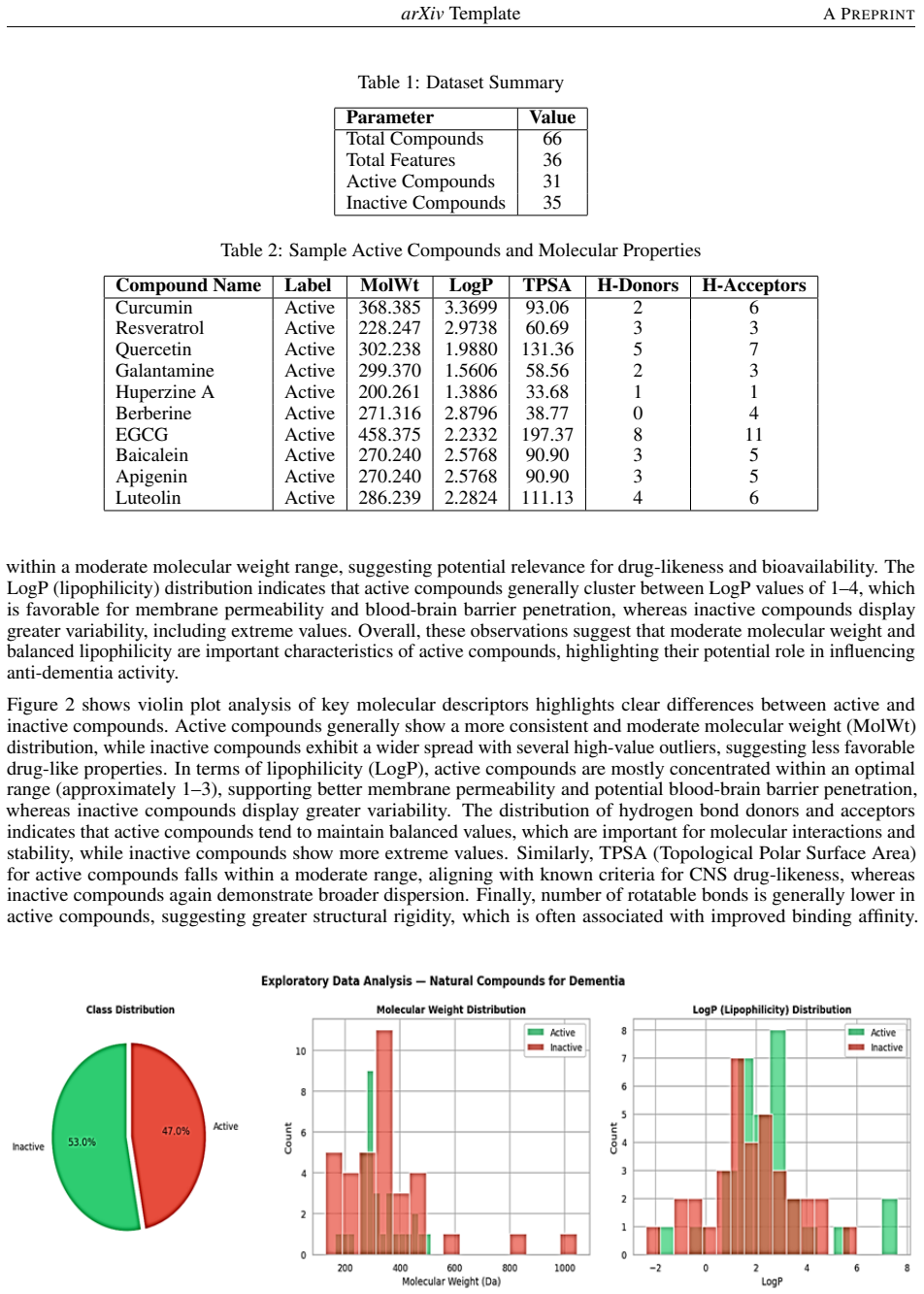
Predictive Modelling of Natural Medicinal Compounds for Alzheimer disease Using Machine Learning and Cheminformatics

Lipophilicity, molecular weight and polarity emerge as the key features driving accuracy in database-screened predictions

Figure from the paper full image
abstract click to expand
Alzheimer disease (AD) is a neurodegenerative disease that lacks specific treatment options. Natural drugs have displayed neuroprotective effects; however, their high-throughput discovery is challenging because of the expense of experimental testing.The study proposed a machine learning approach to identify the anti-dementia activity of natural compounds based on molecular descriptors obtained from cheminformatics. The study used a set of active and inactive compounds obtained from public databases like ChEMBL and PubChem. Various molecular descriptors, including molecular weight, lipophilicity (LogP), topological polar surface area (TPSA), and hydrogen bonding descriptors, were calculated with RDKit. Data preprocessing and feature selection were applied, followed by the development of several classification models (Random Forest, XGBoost, Support Vector Machines, Logistic Regression) and their evaluation based on accuracy, precision, recall, F1-score and ROC-AUC. The outcome suggests that ensemble techniques, such as Random Forest, delivered the best predictive accuracy and ROC-AUC values. This study also highlights that critical physicochemical descriptors in particular lipophilicity, molecular weight and polarity are important in driving neuroprotective activity as identified by feature importance analysis. The integrated machine learning approach shows the potential of combining natural product research and machine learning in early drug discovery for dementia. They provide a means of rapidly exploring large datasets and selecting candidates for experimental confirmation, thus minimising costs and time in the development of drugs for neurodegenerative diseases.
0
0
q-bio.OT 2026-04-15

Glucose baselines shift with prior meal response size

Baseline glycemia exhibits non-random, history-dependent variation across repeated meals

Repeated identical meals produce non-random baseline changes scaled to the last post-meal rise, indicating memory in glucose control.

abstract click to expand
Glycemic regulation is often described as maintaining glucose levels near a stable baseline. However, continuous glucose monitoring after meals displays intra-individual variability even under controlled conditions, suggesting intrinsic system dynamics beyond sensor noise, measurement error or short-term variability around a fixed set point. Therefore, we estimated pre-meal glucose baselines, tracking their changes across repeated identical meal challenges within individuals. The baseline was defined as the median glucose level in a pre-meal window, while successive displacements were computed between consecutive repetitions. Using a publicly available dataset of normoglycemic subjects, we observed systematic changes in baseline levels across repeated exposures. These displacements exceeded short-term fluctuations within the same pre-meal interval and were robust to alternative baseline definitions. Moreover, the magnitude of each baseline shifted is positively related to the size of the preceding postprandial response. This association persisted under permutation testing, indicating that it cannot be explained by random temporal ordering. Overall, these findings suggest that glycemic dynamics cannot be fully described as independent fluctuations around a fixed baseline. Instead, baseline levels evolve across repeated perturbations through history-dependent adjustments, such that each perturbation influences subsequent system states. Potential applications include refined interpretation of continuous glucose monitoring data and development of models that incorporate temporal dependence in glucose dynamics.
0

browse all of q-bio.OT → full archive · search · sub-categories