pith. machine review for the scientific record. sign in

econ.EM

Econometrics

Econometric Theory, Micro-Econometrics, Macro-Econometrics, Empirical Content of Economic Relations discovered via New Methods, Methodological Aspects of the Application of Statistical Inference to Economic Data.

0
econ.EM 2026-05-13 2 theorems

Grid growth faster than r_n to the 1/4 ensures valid uniform inference

A Grid-Rate Condition for Valid Uniform Inference

For twice differentiable functions in a Donsker class, the rule makes discretization error negligible relative to statistical variation.

Figure from the paper full image
abstract click to expand
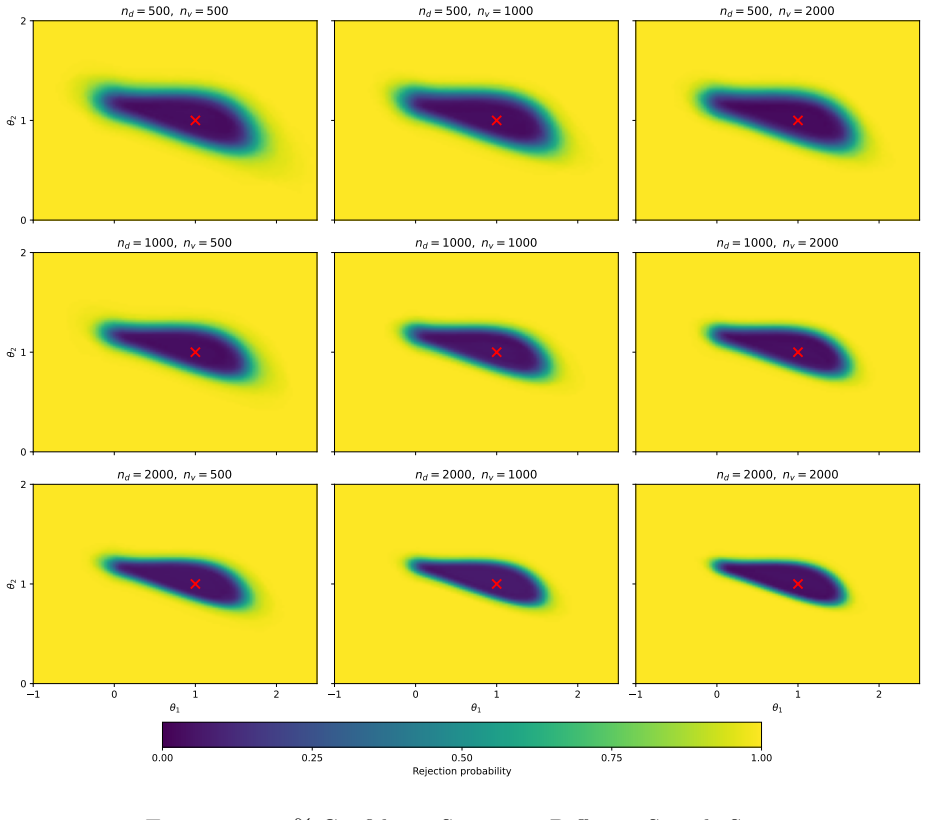
Estimating a continuous functional $F: \X \to \R$ involves specifying $L_n^d$ nodes on $\X \subset \R^d$ for estimation and uniform inference. While asymptotically valid inference requires $L_n$ to increase with $n$, existing fixed-$L$ rules of thumb and heuristic data-driven approaches lack formal justification. This paper shows that, for functions within a Donsker class, the simple grid-growth condition \(L_n=\omega(r_n^{1/4})\) is sufficient for valid inference for twice continuously differentiable functions estimable at the \(r_n^{1/2}\) rate. This condition ensures that the approximation error is asymptotically negligible relative to the stochastic variation of the empirical process.
0
0
econ.EM 2026-05-12 2 theorems

Moments made orthogonal to any order with fixed extra parameters

Higher-Order Neyman Orthogonality in Moment-Condition Models

The construction keeps sensitivity to nuisance errors low at arbitrary orders without adding more parameters as the order rises.

Figure from the paper full image
abstract click to expand
We construct moment functions that are Neyman-orthogonal to a chosen order in parametric moment condition models. These moment functions reduce sensitivity to nuisance estimation error and, as such, offer a unified and tractable route to higher-order debiasing in a wide range of econometric models. The number of additional nuisance parameters required by our construction, beyond those already present in the original moment conditions, is independent of the order of orthogonalization and can be reduced to a single scalar if desired.
0
0
econ.EM 2026-05-11 2 theorems

Hybrid booster adds linear terms to trees for macro forecasts

LGB+: A Macroeconomic Forecasting Road Test

LGB+ lets linear corrections compete with tree updates via out-of-bag checks, lifting accuracy on autoregressive targets.

abstract click to expand
Needless to say, linear dynamics are pervasive in economic time series, particularly autoregressive ones. While gradient boosting with trees excels at capturing nonlinearities, it is inefficient in small samples when much of the predictive content is linear, expending splits to approximate relationships better captured by simple linear terms. This paper proposes LGB+, a boosting procedure operating on a more inclusive set of basis functions. The idea comes in two flavors. LGB+ evaluates a tree and a linear candidate at each step against out-of-bag data; only the winner advances. The simpler variant, LGB^A+, alternates on a fixed schedule: a block of tree updates, then a greedy linear correction, repeat. Both designs avoid ex ante commitments to any particular functional form or predictor selection. Because the prediction is the sum of a linear and a tree component, forecasts decompose natively into linear and nonlinear contributions, and so does permutation-based variable importance and historical proximity weights. In a quarterly U.S. macroeconomic forecasting exercise, LGB+ delivers strong gains for targets with pronounced autoregressive dynamics or mixed linear-nonlinear signals. Variables dominating the linear channel are those operating through autoregressive persistence or near-accounting relationships to the target (e.g., initial claims for unemployment and building permits for housing starts).
0
0
econ.EM 2026-05-11 2 theorems

Risk-adjusted metrics favor professional forecasters

Quantifying the Risk-Return Tradeoff in Forecasting

Loss differentials treated as returns reveal experts avoid big failures while some models win on specific targets.

abstract click to expand
Average forecast accuracy is not the same as forecast reliability. I treat forecast loss differentials relative to a benchmark as a return series. I then evaluate these returns using risk-adjusted performance measures from finance, including the Sharpe ratio, Sortino ratio, Omega ratio, and drawdown-based metrics. I also introduce the Edge Ratio capturing a model's propensity to deliver uniquely informative predictions relative to the forecasting frontier. I apply this framework to U.S. macroeconomic forecasting, comparing econometric benchmarks, machine learning models, a foundation model (TabPFN), and the Survey of Professional Forecasters. While it is often feasible to beat professional forecasters in terms of average accuracy, it is much harder to beat them on a risk-adjusted basis. They rarely exhibit catastrophic failures and often achieve high Edge Ratios, plausibly reflecting the value of contextual judgment. Nonetheless, selected machine learning methods deliver attractive risk profiles for specific targets. The framework naturally extends to meta-analyses across targets, horizons, and samples, illustrated with a density forecast evaluation and the M4 competition.
0
0
econ.EM 2026-05-11 Recognition

Control-system model breaks middle-income trap

Engineering Economy: A New Paradigm for Escaping the Middle-Income Trap

Eleven pillars address Turkey's R&D demand shortage to enable high-income transition like South Korea's.

abstract click to expand
This paper introduces the concept of Engineering Economy as a new paradigm for understanding and managing macroeconomic policy in middle-income countries seeking to escape the middle-income trap. Drawing on Turkiye's post-2001 economic trajectory and South Korea's successful transition from a low-income to a high-income economy, the study argues that conventional frameworks whether the Washington Consensus's market liberalization prescriptions or the institutionalist critique alone are insufficient. Instead, it proposes treating the economy as a dynamic control system requiring continuous calibration rather than static equilibrium. The paper develops a road-surface metaphor (highway, side-road, off-road) to characterize different global economic regimes and presents eleven interconnected policy pillars spanning venture capital formation, regulatory sandboxes, technology-focused industrial policy, and human capital development. By synthesizing insights from endogenous growth theory (Romer), institutional economics (Acemoglu), the catching-up literature (Lee), cybernetic systems theory (Wiener), and Schumpeterian creative destruction, the framework reconceptualizes macroeconomic instruments through control-engineering analogies: interest rates as energy gradients, fiscal policy as energy flow, exchange rates as balance motors, and regulation as adaptive suspension. The analysis demonstrates that Turkiye's structural challenge is not merely institutional weakness but a systemic absence of R&D demand from its dominant enterprise structures, creating a vicious cycle that conventional reforms cannot break. Seven specific opportunity windows arising from US-China technological rivalry are identified, and a phased implementation roadmap is proposed.
0
0
econ.EM 2026-05-11 Recognition

GRU nowcasts Italian municipal income from nightlights at 4% median error

Nowcasting Italian Municipal Income with Nightlights: A Deep Learning Approach

Satellite nightlight data fed into a gated recurrent unit beats persistence and spatial linear models for 7,631 towns with 1.07 million euro

abstract click to expand
This paper assesses whether NASA Black Marble nightlight intensity can serve as an early indicator of annual taxable income at the Italian municipal level, where official data are released with a 12--18 month lag. Using a panel of 7{,}631 municipalities over 2012--2021, we compare four recurrent neural network architectures (LSTM, BiLSTM, GRU, Transformer) against six benchmarks: simple persistence, panel fixed effects, autoregressive distributed lag, and two spatial econometric specifications (SAR, Spatial Durbin) on a queen-contiguity matrix. Models are trained on 2012--2019 and evaluated out-of-sample on 2020--2021 with a cross-sectional Diebold--Mariano test. A single-layer GRU achieves a median forecast error of 1.07 million euros across the cross-section of municipalities -- approximately $4\%$ of the median municipal IRPEF income of 29 million euros -- statistically dominating every benchmark (DM $>4$ against persistence, $>40$ against spatial linear models, all $p<0.001$). Spatial models recover statistically significant spatial autocorrelation ($\rho \approx 0.71$) and a meaningful nightlight spillover ($\theta \approx 0.05$), but their forecasting gap with the GRU is virtually identical to that of spatially-naive linear specifications. We conclude that nightlights contain genuine predictive content for municipal income, but extracting it requires a model class flexible enough to capture cross-sectional heterogeneity and non-linearities that linear specifications, spatial or otherwise, cannot recover.
0
0
econ.EM 2026-05-11 2 theorems

Nonparametric EB intervals reach nominal coverage asymptotically

Nonparametric Empirical Bayes Confidence Intervals

They converge in conditional and marginal coverage while shortening intervals by borrowing strength across units at a logarithmic rate.

Figure from the paper full image
abstract click to expand
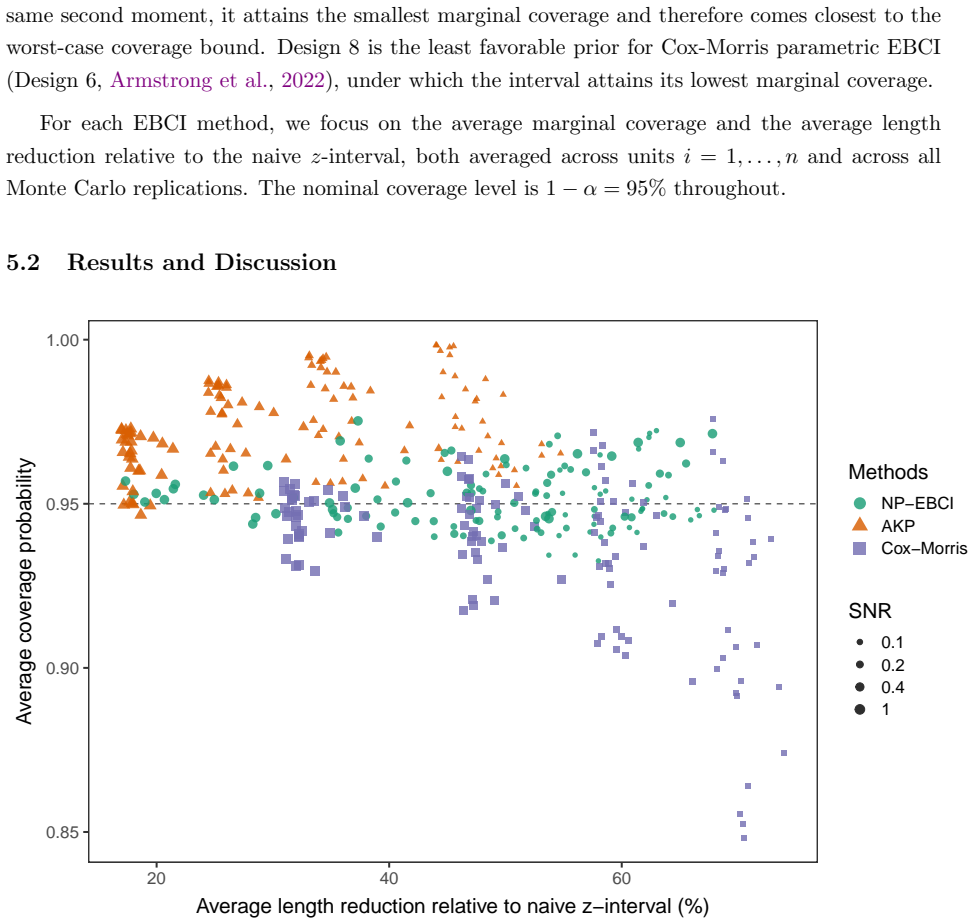
Empirical Bayes methods can improve inference on unobservable individual effects by borrowing strength across units. This paper proposes nonparametric empirical Bayes confidence intervals (NP-EBCIs) for unobservable individual effects in a normal means model. The oracle intervals are constructed from posterior quantiles under a point-identified, fully nonparametric prior; feasible intervals replace these quantiles with nonparametric estimates. The NP-EBCIs are asymptotically exact in the sense that both their conditional and marginal coverage probabilities converge to the nominal level. The flexibility of this nonparametric construction has an unavoidable statistical cost. We demonstrate that posterior quantiles, unlike posterior means, inherit the severe ill-posedness of nonparametric deconvolution: the minimax optimal estimation rate is logarithmic. This logarithmic rate is minimax optimal for errors in the conditional coverage probability, and the resulting errors in the marginal coverage probability also vanish at the same logarithmic rate. Despite these slow asymptotic rates, simulations show that the NP-EBCIs remain close to nominal coverage when the prior is non-Gaussian, and deliver substantial length reductions relative to intervals that treat each unit in isolation.
0
0
econ.EM 2026-05-11 Recognition

AI Changes Incidence and Visibility of Econometric Failures

Vibe Econometrics and the Analysis Contract

The Analysis Contract counters this by requiring method-data agreements, data audits, and pre-commitments to disconfirming results before a

Figure from the paper full image
abstract click to expand
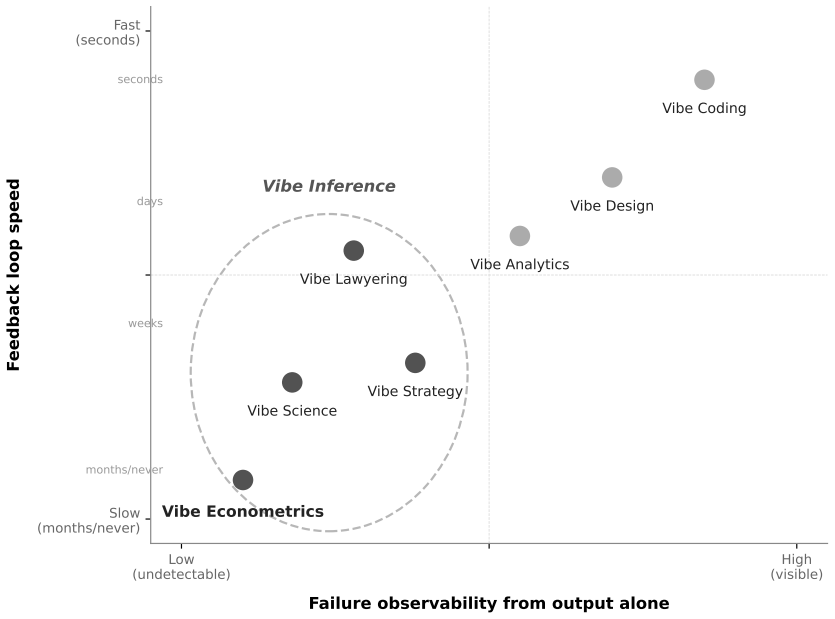
"Vibe coding" and "vibe analytics" have been framed as a democratization of technical capability. This paper argues that AI-assisted methodology more broadly, or what I call "vibe methodology," also democratizes the failure modes specific to each domain. When AI assists with methods whose validity depends on assumptions that cannot be verified from the output alone (a class I call "vibe inference"), the failure surface is structurally different: the output does not reliably signal invalidity, and when it does, recognizing the signal requires the expertise the workflow bypasses. I focus on "vibe econometrics," the subset of AI-assisted causal analysis where identification can be named faster than it can be audited. The claim of this paper is not that AI invents inferential failures that did not previously exist, but that it changes their incidence, observability, and persuasive force enough to create a practically distinct governance problem. This results in three failure modes: method-data mismatch, where AI bypasses expertise at execution; confidence laundering, where AI amplifies the credibility of formatted output; and invisible forking, which spans both. What is new is not the failure modes but AI's industrialization of their packaging. The barrier between naming a method and executing it has collapsed, and weak foundations, dressed as rigorous analysis, now reach audiences at a scale, speed, and polish that previously required expertise. I propose the Analysis Contract, a pre-commitment framework that adapts the logic of pre-analysis plans and the Causal Roadmap to the AI-assisted setting. The contract imposes three conditions before a causal claim is made: a method-data contract, a data audit, and a pre-commitment statement defining what would count as a disconfirming result. The framework generalizes across domains of vibe inference through domain-specific instantiation.
0
0
econ.EM 2026-05-08

Orthogonal moments remove incidental bias in two-way panel regressions

Inference on Linear Regressions with Two-Way Unobserved Heterogeneity

A general procedure delivers root-NT consistent estimates of common parameters under weak conditions on nonparametric first-step estimators.

Figure from the paper full image
abstract click to expand
We develop a general estimation and inference procedure for the common parameters in linear panel data regression models with nonparametric two-way specification of unobserved heterogeneity. The procedure takes as input any first-step estimators of the nonparametric regression function and the fixed effects and relies on two key ingredients: First, we develop moment conditions for the common parameters that are Neyman orthogonal with respect to the nonparametric regression function. Second, we employ a novel adjustment of the nonparametric regression estimator so the estimated fixed effects do not generate incidental parameter biases. Together, these ensure that the resulting estimator of the common parameters is root-NT -- asymptotically normally distributed under weak conditions on the estimators of fixed effects and regression function. Next, we propose a novel two-step estimator of the nonparametric regression function and the fixed effects and verify that this particular estimator satisfies the conditions of our general theory. A numerical study shows that the proposed estimators perform well in finite samples.
0
0
econ.EM 2026-05-08

RL agents narrow equity gaps in NYC 311 complaint routing

Scaling the Queue: Reinforcement Learning for Equitable Call Classification Capacity in NYC Municipal Complaint Systems

By making equitable coverage a direct reward in each domain's MDP, agents learn to route calls while increasing throughput.

abstract click to expand
Municipal 311 call centers and complaint intake systems face a structural mismatch between incoming volume and classification capacity. The staff and heuristics available to triage, route, and prioritize complaints cannot scale with demand. This bottleneck produces differential service quality that follows income and racial lines (\cite{liu2024sla}). We develop an equity-centered reinforcement learning (RL) framework that augments call classification capacity across six New York City Department of Buildings (DOB) operational domains: boiler safety, crane and derrick oversight, heat and hot water complaints, housing complaint triage, scaffold safety, and Natural Area District (SNAD) protection. Rather than replacing human classifiers, our agents act as intelligent intake routers: learning to assign incoming complaints to action categories: escalate, batch, defer, inspect now. The proposed technique is designed to maximize throughput, minimize misclassification cost, and actively narrow historical equity gaps in service delivery. We formalize each domain as a Markov Decision Process (MDP) in which equitable classification coverage is a first-class reward objective. Post-hoc SHAP attribution reveals that complaint recurrence and neighborhood-level statistics are stronger predictors of actionable violations than raw complaint volume. This finding has direct implications for complaint routing given the demographic correlates of those features.
0
0
econ.EM 2026-05-08

Neyman score dictates balancing in debiased machine learning

Covariate Balancing and Riesz Regression Should Be Guided by the Neyman Orthogonal Score in Debiased Machine Learning

Covariate balancing suffices only for covariate-only errors; general case requires regressor balancing on full X

Figure from the paper full image
abstract click to expand
This position paper argues that, in debiased machine learning, balancing functions should be derived from the Neyman orthogonal score, not chosen only as functions of covariates. Covariate balancing is effective when the regression error entering the score can be represented by functions of covariates alone, and it is the natural finite-dimensional approximation for targets such as ATT counterfactual means. For ATE estimation under treatment effect heterogeneity, however, the score error generally contains treatment-specific components because the outcome regression is a function of the full regressor $X=(D,Z)$. In that case, balancing common functions of $Z$ can leave the treatment-specific component unbalanced. We therefore advocate regressor balancing, implemented by Riesz regression with basis functions of $X$, as the general balancing principle for DML. The position is not that covariate balancing is invalid, but that covariate balancing should be understood as the special case that is appropriate when the score-relevant regression error is a function of covariates alone.
0
0
econ.EM 2026-05-07

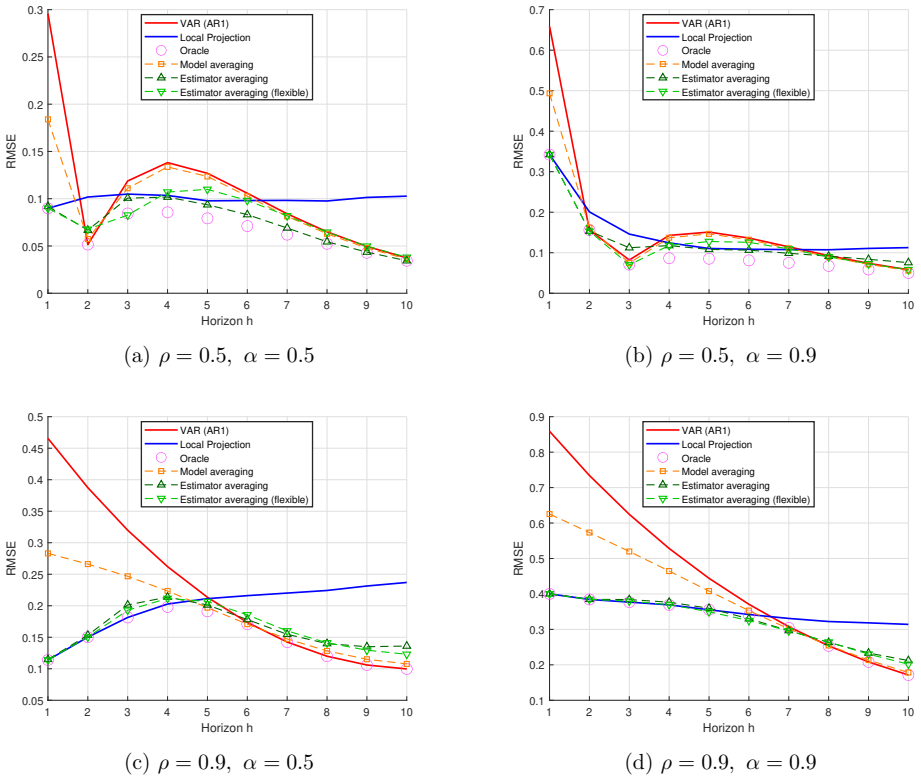
Averaging LP and VAR cuts impulse response MSE

Estimator Averaging of Local Projection and VAR Impulse Responses

Horizon-specific weights derived from finite-sample risk minimization deliver lower error than either method alone.

Figure from the paper full image
abstract click to expand
Local projections (LP) and vector autoregressions (VAR) are the two standard tools for impulse response analysis, but they often display a finite-sample trade-off: LP is typically less biased but more volatile, while VAR is more precise but can be biased under misspecification. We propose an easy-to-implement estimator-averaging approach that combines LP and VAR at each horizon by minimizing the mean squared error of the impulse response itself, rather than in-sample fit. We derive closed-form oracle weights for this finite-sample risk problem, develop feasible AR-sieve-bootstrap procedures, and compare them against an Rsquare-based model-averaging benchmark. For a benchmark class of short-memory linear data generating processes in which LP and VAR are both consistent, we establish the consistency and limiting distribution of the feasible averaged estimator. Monte Carlo results show meaningful risk reductions relative to LP and VAR alone. In an empirical application revisiting Bauer and Swanson (2023), estimator averaging delivers stable and economically intuitive responses for yields, activity, prices, and credit spreads.
0
0
econ.EM 2026-05-07

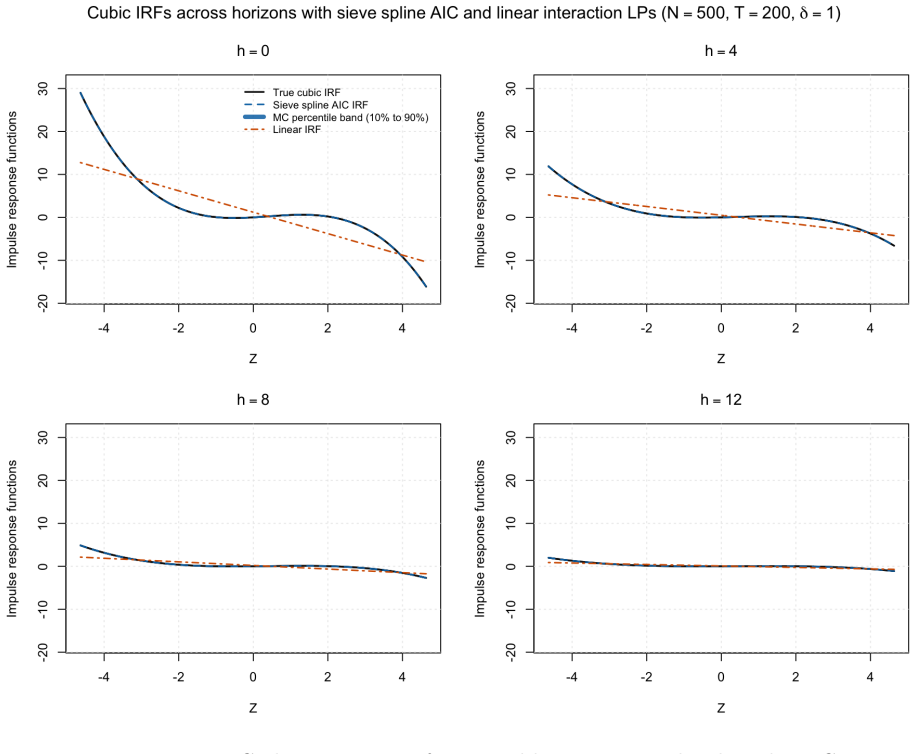
State-dependent projections recover causal responses under linearity

Causal State-Dependent Local Projections

A condition satisfied in standard models lets local projections identify shock effects without full specification, revising monetary policy

Figure from the paper full image
abstract click to expand
State-dependent local projections (LPs) are widely used to estimate how responses to exogenous aggregate shocks vary as a function of observable state variables, yet their causal interpretation remains unclear. We show that this interpretation obtains under the sufficient condition that the conditional mean is linear in the aggregate shock at each horizon, and that this condition holds in a broad class of canonical micro-macro environments, including first-order perturbation solutions of heterogeneous-agent models and macro-finance models. Under this condition, LPs recover causal impulse responses without requiring specification of the full data-generating process. We further show that the causal interpretation of state-dependent LPs is robust to the choice of state variable. By contrast, commonly used linear interaction LPs generally fail to recover causal objects. We therefore develop a sieve-based nonparametric LP estimator that restores causal interpretation and delivers valid pointwise and uniform inference in micro-macro panels. Empirically, allowing for nonparametric state dependence materially changes both the pattern of heterogeneous firm investment responses and their aggregate implications for the transmission of monetary policy shocks.
0
0
econ.EM 2026-05-07

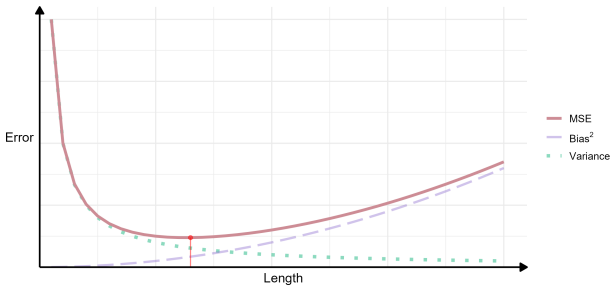
DiD estimator picks pre-trend length to minimize MSE

MSE-Optimal Difference-in-Differences Estimator

Balances bias from longer windows against variance from shorter ones for lower overall error in small samples.

Figure from the paper full image
abstract click to expand
This paper develops a difference-in-differences (DiD) estimation method that selects the optimal length of pre-trends by minimizing the mean squared error (MSE). Conventional DiD regression models, such as the two-way fixed effects model or the event study model, may suffer from accuracy and validity concerns. If the sample size is small, the estimator may have a larger variance. Also, pre-tests often lack power to detect violations of the parallel trends assumption as Roth (2022) highlights. By focusing on the bias and variance tradeoff, the proposed method derives the MSE-optimal estimator from the optimal length of pre-trends. Simulation results and an empirical application demonstrate the practical applicability of the proposed method.
0
0
econ.EM 2026-05-07

Panel bias corrected by inverting outcome mapping at exponential rate

Approximate Operator Inversion for Average Effects in Nonlinear Panel Models

Approximate operator inversion achieves double-robust bias removal for average effects in models with moderate time dimension T.

abstract click to expand
We study the estimation of average effects in nonlinear panel data models with fixed effects when the time dimension $T$ is only moderately large. Our approach, called approximate operator inversion (AOI), offers a new perspective on bias correction. Instead of first estimating unit-specific fixed effects and then correcting the resulting plug-in bias, AOI approximately inverts the likelihood-induced mapping from the fixed-effect distribution to the outcome distribution. AOI can be interpreted as the limit of an infinitely iterated bias correction scheme, and this limit is available in closed form. We show that the bias of the AOI estimator has a rate double robustness property and converges to zero at an exponential rate in $T$ under regularity conditions. Our asymptotic theory requires $T \to \infty$, but the exponential convergence rate of the bias means that finite-sample performance is very good even for moderately large $T$. We establish asymptotic normality and provide feasible inference.
0
0
econ.EM 2026-05-07

Recentering moments yields efficient GMM under misspecification

Efficient GMM and Weighting Matrix under Misspecification

By augmenting the moment conditions and weighting them optimally, the misspecification-efficient estimator minimizes asymptotic variance for

abstract click to expand
This paper develops efficient GMM estimation when the moment conditions are misspecified. We observe that the influence function of the standard GMM estimator under misspecification depends on both the original moment conditions and their Jacobian, motivating a new class of estimators based on augmented moment conditions with recentering. The standard GMM estimator is a special case within this class, and generally suboptimal. By optimally weighting the augmented system, we obtain a misspecification-efficient (ME) estimator with the smallest asymptotic variance for the same GMM pseudo-true value. In linear models, the asymptotic variance of ME estimator reduces to the textbook efficient-GMM variance formula $(G'W^{*}G)^{-1}$, where $W^{*}$ is the inverse of the variance of residualized moments after projection on the Jacobian $G$. We consider a feasible double-recentered bootstrap estimator, which can be considered as a misspecification-robust and efficient version of Hall and Horowitz (1996) recentered bootstrap GMM estimator, and also consider a split-sample ME estimator. Finally, we establish uniform local asymptotic minimax bounds over a class of weighting matrices. We illustrate the proposed methods in simulation and empirical examples.
0
0
econ.EM 2026-05-07

Test rejects stable preferences from singles to couples

It's complicated: A Non-parametric Test of Preference Stability between Singles and Couples

Non-parametric method finds consumption patterns in Dutch, Russian and Spanish panels inconsistent with unchanging preferences.

Figure from the paper full image
abstract click to expand
This paper develops a method to use singles' data in a non-parametric revealed preference setting of collective household choice. We use it to test the controversial assumption of preference stability between singles and couples, without data on intra-household allocation or marital transitions. We show that, under the preference-stability hypothesis, consumption choices from an endogenously matched population admit a conditional random-utility representation over counterfactual pairings of couples and singles. Preference stability is testable as a feasibility restriction on the observed marginal choice distributions. We reject the hypothesis using consumption data from the Dutch LISS, the Russian RLMS, and the Spanish ECPF panels.
0
0
econ.EM 2026-05-07

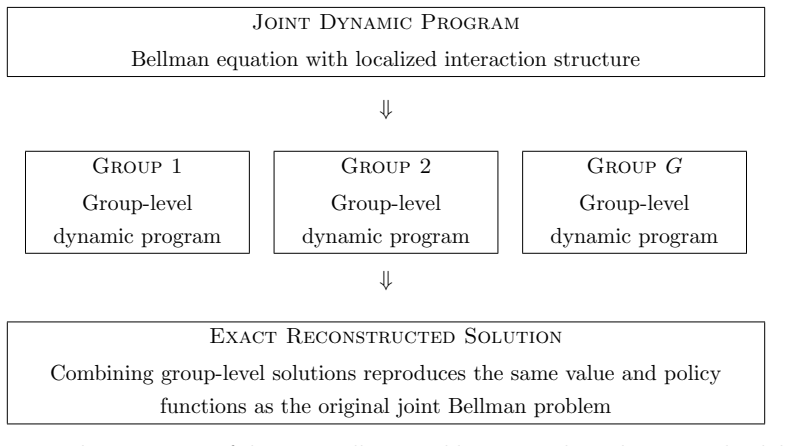
Local groups split Bellman operator into exact subproblems

Scalable Structural Estimation of Networked Infrastructure: Exact Decomposition for Localized Coordination

Decomposition lets researchers estimate coordination among 14k GPU nodes without approximation or independence assumptions.

Figure from the paper full image
abstract click to expand
Interaction effects are often economically central in environments where structural dynamic estimation becomes computationally infeasible. Under fixed group membership and sparse within-group interaction structure, the Bellman operator admits a block-diagonal decomposition that allows high-dimensional dynamic programs to be solved through independent group-level subproblems while preserving the original structural problem exactly. The result applies to a class of dynamic discrete choice models in which interactions are confined within stable local groups and state transitions depend only on within-group conditions. We apply the framework to replacement decisions across 14,344 GPU node locations in the Titan supercomputer, where operating environments differ systematically across cage positions. The structural estimates reveal significant spatial coordination: both neighboring failures and recent local replacement activity increase replacement incentives. Accounting for these interaction effects materially shifts predicted replacement timing and reveals significant misoptimization costs in benchmarks that assume conditional independence. More broadly, the results show how exploiting sparsity in interaction structures can make fully structural estimation feasible in large-scale networked systems without relying on simulation-based auxiliary moments or numerical approximation.
0
0
econ.EM 2026-05-06

The paper derives the efficient influence function for the local average treatment effectโ€ฆ

Doubly Robust Instrumented Difference-in-Differences

Efficient influence functions deliver consistency for effects on compliers if either the outcome or instrument model is correct, plus an IDi

Figure from the paper full image
abstract click to expand
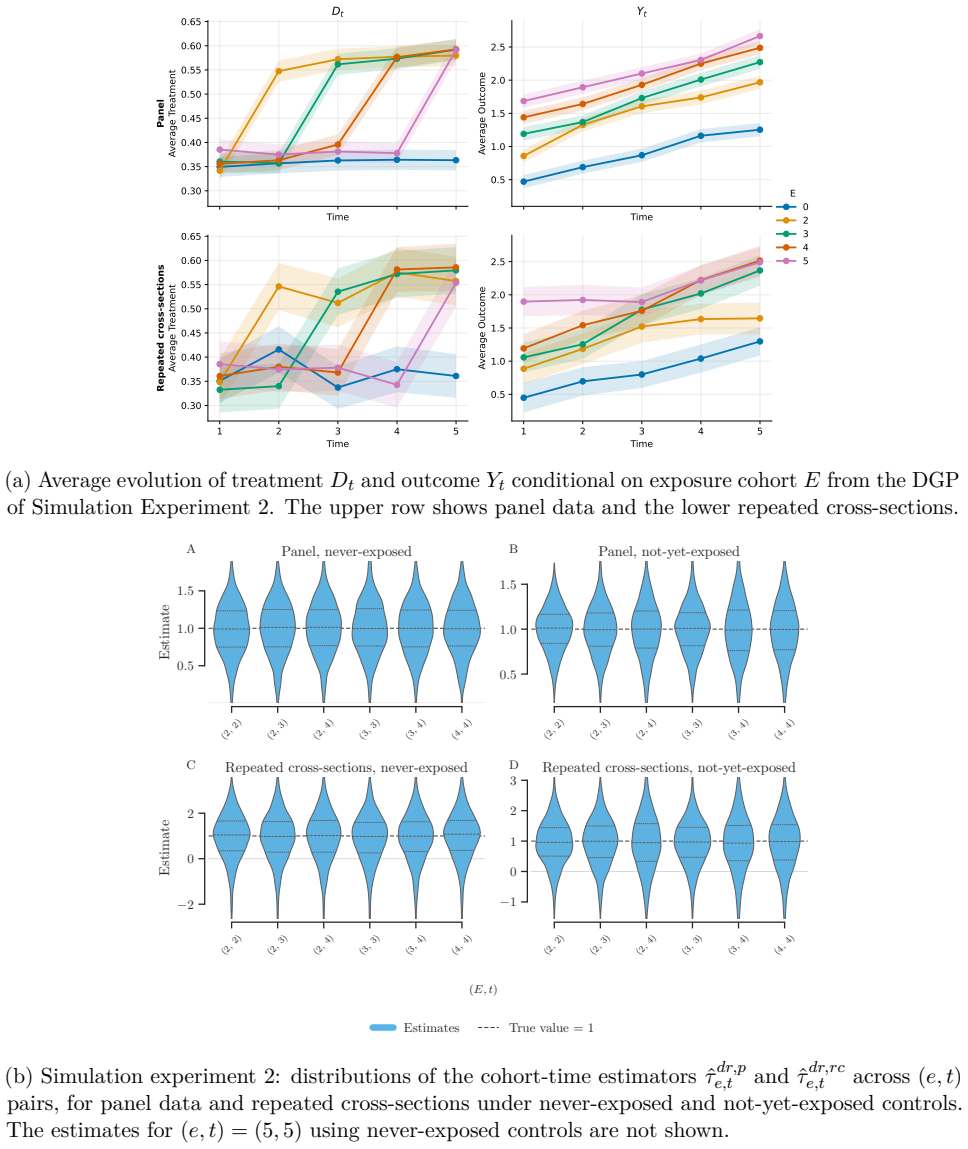
We study estimation of the local average treatment effect on the treated ($LATT$) in instrumented difference-in-differences (IDiD) designs with covariates and staggered instrument exposure. We derive the efficient influence function (EIF) of the target parameter in both panel and repeated cross-sections settings, allowing for two classes of control groups: never-exposed and not-yet-exposed. Building on the EIF, we construct doubly robust estimands and corresponding estimators from first principles. The resulting procedures are the IDiD analogues of the difference-in-differences (DiD) procedures in Callaway and Sant'Anna (2021), targeting $LATT$ rather than $ATT$. We further establish a Bloom-type result under one-sided compliance and absorbing treatment, linking $LATT$ to a convex combination of exposure-cohort-specific $ATT(g, t)$ parameters, making the connection between IDiD and DiD explicit. Asymptotic properties are established under conditions on the remainder term and either Donsker conditions or via cross-fitting. We also construct double machine learning (DML) estimators for the $LATT$ in both data settings and show their equivalence to cross-fitted estimators. Simulations assess the double robustness and finite-sample performance of the proposed methods. An implementation is available in the Python package \texttt{idid}.
0
0
econ.EM 2026-05-05

Optimal test-and-roll sample size is one third of the population

Prior-Free Sample Size Design for Test-and-Roll Experiments

A marginal welfare criterion produces this simple benchmark for Bernoulli and Gaussian outcomes without requiring priors.

Figure from the paper full image
abstract click to expand
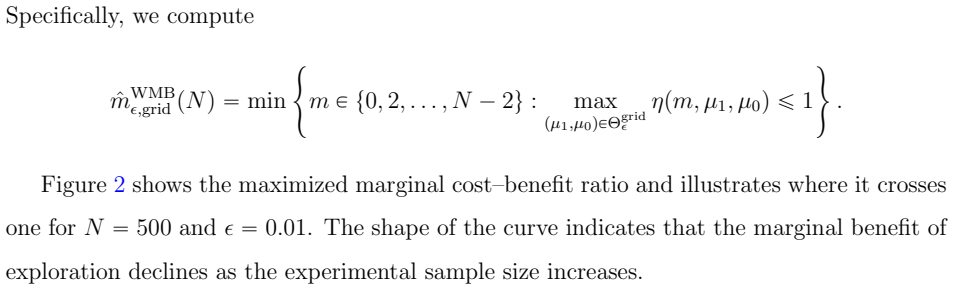
This paper studies sample-size design for finite-population test-and-roll experiments, where a decision-maker first conducts an experiment on $m$ units and then assigns the remaining $N-m$ units to the treatment that performs better in the experiment. We consider welfare-aware sample-size choice, which involves an exploration-exploitation tradeoff: larger experiments improve the rollout decision but impose welfare losses on experimental units assigned to the inferior treatment. We show that the standard absolute minimax regret criterion can lead to implausibly small experiments by over-penalizing exploration in its worst-case objective. To address this limitation, we propose the Worst-case Marginal Benefit (WMB) rule, which compares the worst-case marginal benefit of adding one more matched pair to the experiment with the corresponding marginal exploration cost. We establish a simple rule-of-thirds benchmark. For Bernoulli outcomes, after excluding pathological cases, the WMB criterion yields the optimal sample size of $m \approx N/3$ through a Gaussian approximation. For Gaussian outcomes with a known common variance, the same benchmark arises exactly. These results provide a prior-free and practically implementable guide for welfare-based sample-size design.
0
0
econ.EM 2026-05-05

LS-MD estimator recovers dynamic coefficients despite measurement error

Analysis of interactive fixed effects dynamic linear panel regression with measurement error

It consistently estimates the autoregressive parameter in panel regressions that include interactive fixed effects and classical measurement

abstract click to expand
This paper studies a simple dynamic linear panel regression model with interactive fixed effects in which the variable of interest is measured with error. To estimate the dynamic coefficient, we consider the least-squares minimum distance (LS-MD) estimation method.
0
0
econ.EM 2026-05-04 2 theorems

Eigenvalue method cuts Monte Carlo paths from 1M to 10

Fast Monte-Carlo

Approximation matches full sampling results on steady-state distributions while reducing variance.

Figure from the paper full image
abstract click to expand
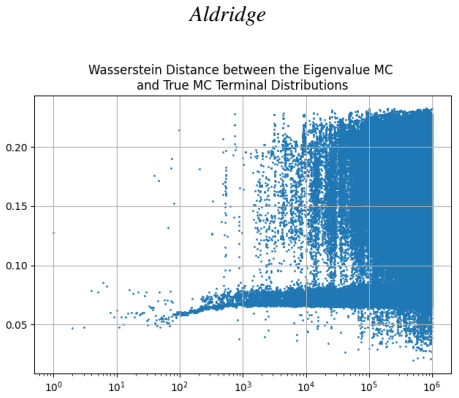
This paper proposes an eigenvalue-based small-sample approximation of the celebrated Markov Chain Monte Carlo that delivers an invariant steady-state distribution that is consistent with traditional Monte Carlo methods. The proposed eigenvalue-based methodology reduces the number of paths required for Monte Carlo from as many as 1,000,000 to as few as 10 (depending on the simulation time horizon $T$), and delivers comparable, distributionally robust results, as measured by the Wasserstein distance. The proposed methodology also produces a significant variance reduction in the steady-state distribution.
0
0
econ.EM 2026-05-04 2 theorems

Two-step method estimates quantiles of panel slope heterogeneity

Estimation and Inference for the ฯ„-Quantile of Individual Heterogeneous Coefficient

The procedure targets the cross-sectional ฯ„-quantile of individual slopes rather than outcome heterogeneity and supplies bootstrap inference

Figure from the paper full image
abstract click to expand
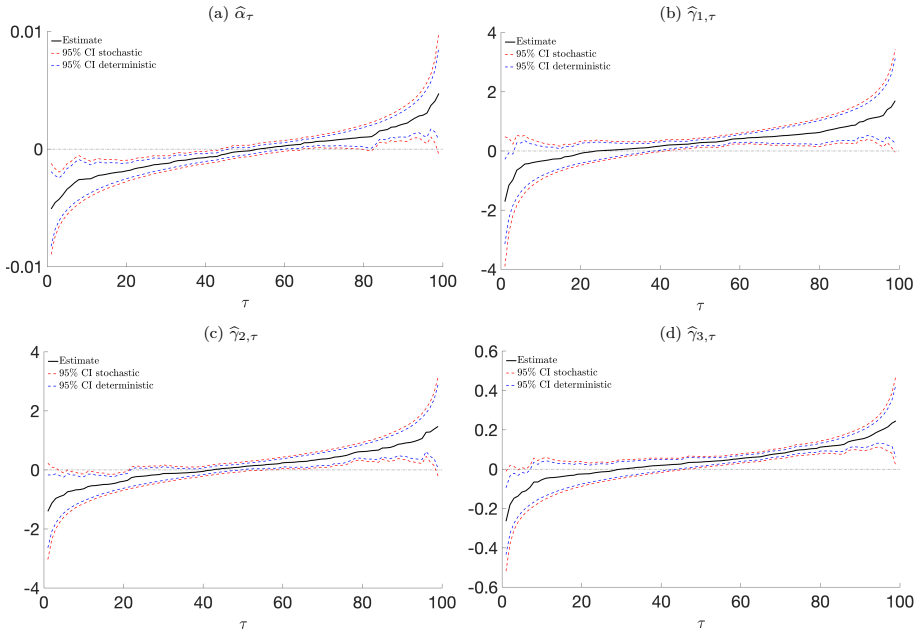
This paper proposes estimation and inference procedures for the quantiles of individual heterogeneous slope coefficients within panel data. We develop a two-step quantile estimation framework for analyzing heterogeneity in individual coefficients. Unlike conventional panel quantile regression, which focuses on outcome heterogeneity, our approach targets the $\tau$-quantile of the cross-sectional distribution of individual-specific slopes. We establish asymptotic theory under both stochastic and deterministic designs, with convergence rates $\sqrt{N}$ and $\sqrt{N\sqrt{T}}$, respectively. We also develop two corresponding bootstrap procedures for practical inference, and formally establish their validity. The suggested methods are of practical interest since they require weaker sample size growth conditions than standard fixed-effect quantile regression, and accommodate large $N$ settings. Numerical simulations and an application to mutual fund performance illustrate the proposed methods and the heterogeneity patterns they reveal across quantiles.
0
0
econ.EM 2026-05-04

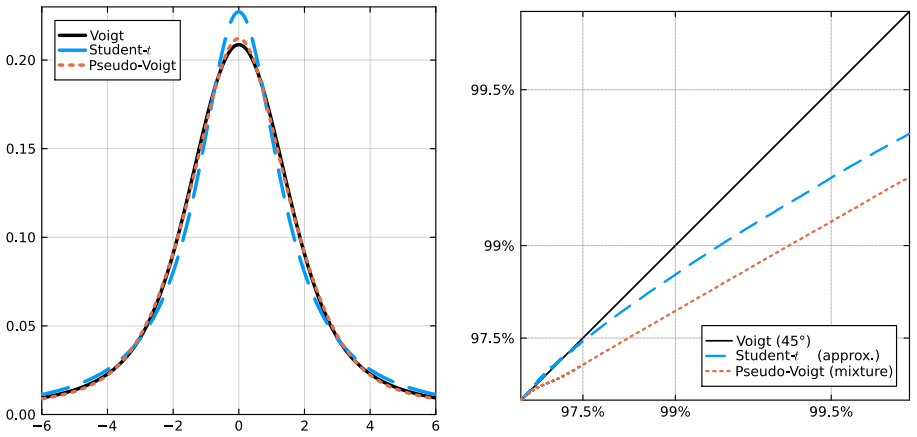
Exact analytical expressions for the Gauss-Cauchy convolution density enable stableโ€ฆ

Exact Likelihood Inference and Robust Filtering for Gauss-Cauchy Convolution Models

Closed-form likelihoods using the error function avoid numerical methods and discount outliers in state-space estimation.

Figure from the paper full image
abstract click to expand
The convolution of a Gaussian and a Cauchy distribution, known as the Voigt distribution, is widely used in spectroscopy and provides a natural framework for modeling heavy-tailed measurement noise. We derive analytical expressions for its density, score, Hessian, and conditional moments using the scaled complementary error function, enabling stable maximum likelihood estimation without numerical convolution, finite-difference derivatives, or pseudo-Voigt approximations. The conditional expectation of the latent Gaussian component is governed by a redescending location score, so extreme observations are automatically discounted rather than propagated. This structure motivates the Gauss-Cauchy Convolution (GCC) filter for state-space models with Gaussian latent dynamics and heavy-tailed measurement errors. In an application to log realized volatility for the Technology Select Sector SPDR Fund, the GCC filter separates persistent latent variation from transient measurement noise and improves on Gaussian, Student-$t$, Huber, and related robust alternatives.
0
0
econ.EM 2026-05-04 4 theorems

Orthogonal estimator recovers BLP price coefficients with many characteristics

Estimation of BLP models with high-dimensional controls

Price sensitivity stays root-T consistent even when features outnumber markets, under the assumption that consumers focus on few traits.

abstract click to expand
This study proposes a framework for estimating demand in differentiated product markets with high dimensional product characteristics, building upon the seminal Berry, Levinsohn, and Pakes (1995) model, using market level data. We allow for a very large set of potential product characteristics, where the number of characteristics may exceed the number of market observations. Our contributions are twofold. First, we establish a general estimation theory for BLP models featuring high-dimensional nuisance parameters. We propose a Neyman orthogonal estimator specifically adapted to this framework, utilizing machine learning techniques, such as Lasso, to construct nuisance parameter estimators that are plugged into the Neyman orthogonal estimator. This approach offers a significant advantage: it achieves $\sqrt{T}$-asymptotic normality for parameters of interest--such as the price coefficient and price heterogeneity--even when nuisance parameters are estimated at slower rates due to their high dimensionality. Second, we apply this theory to a specialized BLP model under approximate sparsity, developing an estimation strategy for the high-dimensional nuisance parameters. The approximate sparsity condition posits that nuisance parameters can be controlled, up to a small approximation error, by a small and unknown subset of variables. In an economic context, this implies that while products have a vast array of characteristics, consumers focus on only a small subset of these due to bounded rationality. This condition makes the recovery of parameters of interest feasible by enabling nuisance parameter estimators to converge at the required rates. The practical performance of the method is evaluated through comprehensive Monte Carlo simulations, which demonstrate its efficacy in finite samples.
0
0
econ.EM 2026-05-04 3 theorems

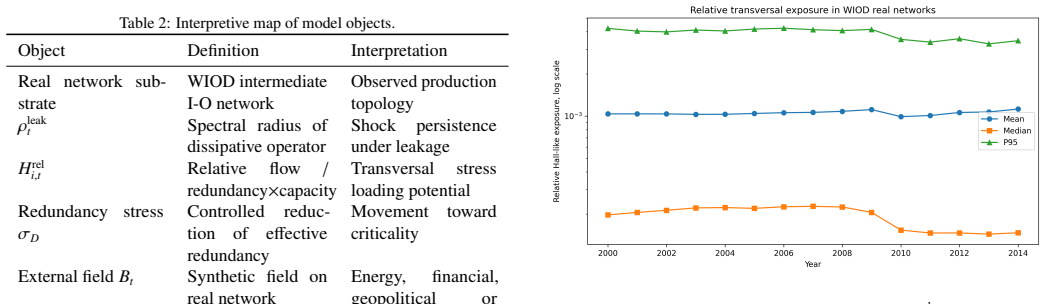
This paper introduces a Hall-Sandpile model that applies a physics analogy of sidewaysโ€ฆ

Hall-Like Transversal Stress and Sandpile Criticality on Real Production Networks

The Hall-Sandpile model on WIOD networks generates four ordered regimes of instability where mean avalanche size and large-eventโ€ฆ

Figure from the paper full image
abstract click to expand
This paper develops a Hall-Sandpile model of economic instability that combines a Hall-like transversal stress mechanism with sandpile threshold dynamics on a real production-network substrate. In analogy with the physical Hall effect, where exposed flows under an external field generate stress in a transversal direction, we model economic shocks as fields that act on flow-intensive, low-redundancy, low-capacity nodes and produce systemic stress through a multiplicative conversion function. The accumulated stress drives a discrete toppling rule and an avalanche dynamics whose effective activation threshold declines with transversal exposure. The model is calibrated on annual World Input--Output Database (WIOD) production networks for 2000--2014 and simulated on the 2014 substrate (2{,}283 country--sector nodes) under three alternative propagation normalisations to avoid mechanical near-criticality from row-stochastic operators. Controlled Monte Carlo experiments over external field intensity and redundancy stress generate four ordered regimes: stable absorption, latent fragility, critical transition, and avalanche regime. Mean avalanche size and the probabilities of finite-size systemic events $\Pr(S\!\geq\!5)$, $\Pr(S\!\geq\!10)$ and $\Pr(S\!\geq\!20)$ rise jointly with field intensity and redundancy stress. Tail diagnostics show regime-dependent thickening of the avalanche distribution, but the estimated tail indices remain too high to interpret as evidence of universal power-law criticality. The contribution is therefore a finite-size, real-network description of how transversal stress activates structural fragility, not a claim of self-organised criticality in the global economy.
0
0
econ.EM 2026-05-04

Penalized likelihood ensures existence in sparse network models

Penalized Likelihood for Dyadic Network Formation Models with Degree Heterogeneity

It corrects incidental-parameter bias for coefficients and partial effects without trimming agents or assuming bounded fixed effects.

abstract click to expand
Estimating network formation models with degree heterogeneity raises two problems in empirical networks. First, agents that send no links, receive no links, or link to all remaining agents can make the fixed-effects MLE fail to exist. Trimming these agents changes the estimation sample and induces selection bias. Second, the incidental-parameter problem biases common parameters and average partial effects. We resolve both issues through a penalized likelihood approach. Our leading specification is a directed network model with reciprocity, nesting the standard undirected and non-reciprocal directed models. The penalty guarantees finite-sample existence and yields bias corrections for coefficients and partial effects. We establish asymptotic results without imposing compactness on the fixed-effects. Allowing the fixed effects to diverge at a logarithmic rate, our asymptotic framework accommodates the degree sparsity ubiquitous in large empirical networks. A global trade application demonstrates that our estimator avoids selection bias and recovers robust parameters where conventional methods fail.
0
0
econ.EM 2026-05-04

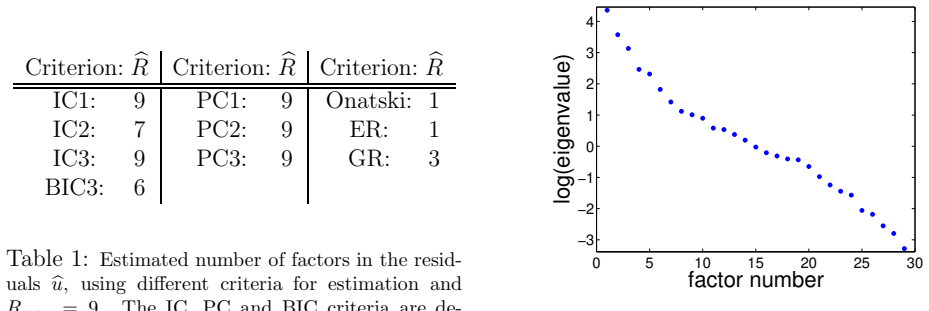
LS estimator distribution unchanged when over-including panel factors

Linear Regression for Panel With Unknown Number of Factors as Interactive Fixed Effects

As long as the true number is not exceeded, the asymptotic law of the regression coefficients does not depend on how many extra factors are

Figure from the paper full image
abstract click to expand
In this paper we study the least squares (LS) estimator in a linear panel regression model with unknown number of factors appearing as interactive fixed effects. Assuming that the number of factors used in estimation is larger than the true number of factors in the data, we establish the limiting distribution of the LS estimator for the regression coefficients as the number of time periods and the number of cross-sectional units jointly go to infinity. The main result of the paper is that under certain assumptions the limiting distribution of the LS estimator is independent of the number of factors used in the estimation, as long as this number is not underestimated. The important practical implication of this result is that for inference on the regression coefficients one does not necessarily need to estimate the number of interactive fixed effects consistently.
0
0
econ.EM 2026-05-04

Bias correction fixes LS estimates in dynamic panels with factors

Dynamic Linear Panel Regression Models with Interactive Fixed Effects

Two sources of asymptotic bias are removed, restoring consistency and chi-squared tests as N and T grow large.

abstract click to expand
We analyze linear panel regression models with interactive fixed effects and predetermined regressors, for example lagged-dependent variables. The first-order asymptotic theory of the least squares (LS) estimator of the regression coefficients is worked out in the limit where both the cross-sectional dimension and the number of time periods become large. We find two sources of asymptotic bias of the LS estimator: bias due to correlation or heteroscedasticity of the idiosyncratic error term, and bias due to predetermined (as opposed to strictly exogenous) regressors. We provide a bias-corrected LS estimator. We also present bias-corrected versions of the three classical test statistics (Wald, LR, and LM test) and show their asymptotic distribution is a chi-squared distribution. Monte Carlo simulations show the bias correction of the LS estimator and of the test statistics also work well for finite sample sizes.
0
0
econ.EM 2026-05-04

Two-step estimator adds interactive fixed effects to BLP demand models

Estimation of random coefficients logit demand models with interactive fixed effects

Handles arbitrary correlation between unobserved characteristics and prices in market-share data.

Figure from the paper full image
abstract click to expand
We extend the Berry, Levinsohn and Pakes (BLP, 1995) random coefficients discrete-choice demand model, which underlies much recent empirical work in IO. We add interactive fixed effects in the form of a factor structure on the unobserved product characteristics. The interactive fixed effects can be arbitrarily correlated with the observed product characteristics (including price), which accommodates endogeneity and, at the same time, captures strong persistence in market shares across products and markets. We propose a two-step least squares-minimum distance (LS-MD) procedure to calculate the estimator. Our estimator is easy to compute, and Monte Carlo simulations show that it performs well. We consider an empirical illustration to US automobile demand.
0
0
econ.EM 2026-04-30

Subsampling validates inference in serially correlated two-way clustered panels

Subsampling Under Two-way Clustering with Serial Correlation

Partitioned individuals and consecutive time blocks produce correct intervals even under non-Gaussian limits that break prior methods.

Figure from the paper full image
abstract click to expand
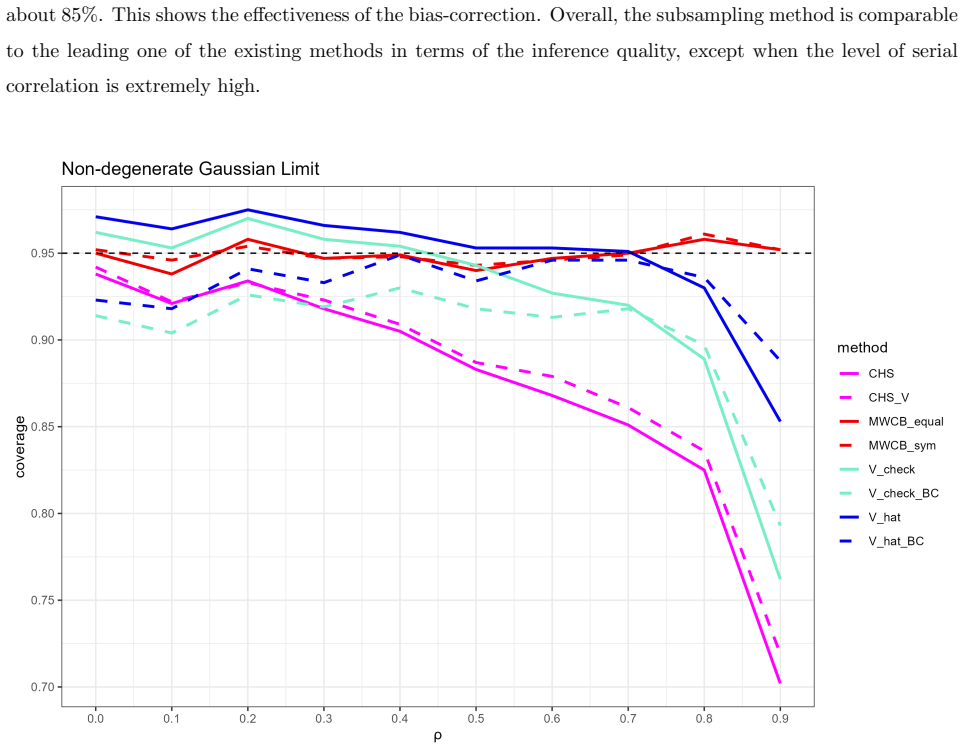
We prove the validity of using subsampling method for inference under a two-way clustered panel in which the time effects are serially correlated. Subsamples should be drawn without replacement from randomly partitioned individual index set and consecutive blocks of time effects. We present two subsampling inference methods: estimating the quantiles directly and constructing the confidence interval by first estimating the asymptotic variance. The quantile method is very adaptive, allowing for non-Gaussian limit which invalidates all existing methods in two-way clustering with serial correlation. Although the variance method only works under Gaussian limit, it comes with a data-driven bandwidth selection algorithm and a bias-correction under suitable estimators. Monte Carlo simulations demonstrate our methods exhibiting the desired coverage level in the finite sample except when the serial correlation is extremely strong. This paper is the first one that allows for inference on non-Gaussian asymptotics under two-way clustering with serial correlation.
0
0
econ.EM 2026-04-30

IFE estimator fails to recover ATT when heterogeneity has factor structure

Treatment-effect heterogeneity and interactive fixed effects: Can we control for too much?

The interactive fixed effects absorb treatment variation and create bias if effects follow a linear factor model, unlike methods that drop a

abstract click to expand
This paper studies the interactive fixed effects (IFE) estimator in a panel-data setting with heterogeneous treatment effects. We show that, if the treatment-effect heterogeneity admits a linear factor structure, the IFE estimator could fail to recover the average treatment effect on the treated units. The problem arises because the interactive fixed effects absorb the heterogeneity in the treatment effect, creating a \textit{bad-control} problem. With time-invariant factors or unit-invariant loadings in the treatment effect heterogeneity, identification may further break down due to multicollinearity. These problems are not present in alternative estimation methods that exclude treated units in post-treatment periods from the factor estimation.
0
0
econ.EM 2026-04-30

Staggered DiD estimator consistent if either model is correct

Doubly robust local projections difference-in-differences

DRLPDID targets the same ATT as LP-DiD but stays valid when only one of two auxiliary models is right.

Figure from the paper full image
abstract click to expand
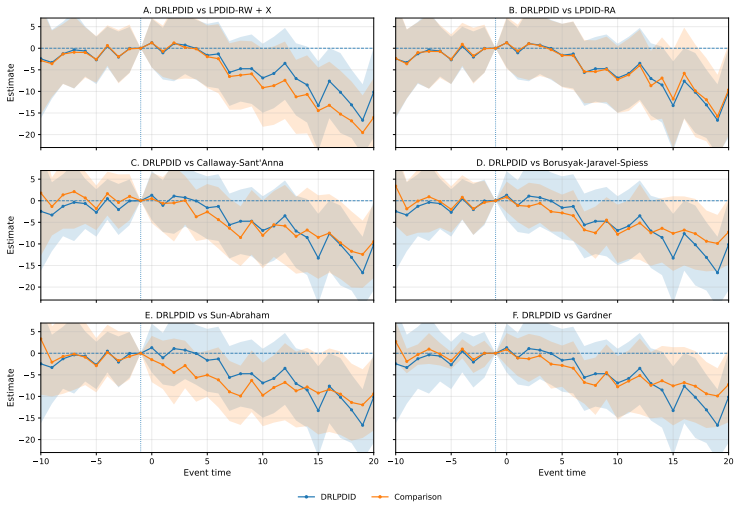
This paper develops a doubly robust extension of local-projections difference-in-differences (LP-DiD) for staggered absorbing treatments. The resulting estimator, DRLPDID, preserves the LP-DiD local-stack ATT target and is consistent when either the local untreated-outcome regression or the local treatment-probability model is correctly specified. It also delivers influence-function-based inference for post-treatment summaries and multiplier-bootstrap bands for dynamic paths. In Monte Carlo designs with covariate-driven selection, DRLPDID matches regression-adjusted LP-DiD under outcome-model alignment and clearly outperforms the IPT-only variant under propensity-score misspecification. In the no-fault-divorce application, DRLPDID tracks robust staggered-adoption estimators and is less negative than unadjusted LP-DiD.
0
0
econ.EM 2026-04-30

Bootstrap replicates MLE distribution in nonlinear panel models

Bootstrap Inference in Nonlinear Panel Data Models with Interactive Fixed Effects

It produces asymptotically unbiased estimates and confidence intervals with correct coverage without custom analytical fixes.

abstract click to expand
The maximum likelihood estimator in nonlinear panel data models with interactive fixed effects is biased. Several bias correction methods, such as analytical and jackknife approaches, have been proposed to enable valid inference. This paper shows that the parametric bootstrap also enables valid inference in such models. In particular, we show that the parametric bootstrap replicates the asymptotic distribution of the maximum likelihood estimator. Therefore, it yields asymptotically unbiased estimates and confidence sets with asymptotically correct coverage. We also propose a transformation-based bootstrap confidence interval that delivers improved finite-sample performance. Simulation results support the theoretical findings. Finally, we apply the proposed method to examine technological and product market spillover effects on firms' innovation behavior.
0
0
econ.EM 2026-04-30

Truncating fixed-point solver leaves estimates identical for any q

Sequential Estimation of Dynamic Discrete Choice Models with Unobserved Heterogeneity

In linear-in-parameters DDC models, EM-NPL(q) matches the converged solution, cutting runtime 20-500 percent while preserving consistency.

Figure from the paper full image
abstract click to expand
Estimating dynamic discrete choice models with unobserved heterogeneity is computationally costly because it requires repeatedly solving fixed-point equations for all unobserved types. We develop the EM-NPL(q) framework that combines the Expectation-Maximization (EM) algorithm with an inner fixed-point solver truncated to q iterations. For the workhorse class of linear-in-parameters models, we establish a truncation-invariance result: for any q$\geq$1, EM-NPL(q) is numerically identical to the EM-NPL estimator that solves the inner fixed-point problem to convergence. Therefore, the choice of q affects computation but not statistical properties. We also establish consistency, asymptotic normality of our estimator, and local convergence of the EM-NPL(q) algorithm. In Monte Carlo simulations, EM-NPL(q) reduces runtime by at least 20% and can be 3--5 times faster. In an application to cola demand, we show that ignoring unobserved heterogeneity understates long-run own-price elasticities by up to 60%, short-run elasticities by up to 85%, and compensating variation from a soda tax by up to 90%.
0
0
econ.EM 2026-04-29

Breakdown frontiers bound average inefficiency after relaxing frontier assumptions

Stochastic Frontier meets Breakdown Frontier

Sensitivity analysis characterizes the identified set for inefficiency and shows how far assumptions can be violated before estimates break.

Figure from the paper full image
abstract click to expand
This paper studies sensitivity analysis of Stochastic Frontier Models. We elaborate relaxations of the baseline assumptions in the Stochastic Frontier Models and characterize the identified set under this relaxations. Furthermore, we derive the breakdown frontier for a relevant parameter of interest, the average inefficiency of a production unit. We show an application of the procedures on a well known dataset, and make the code available for the interested practitioner.
0
0
econ.EM 2026-04-29

Moderate reallocations capture most hindsight budget gains

Auditing Marketing Budget Allocation with Hindsight Regret

Auditing framework on real logs reveals flexibility-detectability trade-off where larger shifts enter higher-uncertainty regions.

Figure from the paper full image
abstract click to expand
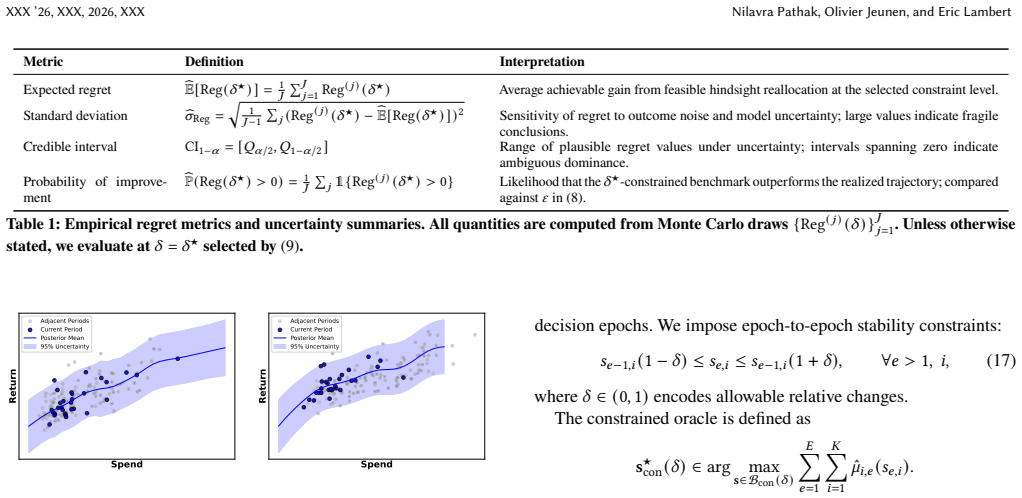
Organizations routinely make strategic budget allocations under operational constraints, but often lack a principled way to assess whether realized allocations were close to the best feasible choices in hindsight. We present a retrospective auditing framework based on hindsight regret, defined as the opportunity cost of the realized allocation relative to a constraint-faithful benchmark under the same budget and stability guardrails. The framework estimates regime-specific spend--response functions from historical logs, computes feasible hindsight allocations via constrained optimization, and propagates uncertainty through Monte Carlo evaluation to produce regret distributions, expected lift, and probability-of-improvement summaries. This separates allocation inefficiency from uncertainty in the estimated response surfaces. Experiments on real marketing allocation logs show that the framework yields interpretable post-hoc diagnostics and reveals a practical trade-off between allocation flexibility and detectability: moderate feasible reallocations often capture most measurable gain, while larger shifts move into weak-support regions with higher uncertainty. The result is a practical method for auditing historical budget decisions when online experimentation is costly or infeasible.
0
0
econ.EM 2026-04-29

Multiple price schedules identify consumer utility nonparametrically

Identification and Estimation of Consumers' Preferences from Repeated Observations under Nonlinear Pricing

Repeated observations turn the quantile of preference types into the solution of a functional equation for full recovery.

Figure from the paper full image
abstract click to expand
We develop a nonparametric approach to identify and estimate consumer preferences and unobserved heterogeneity under nonlinear price schedules. Leveraging variation across multiple price schedules, we show that both the utility function and the distribution of preference types can be nonparametrically identified. The quantile function of unobserved types becomes solution of a functional equation, and we derive conditions ensuring identification. We propose an iterative approach for estimation, in which the regularization bias decays exponentially in the number of iterations while the variance grows only polynomially, yielding a near-parametric convergence rate. We propose a valid bootstrap procedure for finite-sample inference and extend the framework to accommodate potential endogeneity of prices and additional observed heterogeneity. Monte Carlo simulations and an empirical application to data from a European mail carrier demonstrate how we can recover the utility functions and preference distributions in finite samples.
0
0
econ.EM 2026-04-28

Sample splitting yields valid tests for linear systems with unknown coefficients

Inference for Linear Systems with Unknown Coefficients

Tests control size as the number of equations and unknowns grows rapidly with sample size and require no simulation for critical values.

Figure from the paper full image
abstract click to expand
This paper considers the problem of testing whether there exists a solution satisfying certain non-negativity constraints to a linear system of equations. Importantly and in contrast to some prior work, we allow all parameters in the system of equations, including the slope coefficients, to be unknown. For this reason, we describe the linear system as having unknown (as opposed to known) coefficients. This hypothesis testing problem arises naturally when constructing confidence sets for possibly partially identified parameters in the analysis of nonparametric instrumental variables models, treatment effect models, and random coefficient models, among other settings. To rule out certain instances in which the testing problem is impossible, in the sense that the power of any test will be bounded by its size, we begin our analysis by characterizing the closure of the null hypothesis with respect to the total variation distance. We then use this characterization to develop novel testing procedures based on sample-splitting. We establish the validity of our testing procedures under weak and interpretable conditions on the linear system. An important feature of these conditions is that they permit the dimensionality of the problem to grow rapidly with the sample size. A further attractive property of our tests is that they do not require simulation to compute suitable critical values. We illustrate the practical relevance of our theoretical results in a simulation study.
0
0
econ.EM 2026-04-28

Live benchmark requires energy forecasts before test data arrives

Energy-Arena: A Dynamic Benchmark for Operational Energy Forecasting

Energy-Arena blocks retroactive tuning with pre-deadline submissions and rolling evaluation windows on a public leaderboard.

abstract click to expand
Energy forecasting research faces a persistent comparability gap that makes it difficult to measure consistent progress over time. Reported accuracy gains are often not directly comparable because models are evaluated under study-specific datasets, time periods, information sets, and scoring setups, while widely used benchmarks and competition datasets are typically tied to fixed historical windows. This paper introduces the Energy-Arena, a dynamic benchmarking platform for operational energy time series forecasting that provides a continuously updated reference point as energy systems evolve. The platform operates as an open, API-based submission system and standardizes challenge definitions and submission deadlines aligned with operational constraints. Performance is reported on rolling evaluation windows via persistent leaderboards. By moving from retrospective backtesting to forward-looking benchmarking, the Energy-Arena enforces standardized ex-ante submission and ex-post evaluation, thereby improving transparency by preventing information leakage and retroactive tuning. The platform is publicly available at Energy-Arena.org.
0
0
econ.EM 2026-04-28

Linear estimators identify parameters in dynamic logit models for T >= 5

Linear estimations of dynamic fixed effects logit models only with time effects

The methods recover transformations of the parameters then the parameters themselves, attaining root-N consistency in models with only time

abstract click to expand
This paper proposes linear estimation methods for dynamic fixed effects logit models only with time effects (i.e., those only with time dummies and only with time trends). The linear estimators point-identify transformations of parameters of interest for the models if five or more time periods are provided and then point-identify the parameters of interest. What it boils down to is that root-N consistent estimations are attainable for these models. Monte Carlo results corroborate this conclusion.
0
0
econ.EM 2026-04-28

DiD identifies natural direct and indirect effects via mediator

Difference-in-differences with a mediator

Adjusted parallel trends let researchers split total effects into direct paths and those running through the mediator, with robust efficient

Figure from the paper full image
abstract click to expand
Causal mediation analysis is a powerful tool for disentangling the total effect of a treatment into its direct effect on the outcome and its indirect effect mediated through an intermediate variable. However, in observational studies, confounding between treatment and potential outcomes typically renders the total and natural effects non-identifiable. In this work, we advance mediation analysis within the difference-in-differences framework. Under a mediator-adjusted parallel trends assumption and additional conditions, we demonstrate that natural indirect, direct, and total effects are identifiable in the treated group. We further derive efficient influence functions for these estimands, enabling the construction of multiply robust and nonparametrically efficient estimators. We establish the asymptotic properties of these estimators. Applying our methodology to data from the Job Corps Study, we find that job training significantly increases both short-term and long-term earnings, after controlling for the indirect effect through the proportion of weeks employed.
0
0
econ.EM 2026-04-27

Coupled bootstrap corrects bias from ML labels in regressions

Bootstrapping with AI/ML-generated labels

Jointly resampling true and imputed labels gives valid inference without independence assumptions between labels and covariates.

abstract click to expand
AI/ML methods are increasingly used in economics to generate binary variables (or labels) via classification algorithms. When these generated variables are included as covariates in regressions, even small misclassification errors can induce large biases in OLS estimators and invalidate standard inference. We study whether the bootstrap can correct this bias and deliver valid inference. We first show that a seemingly natural fixed-label bootstrap, which generates data using estimated labels but relies on a corrupted version in estimation, is generally invalid unless a strong independence condition between the latent true labels and other covariates holds. We then propose a coupled-label bootstrap that jointly resamples the true and imputed labels, and show it is valid without this condition. Two finite-sample adjustments further improve coverage: a variance correction for uncertainty in estimated misclassification rates and a Hessian rotation for near-singular designs. We illustrate the methods in simulations and apply them to investigate the relationship between wages and remote work status.
0
0
econ.EM 2026-04-27

Misspecification-averse estimators are Bayes rules with tilted likelihoods

Misspecification-Averse Estimation

A new criterion yields asymptotically optimal rules by exponentially tilting the likelihood to respect moment constraints on possible model

Figure from the paper full image
abstract click to expand
We study optimal estimation when the likelihood may be misspecified. Building on tools from the theory of decision-making under uncertainty, we analyze a class of axiomatically grounded optimality criteria which nests several existing misspecification-robust objectives. Within this class, we introduce the constrained multiplier criterion, which allows for flexible misspecification attitudes. We prove a local asymptotic minimax theorem for this criterion, extending a classical efficiency bound to a limit experiment which incorporates moment-constrained misspecification concerns. We characterize asymptotically optimal estimators as Bayes decision rules under a flat prior and an exponentially tilted likelihood that incorporates the moment constraints, and show that feasible plug-in analogs are asymptotically optimal.
0
0
econ.EM 2026-04-27

Penalized estimator selects sparse factors from jumpy high-frequency data

Realized Regularized Regressions

Group-wise truncated L1 penalty on splines delivers oracle model selection and coefficient estimation when covariates diverge

Figure from the paper full image
abstract click to expand
We develop a continuous-time penalized regression framework for the estimation of time-varying coefficients and variable selection when both the response and covariates are It\^o semimartingales with jumps. The coefficient paths are approximated by spline basis expansions and estimated via least squares from truncated high-frequency increments. In a finite-dimensional setting, we establish consistency and derive a feasible asymptotic distribution for the integrated coefficient estimator under infill asymptotics. We then extend the framework to high-dimensional settings in which the number of candidate covariates diverges, and show that a group-wise penalized estimator with a truncated $\ell_1$-penalty attains the oracle property, which delivers both consistent model selection and coefficient estimation. An empirical application to a large panel of more than two hundred high-frequency factors documents sparse factor structure across a large cross-section of stocks and industry portfolios.
0
0
econ.EM 2026-04-27

Stacked triples identify size-weighted treatment effects

Stacked Triple Differences

Regression on four-cell stacks recovers cell-size-weighted averages while avoiding forbidden comparisons under staggered adoption.

abstract click to expand
Triple differences (DDD) is a workhorse quasi-experimental design in applied economics. But, under staggered adoption, its conventional three-way fixed-effects (3WFE) implementation inherits the forbidden-comparison and interpretation issues now well understood in the difference-in-differences literature. To resolve these issues, I introduce stacked DDD. I extend the stacked difference-in-differences approach to the DDD setting by creating self-contained stacks, each consisting of four cells over an event window: treated and clean comparison cohorts, each with treatment-eligible and treatment-ineligible units. Appending these stacks yields a unified dataset for estimating treatment effects without making forbidden comparisons. I prove that, at each post-treatment event-time, a linear regression with fully saturated fixed-effects applied to the stacked dataset identifies a strictly positive, cell-size-weighted average of stack-level conditional average treatment effects, with stack weights proportional to stack-level cell sizes. Building on this characterization, I outline alternative weighting schemes that recover distinct, transparent causal estimands with clear interpretations. Stacked DDD complements recent GMM and imputation-based frameworks by trading efficiency for regression-based transparency, pairwise (rather than global) parallel trends, and direct control over aggregation weights. I provide two empirical illustrations where stacked DDD yields substantially different quantitative conclusions compared to existing procedures.
0
0
econ.EM 2026-04-27

Assignment independence lets standard formulas identify direct effects

Causal Identification under Interference: The Role of Treatment Assignment Independence

ITR-based methods recover average direct effects under restricted treatment dependence, even with arbitrary interference and no exposure map

Figure from the paper full image
abstract click to expand
Empirical researchers routinely invoke the no-interference or \textit{individualistic treatment response} (ITR) assumption to identify causal effects in observational studies, despite concerns that interference across units may arise in many economic settings. This paper studies the causal content of standard ITR-based identification formulas when arbitrary interference is present. We show that, under restrictions on dependence between treatment assignments across units, conventional ITR-based identification formulas -- including those underlying selection-on-observables, instrumental variables, regression discontinuity designs, and difference-in-differences -- identify well-defined causal objects: types of \textit{average direct effects} (ADEs). These results do not require knowledge of the interference structure or specification of exposure mappings. We also propose a sensitivity analysis framework that quantifies the robustness of statistical inference to violations of treatment-assignment independence under arbitrary interference.
0
0
econ.EM 2026-04-27

Reparameterization speeds sampling for large sign-restricted SVARs

Inference in Tightly Identified and Large-Scale Sign-Restricted SVARs

Smooth mappings for inequality restrictions let Hamiltonian Monte Carlo produce better chains and shorter run times in high-dimensional SVAR

Figure from the paper full image
abstract click to expand
We propose a new approach to inference in tightly identified and large-scale structural vector autoregressions based on a reparameterization that enables imposing identifying inequality restrictions through continuously differentiable mappings. Permitted inequality restrictions include shape and ranking restrictions as well as bounds on economically relevant elasticities, and the approach is also able to accommodate zero restrictions in a straightforward manner. We implement a Hamiltonian Monte Carlo algorithm and show how the posterior density can be rapidly evaluated under the reparameterization, thus facilitating inference in high-dimensional settings. Two empirical applications demonstrate that our approach tends to result in lower serial dependence in Markov chains, larger effective sample sizes and reduced computation time relative to existing methods.
0
0
econ.EM 2026-04-24

Agentic AI boosts finance efficiency but adds stability risks

Agentic Artificial Intelligence in Finance: A Comprehensive Survey

Survey finds autonomous agents improve liquidity and risk handling while raising new challenges for oversight and market resilience.

abstract click to expand
The emergence of agentic artificial intelligence (AI) represents a fundamental transformation in financial markets, characterized by autonomous systems capable of reasoning, planning, and adaptive decision-making with minimal human intervention. This comprehensive survey synthesizes recent advances in agentic AI across multiple dimensions of financial operations, including system architecture, market applications, regulatory frameworks, and systemic implications. We examine how agentic AI differs from traditional algorithmic trading and generative AI through its capacity for goal-oriented autonomy, continuous learning, and multi-agent coordination. Our analysis shows that while agentic AI offers substantial potential for enhanced market efficiency, liquidity provision, and risk management, it also introduces novel challenges related to market stability, regulatory compliance, interpretability, and systemic risk. Through a systematic review of foundational research, technical architectures, market applications, and governance frameworks, this survey provides scholars and practitioners with a structured understanding of how agentic AI is reshaping financial markets and identifies critical research directions for ensuring that these systems enhance both operational efficiency and market resilience.
0
0
econ.EM 2026-04-24

One scalar identifies full treatment effect distribution

Nonparametric Point Identification of Treatment Effect Distributions via Rank Stickiness

Rank stickiness and the Bregman-Sinkhorn copula determine the unique joint distribution of potential outcomes from marginals and a single co

Figure from the paper full image
abstract click to expand
Treatment effect distributions are not identified without restrictions on the joint distribution of potential outcomes. Existing approaches either impose rank preservation -- a strong assumption -- or derive partial identification bounds that are often wide. We show that a single scalar parameter, rank stickiness, suffices for nonparametric point identification while permitting rank violations. The identified joint distribution -- the coupling that maximizes average rank correlation subject to a relative entropy constraint, which we call the Bregman-Sinkhorn copula -- is uniquely determined by the marginals and rank stickiness. Its conditional distribution is an exponential tilt of the marginal with a Bregman divergence as the exponent, yielding closed-form conditional moments and rank violation probabilities; the copula nests the comonotonic and Gaussian copulas as special cases. The empirical Bregman-Sinkhorn copula converges at the parametric $\sqrt{n}$-rate with a Gaussian process limit, despite the infinite-dimensional parameter space. We apply the framework to estimate the full treatment effect distribution, derive a variance estimator for the average treatment effect tighter than the Fr\'{e}chet--Hoeffding and Neyman bounds, and extend to observational studies under unconfoundedness.
0
0
econ.EM 2026-04-24

Bayesian models stabilize income distribution estimates over time

Flexible Bayesian Models for Time-Varying Income Distributions

Random walk dynamics on parameters borrow strength across years for precise inequality and dominance probabilities in small samples.

Figure from the paper full image
abstract click to expand
Survey data are widely used to study how income inequality, poverty, and welfare evolve over time. A common practice is to estimate the income distribution separately for each year, treating annual observations as independent cross-sections. For population subgroups with relatively small sample sizes, however, this approach can produce unstable parameter estimates, imprecise inference for inequality and poverty measures, and potentially misleading posterior probabilities of Lorenz and stochastic dominance. This paper develops flexible Bayesian models for time-varying income distributions that borrow strength across adjacent years by allowing the parameters of income distributions to evolve dynamically. We consider a random walk specification and an extended model with shrinkage priors. The proposed framework yields coherent inference for the full income distributions over time, as well as for associated inequality measures, poverty indices, and dominance probabilities. Simulation studies show that, relative to independent year-by-year models, the proposed approach produces substantially more precise and stable inference, while avoiding spurious variation in welfare comparisons. An application to the Aboriginal and residents of the Australian Capital Territory (ACT) population subgroups in the Household, Income and Labour Dynamics in Australia survey shows that the dynamic models deliver improved inference for income distributions and related welfare measures, and can change conclusions about distributional dominance over time.
0
0
econ.EM 2026-04-24

City council speakers skew older

Participation and Representation in Local Government Speech

Analysis of 115 California cities finds remote access raises speaker numbers without changing who participates.

Figure from the paper full image
abstract click to expand
Local government meetings are the most common formal channel through which residents speak directly with elected officials, contest policies, and shape local agendas. However, data constraints typically limit the empirical study of these meetings to agendas, single cities, or short time horizons. We collect and transcribe a massive new dataset of city council meetings from 115 California cities over the last decade, using advanced transcription and diarization techniques to analyze the speech content of the meetings themselves. We document two sets of descriptive findings: First, city council meetings are frequent, long, and vary modestly across towns and time in topical content. Second, public participants are substantially older, whiter, more male, more liberal, and more likely to own homes than the registered voter population, and public participation surges when topics related to land use and zoning are included in meeting agendas. Given this skew, we examine the main policy lever municipalities have to shift participation patterns: meeting access costs. Exploiting pandemic-era variation in remote access, we show that eliminating remote options reduces the number of speakers, but does not clearly change the composition of speakers. Collectively, these results provide the most comprehensive empirical portrait to date of who participates in local democracy, what draws them in, and how institutional design choices shape both the volume and composition of public input.
0
0
econ.EM 2026-04-22

Ethereum gas fees drop to 40-92% via peak shaving for flexible firms

On-chain Peak Shaving

Seven-firm study maps deferrability and gas intensity to four regimes that forecast savings and unavoidable costs

Figure from the paper full image
abstract click to expand
Blockchain technology is widely expected to reduce transaction costs by automating contract enforcement and eliminating intermediaries; yet, the execution costs imposed by network congestion have received little attention in the operations management literature. We study on-chain peak shaving, the systematic scheduling of Ethereum transactions toward low-congestion windows to reduce gas fee exposure. We use transaction-level data from seven firms across seven industries (N = 62,142 transactions, January-March 2026). Gas fees vary significantly throughout the day: the peak-hour premium at 10 AM Eastern Time reaches USD 0.220 per transaction above the overnight baseline, driven primarily by speculative-arbitrage demand rather than operational activity. Firm-level scheduling responses are heterogeneous and not uniformly disciplined. Only three of seven firms transact disproportionately during off-peak hours; four transact counter-cyclically, concentrated in peak windows due to external deadlines or governance cycles. This heterogeneity is explained by two moderators: transaction deferrability and gas intensity. We formalize these into an On-Chain Scheduling Matrix that maps firms to four regimes: 1) full peak shaving, 2) selective peak shaving, 3) cost provisioning, and 4) accept-market-rate, with regime membership predicting both fee savings and residual cost floors (40-92 percent of actual expenditure). Theoretically, we extend Transaction Cost Economics to account for time-varying execution costs imposed by congestion externalities. In addition to extending Williamson's original cost taxonomy, we introduce a dual classification of gas fees as execution costs in timing but maladaptation costs in origin. The findings reposition on-chain gas-fee management alongside energy procurement and foreign exchange hedging as a domain requiring systematic operational planning.
0
0
econ.EM 2026-04-22

Stochastic frontier models fit inside causal inference

Recent Advances in Causal Analysis of the Stochastic Frontier Model

Review outlines how to apply IV, DiD and related tools to efficiency estimation while handling the model's error structure.

abstract click to expand
Causal inference methods (instrumental variables, difference-in-differences, regression discontinuity, etc.) are primary tools used across many social science milieus. One area where their application has lagged however, is in the study of productivity and efficiency. A main reason for this is that the nature of the stochastic frontier model does not immediately lend itself to a causal framework when interest hinges on an error component of the model. This paper reviews the nascent literature on attempts to merge the stochastic frontier literature with causal inference methods. We discuss modeling approaches and empirical issues that are likely to be relevant for applied researchers in this area. This review shows how this model can be easily put within the confines of causal analysis, reviews existing work that has already made inroads in this area, addresses challenges that have yet to be met and discusses core findings.
0
0
econ.EM 2026-04-22

AUM per employee tracks tech's effect on finance labor scale

From Clerks to Agentic-AI: How will Technology Change Labor Market in Finance?

Panel comparisons across computerization, indexing, and AI waves document shifts in assets managed per employee.

Figure from the paper full image
abstract click to expand
Financial firms have gone through three major technological waves: computerization in the 1980s and 1990s, the rise of indexing and passive investing in the 2000s and 2010s, and the AI and automation wave from roughly 2015 to the present. This project studies how much labor is required to manage capital across those waves by tracking a simple productivity measure: assets under management per employee. Using a small panel of representative firms, we compare changes in AUM per employee, revenue per employee, and operating expense intensity over time. The goal is not to identify causal effects, but to document stylized facts about how technology changes the scale of asset management work.
0
0
econ.EM 2026-04-21

Clustered projections recover average responses in time-varying models

Clustered Local Projections for Time-Varying Models

By grouping observations with k-means on observables, the method tracks how uncertainty changes the effects of monetary policy shocks on 5-

Figure from the paper full image
abstract click to expand
We propose a clustered local projection (clustered LP) method to estimate impulse response functions in a class of time-varying models where parameter variation is linked to a low-dimensional matrix of observables. We show that the clustered LP recovers the conditional average response when the driving variables are exogenous and a weighted average of the conditional marginal effects when they are endogenous. We propose an iterative estimation method that first classifies the data using k-means, estimates impulse response functions via GMM, and evaluates differences across clustered LP estimates. Our Monte Carlo simulations illustrate the ability of clustered LP to approximate the conditional average response function. We employ our technique to examine how uncertainty influences the transmission of a contractionary monetary policy shock to the 5- and 10-year U.S. nominal Treasury yields. Our estimation results suggest macroeconomic and monetary policy uncertainty operate through complementary but distinct channels: the former primarily amplifies the risk compensation embedded in the term premium, while the latter governs the speed and persistence with which markets revise their expectations about the future rate path following a monetary policy shock.
0
0
econ.EM 2026-04-21

Factor-augmented panels estimate variance-weighted treatment effects

Factor-Augmented Panel Regressions and Variance-Weighted Treatment Effects

Both principal components and interactive fixed effects converge to the same average with weights from conditional regressor variance.

Figure from the paper full image
abstract click to expand
We revisit panel regressions with unobserved heterogeneity through the lens of variance-weighted average treatment effects. Building on established results for cross-sectional OLS and one-way fixed effects panels, we show that two-way panel estimators with latent factors, specifically the principal components estimator of Greenaway-McGrevy, Han and Sul (2012) and the interactive fixed effects estimator of Bai (2009), also converge to interpretable estimands under fully nonparametric assumptions. Both estimators consistently estimate the same variance-weighted average of unit-time-specific treatment effects, where the weights are proportional to the conditional variance of the regressor given the unobserved heterogeneity. The result requires the number of estimated factors to grow with the sample size and applies to the single regressor case. We discuss the challenges that arise when extending to multiple regressors and to inference.
0
0
econ.EM 2026-04-21

Indirect ties drive new professional links more than degree or density

Causal inference for social network formation

Random team assignments reveal that common contacts strongly increase tie formation while personal network size and density matter less.

Figure from the paper full image
abstract click to expand
This paper develops a framework for identification, estimation, and inference on the causal mechanisms driving endogenous social network formation. Identification is challenging because of unobserved confounders and reverse causality; inference is complicated by questions of equilibrium and sampling. We leverage repeated observations of a network over time and random variation in initial ties to address challenges to causal identification. Our design-based approach sidesteps questions of sampling and asymptotics by treating both the set of nodes (individuals) and potential outcomes as non-random. We apply our approach to data from a large professional services firm, where new hires are randomly assigned to project teams within offices. We estimate the causal effect on tie formation of indirect ties, network degree, and local network density. Indirect ties have a strong and significant positive effect on tie formation, while the effects of degree and density are smaller and less robust.
0
0
econ.EM 2026-04-20

No skill keywords predict insurance agent performance

Decision Traces: What Multi-System Data Fusion Reveals About Institutional Knowledge in Enterprise Hiring

Fusing ATS, HRIS and assessments at a large insurer reveals anti-predictive effects and daily economic value from faster starts

abstract click to expand
Enterprise hiring systems generate data across multiple disconnected platforms: applicant tracking systems (ATS) record candidate profiles, human resource information systems (HRIS) record performance outcomes, and behavioral assessments capture personality and behavioral dimensions. Each system operates independently, and the reasoning behind hiring decisions is lost when managers retire, transfer, or leave. Decision traces are structured evidence chains connecting screening inputs, assessment signals, and production outcomes. They have been theorized but never operationalized at production scale. We present, to our knowledge, the first such study: a deployment at a Fortune 500 insurance carrier (N=10,765 agents hired, 2022-2025), where connecting three siloed data systems produced three findings. First, of 8,181 unique skills parsed from ATS profiles (3,597 testable), not a single keyword predicts production after Bonferroni correction; 30 are significantly anti-predictive, and the median keyword is associated with 25% lower odds of production. Requiring insurance experience alone would reject 2,863 agents who produced $17.7M in annual premium credit. Second, personality-based behavioral assessment (Predictive Index) achieves AUC=0.647 standalone and AUC=0.735 when fused with ATS and behavioral scoring data. Third, speed-to-production follows a measurable economic constant of $54/day per agent unadjusted, or $35/day controlling for source channel and tenure, moderated by behavioral score: high-scored agents capture $114/day from speed acceleration versus $41/day for low-scored agents. These findings were invisible within any single system. We discuss implications for hiring system design, the limitations of keyword-based screening, and the conditions under which institutional knowledge can be captured and operationalized.
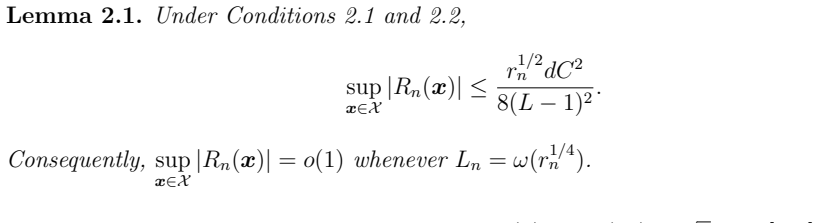
0
0
econ.EM 2026-04-20

Residualizing estimators on diagnostics removes reporting bias and cuts variance

Integrating Diagnostic Checks into Estimation

A single linear adjustment integrates balance and validity checks into estimation, yielding lower variance and valid inference even after we

abstract click to expand
Empirical researchers often use diagnostic checks to assess the plausibility of their modeling assumptions, such as testing for covariate balance in RCTs, pre-trends in event studies, or instrument validity in IV designs. While these checks are traditionally treated as external hurdles to estimation, we argue they should be integrated into the estimation process itself. In particular, we propose residualizing one's baseline estimator against the vector of diagnostic check statistics to remove the component of baseline sampling variation explained by the diagnostic checks. This residualized estimator offers researchers a "free lunch," delivering three properties simultaneously: (i) eliminating inference distortions from check-based selective reporting; (ii) reducing variance without changing the estimand when the baseline model is correctly specified; and (iii) minimizing worst-case bias under bounded local misspecification within the class of linear adjustments. We apply our method to the RCT in Kaur et al. (2024) and find that, even in a setting where all balance checks pass comfortably, residualization increases the magnitude of the baseline point estimate and reduces its standard error, equivalent to approximately a 10% increase in sample size.
0
0
econ.EM 2026-04-20

Four path layers distinguish explosive growth from I(2) series

Path-Explosive Behaviour in Economic Time Series: A Realization-Centred Exploratory Framework

Observable properties of the realised data yield statistics that separate self-reinforcing multiplicative growth without distributional or D

abstract click to expand
We propose a descriptive, realization-centred framework for detecting and characterising explosive and co-explosive behaviour in economic time series, which we term path-explosive behaviour. Departing from the data-generating-process (DGP) perspective that underlies recursive unit root testing, the approach operates directly on observable path properties of the realised series. Four diagnostic layers -- level geometry, growth rate dynamics, normalised curvature, and log-space behaviour -- yield statistics that discriminate between genuine self-reinforcing multiplicative growth and I(2) dynamics without distributional assumptions or asymptotic critical values. Two theoretically motivated absolute gate thresholds screen detected episodes before a composite intensity score is assigned. Co-explosive behaviour between pairs of series is assessed at the episode level through a Jaccard co-occurrence index and non-parametric intensity concordance measures. The theoretical motivation draws on the path dependence and planning irreversibility literatures to argue that, in settings where discrete institutional decisions shape growth trajectories, a realization-centred characterisation is epistemically more appropriate than a DGP-based test. A simulation study across four DGP regimes validates the framework's discriminating power and conservatism. An empirical application to real house prices, commodity prices, public debt, and Spanish tourism destinations illustrates the empirical content of the path-explosive concept and distinguishes it from speculative bubble detection.
0
0
econ.EM 2026-04-20

Separable models stay reliable for matching markets with missing factors

The Econometrics of Matching with Transferable Utility: A Progress Report

Theory and simulations show the standard approach recovers parameters well under omitted variables and modest non-separabilities.

Figure from the paper full image
abstract click to expand
Since Choo and Siow (2006), a burgeoning literature has analyzed matching markets when utility is perfectly transferable and the joint surplus is separable. We take stock of recent methodological developments in this area. Combining theoretical arguments and simulations, we show that the separable approach is reasonably robust to omitted variables and/or non-separabilities. We conclude with a caveat on data requirements and imbalanced datasets.
0
0
econ.EM 2026-04-20

Gumbel copula nearly perfectly binds equity and bond volatility

The realized copula of volatility

Nonparametric estimator from high-frequency returns recovers the copula linking latent stochastic volatilities.

Figure from the paper full image
abstract click to expand
We study a new measure of codependency in the second moment of a continuous-time multivariate asset price process, which we name the realized copula of volatility. The statistic is based on local volatility estimates constructed from high-frequency asset returns and affords a nonparametric estimator of the empirical copula of the latent stochastic volatility. We show consistency of our estimator with in-fill asymptotic theory, either with a fixed or increasing time span. In the latter setting, we derive a functional central limit theorem for the empirical process associated with the measurement error of the time-invariant marginal copula of volatility. We also develop a goodness-of-fit test to evaluate hypotheses about the shape of the latter. In a simulation study, we demonstrate that our estimator is a good proxy of both the empirical and marginal copula of volatility, even with a moderate amount of high-frequency data recorded over a relatively short sample. The goodness-of-fit test is found to exhibit size control and excellent power. We implement our framework on high-frequency transaction data from futures contracts that track the U.S. equity and treasury bond market. A Gumbel copula is found to offer a near-perfect bind between the realized variance processes in these data.
0
0
econ.EM 2026-04-17

The paper proposes a unified optimization framework using shadow prices and ridgeโ€ฆ

Informativeness under Model Uncertainty: Shadow Prices and Ridge Penalties

A Lagrangian framework with shadow prices, Stein-type risk-selected tolerance, KKT debiasing, and individual shadow prices plus a plateauโ€ฆ

Figure from the paper full image
abstract click to expand
We develop inference under model uncertainty due to weak, noisy, multiple candidate restrictions and theories, and nuisance control covariates. A unified framework is given with degrees of misspecification and corresponding shadow prices, based on a Lagrangian constrained optimization approach, and a data$-$driven tolerance parameter selected via a Stein$-$type (shrinkage) risk criterion. A debiasing step is based on Karush$-$Kuhn$-$Tucker conditions. We introduce individual shadow prices (ISP) for different restrictions to measure empirical relevance and propose a plateau rule to separate signal from noise. We establish consistency and asymptotic normality of the estimators and characterize the ISP. Simulations and an application to a Solow growth model illustrate the method$^{\prime}$s practical usefulness.
0
0
econ.EM 2026-04-17

Immigrants value travel time 66% less than Canadian-born

Mobility Behaviour of Immigrants in Canada: Analyzing Mode Choice Using GPS Panel Data and Mixed Logit Models

GPS panel of 80,000 trips shows one SD higher integration cuts transit choice probability by five points and boosts car use

Figure from the paper full image
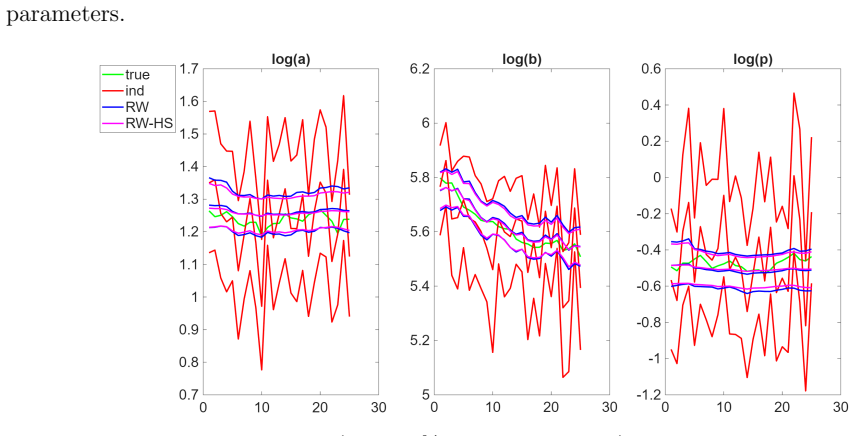
abstract click to expand
We examine these relationships using a panel dataset of more than 80,000 trip observations from 100 participants through a custom-built mobile application. A joint revealed preference (RP) and stated preference (SP) framework is used to estimate multinomial logit (MNL) and mixed logit (MXL) models. The level of integration is represented through a composite index capturing economic, social, civic, and health dimensions of integration. Results indicate two distinct patterns. First, the estimated models suggest that new immigrants in the sample exhibit lower sensitivity to in-vehicle travel time than Canadian-born respondents. The mixed logit specification suggests that the value of travel time for the sampled immigrants is approximately 66% lower than that of Canadian-born residents, with a immigrant-to-Canadian-born ratio of 0.34 that is consistent across both MXL specifications. Second, higher levels of integration are associated with reduced transit use and greater car reliance. A one standard deviation increase in the integration index decreases the probability of choosing public transit by approximately five percentage points. The joint RP-SP specification allows the inclusion of emerging e-mobility alternatives not yet observed in revealed behaviour; these face no inherent preference penalty, competing purely on their level-of-service attributes. Out-of-sample validation using five-fold cross-validation produces a mean prediction accuracy between 80% and 82% across model specifications. The findings suggest that transit policies in immigrant-receiving cities could prioritize service quality improvements, particularly reductions in access time, which are approximately three times more effective than fare reductions in shifting immigrants toward transit use.
0
0
econ.EM 2026-04-17

Simple intervals cover true parameters on average for all priors

True and Pseudo-True Parameters

Posteriors concentrate on pseudo-true values only for fragile prior sequences in linear minimum-distance problems, yet the intervals work no

Figure from the paper full image
abstract click to expand
Parameter estimates in misspecified models converge to pseudo-true parameter values, which minimize a population objective function. Pseudo-true values often differ from quantities of economic interest, raising questions of how, if at all, they are relevant for decision-making. To study this question we consider Bayesian decision-makers facing a linear population minimum distance problem. Within a class of priors motivated by the minimum distance objective, we characterize prior sequences under which posteriors concentrate on the pseudo-true value. This convergence is fragile to small changes in priors, implying that pseudo-true values are relevant for decision-making only in special cases. Constructive results are nevertheless possible in this setting, and we derive simple confidence intervals that guarantee correct average coverage for the true parameter under every prior in the class we study, with no bound on the magnitude of misspecification.
0
0
econ.EM 2026-04-17

Jackknife tests deliver chi-square limits for weak-IV inference

Jackknife Instrumental Variable Inference

A change to the objective function converts the limiting distribution into standard chi-square even with many instruments and heteroskedast

Figure from the paper full image
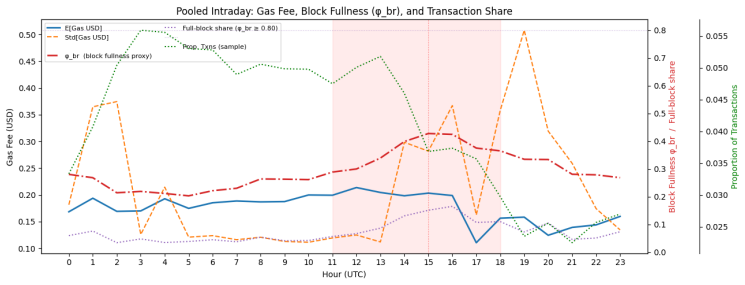
abstract click to expand
This paper introduces a class of jackknife-based test statistics for linear regression models with endogeneity and heteroskedasticity in the presence of many potentially weak instrumental variables. The tests may be used when considering hypotheses on the full parameter vector or hypotheses defined as linear restrictions. We show that in the limit and under the null the proposed statistics are distributed as a combination of chi squares but by modifying the objective function we derive more familiar chi square limits. An extensive simulation study shows the competitive finite sample properties of the proposed tests in particular against Anderson-Rubin-type of statistics. Finally, we provide an empirical illustration that applies the proposed tests to study the effect of alcohol consumption on body mass index using genetic variants as instrumental variables using the UK Biobank.
0
0
econ.EM 2026-04-16

1970s experience closes most of the 2021 inflation forecast gap

Who Saw It Coming? Historical Experience and the 2021 Inflation Forecast Failure

Models trained mainly on recent calm years missed the supply-shock shift, while older households and experienced models adjusted forecasts a

Figure from the paper full image
abstract click to expand
This paper studies the 2021 U.S. inflation forecasting failure. I show that the failure was primarily driven by sample composition rather than functional-form misspecification: estimation samples dominated by the Great Moderation underweight supply-shock regimes, and expectations anchored to that regime were slow to recognize the shift. Three historically informed adjustments, an intercept correction, a similarity re-estimation on 1970s data, and a kernel-weighted estimator, substantially close the forecast gap, and the gains extend to eight additional U.S. price indices. Household survey respondents over 60, whose lifetime includes the 1970s, reported higher inflation expectations from early 2021, consistent with experience-based learning; younger cohorts remained anchored to the prevailing regime. A controlled experiment with large language models conditioned on ``experienced'' and ``young'' professional personas confirms that experiential priors generate significant forecast differences under a common training leakage assumption. Across all three exercises, the source of the prior mattered more than the sophistication of the model.
0
0
econ.EM 2026-04-16

Binary autoregressions aggregate to Poisson models under rare scaling

Generalized Autoregressive Multivariate Models: From Binary to Poisson

This links binary choice dynamics to count data models via a scaling limit and proves stationarity with a coupling method.

Figure from the paper full image
abstract click to expand
This paper presents a framework for binary autoregressive time series in which each observation is a Bernoulli variable whose success probability evolves with past outcomes and probabilities, in the spirit of GARCH-type dynamics, accommodating nonlinearities, network interactions, and cross-sectional dependence in the multivariate case. Existence and uniqueness of a stationary solution is established via a coupling argument tailored to the discontinuities inherent in binary data. A key theoretical result, further supported by our empirical illustration on S&P 100 data, shows that, under a rare-events scaling, aggregates of such binary processes converge to a Poisson autoregression, providing a micro-foundation for this widely used count model. Maximum likelihood estimation is proposed and illustrated empirically.
0
0
econ.EM 2026-04-16

Surrogate scores deliver root-n normal maximum score estimates

Root-n Asymptotically Normal Maximum Score Estimation

Under primitive conditions the estimator converges at the usual parametric rate and supports standard inference.

Figure from the paper full image
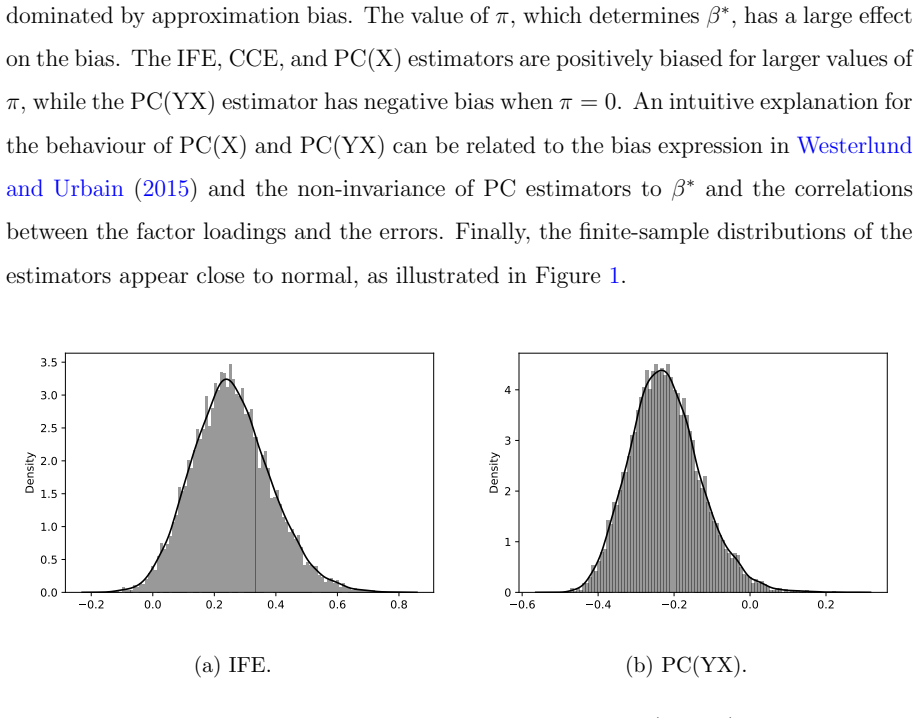
abstract click to expand
The maximum score method (Manski, 1975, 1985) is a powerful approach for binary choice models, yet it is known to face both practical and theoretical challenges. In particular, the estimator converges at a slower-than-root-$n$ rate to a nonstandard limiting distribution. We investigate conditions under which strictly concave surrogate score functions can be employed to achieve identification through a smooth criterion function. This criterion enables root-$n$ convergence to a normal limiting distribution. While the conditions to guarantee these desired properties are nontrivial, we characterize them in terms of primitive conditions. Extensive simulation studies support, the root-$n$ convergence rate, the asymptotic normality, and the validity of the standard inference methods.
0
0
econ.EM 2026-04-15

TFP distributions match up to mean and variance in dense vs sparse areas

Is Productivity Advantage of Cities Really Down To Mean and Variance?

This supports that city productivity gains come from agglomeration, not from selecting higher-productivity firms.

Figure from the paper full image
abstract click to expand
Firms in denser areas are more productive, a pattern attributed to agglomeration economies and firm selection. To disentangle these two channels, the popular approach of Combes et al. (2012, ECTA) critically assumes that total factor productivity (TFP) distributions between denser and less dense areas are the same up to mean, variance, and left-tail truncation. We empirically validate this assumption using Spanish administrative firm-level data and recent econometric methods adapted to noisy TFP estimates. Our results find that TFP distributions are indeed statistically identical up to these parameters, validating the use of such productivity decompositions. Furthermore, using only the mean and variance is sufficient to capture differences for all sectors. Accordingly, the productivity advantage of cities may be entirely due to agglomeration rather than stronger selection, suggesting that policymakers should focus on policies targeting agglomeration. Finally, our approach extends to related contexts like differences in worker skill distributions.
0
0
econ.EM 2026-04-15

Quantile model improves oil price downside forecasts by 10-25%

Forecasting Oil Prices Across the Distribution: A Quantile VAR Approach

By letting predictor effects vary across the distribution, it captures crisis asymmetries missed by mean-based models.

Figure from the paper full image
abstract click to expand
We develop a Quantile Bayesian Vector Autoregression (QBVAR) to forecast real oil prices across different quantiles of the conditional distribution. The model allows predictor effects to vary across quantiles, capturing asymmetries that standard mean-focused approaches miss. Using monthly data from 1975 to 2025, we document three findings. First, the QBVAR improves median forecasts by 2-5\% relative to Bayesian VARs, demonstrating that quantile-specific dynamics matter even for point prediction. Second, uncertainty and financial condition variables strongly predict downside risk, with left-tail forecast improvements of 10-25\% that intensify during crisis episodes. Third, right-tail forecasting remains difficult; stochastic volatility models dominate for upside risk, though forecast combinations that include the QBVAR recover these losses. The results show that modeling the conditional distribution yields substantial gains for tail risk assessment, particularly during major oil market disruptions.
0
0
econ.EM 2026-04-15

Graphs show post-treatment controls required for DiD with time-varying covariates

Causal Graphs for Conditional Parallel Trends

New ฮ”-SWIG method reveals that pre-trend checks alone cannot confirm all assumptions needed for unbiased post-treatment estimates.

Figure from the paper full image
abstract click to expand
Difference-in-Differences (DiD) is a widely used research design that often relies on a conditional parallel trends (CPT) assumption. In contrast to settings with unconfoundedness, where causal graphs provide powerful frameworks for reasoning about valid conditioning variables, general-purpose graphical tools for CPT are missing. We introduce transformed Single World Intervention Graphs (SWIGs), the $\Delta$-SWIGs, and prove that they enable us to read off conditional independencies via $d$-separation that imply CPT. Using $\Delta$-SWIGs, we study valid conditioning strategies for DiD in complex settings with multiple periods and time-varying covariates. We show that when time-varying covariates affect the outcome, controlling for post-treatment variables is required for identification. However, even when such controls are included, pre-treatment parallel trends are only informative about a subset of the assumptions required for unbiased post-treatment effects, highlighting the limitations of purely empirical justifications of CPT.
0
0
econ.EM 2026-04-15

L1 distance on CDFs gives minimal-mobility view of ordinal change

Distributional Change in Ordinal Data with Missing Observations: Minimal Mobility and Partial Identification

Partial identification from repeated cross-sections with missing data supplies sharp bounds on the discrepancy measure and its change-config

Figure from the paper full image
abstract click to expand
Empirical analyses of ordinal outcomes using repeated cross-sectional data rely on marginal distributions, leaving the joint distribution unobserved and the sources of distributional change unidentified. This paper develops a framework to measure and interpret such changes under limited information. The $L_1$ distance between cumulative distribution functions admits an optimal transport representation as the minimal reallocation of probability mass across ordered categories, which provides a foundation for the analysis. This yields both a scalar measure of discrepancy and a structured characterization of how distributional change must occur, which I term minimal-mobility configurations. To address missing data, I adopt a partial identification approach that delivers sharp bounds on the marginal distributions and, in turn, on both the discrepancy measure and its associated configurations. The resulting framework supports inference using standard resampling methods and provides a transparent basis for assessing sensitivity to nonresponse. An application to Arab Barometer data illustrates the approach.
0
0
econ.EM 2026-04-15

New index tracks resilience without letting strengths mask weaknesses

A Diagnostics-First Composite Index for Macro-Financial Resilience to Socioeconomic Challenges: The Gondauri Index with Benchmarking and Scenario Evidence

Gondauri Index uses three separate pillars on a 0-100 scale to benchmark economies and identify binding constraints from 2005 to 2030.

abstract click to expand
In the face of socioeconomic challenges, this paper develops and empirically demonstrates the Gondauri Index (GI) as a reproducible diagnostics-first composite framework for benchmarking macro-financial resilience across heterogeneous economies on a unified 0-100 scale. The GI addresses a key limitation of conventional surveillance dashboards: resilience is multi-dimensional and only partially substitutable, so strength in one area cannot sustainably offset fragility in another. The index integrates three interpretable pillars: Inequality Resilience Score (IRS), Liquidity and Systemic Resilience (LNSR), and Inflation Forecast Coherence (IFC). Cross-country comparability is ensured through robust percentile normalization (p5-p95), a consistent annual country-year design, and explicit missing-data handling via component-level weight renormalization. Empirically, the paper provides a 2024 benchmark snapshot and dynamic evidence for 2005-2024 using 5-year rolling diagnostics and Delta log(GI) contribution decomposition, allowing transparent attribution of resilience changes to pillar-level drivers. A forward-looking extension constructs 2026-2030 scenario pathways and introduces a binding-pillar diagnostic that identifies the dominant constraint on resilience across horizons. Overall, the GI offers a scalable tool for comparative resilience assessment, early-warning diagnostics, and evidence-based policy sequencing.
0
0
econ.EM 2026-04-14

Two-step method separates shock from repricing in Brazilian yield curve

Shock, Communication, and Yield Curve Repricing: A Two-Step Empirical Framework for Copom Events in Brazil

Framework reaches R-squared of 0.43 for 252-day DI contracts by isolating initial reactions before Copom statements.

abstract click to expand
This paper proposes a two-step empirical framework to study the repricing of the Brazilian DI curve around Copom-related events. The empirical strategy separates the initial market reaction associated with the underlying shock from the subsequent repricing observed between the shock and the first Copom statement that follows it. The dataset combines a hand-built event calendar, daily market data, Focus expectations, and structured textual features extracted from Copom statements, including tone, forward-guidance direction and explicitness, and uncertainty indicators. In the updated sample, 59 events retain both analytical windows, allowing the second stage to include the full set of same-day Copom events. Baseline results suggest that the framework is most informative at the front and intermediate sections of the curve, especially for the DI 252d maturity, for which the baseline OLS specification reaches an in-sample R2 of about 0.43. By contrast, explanatory power is materially weaker for the DI 504d maturity and for slope adjustments, and out-of-sample performance remains limited. The textual variables display economically plausible signs, but their statistical contribution is not uniformly robust across specifications. The main contribution of the paper is therefore methodological and applied: it offers an implementable event-based decomposition for assessing how shocks and Copom communication jointly shape curve dynamics in Brazil.
0
0
econ.EM 2026-04-14

Single-parameter kernel method estimates average marginal effects in IV models

Average Marginal Effects in One-Step Partially Linear Instrumental Regressions

Reproducing kernel Hilbert space approximation with Bayesian bootstrap delivers consistency and valid inference when analytic variance is in

Figure from the paper full image
abstract click to expand
We propose a novel procedure for estimating and conducting inference on average marginal effects in partially linear instrumental regressions using Reproducing Kernel Hilbert Space methods. Our procedure relies on a single regularization parameter. We obtain the consistency and asymptotic normality of our estimator. Since the variance of the limiting distribution has a complex analytical form, we propose a Bayesian bootstrap method to conduct inference and establish its validity. Our procedure is easy to implement and exhibits good finite-sample performance in simulations. Three empirical applications illustrate its implementation on real data, showing that it yields economically meaningful results.
0
0
econ.EM 2026-04-14

Knowledge compounding saves 84.6% tokens vs RAG over four queries

Knowledge Compounding: An Empirical Economic Analysis of Self-Evolving Knowledge Wikis under the Agentic ROI Framework

Persistent wikis turn repeated domain tasks into capital accumulation, with projected savings rising to 81 percent under high topic focus.

Figure from the paper full image
abstract click to expand
Building on the Agentic ROI framework proposed by Liu et al. (2026), this paper introduces knowledge compounding as a new measurable concept in the empirical economics of LLM agents and validates it through a controlled four-query experiment on Qing Claw, an industrial-grade C# reimplementation of the OpenClaw multi-agent framework. Our central theoretical claim is that the cost term in the original Agentic ROI equation contains an unexamined assumption -- that the cost of each task is mutually independent. This assumption holds under the traditional retrieval-augmented generation (RAG) paradigm but breaks down once a persistent, structured knowledge layer is introduced. We propose a dynamic Agentic ROI model in which cost is treated as a time-varying function Cost(t) governed by a knowledge-base coverage rate H(t). Empirical results from four sequential queries on the same domain yield a cumulative token consumption of 47K under the compounding regime versus 305K under a matched RAG baseline -- a savings of 84.6%. Calibrated 30-day projections indicate cumulative savings of 53.7% under medium topic concentration and 81.3% under high concentration, with the gap widening monotonically over time. We further identify three microeconomic mechanisms underlying the compounding effect: (i) one-time INGEST amortized over N retrievals, (ii) auto-feedback of high-value answers into synthesis pages, and (iii) write-back of external search results into entity pages. The theoretical contribution of this paper is a recategorization of LLM tokens from consumables to capital goods, shifting the economic discussion from static marginal cost analysis to dynamic capital accumulation. The engineering contribution is a minimal reproducible implementation in approximately 200 lines of C#, which we believe is the first complete industrial-grade reference implementation of Karpathy's (2026) LLM Wiki paradigm.
0
0
econ.EM 2026-04-13

ML proxies enable sharp partial ID in econometric models

Econometric Inference with Machine-Learned Proxies: Partial Identification via Data Combination

Linking a main sample to a validation sample via optimal transport produces bounds and analytical inference without assuming proxy accuracy.

Figure from the paper full image
abstract click to expand
Empirical researchers increasingly use upstream machine-learning (ML) methods to construct proxies for latent target variables from complex, unstructured data. A naive plug-in use of such proxies in downstream econometric models, however, can lead to biased estimation and invalid inference. This paper develops a framework for partial identification and inference in general moment models with ML-generated proxies. Our approach does not require restrictive assumptions on the upstream ML procedure, such as consistency or known convergence rates, nor does it require a complete validation sample containing all variables used in the downstream analysis. Instead, we assume access to two datasets: a downstream sample containing observed covariates and the proxy, and an auxiliary validation sample containing joint observations on the proxy and its target variable. We treat the proxy as a linking variable between these two samples, rather than as a literal noisy substitute for the latent target variable. Building on this idea, we develop a sharp identification strategy based on an unconditional optimal transport characterization and an inference procedure that controls asymptotic size using analytical critical values without resampling. Monte Carlo simulations show reliable size control and informative confidence sets across a range of predictive-accuracy scenarios.
0
0
econ.EM 2026-04-13

Multiway dependence yields normal limits for maximum score estimator at parametric rate

Gaussian approximation for maximum score and non-smooth M-estimators with multiway dependence

The estimator converges at the sqrt(n) rate with Gaussian limits instead of cube-root non-normality, enabling standard bootstrap inference.

abstract click to expand
The maximum score estimator of Manski (1975) provides an elegant approach to estimate slope coefficient in binary choice models without requiring parametric assumptions on the error distribution. However, under i.i.d. sampling, it admits a non-Gaussian limiting distribution and exhibits cube-root asymptotics, which complicates statistical inference. We show that, under multiway dependence, the maximum score estimator attains asymptotic normality at a parametric rate. We obtain this surprising result through the development of a general M-estimation theory that accommodates non-smooth objective functions under multiway dependence. We further propose and establish the validity of a bootstrap procedure for inference.
0

browse all of econ.EM โ†’ full archive ยท search ยท sub-categories