pith.machine review for the scientific record.sign in
eess.AS
Audio and Speech Processing
Theory and methods for processing signals representing audio, speech, and language, and their applications. This includes analysis, synthesis, enhancement, transformation, classification and interpretation of such signals as well as the design, development, and evaluation of associated signal processing systems. Machine learning and pattern analysis applied to any of the above areas is also welcome. Specific topics of interest include: auditory modeling and hearing aids; acoustic beamforming and source localization; classification of acoustic scenes; speaker separation; active noise control and echo cancellation; enhancement; de-reverberation; bioacoustics; music signals analysis, synthesis and modification; music information retrieval; audio for multimedia and joint audio-video processing; spoken and written language modeling, segmentation, tagging, parsing, understanding, and translation; text mining; speech production, perception, and psychoacoustics; speech analysis, synthesis, and perceptual modeling and coding; robust speech recognition; speaker recognition and characterization; deep learning, online learning, and graphical models applied to speech, audio, and language signals; and implementation aspects ranging from system architecture to fast algorithms.
Default 55 BPM floor forces double-tempo output on 21% of slow tracks, plus octave and continuity errors.
abstractclick to expand
Over the past two decades, the task of musical beat tracking has transitioned from heuristic onset detection algorithms to highly capable deep neural networks (DNN). Although DNN-based beat tracking models achieve near-perfect performance on mainstream, percussive datasets, the SMC dataset has stubbornly yielded low F-measure scores. By testing how well state-of-the-art models detect beats on individual tracks in the SMC dataset, we identify three distinct failure modes: octave errors, continuity errors, and complete tracking failure where all metrics fall below 0.3. We reveal that state-of-the-art models tend to generate "confident-but-wrong" activations. Furthermore, we show that the standard DBN's default minimum tempo of 55 BPM prevents it from inferring the correct tempo for 21\% of SMC tracks, forcing double-tempo predictions on slow music. By exposing such fundamental oversights, we provide concrete directions for improving beat and downbeat detection, specifically emphasizing training data diversification and multi-hypothesis tempo estimation.
Speech enhancement (SE) systems are typically evaluated using a variety of instrumental metrics. The use of automatic speech recognition (ASR) systems to evaluate SE performance is common in literature, usually in terms of word error rate (WER). However, WER scores depend heavily on the choice of ASR system and text normalization pipeline. In this paper, we investigate how modern ASR models correlate with human recognition of enhanced speech. A listening experiment reveals that modern ASR models with large-scale noisy training and embedded language models correlate more with human WER than simpler ones, with a transducer model providing the most reliable transcriptions. Nevertheless, we also show that these models' robustness to noise and use of context can be uninformative to an acoustics-focused evaluation of enhancement performance.
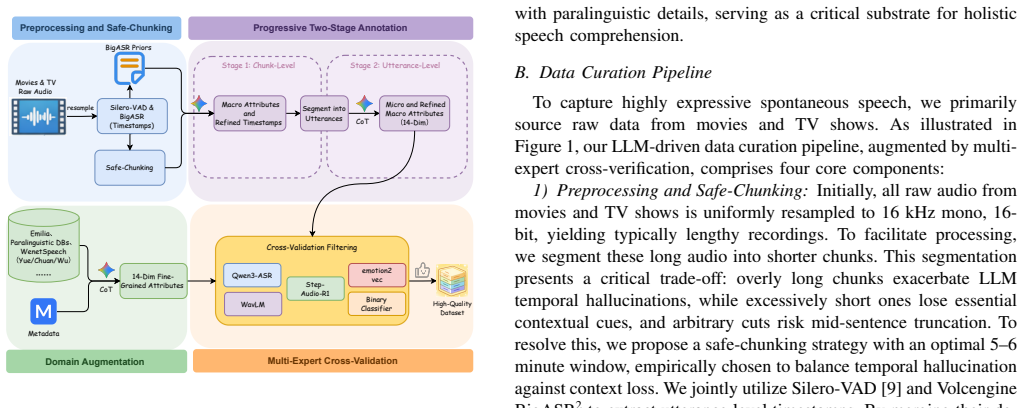
While speech Large Language Models (LLMs) excel at conventional tasks like basic speech recognition, they lack fine-grained, multi-dimensional perception. This deficiency is evident in their struggle to disentangle complex features like micro-acoustic cues, acoustic scenes, and paralinguistic signals. This resulting incomplete comprehension of real-world speech fundamentally bottlenecks the development of perceptive and empathetic next-generation speech systems. At its core, this persistent perceptual limitation primarily stems from three interacting factors: scarce high-quality expressive data, absent fine-grained modeling for multi-dimensional attributes, and reliance on restricted coverage, coarse-grained benchmarks. We address these challenges through three pillars: First, our robust data curation pipeline resolves complex acoustic environments and long-audio timestamp alignment challenges to extract a high-quality spontaneous speech corpus from audiovisual sources. Second, we construct FMSU-Bench, a pioneering benchmark covering 14 speech attribute dimensions to rigorously assess the fine-grained, multi-dimensional speech understanding capabilities of current models. Third, empowered by our curated corpus, we introduce FM-Speech. Driven by a decoupled attribute modeling and progressive curriculum fine-tuning framework, it substantially elevates fine-grained, multi-dimensional acoustic perception. Extensive evaluations on FMSU-Bench reveal that current speech LLMs still require significant improvement in multi-dimensional, fine-grained understanding. In contrast, FM-Speech substantially outperforms current open-source models, establishing a robust paradigm for real-world speech understanding.
Dividing audio into chunks and aligning labels to chunk starts reduces training and decoding time without sacrificing recognition quality.
abstractclick to expand
We propose the Chunkwise Aligner, a novel architecture for streaming automatic speech recognition (ASR). While the Transducer is the standard model for streaming ASR, its training is costly due to the need to compute all possible audio-label alignments. The recently introduced Aligner reduces this cost by discarding explicit alignments, but this modification makes it unsuitable for streaming. Our approach overcomes this limitation by dividing the audio into chunks and aligning each label to the leftmost frames of its chunk, whereas transitions between chunks are managed by a learned end-of-chunk probability. Experiments show that the Chunkwise Aligner not only matches the Transducer's accuracy in both offline and streaming scenarios, but also offers superior training and decoding efficiencies.
The method estimates 3D acoustic transfer function magnitudes accurately up to 1 kHz and trains faster than autoencoder baselines.
abstractclick to expand
Reconstructing a 3D sound field from sparse microphone measurements is a fundamental yet ill-posed problem, which we address through Acoustic Transfer Function (ATF) magnitude estimation. ATF magnitude encapsulates key perceptual and acoustic properties of a physical space with applications in room characterization and correction. Although recent generative paradigms such as Flow Matching (FM) have achieved state-of-the-art performance in speech and music generation, their potential in spatial audio remains underexplored. We propose a novel framework for 3D ATF magnitude reconstruction as a guided generation task, with a 3D U-Net conditioned by a permutation-invariant set encoder. This architecture enables reconstruction from an arbitrary number of sparse inputs while leveraging the stable and efficient training properties of FM. Experimental results demonstrate that SF-Flow achieves accurate reconstruction up to \SI{1}{kHz}, trains substantially faster than the autoencoder baseline, and improves significantly with dataset size.
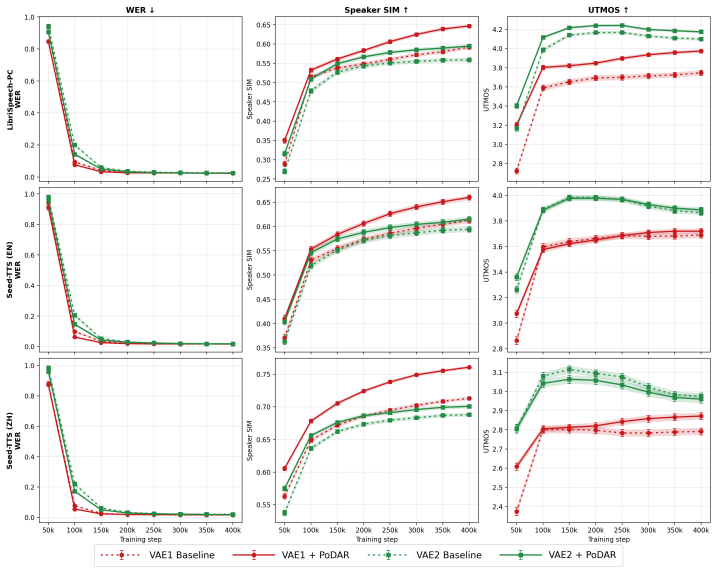
The performance of audio latent diffusion models is primarily governed by generator expressivity and the modelability of the underlying latent space. While recent research has focused primarily on the former, as well as improving the reconstruction fidelity of audio codecs, we demonstrate that latent modelability can be significantly improved through explicit factor disentanglement. We present PoDAR (Power-Disentangled Audio Representation), a framework that utilizes a randomized power augmentation and latent consistency objective to decouple signal power from invariant semantic content. This factorization makes the latent space easier to model, which both accelerates the convergence of downstream generative models and improves final overall performance. When applied to a Stable Audio 1.0 VAE with an F5-TTS generator, PoDAR achieves about a $2\times$ acceleration in convergence to match baseline performance, while increasing final speaker similarity by 0.055 and UTMOS by 0.22 on the LibriSpeech-PC dataset. Furthermore, isolating power into dedicated channels enables the application of CFG exclusively to power-invariant content, effectively extending the stable guidance regime to higher scales.
A probabilistic model uses the room's echo tail, estimated via WPE, to decide whether two single-microphone recordings share their origin.
abstractclick to expand
Location information can be a valuable signal for audio segmentation tasks, especially as a complement to methods focusing on the content or qualities of the sources. Though audio source localization is typically performed using the observations of the signal captured by multiple microphones in space, information about a source's location is captured by a single microphone through its arrival time and spectral amplitude--given the source's emitted signal is known. Since reverberation originates from the audio sources in a room, it accordingly contains some information about the emitted audio signals. The late-tail part of reverberation is relatively invariant to the local source and microphone geometry, depending primarily on only the room itself, and thus can provide the necessary reference information about audio signals that depends minimally on their location. In this work, we leverage the robust late-tail estimation of Weighted Prediction Error (WPE) dereverberation within a probabilistic framework to estimate the likelihood of two audio signals collected in the same room as having originated from the same location. We demonstrate the effectiveness of our approach on the speaker diarization task in both simulated and real environments.
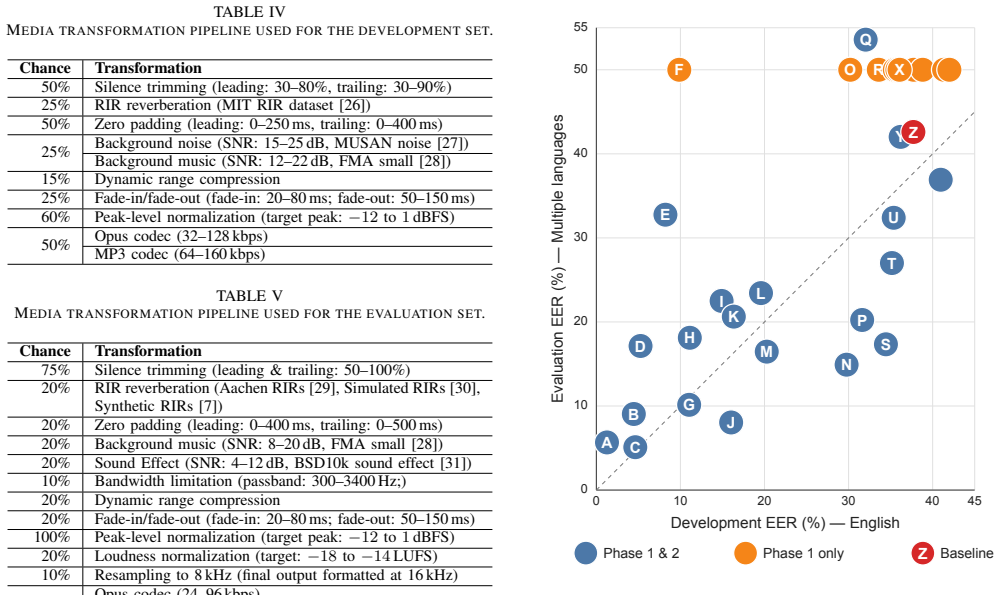
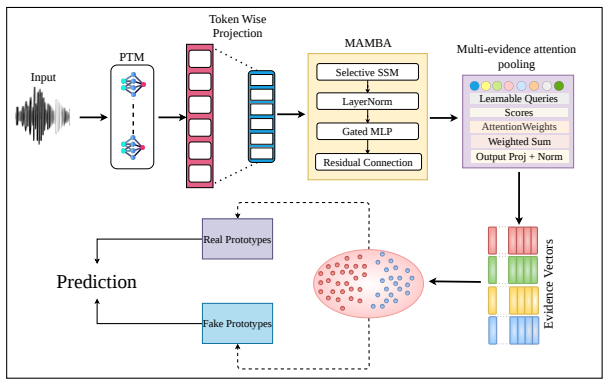
RADAR Challenge 2026 is an APSIPA Grand Challenge on Robust Audio Deepfake Recognition under Media Transformations, designed to simulate realistic media conditions in real-world audio distribution pipelines, including compression, resampling, noise, and reverberation. It consists of two phases: an English development phase with labeled data for analysis and paper writing, and a multilingual evaluation phase containing more than 100,000 utterances in English, Singapore English, Mandarin Chinese, Taiwanese Mandarin, Japanese, and Vietnamese. Systems are evaluated using equal error rate (EER) for binary real/fake classification. This paper describes the challenge task, the construction of the data set, the evaluation protocol, and the overall results. During the challenge, 33 teams submitted to the development phase and 22 teams submitted to the final evaluation phase. The reported results highlight the remaining challenges of robust audio deepfake detection under multilingual and media-transformed conditions.
Evaluating expressive speech remains challenging, as existing methods mainly assess emotional intensity and overlook whether a speech sample is expressively appropriate for its contextual setting. This limitation hinders reliable evaluation of speech systems used in narrative-driven and interactive applications, such as audiobooks and conversational agents. We introduce CEAEval, a Context-rich framework for Evaluating Expressive Appropriateness in speech, which assesses whether a speech sample expressively aligns with the underlying communicative intent implied by its discourse-level narrative context. To support this task, we construct CEAEval-D, the first context-rich speech dataset with real human performances in Mandarin conversational speech, providing narrative descriptions together with fifteen dimensions of human annotations covering expressive attributes and expressive appropriateness. We further develop CEAEval-M, a model that integrates knowledge distillation, planner-based multi-model collaboration, adaptive audio attention bias, and reinforcement learning to perform context-rich expressive appropriateness evaluation. Experiments on a human-annotated test set demonstrate that CEAEval-M substantially outperforms existing speech evaluation and analysis systems.
Metric-induced discrete flow matching (MI-DFM) exploits token-latent geometry for discrete generation, but its practical use is limited by two issues: heuristic schedulers requiring hyperparameter search, and finite-step path-tracking error from its first-order continuous-time Markov chain (CTMC) solver. We address both issues. First, we derive a kinetic-optimal scheduler for prescribed scalar-parameterized probability paths, and instantiate it for MI-DFM as a training-free numerical schedule that traverses the path at constant Fisher-Rao speed. Second, we introduce a finite-step moment correction that adjusts the jump probability while preserving the CTMC jump destination distribution. We validate the resulting method, GibbsTTS, on codec-based zero-shot text-to-speech (TTS). Under controlled comparisons with a unified architecture and large-scale dataset, GibbsTTS achieves the best objective naturalness and is preferred in subjective evaluations over masked discrete generative baselines. Additionally, in comparison with the evaluated state-of-the-art TTS systems, GibbsTTS shows strong speaker similarity, achieving the highest similarity on three of four test sets and ranking second on the fourth. Project page: https://ydqmkkx.github.io/GibbsTTSProject
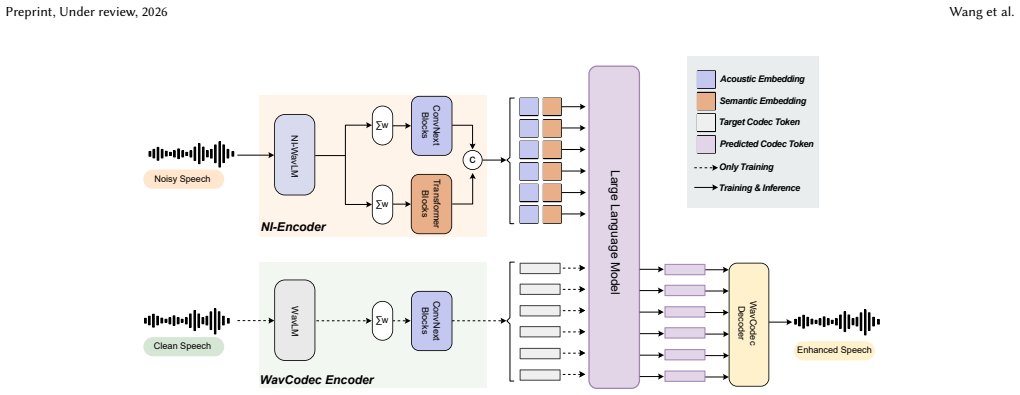
Language model (LM)-based speech enhancement (SE) can generate natural-sounding speech, but under severe noise it often suffers from unreliable conditioning, leading to perceptually plausible yet linguistically incorrect outputs. To address this issue, we propose L3-SE, a noise-invariant acoustic-semantic distillation framework for reducing linguistic hallucination in LM-based SE. The proposed method learns a noise-invariant conditioning encoder from noisy speech by jointly distilling two complementary clean-speech targets: an acoustic target for reconstruction fidelity and a semantic target for linguistic consistency. The resulting noise-invariant acoustic-semantic representations are used to condition a decoder-only autoregressive language model, which predicts clean acoustic tokens that are decoded into enhanced speech. To support high-quality generation, we further employ a high-fidelity codec built on learnable weighted WavLM layer representations as the discrete acoustic interface. By improving the reliability of conditioning under adverse conditions, the proposed framework substantially reduces hallucination and improves content faithfulness. Experiments show that the proposed method consistently outperforms prior LM-based speech enhancement baselines on linguistic consistency metrics, with especially clear gains under low-SNR and reverberant conditions, while maintaining competitive perceptual quality. Audio samples are available at https://max1wz.github.io/L3-SE-Demo-Page/. The complete source code will be released after the manuscript is accepted.
We introduce Latent Secret Spin (LSS), a blind speech watermarking method based on geometric operations in codec latent space. Based upon orthogonal rotations to principal components, LSS induces imperceptible but detectable covariance signatures according to a pseudo-random watermarking schedule. The scheme generalises across datasets, preserves perceptual quality and, unlike some learned, neural watermarking schemes, it does not require neural network training, is resistant to common signal manipulations and is flexible to payload size. Analyses show that structured latent-space watermarking is a promising and interpretable alternative to existing approaches.
Single-channel speaker distance estimation has recently achieved centimeter-level accuracy in simulated environments, yet it remains unclear which components of the room impulse response (RIR) the model exploits and how performance depends on the recording conditions. In this work, we decompose simulated RIRs into four variants (full, direct-only, no-late, and no-early) using the mixing time estimated from the echo density function as the boundary between early reflections and late reverberation. We define four calibration scenarios, from fully calibrated (synchronised capture, known source level) to fully uncalibrated (arbitrary onset, unknown level), and evaluate all combinations on a matched dataset. Results show that without time calibration, mean absolute error (MAE) increases to $1.29$ m and the model extracts reverberation-based cues, with early reflections emerging as the most informative component. Further analysis against DRR, $C_{50}$, and $T_{60}$ confirms that estimation accuracy improves with stronger early energy and degrades in highly reverberant environments. When time calibration is available, the model achieves a MAE of $0.14$ m by extracting the propagation delay alone, regardless of the RIR content.
The evaluation of voice anonymisation remains challenging. Current practice relies on automatic speaker verification metrics such as the equal error rate (EER). Performance estimates dependent on the classifier and operating point provide an incomplete or even misleading characterisation of privacy risk. We investigate the use of similarity rank disclosure (SRD), an information-theoretic metric, which operates on feature representations rather than classifier decisions, providing a threshold-independent assessment of privacy and analysis of both average and worst-case disclosure. We report its application to speaker embeddings, fundamental frequency, and phone embeddings using 2024 VoicePrivacy Challenge systems. The SRD reveals privacy leaks and system-specific weaknesses missed by EER-based evaluation. Findings highlight the merit of representation-level metrics and demonstrate the potential of SRD as a flexible and interpretable tool for the evaluation of voice anonymisation.
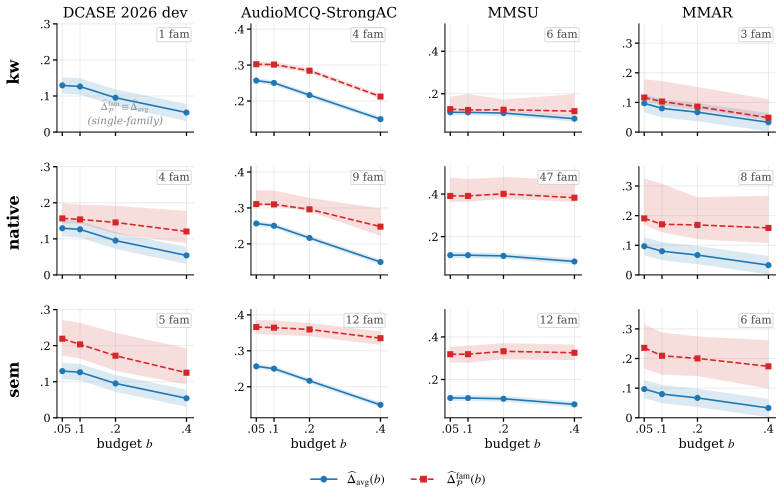
Large audio language models (LALMs) are increasingly used to reason over long audio clips, yet deployment often compresses audio before inference to reduce memory and latency. The risk is that compression can leave aggregate accuracy acceptable while sharply degrading answers for a deployment-critical query family. We study answer-preserving audio compression, judging a compressor by the excess answer-error it induces, especially for the worst-affected family. We formulate this theoretically as a compressor acceptance-rejection criterion, derive a practical sign-off protocol that returns compression budgets satisfying worst-family checks with statistical confidence, and evaluate it on five multiple-choice audio question-answering benchmarks with two Qwen-based backbones. The protocol exposes hidden family-level damage, shows that the chosen query-family partition can change the approved budget, and identifies regimes where query-conditioned compression helps maintain answer preservation.
Integrating speech understanding and generation is a pivotal step toward building unified speech models. However, the different representations required for these two tasks currently pose significant compatibility challenges. Typically, semantics-oriented features are learned from self-supervised learning (SSL), and acoustic-oriented features from reconstruction. Such fragmented representations hinder the realization of truly unified speech systems. We present WavCube, a compact continuous latent derived from an SSL speech encoder that simultaneously supports speech understanding, reconstruction, and generation. WavCube employs a two-stage training scheme. Stage 1 trains a semantic bottleneck to filter off-manifold redundancy that makes raw SSL features intractable for diffusion. Stage 2 injects fine-grained acoustic details via end-to-end reconstruction, while a semantic anchoring loss ensures the representation remains grounded within its original semantic manifold. Comprehensive experiments show that WavCube closely approaches WavLM performance on SUPERB despite an 8x dimensional compression, attains reconstruction quality on par with existing acoustic representations, delivers state-of-the-art zero-shot TTS performance with markedly faster training convergence, and excels in speech enhancement, separation, and voice conversion tasks on the SUPERB-SG benchmark. Systematic ablations reveal that WavCube's two-stage recipe resolves two intrinsic flaws of SSL features for generative modeling, paving the way for future unified speech systems. Codes and checkpoints are available at https://github.com/yanghaha0908/WavCube.
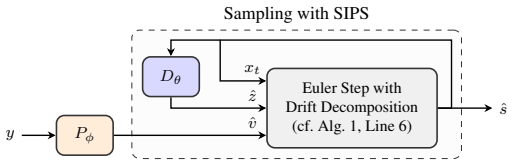
We propose a plug-and-play framework for speech enhancement and separation that augments predictive methods with a generative speech prior. Our approach, termed Stochastic Interpolant Prior for Speech (SIPS), builds on stochastic interpolants and leverages their flexibility to bridge predictive and generative modeling. Specifically, we decompose the interpolation dynamics into a task-specific drift and a stochastic denoising component, allowing a predictive estimate to be integrated directly into the generative sampling process. This results in a mathematically grounded framework for combining strong pretrained predictors with the expressive power of generative models. To this end, we train a score model using only clean speech, yielding a degradation-agnostic prior that can be reused across tasks. During inference, the predictor provides a deterministic drift that steers the sampling process toward a task-consistent estimate, while the score model preserves perceptual naturalness. Unlike prior hybrid approaches, which typically rely on architecture-specific conditioning and are tied to particular predictors or degradation settings, SIPS provides a unified framework that generalizes across predictors and additive degradation tasks. We demonstrate its effectiveness for both speech enhancement and speech separation using recent predictors such as SEMamba and FlexIO. The proposed method consistently improves perceptual quality, achieving gains up +1.0 NISQA for speech separation.
Coupled directional and diffuse tasks let the model outperform baselines and tune inter-channel differences in stereo by adjusting the extra
abstractclick to expand
Recently, neural directional filtering (NDF) has been introduced as a flexible approach for reconstructing a virtual directional microphone (VDM) with a desired directivity pattern for spatial sound capture. Building on this idea, we propose NDF+, which enables joint neural directional filtering and diffuse sound extraction. NDF+ reformulates VDM estimation into two coupled subtasks: dereverberated VDM reconstruction and diffuse sound extraction. This reformulation enables NDF+ to manipulate diffuse components in the final reconstructed VDM output. We evaluated NDF+ under reverberant conditions and compared it with representative conventional baselines. Results show that NDF+ consistently outperforms the baselines on both subtasks, while maintaining VDM reconstruction quality comparable to that of the original single-task NDF model. These findings indicate that NDF+ introduces an additional degree of freedom for diffuse sound control in the VDM reconstruction. In a stereo recording application, NDF+ provides controllable inter-channel level differences between left and right channels by adjusting the estimated diffuse component.
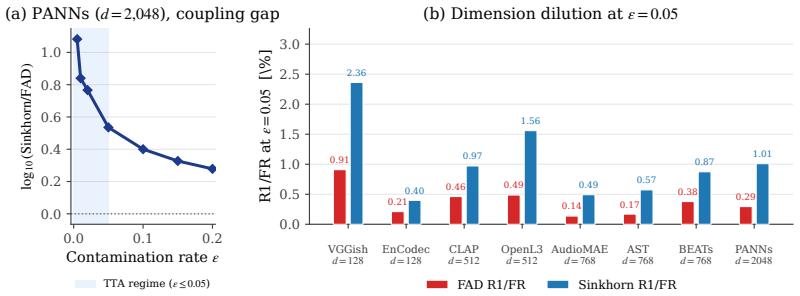
In audio generation evaluation, Fr\'echet Audio Distance (FAD) is a 2-Wasserstein distance with structural constraints for both primitives: the cost is a frozen embedding pullback whose invariance set hides severe artifacts, and the coupling is a Gaussian fit that dilutes rank-1 contamination relative to discrete OT. We propose Optimal Transport Audio Distance (OTAD), which corrects each primitive with one dedicated mechanism -- a residual Riemannian ground-metric adapter for the cost and entropic Sinkhorn optimal transport for the coupling. Across eight encoders under a four-axis protocol, coupling-only comparisons at $\epsilon = 0.05$ show that Sinkhorn's rank-1 sensitivity exceeds FAD's by a factor of 1.9 to 3.6. Furthermore, OTAD achieves a higher mean Spearman correlation with audio-quality MOS (DCASE 2023 Task 7) than baseline metrics. As an intrinsic benefit of the discrete transport plan, OTAD yields per-sample diagnostics with AUROC $\ge 0.86$, a capability that scalar- or kernel-aggregated metrics structurally lack.
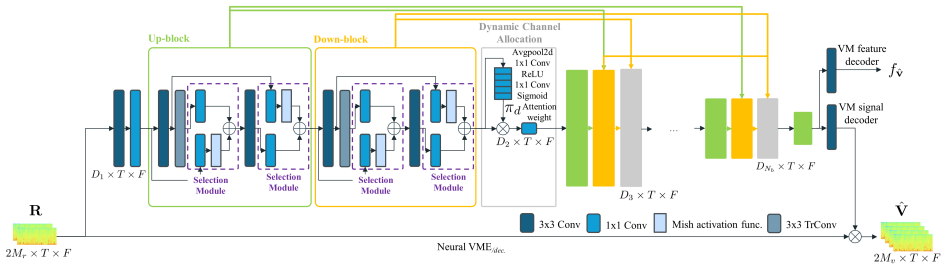
While the spatial directivity of multichannel speech enhancement algorithms improves with the number of microphones, fitting large capture arrays into real-world edge devices is typically limited by physical constraints. To overcome this limitation, we propose Spatial-Magnifier, a neural network designed to generate virtual microphone (VM) signals from a limited set of real microphone (RM) measurements. Moreover, we introduce the Spatial Audio Representation Learning (SARL) framework, which leverages estimated VM signals and features to condition a downstream speech enhancement system. Experimental results demonstrate that the proposed framework outperforms existing spatial upsampling baselines across various speech extraction systems, including end-to-end multichannel speech enhancement and neural beamforming. The proposed method nearly recovers the oracle performance achieved when all microphones are available.
The rapid advancement of generative audio models has outpaced the development of robust evaluation methodologies. Existing objective metrics and general multimodal large language models (MLLMs) often struggle with domain generalization, zero-shot capabilities, and instructional flexibility. To address these bottlenecks, we propose JASTIN, a generalizable, instruction-driven audio evaluation framework that formulates audio assessment as a self-instructed reasoning task. JASTIN bridges a frozen high-performance audio encoder with a fine-tuned LLM backbone via a trainable audio adapter. To ensure robust zero-shot generalization, we introduce a comprehensive instruction following data preparation pipeline, incorporating Multi-Source, Multi-Task, Multi-Calibration, and Multi-Description data. Experimental results demonstrate that JASTIN achieves state-of-the-art Pearson and Spearman correlations with human subjective ratings. It consistently outperforms general MLLMs across speech, sound, music, and out-of-domain evaluation tasks without the need for task-specific retraining.
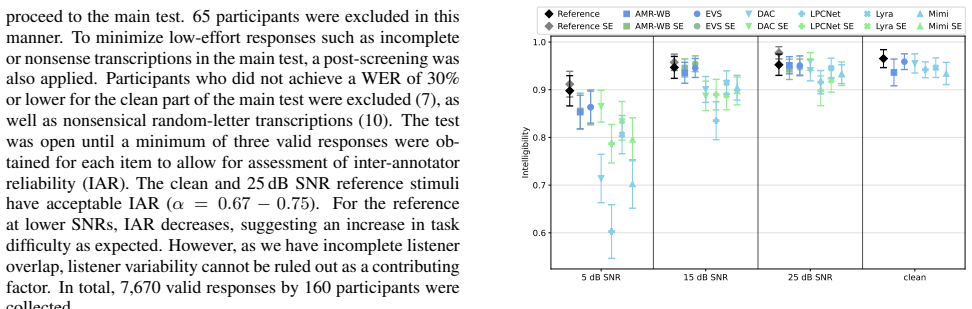
Preserving speech intelligibility is a minimum requirement for speech codecs in communication. Recently, very low-bitrate neural codecs have gained interest for replacing classical codecs, reinforcing the need to evaluate whether intelligibility is preserved in realistic scenarios. In this paper, we evaluate the intelligibility and listening effort of classical and neural speech codecs in clean and noisy conditions. Further, we assess the impact of speech enhancement (SE) before coding, simulating a possible audio processing pipeline. The results show that classical codecs are more noise robust than neural codecs. Further, SE can lead to significant intelligibility and listening effort improvements for codecs otherwise negatively affected by noise. Listening effort reveals nuanced differences when intelligibility is saturated. Lastly, objective intelligibility based on automatic speech recognition is highly correlated with subjective intelligibility scores averaged per condition.
Acoustic echo and background noise pose challenges on speech enhancement in hands-free systems and speakerphones. Discriminatively trained end-to-end methods represent a powerful solution for joint acoustic echo control (AEC) and denoising. However, with the advent of generative methods, diffusion-based approaches have seen remarkable performance in speech enhancement tasks. In this work, to the best of our knowledge, we provide the first (still non-causal) diffusion-based AEC model (DiffVQE) that is reproducible in terms of topology, training data, and training framework. So far, without employing diffusion, Microsoft's discriminative DeepVQE model has been shown to excel any of the ICASSP 2023 AEC Challenge entries achieving remarkable performance. Using data from the Interspeech 2025 URGENT Challenge for a diverse, high-quality training dataset, our DiffVQE excels DeepVQE both in echo and noise control performance, as well as in computational complexity and model size.
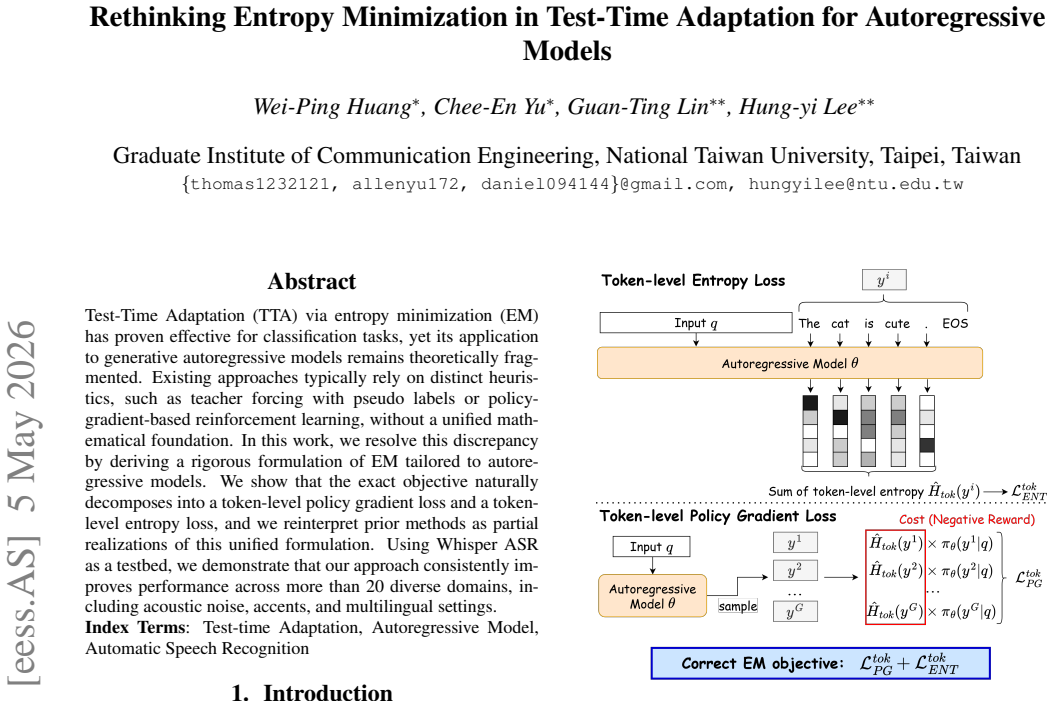
Test-Time Adaptation (TTA) via entropy minimization (EM) has proven effective for classification tasks, yet its application to generative autoregressive models remains theoretically fragmented. Existing approaches typically rely on distinct heuristics, such as teacher forcing with pseudo labels or policy-gradient-based reinforcement learning, without a unified mathematical foundation. In this work, we resolve this discrepancy by deriving a rigorous formulation of EM tailored to autoregressive models. We show that the exact objective naturally decomposes into a token-level policy gradient loss and a token-level entropy loss, and we reinterpret prior methods as partial realizations of this unified formulation. Using Whisper ASR as a testbed, we demonstrate that our approach consistently improves performance across more than 20 diverse domains, including acoustic noise, accents, and multilingual settings.
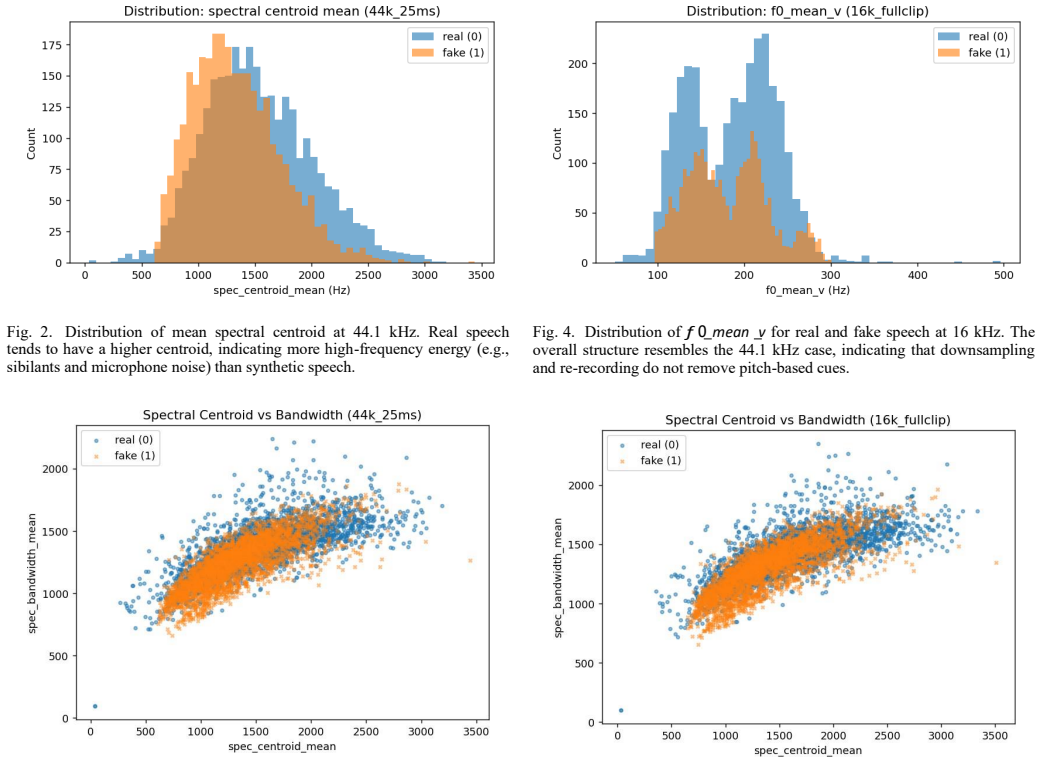
Recent advances in generative speech have increased the need for automatic detection of obviously failed synthetic outputs. This is particularly important in clinical settings such as AVATAR therapy, in which schizophrenia patients engage with a computer-generated representation of their hallucinated voices and degraded synthesis may disrupt immersion and therapeutic engagement. We investigate whether low-dimensional, interpretable source-output acoustic features can provide a lightweight first-pass detector of degraded voice-cloning outputs. Motivated by source-filter models of speech, we first test median fundamental frequency (f0) as a source-related consistency measure, and compare it with vocal tract length (VTL) as a filter-related measure and Harmonics-to-Noise Ratio (HNR) as a noise-related descriptor. Human-labeled voice-cloning samples generated with two vocoder families, WaveRNN (n=54) and HiFi-GAN (n=40), were evaluated using an asymmetric thresholding procedure in the input-output feature space. For WaveRNN, f0 and HNR both achieved 85.2% accuracy, outperforming VTL (64.8%). For HiFi-GAN, HNR achieved 80.0% accuracy, followed by f0 at 77.5% and VTL at 67.5%. Sample-level overlap and spectrographic inspection showed that f0 and HNR capture partly distinct failure patterns, rather than providing redundant rankings of the same samples. These results show that simple source-output acoustic consistency measures can provide useful first-pass detection of degraded voice clones, and support the use of interpretable threshold-based screening in applications where failed synthetic speech must be rejected quickly.
One embedding holds separate subspaces for content, identity and style so weighted similarity can suppress or emphasize any axis.
abstractclick to expand
Speech encodes multiple simultaneous attributes -- linguistic content, speaker identity, dialect, gender --that conventional single-vector embeddings conflate. We present a factor-partitioned embedding framework that maps each utterance into a single vector whose subspaces correspond to distinct axes of variation. A shared acoustic encoder feeds per-axis linear projection heads, each trained via distillation from a specialist teacher or a contrastive objective over shared-label pairs. The resulting embeddings support attribute-conditioned retrieval: similarity is computed as a signed weighted sum over per-axis cosine scores, allowing retrieval that jointly considers what was said and how -- or explicitly suppresses one attribute to surface another. We evaluate on cross-corpus retrieval over corpora sharing the Harvard sentence prompts, demonstrating that signed axis weighting can suppress same-speaker bias and surface semantically matched utterances across recording conditions.
Code is available at: https://github.com/jimregan/spoken-sentence-transformers
A partitioned vector lets retrieval emphasize content while suppressing speaker identity through signed per-axis scores.
abstractclick to expand
Speech encodes multiple simultaneous attributes -- linguistic content, speaker identity, dialect, gender --that conventional single-vector embeddings conflate. We present a factor-partitioned embedding framework that maps each utterance into a single vector whose subspaces correspond to distinct axes of variation. A shared acoustic encoder feeds per-axis linear projection heads, each trained via distillation from a specialist teacher or a contrastive objective over shared-label pairs. The resulting embeddings support attribute-conditioned retrieval: similarity is computed as a signed weighted sum over per-axis cosine scores, allowing retrieval that jointly considers what was said and how -- or explicitly suppresses one attribute to surface another. We evaluate on cross-corpus retrieval over corpora sharing the Harvard sentence prompts, demonstrating that signed axis weighting can suppress same-speaker bias and surface semantically matched utterances across recording conditions.
Code is available at: https://github.com/jimregan/spoken-sentence-transformers
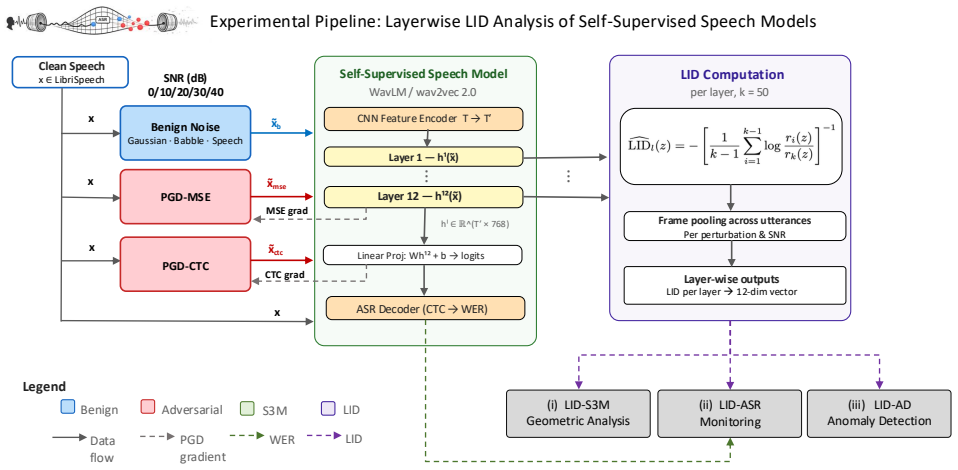
Self-supervised speech models (S3Ms) achieve strong downstream performance, yet their learned representations remain poorly understood under natural and adversarial perturbations. Prior studies rely on representation similarity or global dimensionality, offering limited visibility into local geometric changes. We ask: how do perturbations deform local geometry, and do these shifts track downstream automatic speech recognition (ASR) degradation? To address this, we present GRIDS, a framework using Local Intrinsic Dimensionality (LID) across layer-wise representations in WavLM and wav2vec 2.0. We find that LID increases for all low signal-to noise ratio (SNR) perturbations and diverges at high SNR: benign noise converges toward the clean profile, while adversarial inputs retain early-layer LID elevation. We show LID elevation co-occurs with increased WER, and that layer-wise LID features enable anomaly detection (AUROC 0.78-1.00), opening the door to transcript-free monitoring in S3Ms.
Vocal hyperfunction (VH) is a prevalent voice disorder whose ambulatory detection remains challenging despite extensive daily voice data. Prior approaches capture week-long neck-surface accelerometer recordings but collapse them into fixed-length subject-level feature vectors, discarding within-day temporal dynamics encoding nuanced voicing feature interactions. We introduce a novel hybrid architecture combining gradient-boosted trees on day-level distributional features with a CNN-based multiple instance learning (MIL) framework that preserves and learns from from temporal dynamics throughout each day. On the held-out test set, our model exceeds the challenge baselines (AUC: 0.82 PVH, 0.77 NPVH), achieving AUCs of 0.879 for PVH (Rank 5) and 0.848 for NPVH (Rank 3), while also providing insights into clinically relevant information about both pathologies.
Speech technologies are deployed in high-stakes settings, yet fairness concerns remain fragmented across tasks and disciplines. Existing surveys either adopt a general machine-learning perspective that overlooks speech-specific properties or focus on a single task, missing failure patterns shared across the speech domain. Synthesizing over 400 studies spanning generation and perception tasks and emerging speech-language models, this survey presents a unified framework that links formal fairness definitions to evaluation, diagnosis, and mitigation. We formalize seven fairness definitions adapted to the speech modality and organize the field's conceptual evolution through three paradigms: Robustness, Representation, and Governance. We then ground evaluation metrics in the mathematical cores of these definitions and offer a decision tree for metric selection. We diagnose bias sources along the speech processing pipeline, surfacing speech-specific mechanisms such as channel bias as a demographic proxy and annotation subjectivity in emotion labels. We systematize mitigation strategies across four intervention stages, mapping each to the diagnosed sources. Finally, we identify open challenges and propose directions for future research.
To address the limitations of existing Generative Fixed-Filter Active Noise Control (GFANC) methods, which rely on filter decomposition and recombination and require supervised learning with labeled data, this paper proposes a Transformer-based End-to-End Control-Filter Generation (E2E-CFG) framework. Unlike previous approaches that predict combination weights of sub control filters, the proposed method directly generates control filters in an unsupervised manner by integrating the co-processor and real-time controller into a fully differentiable ANC system, where the accumulated error signal is used as the training objective. By abandoning the decomposition--reconstruction process, the proposed design simplifies the control pipeline and avoids error accumulation, while the Transformer architecture effectively captures global and dynamic noise characteristics through its attention mechanism. Numerical simulations on real-recorded noises demonstrate that the proposed method achieves improved noise reduction performance and adaptability to different types of noises compared with the original GFANC framework.
The method needs no fine-tuning of the large models and works with embeddings from birds or speech, reducing the need for scarce labeled bio
abstractclick to expand
We show that pretrained acoustic embeddings classify elephant vocalisations at a level approaching that of end-to-end supervised neural networks, without any fine-tuning of the embedding model. This result is of practical importance because annotated bioacoustic data are scarce and costly to obtain, leaving conventional supervised approaches prone to overfitting and to poor generalisation under domain shift. A broad range of embedding models drawn from general audio, speech, and bioacoustic domains is evaluated, all of which are either out-of-domain (containing no bioacoustic data) or out-of-species (containing no elephant call data). The embedding networks themselves remain fixed; only the lightweight downstream classifiers, which include a linear model and several small neural networks, are trained. Among the models considered, Perch 2.0 achieves the best cross-validated classification performance, attaining AUCs of 0.849 on African bush elephant (Loxodonta africana) calls and 0.936 on Asian elephant (Elephas maximus) calls, with Perch 1.0 close behind. The best-performing system is within 2.2 % of an end-to-end supervised elephant call classification system. A layerwise analysis of pretrained transformer encoders, considered as embedding models, shows that intermediate representations outperform final-layer outputs. The second layer of both wav2vec2.0 and HuBERT encodes sufficient information for effective elephant call classification; truncation at this layer therefore preserves classification performance whilst retaining only approximately 10 % of the parameters of the full network. Such compact embedding networks are well suited to on-device processing where computational resources are limited.
LRS-VoxMM from real conversations shows visual cues matter more as audio degrades, with released noise and reverberation sets for testing.
abstractclick to expand
We introduce LRS-VoxMM, an in-the-wild benchmark for audio-visual speech recognition (AVSR). The benchmark is derived from VoxMM, a dataset of diverse real-world spoken conversations with human-annotated transcriptions. We select AVSR-suitable samples and preprocess them in an LRS-style format for direct use in existing AVSR pipelines. Compared with commonly used benchmarks, LRS-VoxMM covers a more diverse range of scenarios and acoustic conditions. We also release distorted evaluation sets with additive noise, reverberation, and bandwidth limitation to support evaluation under severe acoustic degradation. Experimental results show that LRS-VoxMM is considerably harder than LRS3 and that the contribution of visual information becomes more evident as the audio signal degrades. LRS-VoxMM supports more realistic AVSR benchmarking and encourages further research on the role of visual information in challenging real-world conditions.
AV-HuBERT features condition Parakeet-v2 for single-pass transcription of long multi-party recordings, then LLM topic similarity groups the
abstractclick to expand
Multi-talker automatic speech recognition (ASR) in conversational recordings remains an open problem, particularly in scenarios with large portion of overlapping speech where identifying and transcribing a target speaker is difficult from audio alone. Visual cues can help resolve speaker ambiguity, yet their integration into long-context audio-visual (AV) ASR systems has been limited. The CHiME-9 MCoRec task addresses this challenge by requiring transcription of audio-visual recordings of heavily-overlapped parallel conversations, followed by clustering the participants into conversational groups. In this work, we present the BUT system based on a long-context target-speaker AV-ASR model capable of processing long-form recordings in a single decoding pass. Our architecture conditions a pre-trained NVIDIA Parakeet-v2 ASR model on visual representations from a pre-trained AV-HuBERT model. To cluster participants into conversation groups, we employ Qwen3.5-122B LLM to estimate transcript topic similarity followed by hierarchical agglomerative clustering. On the MCoRec development set, the proposed system achieves 33.7% WER and a clustering F1 score of 0.97, improving over the official baseline by 16.2% WER and 0.15 F1 absolute. On the eval set, our team ranked second, being 0.16% WER and 0.5% F1 worse than the best system.
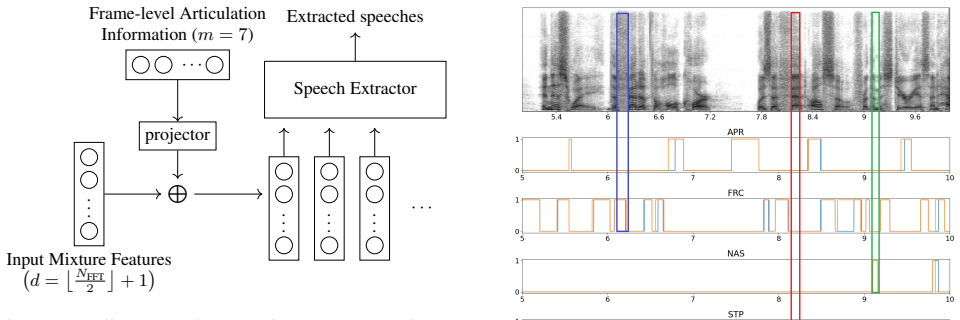
We propose a knowledge-driven approach to speech target extraction in the presence of background sound effects already recorded in cinematic audio. The specific knowledge sources studied are manners of articulation that are detected in speech frames and adopted to form a knowledge vector as a part of features to enhance speech separation and target speech extraction because some short speech segments are often difficult to separate from mixed background sounds. Testing on the recent Sound Demixing Challenge data for cinematic audio source separation (CASS) shows that utilizing articulator-aware knowledge sources produces better separation results than those obtained without using any knowledge, especially for speech segments buried in unspecified background sound events.
Objective metrics for emotional expressiveness are vital for speech generation, particularly in expressive synthesis and voice conversion requiring emotional prosody transfer. To quantify this, the field widely relies on emotion similarity between reference and generated samples. This approach computes cosine similarity of embeddings from encoders like emotion2vec, assuming they capture affective cues despite linguistic and speaker variations. We challenge this assumption through controlled adversarial tasks and human alignment tests. Despite high classification accuracy, these latent spaces are unsuitable for zero-shot similarity evaluation. Representational limitations cause linguistic and speaker interference to overshadow emotional features, degrading discriminative ability. Consequently, the metric misaligns with human perception. This acoustic vulnerability reveals it rewards acoustic mimicry over genuine emotional synthesis.
Cross-lingual speaker verification suffers from severe language-speaker entanglement. This causes systematic degradation in the hardest scenario: correctly accepting utterances from the same speaker across different languages while rejecting those from different speakers sharing the same language. Standard adversarial disentanglement degrades speaker discriminability; blind discriminators inadvertently penalize speaker-discriminative traits that merely correlate with language. To address this, we propose Dual-LoRA, injecting trainable task-factorized LoRA adapters into a frozen pre-trained backbone. Our core innovation is a Language-Anchored Adversary: by grounding the discriminator with an explicit language branch, adversarial gradients target true linguistic cues rather than arbitrary correlations, preserving essential speaker characteristics. Evaluated on the TidyVoice benchmark, our system achieves a 0.91% validation EER and achieves 3rd place in the official challenge.
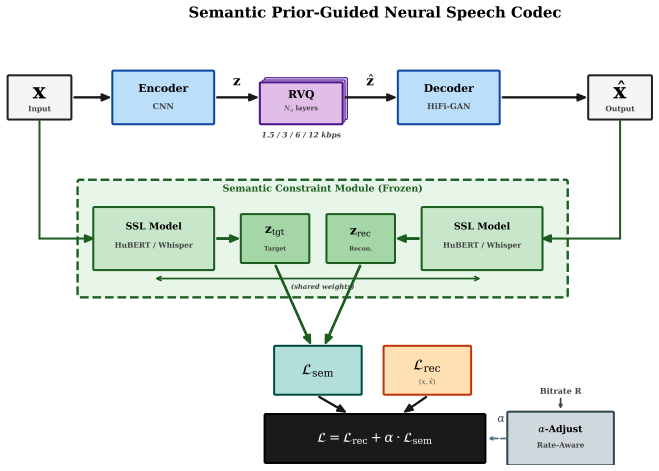
Conventional neural speech codecs suffer from severe intelligibility degradation at ultra-low bitrates, where the bottleneck transitions from acoustic distortion to semantic loss. To address this issue, this paper conducts a systematic investigation into the role and fundamental limits of integrating frozen semantic priors -- specifically HuBERT and Whisper -- into neural speech coding. We introduce and quantitatively validate a novel Semantic Retirement phenomenon: while semantic constraints reduce the Word Error Rate (WER) by up to ~10% relatively at 1.5 kbps, their benefits rapidly diminish beyond 6 kbps, indicating a practical capacity boundary. We further uncover a clear trade-off between different prior types: acoustic-rich priors (HuBERT) better preserve prosodic and timbral details, whereas high-level linguistic priors (Whisper) effectively suppress phonetic hallucinations in noisy environments (reducing hallucination rates by 26 percent) and substantially narrow the generalization gap for unseen speakers. Building on these findings, we propose a bitrate-aware regulation strategy that dynamically adjusts prior strength to optimize the trade-off between semantic consistency and perceptual naturalness. Extensive experimental evaluations confirm that our approach achieves competitive intelligibility and noise robustness compared to existing baselines, offering a principled pathway toward ultra-low-bitrate generative speech coding.
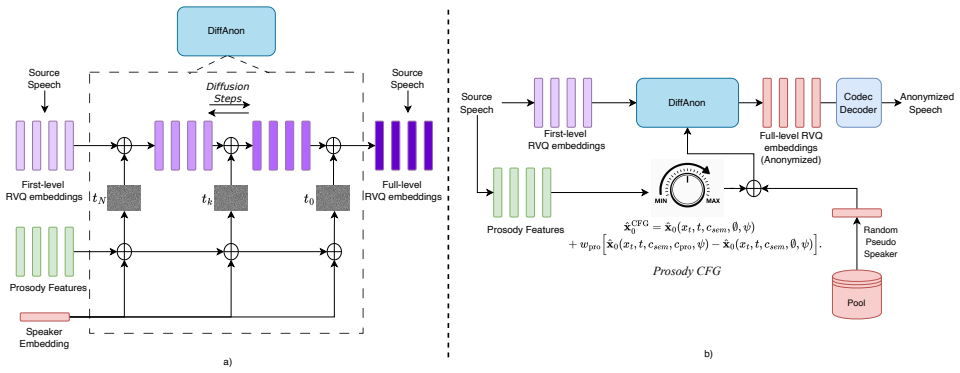
To preserve or not to preserve prosody is a central question in voice anonymization. Prosody conveys meaning and affect, yet is tightly coupled with speaker identity. Existing methods either discard prosody for privacy or lack a principled mechanism to control the utility-privacy trade-off, operating at fixed design points. We propose DiffAnon, a diffusion-based anonymization method with classifier-free guidance (CFG) that provides explicit, continuous inference-time control over prosody preservation. DiffAnon refines acoustic detail over semantic embeddings of an RVQ codec, enabling smooth interpolation between anonymization strength and prosodic fidelity within a single model. To the best of our knowledge, it is the first voice anonymization framework to provide structured, interpolatable inference-time prosody control. Experiments demonstrate structured trade-off behavior, achieving strong utility while maintaining competitive privacy across controllable operating points.
Fine-tuning on distilled texts from ACL papers lowers error rates in Arabic, Chinese, and French while keeping the original speaker's voice.
abstractclick to expand
Preserving a speaker's voice identity while generating speech in a different language remains a fundamental challenge in spoken language technology, particularly in specialized domains such as scientific communication. In this paper, we address this challenge through our system submission to the International Conference on Spoken Language Translation (IWSLT 2026), the Cross-Lingual Voice Cloning shared task. First, we evaluate several state-of-the-art voice cloning models for cross-lingual speech generation of scientific texts in Arabic, Chinese, and French. Then, we build voice cloning systems based on the OmniVoice foundation model. We employ data augmentation via multi-model ensemble distillation from the ACL 60/60 corpus. We investigate the effect of using this synthetic data for fine-tuning, demonstrating consistent improvements in intelligibility (WER and CER) across languages while preserving speaker similarity.
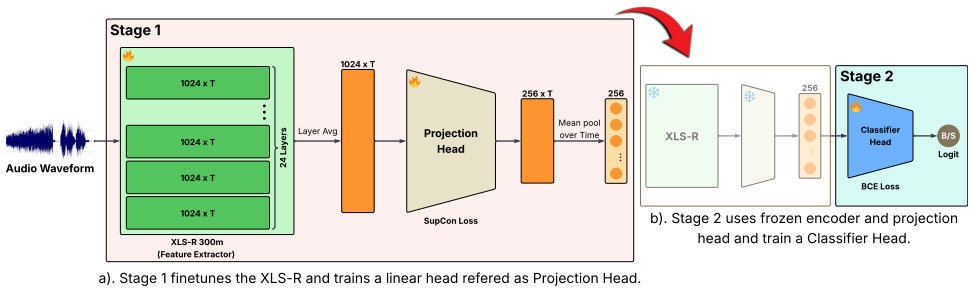
Supervised contrastive learning (SupCon) is widely used to shape representations, but has seen limited targeted study for audio deepfake detection. Existing work typically combines contrastive terms with broader pipelines; however, the focus on SupCon itself is missing. In this work, we run a controlled study on wav2vec2 XLS-R (300M) that varies (i) similarity in SupCon (cosine vs angular similarity derived from the hyperspherical angle) and (ii) negative scaling using a warm-started global cross-batch queue. Stage 1 fine-tunes the encoder and projection head with SupCon; Stage 2 freezes them and trains a linear classifier with BCE. Trained on ASVspoof 2019 LA and evaluated on ASV19 eval plus ITW and ASVspoof 2021 DF/LA, Cosine SupCon with a delayed queue achieves the best ITW EER (8.29%) and pooled EER (4.44), while angular similarity performs strongly without queued negatives (ITW 8.70), indicating reduced reliance on large negative sets.
Recent advancements in large audio language models have extended Chain-of-Thought (CoT) reasoning into the auditory domain, enabling models to tackle increasingly complex acoustic and spoken tasks. To elicit and sustain these extended reasoning chains, the prevailing paradigm -- driven by the success of text-based reasoning models -- overwhelmingly relies on Reinforcement Learning with Verified Rewards (RLVR). However, as models are strictly optimized to distill rich, continuous auditory contexts into isolated, verifiable text labels, a fundamental question arises: are we fostering true audio intelligence, or merely reducing a continuous sensory medium into a discrete puzzle? We identify this as the "verifiable reward trap." While RLVR yields remarkable scores on standardized objective benchmarks, it systematically degrades the real-world conversational feel of audio models. By prioritizing isolated correctness over acoustic nuance, RLVR reduces dynamic interactions to mechanical "answering machines," severely compromising prosodic naturalness, emotional continuity, and user immersion, particularly in long-turn dialogues. To bridge the gap between mechanical objective verification and genuine sensory empathy, we introduce Step-Audio-R1.5, marking a paradigm shift toward Reinforcement Learning from Human Feedback (RLHF) in audio reasoning. Comprehensive evaluations demonstrate that Step-Audio-R1.5 not only maintains robust analytical reasoning but profoundly transforms the interactive experience, redefining the boundaries of deeply immersive long-turn spoken dialogue.
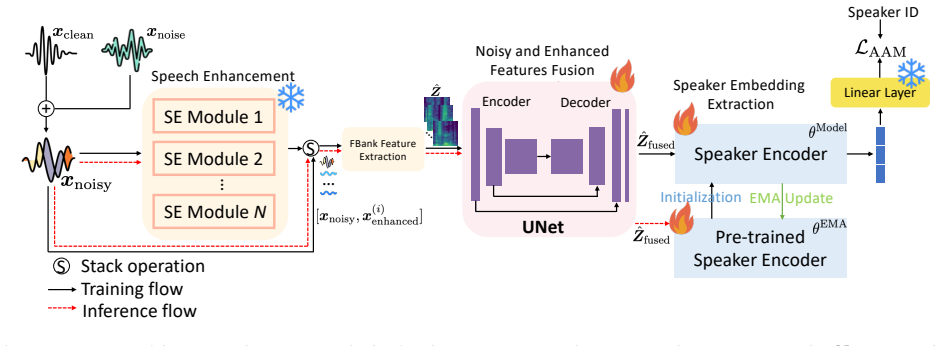
The joint training of speech enhancement and speaker embedding networks for speaker recognition is widely adopted under noisy acoustic environments. While effective, this paradigm often fails to leverage the generalization and robustness benefits inherent in large-scale speech enhancement pre-training. Moreover, maintaining the speaker information in the denoised speech is not an explicit objective of the speech enhancement process. To address these limitations, we proposed a scalable \textbf{U}Net-based \textbf{F}usion framework (UF-EMA) that considers the noisy and enhanced speech as a multi-channel input, thereby enabling the speaker encoder to exploit speaker information effectively. In addition, an \textbf{E}xponential \textbf{M}oving \textbf{A}verage strategy is applied to a speaker encoder pre-trained on clean speech to mitigate overfitting and facilitate a smooth transition from clean to noisy conditions. Experimental results on multiple noise-contaminated test sets showcase the superiority of the proposed approach.
Recent audio-aware large language models (ALLMs) have demonstrated strong capabilities across diverse audio understanding and reasoning tasks, but they still frequently produce hallucinated or overly confident outputs. While uncertainty estimation has been extensively studied in text-only LLMs, it remains largely unexplored for ALLMs, where audio-conditioned generation introduces additional challenges such as perceptual ambiguity and cross-modal grounding. In this work, we present the first systematic empirical study of uncertainty estimation in ALLMs. We benchmark five representative methods, including predictive entropy, length-normalized entropy, semantic entropy, discrete semantic entropy, and P(True), across multiple models and diverse evaluation settings spanning general audio understanding, reasoning, hallucination detection, and unanswerable question answering. Our results reveal two key findings. First, semantic-level and verification-based methods consistently outperform token-level baselines on general audio reasoning benchmarks. Second, on trustworthiness-oriented benchmarks, the relative effectiveness of uncertainty methods becomes notably more model- and benchmark-dependent, indicating that conclusions drawn from general reasoning settings do not straightforwardly transfer to hallucination and unanswerable-question scenarios. We further explore uncertainty-based adaptive inference as a potential downstream application. We hope this study provides a foundation for future research on reliable, uncertainty-aware audio-language systems.
Direction-of-arrival (DOA) estimation is an important task in microphone array processing and many downstream applications. The steered response power with phase transform (SRP-PHAT) method has been widely adopted for DOA estimation in recent years. However, accurate SRP-PHAT estimation in 3D scenarios requires evaluating steering responses over thousands of candidate directions, severely limiting real-time performance on resource-constrained platforms. This challenge becomes even more critical for planar arrays, which are widely used in robotics due to their structural simplicity. Motivated by the fact that azimuth estimation is usually more reliable than elevation estimation for most arrays, we propose ASAP, an azimuth-priority strip-based search approach to planar microphone array DOA estimation in 3D. In the first stage, ASAP performs coarse-to-fine region contraction within azimuthal strips to lock azimuth angles while retaining multiple maxima through spherical caps. In the second stage, it refines elevation along the great-circle arc between two close candidates. Extensive simulations and real-world experiments validate the efficiency and merits of the proposed method over existing approaches.
Under-resourced languages remain underrepresented in quantitative rhythm research,particularly in systematic intra-branch analysis of acoustic differentiation within closely related linguistic groups.This study investigates acoustic differentiation within the Tani language subgroup by examining speech rhythm in Nyishi and Adi,two under-resourced Tani languages spoken in Arunachal Pradesh,North-East India,using a frequency domain framework based on amplitude modulation(AM) low-frequency(LF) spectrum analysis,commonly referred to as rhythm formant analysis(RFA).The analysis is designed to identify whether intra-branch differentiation follows a hierarchical pattern across rhythmic and spectral domains.From the LF modulation spectrum,three rhythm formant features were derived:Number of Dominant peaks(NDP),Mean Frequency of Dominant Peaks(MFDP),and Variance of Dominant Frequencies(VFDP).In addition,Discrete Cosine Transform (DCT)coefficients and Mel Frequency Cepstral Coefficient(MFCC) were extracted to characterise the spectral modulation structure and broad spectral organisation of the speech signal.Statistical modelling reveals a hierarchical pattern of differentiation,where rhythmic features show consistent but moderate separation,with Nyishi exhibiting higher dominant modulation frequencies as well as greater dispersion than Adi.Classification experiments further support this hierarchy,with rhythm-only features achieved approximately 84-85% classification accuracy.Fusion using MFCC representations improved performance to 90.9% classification accuracy using support vector machine (SVM) and 93.96% using multilayer perceptron (MLP).These findings demonstrate that rhythmic and spectral features encode complementary levels of linguistic variations,with low frequency modulation capturing constrained macro temporal structure and spectral features reflecting finer phonological differentiation.
Neural networks can be trained to learn task-relevant representations from data. Understanding how these networks make decisions falls within the Explainable AI (XAI) domain. This paper proposes to study an XAI topic: uncovering unknown organisational patterns in network representations, particularly those representations learned by the speaker recognition network that recognises the speaker identity of utterances. Past studies employed algorithms (e.g. t-distributed Stochastic Neighbour Embedding and K-means) to analyse and visualise how network representations form independent clusters, indicating the presence of flat clustering phenomena within the space defined by these representations. In contrast, this work applies two algorithms -- Single-Linkage Clustering (SLINK) and Hierarchical Density-Based Spatial Clustering of Applications with Noise (HDBSCAN) -- to analyse how representations form clusters with hierarchical relationships rather than being independent, thereby demonstrating the existence of hierarchical clustering phenomena within the network representation space. To semantically understand the above hierarchical clustering phenomena, a new algorithm, termed Hierarchical Cluster-Class Matching (HCCM), is designed to perform one-to-one matching between predefined semantic classes and hierarchical representation clusters (i.e. those produced by SLINK or HDBSCAN). Some hierarchical clusters are successfully matched to individual semantic classes (e.g. male, UK), while others to conjunctions of semantic classes (e.g. male and UK, female and Ireland). A new metric, Liebig's score, is proposed to quantify the performance of each matching behaviour, allowing us to diagnose the factor that most strongly limits matching performance.
Directional Selective Fixed-Filter Active Noise Control (D-SFANC) can effectively attenuate noise from different directions by selecting the suitable pre-trained control filter based on the Direction-of-Arrival (DoA) of the current noise. However, this method is weak at tracking the direction variations of non-stationary noise, such as that from a moving source. Therefore, this work proposes a Predictive Directional SFANC (PD-SFANC) method that uses a Convolutional Recurrent Neural Network (CRNN) to capture the hidden temporal dynamics of the moving noise and predict the control filter to cancel future noise. Accordingly, the proposed method can significantly improve its noise-tracking ability and dynamic noise-reduction performance. Furthermore, numerical simulations confirm the superiority of the proposed method for handling moving sources across various movement scenarios, compared to several representative ANC baselines.
Prompting with labelled examples lets the model output diarized transcripts in one pass, boosting both consistency and word accuracy.
abstractclick to expand
As part of the MediSpeech project, we aim to develop a system that transcribes and diarizes Dutch conversations between doctors and patients in real-time. In this research (in-progress) we explore ways of efficiently combining Whisper with speaker diarization (SD). After trying to prompt Whisper with text that contains speaker labels, we observed that it is able to insert labels into the transcription with promising accuracy. We continued this line of research by fine-tuning Whisper with speaker-labelled prompts to generate transcriptions in a format similar to that of Serialized Output Training (SOT). Fine-tuning Whisper yielded more consistent speaker IDs across the chunks of long-form audio and improved verbatim transcription. The study uncovered new challenges as Whisper's SD performance suffers because of mistakes that get propagated through prompts and inaccurate timestamps assigned to overlapping speech.
Multi-speaker automatic speech recognition (ASR) aims to transcribe conversational speech involving multiple speakers, requiring the model to capture not only what was said, but also who said it and sometimes when it was spoken. Recent Speech-LLM approaches have shown the potential of unified modeling for this task, but jointly learning speaker attribution, temporal structure, and lexical recognition remains difficult and data-intensive. At the current stage, leveraging reliable speaker diarization as an explicit structural prior provides a practical and efficient way to simplify this task. To effectively exploit such priors, we propose DM-ASR, a diarization-aware multi-speaker ASR framework that reformulates the task as a multi-turn dialogue generation process. Given an audio chunk and diarization results, DM-ASR decomposes transcription into a sequence of speaker- and time-conditioned queries, each corresponding to one speaker in one time segment. This formulation converts multi-speaker recognition into a series of structured sub-tasks, explicitly decoupling speaker-temporal structure from linguistic content and enabling effective integration of diarization cues with the reasoning capability of large language models. We further introduce an optional word-level timestamp prediction mechanism that interleaves word and timestamp tokens, yielding richer structured outputs and better transcription quality. Our analysis shows that diarization systems provide more reliable speaker identities and segment-level boundaries, while LLMs excel at modeling linguistic content and long-range dependencies, demonstrating their complementary strengths. Experiments on Mandarin and English benchmarks show that the proposed approach achieves strong performance with relatively small models and training data, while remaining competitive with or outperforming existing unified approaches.
Networks first predict effect types and dry signal; search then refines order and settings by reconstruction match, beating pure prediction.
abstractclick to expand
Audio effects play an essential role in sound design. This research addresses the task of audio effect estimation, which aims to estimate the configuration of applied effects from a wet signal. Existing approaches to this problem can be categorized into predictive approaches, which use models pre-trained in a data-driven manner, and search-based approaches, which are based on wet signal reconstruction. In this study, we propose a novel approach that integrates these approaches: first, DNNs predict the dry signal and effect configuration, and then a search is performed based on wet signal reconstruction using these predictions. By estimating the dry signal in the prediction stage, it becomes possible to complement or improve the predictions using reconstruction similarity as an objective function. The experimental evaluation showed that methods based on the proposed approach outperformed the method solely based on the predictive approach. Furthermore, the findings suggest that the task division of predicting the effect type combination followed by the search-based estimation of order and parameters was the most effective across various metrics.
While Large Audio Language Models (LALMs) achieve strong performance on short audio, they degrade on long-form inputs. This degradation is more severe in temporal awareness tasks, where temporal alignment becomes increasingly inaccurate as audio duration grows. We attribute these limitations to the lack of data, benchmarks, and modeling approaches tailored for long-form temporal awareness. To bridge this gap, we first construct LAT-Chronicle, a 1.2k hour long-form audio dataset with temporal annotations across real-world scenarios. We further develop LAT-Bench, the first human-verified benchmark supporting audio up to 30 minutes while covering three core tasks: Dense Audio Caption, Temporal Audio Grounding, and Targeted Audio Caption. Leveraging these resources, we propose LAT-Audio, formulating temporal awareness as a progressive global-to-local reasoning paradigm. A global timeline is first constructed as an aligned temporal-semantic context,and the Think-With-Audio Chain-of-Thought (TWA-CoT) is then introduced to perform iterative reasoning by incorporating local audio information via tool use. Experiments show that LAT-Audio surpasses existing models on long-form audio temporal awareness tasks and improves robustness to input duration. We release the dataset, benchmark, and model to facilitate future research at https://github.com/alanshaoTT/LAT-Audio-Repo.
Generative audio modeling has largely been fragmented into specialized tasks, text-to-speech (TTS), text-to-music (TTM), and text-to-audio (TTA), each operating under heterogeneous control paradigms. Unifying these modalities remains a fundamental challenge due to the intrinsic dissonance between structured semantic representations (speech/music) and unstructured acoustic textures (sound effects). In this paper, we introduce UniSonate, a unified flow-matching framework capable of synthesizing speech, music, and sound effects through a standardized, reference-free natural language instruction interface. To reconcile structural disparities, we propose a novel dynamic token injection mechanism that projects unstructured environmental sounds into a structured temporal latent space, enabling precise duration control within a phoneme-driven Multimodal Diffusion Transformer (MM-DiT). Coupled with a multi-stage curriculum learning strategy, this approach effectively mitigates cross-modal optimization conflicts. Extensive experiments demonstrate that UniSonate achieves state-of-the-art performance in instruction-based TTS (WER 1.47%) and TTM (SongEval Coherence 3.18), while maintaining competitive fidelity in TTA. Crucially, we observe positive transfer, where joint training on diverse audio data significantly enhances structural coherence and prosodic expressiveness compared to single-task baselines. Audio samples are available at https://qiangchunyu.github.io/UniSonate/.
Using self-supervised learning (SSL) models has significantly improved performance for downstream speech tasks, surpassing the capabilities of traditional hand-crafted features. This study investigates the amalgamation of SSL models, with the aim to leverage both their individual strengths and refine extracted features to achieve improved speech recognition models for naturalistic scenarios. Our research investigates the massive naturalistic Fearless Steps (FS) APOLLO resource, with particular focus on the FS Challenge (FSC) Phase-4 corpus, providing the inaugural analysis of this dataset. Additionally, we incorporate the CHiME-6 dataset to evaluate performance across diverse naturalistic speech scenarios. While exploring previously proposed Feature Refinement Loss and fusion methods, we found these methods to be less effective on the FSC Phase-4 corpus. To address this, we introduce a novel deep cross-attention (DCA) fusion method, designed to elevate performance, especially for the FSC Phase-4 corpus. Our objective is to foster creation of superior FS APOLLO community resources, catering to the diverse needs of researchers across various disciplines. The proposed solution achieves an absolute +1.1% improvement in WER, providing effective meta-data creation for the massive FS APOLLO community resource.
Mispronunciation Detection and Diagnosis (MDD) requires modeling fine-grained acoustic deviations. However, current ASR-derived MDD systems often face inherent limitations. In particular, CTC-based models favor sequence-level alignments that neglect transient mispronunciation cues, while explicit canonical priors bias predictions toward intended targets. To address these bottlenecks, we propose a prompt-free framework decoupling acoustic fidelity from canonical guidance. First, we introduce CROTTC, an acoustic model enforcing monotonic, frame-level alignment to accurately capture pronunciation deviations. Second, we implicitly inject mispronunciation information via the IF strategy under the knowledge transfer principle. Experiments show CROTTC-IF achieves a 71.77% F1-score on L2-ARCTIC and 71.70% F1-score on the Iqra'Eval2 leaderboard. With empirical analysis, we demonstrate that decoupling acoustics from explicit priors provides highly robust MDD.
This paper introduces PHOTON (PHysical Optical Tracking of Notes), a non-invasive optical sensing system for measuring key-lever motion in historical keyboard instruments. PHOTON tracks the vertical displacement of the key lever itself, capturing motion shaped by both performer input and the instrument's mechanically imposed, time-varying load. Reflective optical sensors mounted beneath the distal end of each lever provide continuous displacement, timing, and articulation data without interfering with the action. Unlike existing optical systems designed for modern pianos, PHOTON accommodates the diverse geometries, limited clearances, and non-standard layouts of harpsichords, clavichords, and early fortepianos. Its modular, low-profile architecture enables high-resolution, low-latency sensing across multiple manuals and variable key counts. Beyond performance capture, PHOTON provides real-time MIDI output and supports empirical study of expressive gesture, human-instrument interaction, and the construction of instrument-specific MIDI corpora using real historical mechanisms. The complete system is released as open-source hardware and software, from schematics and PCB layouts developed in KiCad to firmware written in CircuitPython, lowering the barrier to adoption, replication, and extension.
Speaker diarization (SD) is the task of answering "who spoke when" in a multi-speaker audio stream. Classically, an SD system clusters segments of speech belonging to an individual speaker's identity. Recent years have seen substantial progress in SD through end-to-end neural diarization (EEND) approaches. DiariZen, a hybrid SD pipeline built upon a structurally pruned WavLM-Large encoder, a Conformer backend with powerset classification, and VBx clustering, represents the leading open-source state of the art at the time of writing across multiple benchmarks. Despite its strong performance, the DiariZen architecture spans several repositories and frameworks, making it difficult for researchers and practitioners to understand, reproduce, or extend the system as a whole. This tutorial paper provides a self-contained, block-by-block explanation of the complete DiariZen pipeline, decomposing it into seven stages: (1) audio loading and sliding window segmentation, (2) WavLM feature extraction with learned layer weighting, (3) Conformer backend and powerset classification, (4) segmentation aggregation via overlap-add, (5) speaker embedding extraction with overlap exclusion, (6) VBx clustering with PLDA scoring, and (7) reconstruction and RTTM output. For each block, we provide the conceptual motivation, source code references, intermediate tensor shapes, and annotated visualizations of the actual outputs on a 30s excerpt from the AMI Meeting Corpus. The implementation is available at https://github.com/nikhilraghav29/diarizen-tutorial, which includes standalone executable scripts for each block and a Jupyter notebook that runs the complete pipeline end-to-end.
Full-duplex interaction, where speakers and listeners converse simultaneously, is a key element of human communication often missing from traditional spoken dialogue systems. These systems, based on rigid turn-taking paradigms, struggle to respond naturally in dynamic conversations. The Full-Duplex Interaction Track of ICASSP 2026 Human-like Spoken Dialogue Systems Challenge (HumDial Challenge) aims to advance the evaluation of full-duplex systems by offering a framework for handling real-time interruptions, speech overlap, and dynamic turn negotiation. We introduce a comprehensive benchmark for full-duplex spoken dialogue systems, built from the HumDial Challenge. We release a high-quality dual-channel dataset of real human-recorded conversations, capturing interruptions, overlapping speech, and feedback mechanisms. This dataset forms the basis for the HumDial-FDBench benchmark, which assesses a system's ability to handle interruptions while maintaining conversational flow. Additionally, we create a public leaderboard to compare the performance of open-source and proprietary models, promoting transparent, reproducible evaluation. These resources support the development of more responsive, adaptive, and human-like dialogue systems.
Evaluation of musical source separation (MSS) has traditionally relied on Blind Source Separation Evaluation (BSS-Eval) metrics. However, recent work suggests that BSS-Eval metrics exhibit low correlation between metrics and perceptual audio quality ratings from a listening test, which is considered the gold standard evaluation method. As an alternative approach in singing voice separation, embedding-based intrusive metrics that leverage latent representations from large self-supervised audio models such as Music undERstanding with large-scale self-supervised Training (MERT) embeddings have been introduced. In this work, we analyze the correlation of perceptual audio quality ratings with two intrusive embedding-based metrics: a mean squared error (MSE) and an intrusive variant of the Fr\'echet Audio Distance (FAD) calculated on MERT embeddings. Experiments on two independent datasets show that these metrics correlate more strongly with perceptual audio quality ratings than traditional BSS-Eval metrics across all analyzed stem and model types.
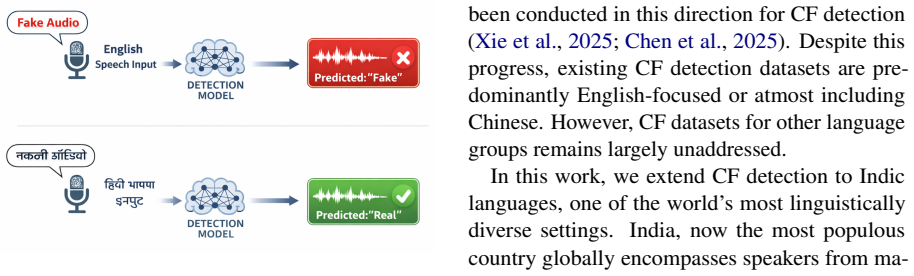
The rapid advancement of Audio Large Language Models (ALMs), driven by Neural Audio Codecs (NACs), has led to the emergence of highly realistic speech deepfakes, commonly referred to as CodecFakes (CFs). Consequently, CF detection has attracted increasing attention from the research community. However, existing studies predominantly focus on English or Chinese, leaving the vulnerability of Indic languages largely unexplored. To bridge this gap, we introduce Indic-CodecFake (ICF) dataset, the first large-scale benchmark comprising real and NAC-synthesized speech across multiple Indic languages, diverse speaker profiles, and multiple NAC types. We use IndicSUPERB as the real speech corpus for generation of ICF dataset. Our experiments demonstrate that state-of-the-art (SOTA) CF detectors trained on English-centric datasets fail to generalize to ICF, underscoring the challenges posed by phonetic diversity and prosodic variability in Indic speech. Further, we present systematic evaluation of SOTA ALMs in a zero-shot setting on ICF dataset. We evaluate these ALMs as they have shown effectiveness for different speech tasks. However, our findings reveal that current ALMs exhibit consistently poor performance. To address this, we propose SATYAM, a novel hyperbolic ALM tailored for CF detection in Indic languages. SATYAM integrates semantic representations from Whisper and prosodic representations from TRILLsson using through Bhattacharya distance in hyperbolic space and subsequently performs the same alignment procedure between the fused speech representation and an input conditioning prompt. This dual-stage fusion framework enables SATYAM to effectively model hierarchical relationships both within speech (semantic-prosodic) and across modalities (speech-text). Extensive evaluations show that SATYAM consistently outperforms competitive end-to-end and ALM-based baselines on the ICF benchmark.
Recent advances in Text-To-Speech (TTS) synthesis have seen the popularity of multi-stage approaches that first predict semantic tokens and then generate acoustic tokens. In this paper, we extend the coarse-to-fine generation paradigm to the temporal domain and introduce Chain-of-Details (CoD), a novel framework that explicitly models temporal coarse-to-fine dynamics in speech generation using a cascaded architecture. Our method progressively refines temporal details across multiple stages, with each stage targeting a specific temporal granularity. All temporal detail predictions are performed using a shared decoder, enabling efficient parameter utilization across different temporal resolutions. Notably, we observe that the lowest detail level naturally performs phonetic planning without the need for an explicit phoneme duration predictor. We evaluate our method on several datasets and compare it against several baselines. Experimental results show that CoD achieves competitive performance with significantly fewer parameters than existing approaches. Our findings demonstrate that explicit modeling of temporal dynamics with the CoD framework leads to more natural speech synthesis.
Six-model analysis finds 7-8 dB cepstral peaks for natural output and values above 10 dB for artificial sound, with VITS leading in dynamic
abstractclick to expand
This study investigates voice mapping as an evaluation framework for text-to-speech (TTS) synthesis quality. The study analyzes six TTS models, including historical and recent ones. The metrics are crest factor, spectrum balance, and cepstral peak prominence (CPPs). We investigated 6 influential TTS models: Merlin, Tacotron 2, Transformer TTS, FastSpeech 2, Glow-TTS, and VITS. The results demonstrate that voice range serves as a primary indicator of model capability, with VITS showing the largest range among tested models. Glow-TTS exhibited superior performance in soft phonation, indicated by higher spectrum balance, despite limited voice range. The results showed that the CPPs values between 7-8 dB indicate natural voice quality, while with CPPs exceeding 10 dB, the speech tends to sound robotic. These findings underscore the need for voice mapping to evaluate vocal effort, and capture how TTS systems handle voice dynamic and expressiveness.
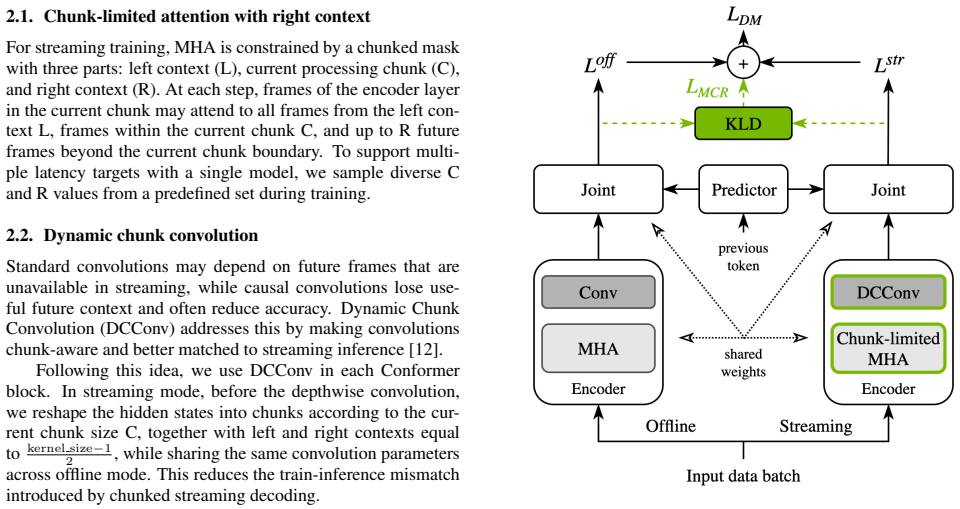
Unification of automatic speech recognition (ASR) systems reduces development and maintenance costs, but training a single model to perform well in both offline and low-latency streaming settings remains challenging. We present a Unified ASR framework for Transducer (RNNT) training that supports both offline and streaming decoding within a single model, using chunk-limited attention with right context and dynamic chunked convolutions. To further close the gap between offline and streaming performance, we introduce an efficient Triton implementation of mode-consistency regularization for RNNT (MCR-RNNT), which encourages agreement across training modes. Experiments show that the proposed approach improves streaming accuracy at low latency while preserving offline performance and scaling to larger model sizes and training datasets. The proposed Unified ASR framework and the English model checkpoint are open-sourced.
The self-noise of capacitive sensors, primarily caused by thermal noise from the gate-bias resistor in the preamplifier, imposes a fundamental limit on measurement sensitivity. In electret condenser microphones (ECMs), this resistor simultaneously determines the noise low-pass cutoff frequency and the signal high-pass cutoff frequency through a single RC time constant, creating a trade-off between noise reduction and signal bandwidth. This paper proposes PDS-Amp (Photoelectric DC Servo Amplifier), a circuit technique that replaces the gate-bias resistor with a photoelectric element functioning as an ultra-high-impedance current source. A DC servo loop using lag-lead compensation feeds back the preamplifier output through an LED to control the photocurrent, thereby stabilizing the gate bias while decoupling the noise and signal cutoff frequencies. A custom photosensor based on the external photoelectric effect of a zinc photocathode was fabricated to achieve sub-picoampere dark current, overcoming the limitations of commercial semiconductor photodiodes. Combined with a cascode JFET preamplifier that minimizes input capacitance through bootstrap action, PDS-Amp achieved a self-noise of 11 dBA with a 12 pF dummy microphone. Despite using a small-diameter ECM capsule, this performance is comparable to that of large-diaphragm condenser microphones costing several thousand dollars. Recording experiments with an actual ECM capsule qualitatively confirmed a significant reduction in background noise. The proposed technique is applicable not only to microphones but broadly to capacitive sensors including accelerometers, pressure sensors, and pyroelectric sensors.
Selective modulation of network kernels during incremental steps improves stability and performance on sequential sound classification tasks
abstractclick to expand
The ability of humans for lifelong learning is an inspiration for deep learning methods and in particular for continual learning. In this work, we apply Hebbian learning, a biologically inspired learning process, to sound classification. We propose a kernel plasticity approach that selectively modulates network kernels during incremental learning, acting on selected kernels to learn new information and on others to retain previous knowledge. Using the ESC-50 dataset, the proposed method achieves 76.3% overall accuracy over five incremental steps, outperforming a baseline without kernel plasticity (68.7%) and demonstrating significantly greater stability across tasks.
Integrating large language models (LLMs) into automatic speech recognition (ASR) has become a mainstream paradigm in recent years. Although existing LLM-based ASR models demonstrate impressive performance on public benchmarks, their training remains predominantly data-driven, leaving key practical challenges insufficiently addressed -- particularly limited downward scalability in resource-constrained deployments and hallucinations under acoustically challenging conditions. To address these issues, we present NIM4-ASR, a production-oriented LLM-based ASR framework optimized for both efficiency and robustness. Grounded in a principled delineation of functional roles between the encoder and the LLM, we redesign the multi-stage training paradigm to align each module with its intended capability boundary. Specifically, we reformulate the pre-training architecture and objective to mitigate the modality gap and improve parameter efficiency; introduce an iterative asynchronous SFT stage to preserve acoustic fidelity and constrain representation drift; and design an ASR-specialized reinforcement learning stage to further enhance recognition quality and robustness. We additionally incorporate a suite of production-oriented optimizations, including robustness under noisy and silent conditions, real-time streaming inference, and hotword customization via retrieval-augmented generation (RAG). Experiments show that NIM4-ASR achieves state-of-the-art performance on multiple public benchmarks with merely 2.3B parameters, while substantially outperforming larger-scale competitors on internal benchmarks -- particularly in entity-intensive real-world scenarios. NIM4-ASR further supports million-scale hotword customization via RAG with sub-millisecond retrieval latency, enabling efficient adaptation to emerging entities and personalized user requirements.
Instruction-following text-to-speech (TTS) has emerged as an important capability for controllable and expressive speech generation, yet its evaluation remains underdeveloped due to limited benchmark coverage, weak diagnostic granularity, and insufficient multilingual support. We present \textbf{MINT-Bench}, a comprehensive multilingual benchmark for instruction-following TTS. MINT-Bench is built upon a hierarchical multi-axis taxonomy, a scalable multi-stage data construction pipeline, and a hierarchical hybrid evaluation protocol that jointly assesses content consistency, instruction following, and perceptual quality. Experiments across ten languages show that current systems remain far from solved: frontier commercial systems lead overall, while leading open-source models become highly competitive and can even outperform commercial counterparts in localized settings such as Chinese. The benchmark further reveals that harder compositional and paralinguistic controls remain major bottlenecks for current systems. We release MINT-Bench together with the data construction and evaluation toolkit to support future research on controllable, multilingual, and diagnostically grounded TTS evaluation. The leaderboard and demo are available at https://longwaytog0.github.io/MINT-Bench/
In this work, we introduce a paralinguistic supervision paradigm for low-resource multilingual speech emotion recognition (LRM-SER) that leverages non-verbal vocalizations to exploit prosody-centric emotion cues. Unlike conventional SER systems that rely heavily on labeled verbal speech and suffer from poor cross-lingual transfer, our approach reformulates LRM-SER as non-verbal-to-verbal transfer, where supervision from a labeled non-verbal source domain is adapted to unlabeled verbal speech across multiple target languages. To this end, we propose NOVA ARC, a geometry-aware framework that models affective structure in the Poincar\'e ball, discretizes paralinguistic patterns via a hyperbolic vector-quantized prosody codebook, and captures emotion intensity through a hyperbolic emotion lens. For unsupervised adaptation, NOVA-ARC performs optimal transport based prototype alignment between source emotion prototypes and target utterances, inducing soft supervision for unlabeled speech while being stabilized through consistency regularization. Experiments show that NOVA-ARC delivers the strongest performance under both non-verbal-to-verbal adaptation and the complementary verbal-to-verbal transfer setting, consistently outperforming Euclidean counterparts and strong SSL baselines. To the best of our knowledge, this work is the first to move beyond verbal-speech-centric supervision by introducing a non-verbal-to-verbal transfer paradigm for SER.
In this study, we present Healthcare Codec-Fake Detection (HCFD), a new task for detecting codec-fakes under pathological speech conditions. We intentionally focus on codec based synthetic speech in this work, since neural codec decoding forms a core building block in modern speech generation pipelines. First, we release Healthcare CodecFake, the first pathology-aware dataset containing paired real and NAC-synthesized speech across multipl clinical conditions and codec families. Our evaluations show that SOTA codec-fake detectors trained primarily on healthy speech perform poorly on Healthcare CodecFake, highlighting the need for HCFD-specific models. Second, we demonstrate that PaSST outperforms existing speech-based models for HCFD, benefiting from its patch-based spectro-temporal representation. Finally, we propose PHOENIX-Mamba, a geometry-aware framework that models codec-fakes as multiple self-discovered modes in hyperbolic space and achieves the strongest performance on HCFD across clinical conditions and codecs. Experiments on HCFK show that PHOENIX-Mamba (PaSST) achieves the best overall performance, reaching 97.04 Acc on E-Dep, 96.73 on E-Alz, and 96.57 on E-Dys, while maintaining strong results on Chinese with 94.41 (Dep), 94.40 (Alz), and 93.20 (Dys). This geometry-aware formulation enables self-discovered clustering of heterogeneous codec-fake modes in hyperbolic space, facilitating robust discrimination under pathological speech variability. PHOENIX-Mamba achieves topmost performance on the HCFD task across clinical conditions and codecs.
Large Audio-Language Models (LALMs) are increasingly integrated into daily applications, yet their generative biases remain underexplored. Existing speech fairness benchmarks rely on synthetic speech and Multiple-Choice Questions (MCQs), both offering a fragmented view of fairness. We propose VIBE, a framework that evaluates generative bias through open-ended tasks such as personalized recommendations, using real-world human recordings. Unlike MCQs, our method allows stereotypical associations to manifest organically without predefined options, making it easily extensible to new tasks. Evaluating 11 state-of-the-art LALMs reveals systematic biases in realistic scenarios. We find that gender cues often trigger larger distributional shifts than accent cues, indicating that current LALMs reproduce social stereotypes.
The growing reliance on large-scale speech data has made privacy protection a critical concern. However, existing anonymization approaches often degrade data utility, for example by disrupting acoustic continuity or reducing vocal diversity, which compromises the value of speech data for downstream tasks such as Automatic Speech Recognition (ASR), Text-to-Speech (TTS), and Speech Emotion Recognition (SER). Current evaluation practices are also limited, as they mainly rely on direct testing of anonymized speech with pretrained models, providing only a partial view of utility. To address these issues, we propose a novel two-stage framework that protects both linguistic content and acoustic identity while maintaining usability. For content privacy, we employ a generative speech editing model to seamlessly replace personally identifiable information (PII), and for voice privacy, we introduce F3-VA, a flow-matching-based anonymization framework with a three-stage design that produces diverse and distinct anonymized speakers. To enable a more comprehensive assessment, we evaluate privacy using both acoustic- and content-based speaker verification metrics, and assess utility by training ASR, TTS, and SER models from scratch. Experimental results show that our framework achieves stronger privacy protection with minimal utility degradation compared to baselines from the VoicePrivacy Challenge, while the proposed evaluation protocol provides a more realistic reflection of the utility of anonymized speech under privacy protection.
We introduce a new framework for room acoustics modelling based on a state-space model of the boundary integral equation representing the sound field in a room. Whereas state-space models of linear time-invariant systems are traditionally constructed by means of a state vector and a 4-tuple of system matrices, the state-space representation introduced in this work consists of a state function representing the pressure distribution at the room boundary, and a 4-tuple of integral operators. We refer to this representation as a boundary integral operator state-space (BIOSS) model and provide a physical interpretation for each of the integral operators. As many mathematical operations on vectors and matrices translate to functions and operators, the BIOSS representation can be manipulated to obtain two transfer function representations, having either a feedback or a parallel feedforward structure. Consequently, various equivalent representations for room acoustics are obtained in the BIOSS framework, in the time or frequency domain, and in continuous or discrete space. We discuss two future directions for how the proposed framework can be fertile for research on room acoustics modelling. Firstly, we identify equivalences between the BIOSS framework and various existing room acoustics models (boundary element models, delay networks, geometric models), which may be used to establish relations between existing models and to develop novel room acoustics models. Secondly, we postulate on how concepts from state-space theory, such as observability, controllability, and state realization, can be used for developing new inference and control methods for room acoustics.
This paper reviews the current state and emerging trends in synthetic speech detection. It outlines the main data-driven approaches, discusses the advantages and drawbacks of focusing future research solely on neural encoding detection, and offers recommendations for promising research directions. Unlike works that introduce new detection methods or datasets, this paper aims to guide future state-of-the-art research in the field and to highlight the risk of overcommitting to approaches that may not stand the test of time.
Recent advancements in Text-to-Song generation have enabled realistic musical content production, yet existing evaluation benchmarks lack the professional granularity to capture multi-dimensional aesthetic nuances. In this paper, we propose SongBench, a specialized framework for fine-grained song assessment across seven key dimensions: Vocal, Instrument, Melody, Structure, Arrangement, Mixing, and Musicality. Utilizing this framework, we construct an expert-annotated database comprising 11,717 samples from state-of-the-art models, labeled by music professionals. Extensive experimental results demonstrate that SongBench achieves high correlation with expert ratings. By revealing fine-grained performance gaps in current state-of-the-art models, SongBench serves as a diagnostic benchmark to steer the development toward more professional and musically coherent song generation.
Universal speech enhancement (USE) aims to restore speech signals from diverse distortions across multiple sampling rates. We propose UniPASE, an extension of the low-hallucination PASE framework tailored for USE. At its core is DeWavLM-Omni, a unified representation-level enhancement module fine-tuned from WavLM via knowledge distillation on a large-scale supervised multi-distortion dataset. This module directly converts degraded waveforms into clean and linguistically faithful phonetic representations, ensuring robust enhancement with minimal linguistic hallucination. Based on these enhanced phonetic representations, an Adapter generates enhanced acoustic representations containing rich acoustic details, which a neural Vocoder uses to reconstruct corresponding high-fidelity 16-kHz waveforms. A PostNet then converts the waveforms to 48~kHz before resampling them to their original rates, enabling seamless handling of inputs and outputs at multiple sampling rates. Experimental results on several evaluation datasets, covering sub-tasks and full tasks, demonstrate that UniPASE achieves superior or competitive performance compared with existing state-of-the-art models. The proposed model also serves as the backbone of our submission to the URGENT 2026 Challenge, which achieved 1st place in the objective evaluation. The source code and audio demos are available at https://github.com/xiaobin-rong/unipase/.
This study investigates whether speech-based depression detection models learn depression-related acoustic biomarkers or instead rely on speaker identity cues. Using the DAIC-WOZ dataset, we propose a data-splitting strategy that controls speaker overlap between training and test sets while keeping the training size constant, and evaluate three models of varying complexity. Results show that speaker overlap significantly boosts performance, whereas accuracy drops sharply on unseen speakers. Even with a Domain-Adversarial Neural Network, a substantial performance gap remains. These findings indicate that depression-related features extracted by current speech models are highly entangled with speaker identity. Conventional evaluation protocols may therefore overestimate generalization and clinical utility, highlighting the need for strictly speaker-independent evaluation.
Reciprocal points learning plus logit normalization and model fusion cut EER from 1.28% to 0.09% on a new VoxCeleb-like test set.
abstractclick to expand
This paper proposes an improved approach for open-set speaker identification based on pretrained speaker foundation models. Building upon the previous Speaker Reciprocal Points Learning framework (V1), we first introduce an enhanced open-set learning objective by integrating reciprocal points learning with logit normalization (LogitNorm) and incorporating adaptive anchor learning to better constrain target speaker representations and improve robustness. Second, we propose a model fusion strategy to stabilize and enhance the few-shot tuning process, effectively reducing result randomness and improving generalization. Furthermore, we introduce a model selection method to ensure optimal performance in model fusion. Experimental evaluations on the VoxCeleb, ESD and 3D-Speaker datasets demonstrate the effectiveness and robustness of the proposed method under diverse conditions. On a newly proposed Vox1-O-like test set, our method reduces the EER from 1.28% to 0.09%, achieving a relative reduction of approximately 93%.
GatherMOS combines acoustic descriptors and pseudo-labels to outperform DNSMOS, VQScore and supervised models on VoiceBank-DEMAND under low-
abstractclick to expand
In this paper, we introduce GatherMOS, a novel framework that leverages large language models (LLM) as meta-evaluators to aggregate diverse signals into quality predictions. GatherMOS integrates lightweight acoustic descriptors with pseudo-labels from DNSMOS and VQScore, enabling the LLM to reason over heterogeneous inputs and infer perceptual mean opinion scores (MOS). We further explore both zero-shot and few-shot in-context learning setups, showing that zero-shot GatherMOS maintains stable performance across diverse conditions, while few-shot guidance yields large gains when support samples match the test conditions. Experiments on the VoiceBank-DEMAND dataset demonstrate that GatherMOS consistently outperforms DNSMOS, VQScore, naive score averaging, and even learning-based models such as CNN-BLSTM and MOS-SSL when trained under limited labeled-data conditions. These results highlight the potential of LLM-based aggregation as a practical strategy for non-intrusive speech quality evaluation.
Deep learning has enabled highly realistic synthetic speech, raising concerns about fraud, impersonation, and disinformation. Despite rapid progress in neural detectors, transparent baselines are needed to reveal which acoustic cues reliably separate real from synthetic speech. This paper presents an interpretable classical machine learning baseline for deepfake audio detection using the Fake-or-Real (FoR) dataset. We extract prosodic, voice-quality, and spectral features from two-second clips at 44.1 kHz (high-fidelity) and 16 kHz (telephone-quality) sampling rates. Statistical analysis (ANOVA, correlation heatmaps) identifies features that differ significantly between real and fake speech. We then train multiple classifiers -- Logistic Regression, LDA, QDA, Gaussian Naive Bayes, SVMs, and GMMs -- and evaluate performance using accuracy, ROC-AUC, EER, and DET curves. Pairwise McNemar's tests confirm statistically significant differences between models. The best model, an RBF SVM, achieves ~93% test accuracy and ~7% EER on both sampling rates, while linear models reach ~75% accuracy. Feature analysis reveals that pitch variability and spectral richness (spectral centroid, bandwidth) are key discriminative cues. These results provide a strong, interpretable baseline for future deepfake audio detectors.
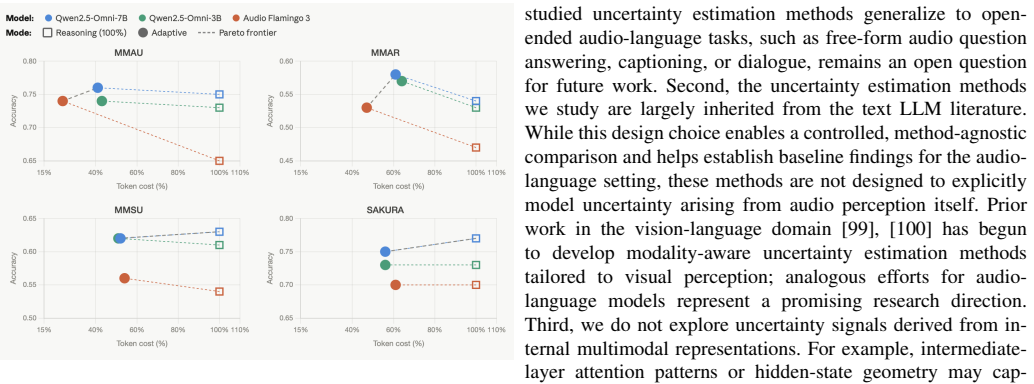
Lightweight strategies let models output aligned timing with transcripts, yielding gains in both precision and recognition quality acrossε€δΈͺ
abstractclick to expand
Recent advances in speech-aware language models have coupled strong acoustic encoders with large language models, enabling systems that move beyond transcription to produce richer outputs. Among these, word-level timestamp prediction is critical for applications such as captioning, media search, and multimodal synchronization, yet it is often handled by external alignment tools. In this work, we extend an existing speech-aware language model to predict timestamps directly alongside transcripts. We introduce a set of novel lightweight training strategies that improve alignment robustness while preserving recognition quality. Experiments across multiple datasets show that these strategies not only enhance timestamp accuracy, but also yield gains in overall ASR performance. Together, they demonstrate an efficient and unified approach to speech recognition with precise timestamp prediction.