pith. machine review for the scientific record. sign in

physics.acc-ph

Accelerator Physics

Accelerator theory and simulation. Accelerator technology. Accelerator experiments. Beam Physics. Accelerator design and optimization. Advanced accelerator concepts. Radiation sources including synchrotron light sources and free electron lasers. Applications of accelerators.

0
physics.acc-ph 2026-05-14 2 theorems

Localized kick extraction enables 3D proton FLASH scanning

Longitudinal Localized Kick Driven Fast Extraction Method and Rapid Cycling Synchrotron Design for 3D PBS Proton FLASH Delivery

RCS design with dynamic kicker meets dose accuracy and holds septum losses below 1 percent at 2×10^10 particles.
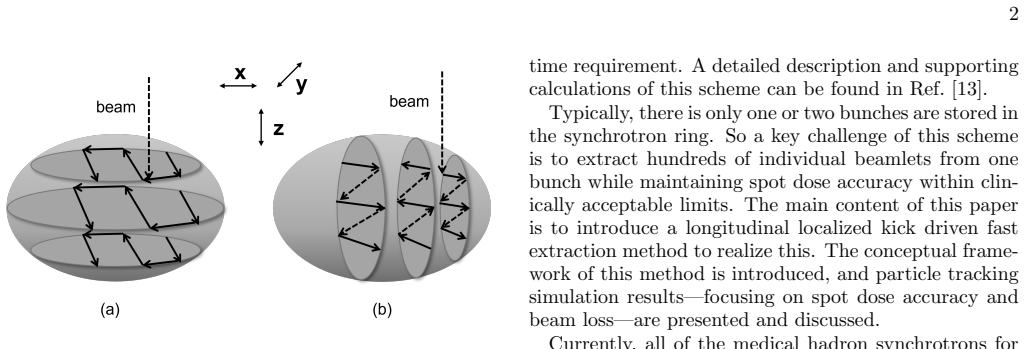
Figure from the paper full image
abstract click to expand
This paper presents the design of a rapid cycling synchrotron (RCS) featuring a longitudinal localized kick driven fast extraction system for three-dimensional (3D) pencil beam scanning (PBS) proton FLASH delivery. The extraction method is designed to accommodate a novel scanning scheme that addresses the stringent requirement for substantially shorter delivery time compared to current solutions, where the scanning layer is parallel to the proton beam direction. In this method, the kicker pulse waveform is applied selectively to specific longitudinal segments of the proton bunch. For each scanning spot, the functional region of the kicker along the longitudinal direction is dynamically adjusted based on real-time beam longitudinal line density measured by a beam current monitor. The corresponding region-determination algorithm is provided. We analyze the spot dose accuracy and the beam loss at the septum, indentifying increased particle longitudinal line density will reduce spot dose accuracy and increase beam loss. A total number of particles of $2\times10^{10}$ can satisfy the requirements of spot dose accuracy and the beam loss due to the septum is less than 1%. The extraction system comprises a stripline kicker, an electric septum (ESe), and a magnetic septum (MSe), imposing specific requirements on the RCS lattice design. The RCS is carefully designed to meet these constraints, and the parameters of the extraction elements are detailed. By integrating a novel scanning scheme with a specially designed RCS and fast extraction method, this work demonstrates the feasibility of achieving 3D PBS proton FLASH delivery.
0
0
physics.acc-ph 2026-05-14

This paper introduces a quasi-strong-strong beam-beam simulation method to model…

Quasi-Strong-Strong Beam-Beam Modeling of Bootstrapping Injection in FCC-ee

Quasi-strong-strong simulations identify stable bootstrapping injection up to nominal bunch population in W and H modes of FCC-ee but…

abstract click to expand
The FCC-ee is designed to operate with exceptionally strong beam--beam interactions, making continuous injection a critical and non-trivial aspect of its operation. During the injection process, an unavoidable charge imbalance between the two colliding beams leads to asymmetric beam--beam forces, potentially compromising transverse stability. In this paper, we introduce a quasi-strong-strong (QSS) beam--beam scheme, implemented in the SAD simulation framework. The method preserves a self-consistent beam--beam lens by coupling paired weak--strong simulations, while avoiding the computational cost of full strong--strong tracking. The injection process is modeled as a gradual increase of the stored bunch population, allowing the isolated study of beam--beam--driven optics deformation under charge imbalance. Using the QSS approach, we investigate the feasibility of bootstrapping injection in the Z, W, and H operating modes of FCC-ee. Stable injection paths up to the nominal bunch population are identified in the W and H modes. In contrast, in the explored parameter region, the Z mode exhibits saturation of the stored population below the nominal value.
0
0
physics.acc-ph 2026-05-13 1 theorem

Approximate invariants extract betatron frequencies from nonlinear beams

Approximate Invariant Analysis: An Efficient Framework for Nonlinear Beam Dynamics, Part I: Geometric Approaches of the Poincar\'e Rotation Number

A framework pairs approximate invariants with Poincaré rotation numbers to analyze beam motion in rings like NSLS-II.

Figure from the paper full image
abstract click to expand
We present the first part of an efficient framework for nonlinear beam dynamics, termed Approximate Invariant Analysis (AIA). The framework is based on the construction of approximate invariants~[Y.~Li, D.~Xu, and Y.~Hao, Phys.\ Rev.\ Accel.\ Beams \textbf{28}, 074001 (2025)] and on the extraction of the betatron frequency with the geometric foundations of Poincar\'e rotation number~[S.~Nagaitsev and T.~Zolkin, Phys.\ Rev.\ Accel.\ Beams \textbf{23}, 054001 (2020)]. The method is demonstrated using the National Synchrotron Light Source~II (NSLS-II) storage ring as an illustrative example.
0
0
physics.acc-ph 2026-05-13 Recognition

Tapered undulator fixes chirp-induced slippage in LWFA FELs

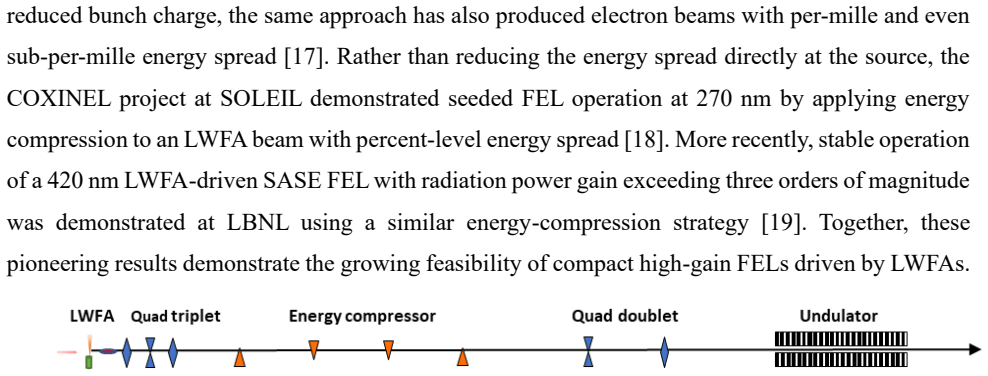
Phase synchronization recovery in energy-compressed LWFA electron beams for free-electron lasers via undulator tapering

Optimized profile restores phase lock, raising saturation power and spectral quality over untapered case.

Figure from the paper full image
abstract click to expand
Laser wakefield accelerators (LWFAs) are attractive compact drivers for free-electron lasers (FELs) because they can generate femtosecond electron beams with high peak current over centimeter-scale acceleration distances. However, their relatively large energy spread remains a major obstacle to high-gain FEL operation. Although bunch energy compression can reduce the slice energy spread to a level suitable for FEL amplification, it also introduces a strong energy chirp. The energy chirp detunes the FEL resonance along the planar undulator, causing phase slippage between the electrons and the radiation field, reduced bunching efficiency, and degraded radiation power and spectral quality. Here we investigate a longitudinally tapered undulator for compensating the chirp-induced resonance mismatch in a self-amplified spontaneous-emission (SASE) FEL driven by an energy-compressed LWFA beam. Using three-dimensional unaveraged simulations, we show that an optimized taper profile restores electron-radiation phase synchronization and significantly improves both the saturation power and the spectral properties relative to the untapered case. We also assess the sensitivity of the scheme to shot-to-shot beam-energy fluctuations characteristic of LWFA operation. Our results show that undulator tapering is an effective method for mitigating chirp-induced performance degradation in compact plasma-based FELs.
0
0
physics.acc-ph 2026-05-12 Recognition

First HTS CCT sextupole magnet built for FCC-ee

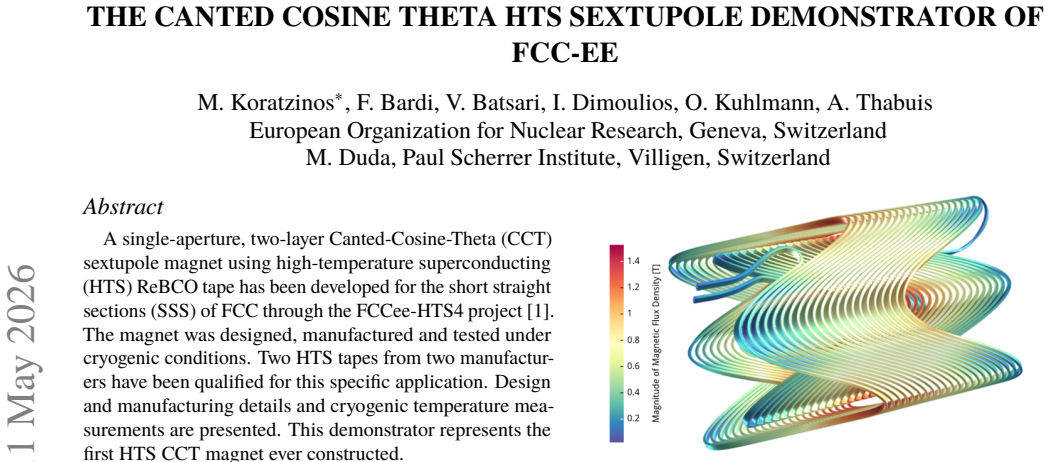
The Canted Cosine Theta HTS Sextupole Demonstrator for FCC-ee

Design, manufacture and cryogenic tests qualify two ReBCO tapes for use in short straight sections of the collider.

Figure from the paper full image
abstract click to expand
A single-aperture, two-layer Canted-Cosine-Theta (CCT) sextupole magnet using high-temperature superconducting (HTS) ReBCO tape has been developed for the short straight sections (SSS) of FCC through the FCCee-HTS4 project. The magnet was designed, manufactured and tested under cryogenic conditions. Two HTS tapes from two manufacturers have been qualified for this specific application. Design and manufacturing details and cryogenic temperature measurements are presented. This demonstrator represents the first HTS CCT magnet ever constructed.
0
0
physics.acc-ph 2026-05-11 2 theorems

Scaling laws tie laser ion transmission to opening angle

Beam intensity and quality predictions for laser-accelerated ions after capture and transport

Analysis of capture and transport shows divergence as the dominant limit and quantifies reduction needed for injector intensities.

Figure from the paper full image
abstract click to expand
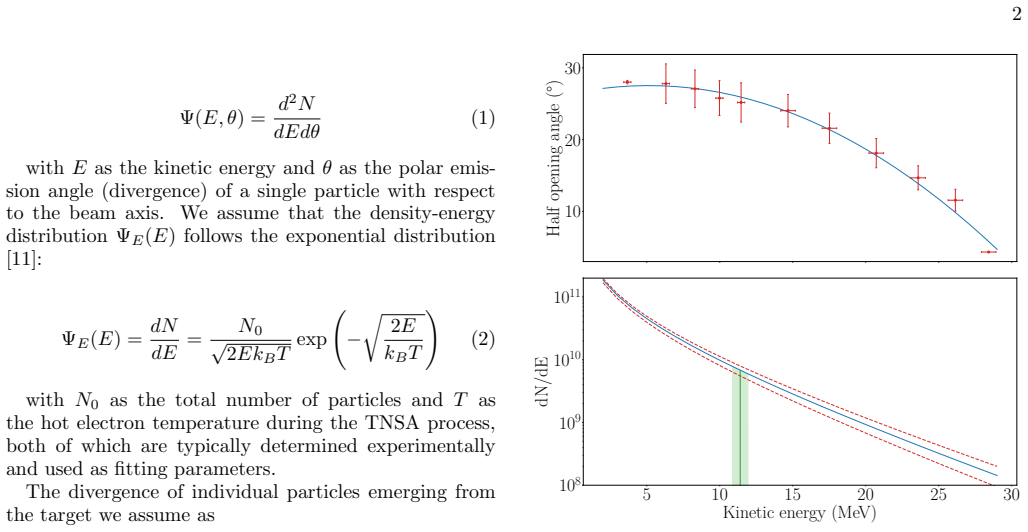
Laser-plasma acceleration produces ultrashort, high-brightness ion beams reaching tens of MeV, yet their large divergence and broad energy spread require dedicated capture elements for beam transport. Using laser-accelerated protons from the GSI PHELIX laser to the LIGHT beamline as a reference, we developed a framework to optimize and assess such combined capture and transport systems, with emphasis on injection into conventional accelerators. In addition to our numerical analysis we derive scaling laws linking transmission and chromatic emittance growth to the initial half-opening angle, showing that the present performance is primarily divergence-limited. We also estimate and predict the longitudinal bunch quality and quantify the divergence reduction needed to approach injector-relevant intensities.
0
0
physics.acc-ph 2026-05-11 Recognition

Compton signals observed in BEPCII polarimeter

Status report towards implementation of a Compton polarimeter at BEPCII

Clear laser-electron scattering detected during commissioning, with upgrades planned for full beam polarization measurement.

Figure from the paper full image
abstract click to expand
Precision beam polarization measurements based on Compton polarimeters are essential for the physics program of future high-energy colliders. In order to prepare for these and to extend the scope of physics measurements of the BESIII experiment at the BEPCII, a diagnostic of electron beam transverse polarization at BEPCII is of interest. The design and status report of the commissioning, until July 2025, of this device is reported in this paper. We report unambiguous observation of Compton interaction, discuss current limitations of the experimental setup and draw prospects for improvements and actual measurement of electron beam polarization in the near future.
0
0
physics.acc-ph 2026-05-11 2 theorems

Upgrades to three Fermilab rings needed for PIP-II beam

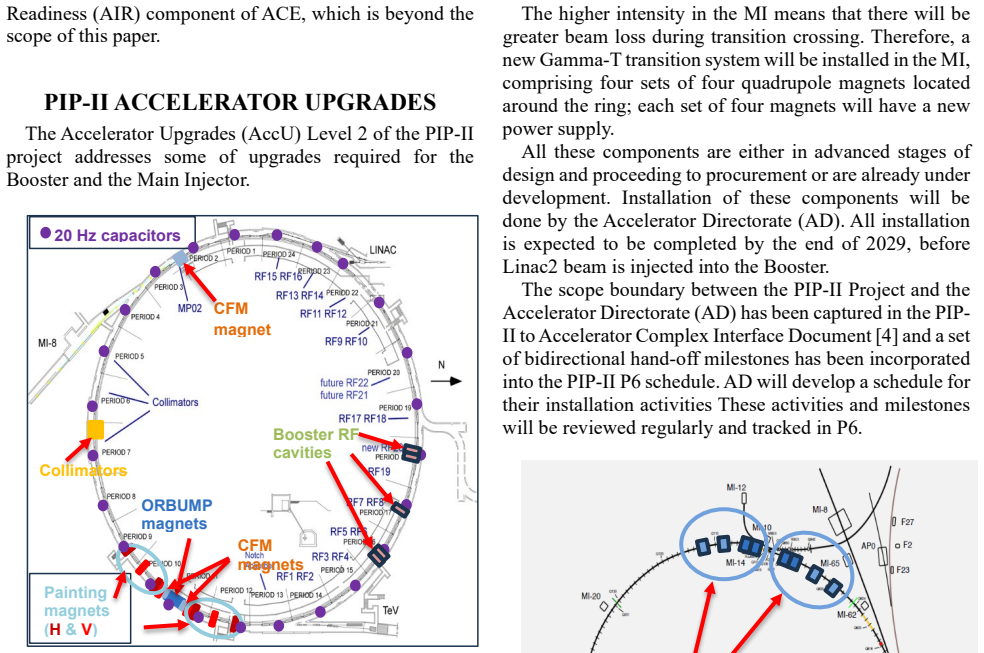
Accelerator Upgrades Required for Beam Operation at Fermilab in the PIP-II/DUNE Era

Booster, Recycler and Main Injector must handle 800 MeV beams at higher intensity and rate to support DUNE operations.

Figure from the paper full image
abstract click to expand
The Proton Improvement Plan - II (PIP-II) injector linac is an 800 MeV superconducting H$^-$ linac, christened Linac2, that will replace the existing 400 MeV injector to the accelerator complex at Fermilab. The higher energy, intensity and repetition rate require various upgrades to the existing accelerator complex consisting of the Booster, the Recycler Ring and the Main Injector, in order to be able to accept and accelerate beam from PIP-II. In this paper we discuss various upgrades that are required and steps being taken to implement them.
0
0
physics.acc-ph 2026-05-11 2 theorems

n=1 SIS layer maximizes field in superconducting RF coatings

Multilayer model for coatings with arbitrary layers for superconducting radio-frequency applications

Arbitrary layers and all losses modeled; thicknesses below penetration depth cost only minor performance.

Figure from the paper full image
abstract click to expand
We extend the multilayer model of \etal{Kubo} for superconductor-insulator-superconductor (SIS) structures in two ways: first, by generalizing it to arbitrary sequences of layers of arbitrary type, i.e. superconducting, normal conducting, and insulating; and second, by accounting for all contributions, including ohmic losses and dielectric effects. We examine the maximum applicable field for $(\text{SI})^n\text{S}$ structures. We find that the optimum configuration corresponds to the $n=1$ case. However, the thickness of the superconducting coating layers can be reduced to below their penetration depth with minor performance penalty. We discuss the ability to model transitions in SS bilayers by introducing a set of virtual layers that represent the transition region through interpolated parameters. We find degradation of the maximum applicable field with thicker transition layers, and a larger effective penetration depth of the electromagnetic fields. Furthermore, the surface impedance of the multilayer structure is calculated using the Leontovich boundary condition, yielding a formulation suitable for integration into finite element simulations. Additionally, the Poynting theorem is used to determine the loss contributions of individual layers.
0
0
physics.acc-ph 2026-05-11 Recognition

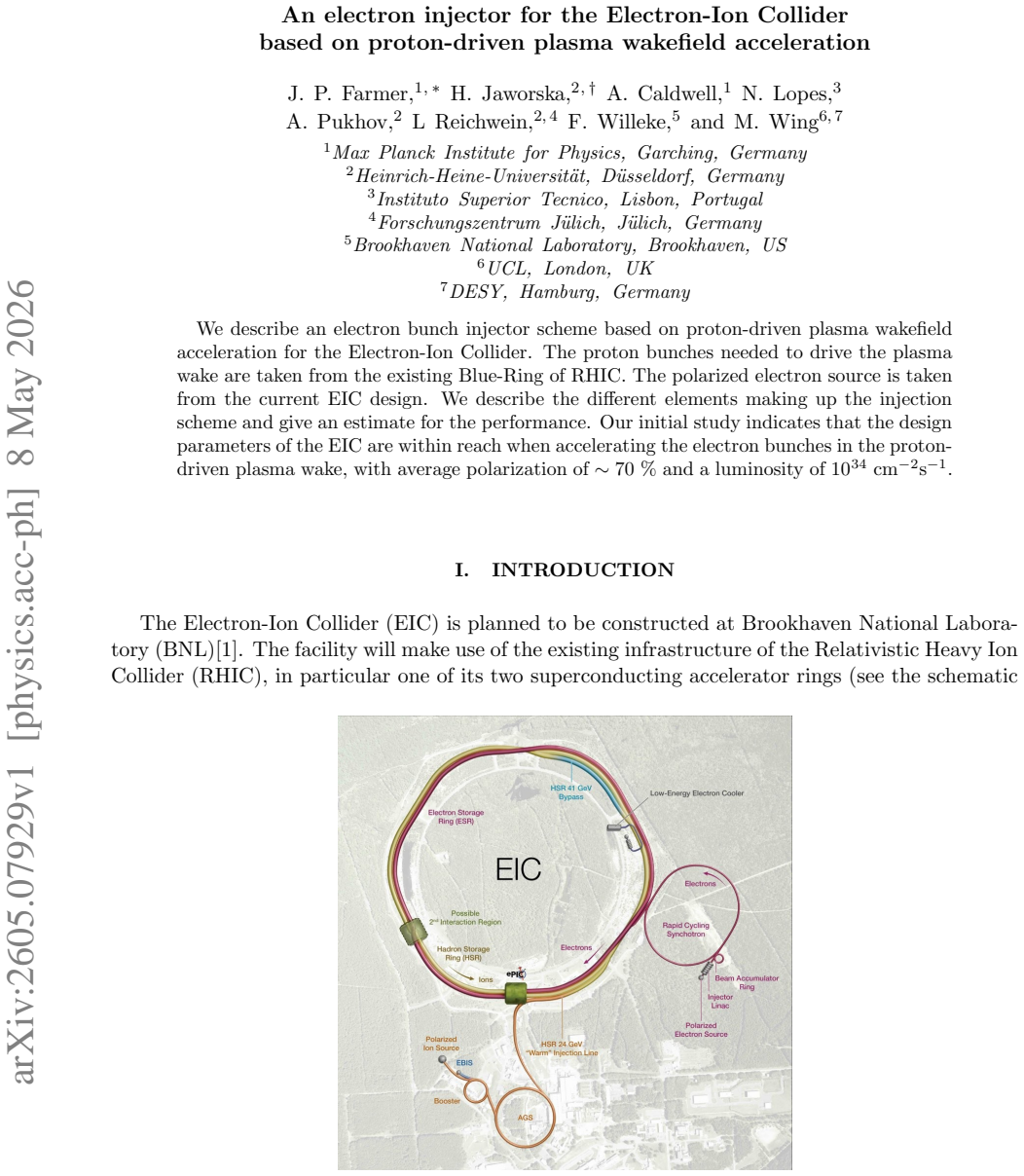
RHIC protons drive plasma wake for EIC electron injection

An electron injector for the Electron-Ion Collider based on proton-driven plasma wakefield acceleration

Estimates indicate this injector can provide 70 percent polarization and 10^34 luminosity matching the collider's design.

Figure from the paper full image
abstract click to expand
We describe an electron bunch injector scheme based on proton-driven plasma wakefield acceleration for the Electron-Ion Collider. The proton bunches needed to drive the plasma wake are taken from the existing Blue-Ring of RHIC. The polarized electron source is taken from the current EIC design. We describe the different elements making up the injection scheme and give an estimate for the performance. Our initial study indicates that the design parameters of the EIC are within reach when accelerating the electron bunches in the proton-driven plasma wake, with average polarization of ~70% and a luminosity of 1e34 cm$^{-2}$s$^{-1}$.
0
0
physics.acc-ph 2026-05-11 2 theorems

Ion beams yield coherent gamma rays via laser-triggered instability

Coherent {γ}-ray Generation By Partially Stripped Ion Beams

Microbunching from collective instability turns laser backscattering from partially stripped ions into tunable coherent gamma rays, but at更高

Figure from the paper full image
abstract click to expand
We describe a scheme for generation of coherent $\gamma$-rays by backscattering intense visible laser light from a beam of partially stripped ions. The scheme is similar in principle to the proposed Gamma Factory at CERN, with the important difference that the scattering becomes coherent as a result of a collective instability which microbunches the ions. This instability is analogous to that which occurs in high-gain free electron lasers (FELs). The scheme potentially offers a route to a source of tuneable, coherent $\gamma$-rays, opening up a wide range of possible new applications and opportunities. We find that the parameter requirements for realization of coherent $\gamma$-ray generation regime are considerably more stringent than those proposed for the Gamma Factory, requiring significant increases in the pump laser intensity and possibly the ion beam current.
0
0
physics.acc-ph 2026-05-08

New method reconstructs complex electron bunch timing from spectra

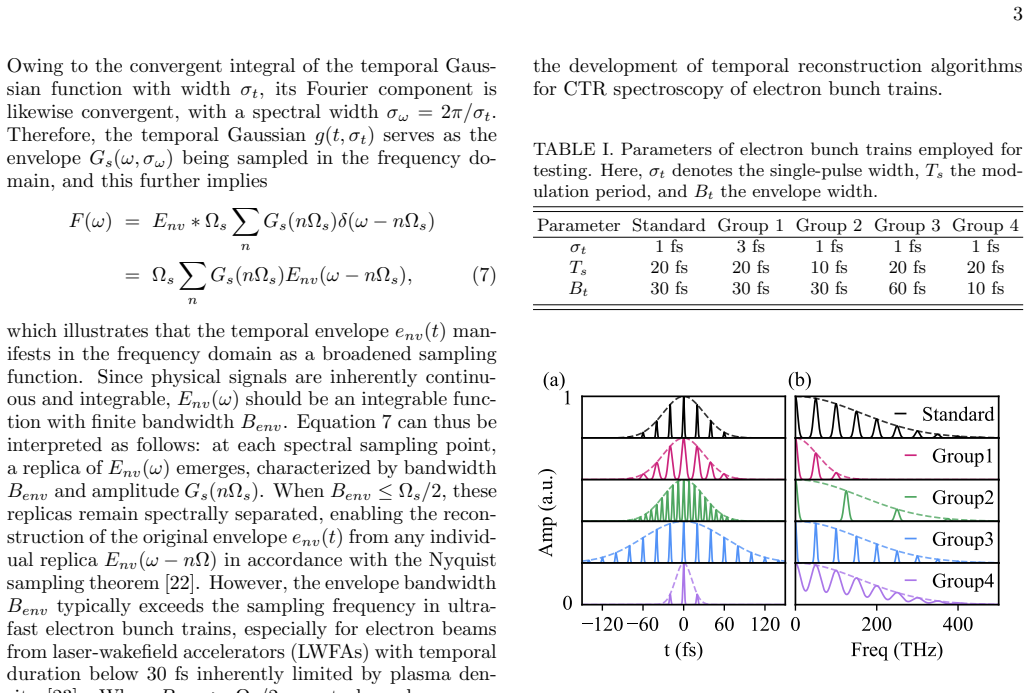
A Temporal Retrieval Method for Modulated Electron Bunches via Adaptive Kernel Reconstruction

Adaptive kernel splits high- and low-frequency parts and recovers profiles more accurately than Kramers-Kronig on simulated modulated trains

Figure from the paper full image
abstract click to expand
Femtosecond electron beams with complex modulation play a crucial role in applications such as X-ray Free Electron Lasers (XFELs) and plasma wakefield accelerators. However, diagnostics for the electron beam current profile still face challenges with complex structure. In this letter, we propose a novel temporal retrieval algorithm for the coherent transition radiation (CTR) diagnostics of complex modulated electron beams. Starting from the time-frequency analysis of the electron bunch train, the algorithm separates and reconstructs the high- and low-frequency components. A temporal kernel was derived from the inverse sampling of the measured spectrum to construct the high-frequency component, while the low-frequency envelope was composed of several basis functions. Tested on the electron bunch trains from the complex multi-gaussian model and bunching-enhanced coherent harmonic generation, the algorithm successfully reconstructed the temporal signals and achieves better performance than the Kramers-Kronig method. This method is expected to crucial provide temporal evidence for potential electron beam modulation schemes, and will enable broad prospects for future applications.
0
0
physics.acc-ph 2026-05-08 2 theorems

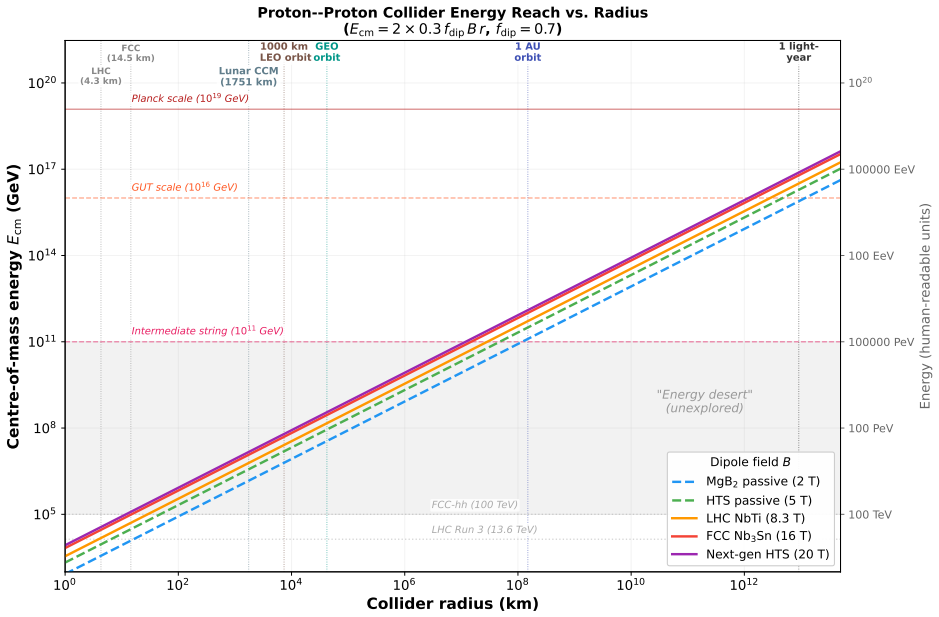
Orbital colliders need 1,000-100,000 km radii for PeV-EeV energies

The Case for Space-Based Particle Colliders: Orbital Infrastructure as a Path to Grand Unification Energy Scales

Terrestrial accelerators fall short of the scales where grand unification is expected, but space orbits following the standard energy-radius

Figure from the paper full image
abstract click to expand
The Standard Model of particle Physics has been validated to extraordinarily high precision by the Large Hadron Collider (LHC). Yet it leaves some of the most fundamental questions in Physics unresolved: the nature of dark matter, the hierarchy problem, and the unification of forces. Multiple next-generation terrestrial colliders have been proposed such as the Future Circular Collider (FCC) which will reach centre-of-mass energies of $\approx$100 TeV, yet the energy scales at which hints of Grand Unified Theories (GUTs) and string theory are expected to be observed ($10^{11}-10^{13}$ TeV) remain orders of magnitude beyond the reach of any terrestrial facility. We argue that the path to these energy frontiers inevitably leads to Space. By examining the fundamental scaling law for circular proton colliders, we establish that colliders of radius $10^3-10^5$ km are required to enter the PeV-EeV regime. In addition, Space-based colliders benefit from virtually free ultra-high vacuum ($< 10^{10}$ particles/m$^3$ above 1000 km altitude), passive cryogenic cooling, reduction of geological and political constraints, and perhaps most importantly -- the substantial reduction of the thermodynamic penalty that dominates terrestrial cryogenic power budgets. We survey existing proposals for beyond-Earth colliders, derive order-of-magnitude requirements for an orbital collider constellation, and assess feasibility against current and near-term spacecraft capabilities in formation flying, power generation, and precision attitude control. We conclude that recent developments in orbital infrastructure -- particularly gigawatt-scale orbital power architectures being developed for Space-based data centers -- are converging with the needs of a Space-based mega collider, making serious feasibility studies warranted and promising a more certain path towards the core questions of modern Physics.
0
0
physics.acc-ph 2026-05-07

Inhomogeneous coatings produce normal quality factor spreads in SRF cavities

Numerical quality factor statistics for SRF cavities with spatially inhomogeneous multilayer coatings modeled by Gaussian random fields

Spread increases with coating variation length scale while averages stay close to the uniform case, with deviations reaching 2-6%.

Figure from the paper full image
abstract click to expand
Bulk niobium has long been the material of choice for superconducting radio-frequency applications. An alternative approach is the superconductor-insulator-superconductor multilayer structure, which enables the use of brittle high-$T_c$ materials such as NbTiN. At present, SIS coatings are limited to flat samples, with the single-cell TESLA cavity representing a key milestone. Extending coating processes to non-flat geometries is expected to introduce macroscopic inhomogeneities in coating thickness. We model these variations using Gaussian random fields parametrized by a length scale, and generated by solving a stochastic partial differential equation. The resulting field is incorporated into the boundary condition of the cavity eigenvalue problem, from which quantities of interest -- such as resonant frequency and quality factor -- are computed. This procedure is repeated for eight length scales, with \num{2048} samples per length scale, where the resulting quality factors are recorded. Our results show that the quality factors follow a normal distribution. The standard deviation increases with the length scale and can be statistically distinguished. In contrast, the mean values remain largely unchanged, with only a few significant differences. In extreme cases, depending on the length scale, the quality factor may differ from the uniform case by \SIrange{2}{6}{\percent}.
0
0
physics.acc-ph 2026-05-07 2 theorems

Quality factors of inhomogeneous SRF cavities follow normal distributions

Numerical quality factor statistics for SRF cavities with spatially inhomogeneous multilayer coatings modeled by Gaussian random fields

Simulations show the spread grows with coating length scale while averages stay close to uniform cases and differ by at most 6 percent.

Figure from the paper full image
abstract click to expand
Bulk niobium has long been the material of choice for superconducting radio-frequency applications. An alternative approach is the superconductor-insulator-superconductor multilayer structure, which enables the use of brittle high-$T_c$ materials such as NbTiN. At present, SIS coatings are limited to flat samples, with the single-cell TESLA cavity representing a key milestone. Extending coating processes to non-flat geometries is expected to introduce macroscopic inhomogeneities in coating thickness. We model these variations using Gaussian random fields parametrized by a length scale, and generated by solving a stochastic partial differential equation. The resulting field is incorporated into the boundary condition of the cavity eigenvalue problem, from which quantities of interest -- such as resonant frequency and quality factor -- are computed. This procedure is repeated for eight length scales, with \num{2048} samples per length scale, where the resulting quality factors are recorded. Our results show that the quality factors follow a normal distribution. The standard deviation increases with the length scale and can be statistically distinguished. In contrast, the mean values remain largely unchanged, with only a few significant differences. In extreme cases, depending on the length scale, the quality factor may differ from the uniform case by \SIrange{2}{6}{\percent}.
0
0
physics.acc-ph 2026-05-07

Copper plating and tolerances decide low-beta cavity performance

Low Beta, Normal Conducting Cavities

Normal conducting cavities at non-relativistic energies need precise manufacturing to turn RF designs into reliable accelerator components.

Figure from the paper full image
abstract click to expand
The contribution is on issues being especially related to normal conducting cavities operating at non-relativistic beam energies. Various types of cavities are introduced w.r.t. their operation mode, application, advantages, and disadvantages. Special emphasis is put on their production and the challenges along the way from finalized Rf-design up to the operating cavity. This covers the choice of material, production, tolerances, alignment, cooling, and the demanding task of copper plating. The contribution closes with some remarks on Rf-commissioning and -conditioning.
0
0
physics.acc-ph 2026-05-06

LHC ion beams laser-excited to create ultra-intense gamma rays

Gamma Factory: A New Experimental Paradigm for CERN's HL-LHC--FCC-ee Transition

Stored partially stripped ions would generate gamma beams bright enough to produce new electron, muon, neutron, and neutrino sources at CERN

Figure from the paper full image
abstract click to expand
The Gamma Factory (GF) proposal \cite{Krasny:2015ffb} is motivated by the recognition of a largely untapped potential of the CERN accelerator complex to enable a new research programme at the intersection of particle, nuclear, atomic, fundamental, and applied physics. The central concept is to produce, accelerate, cool, and store atomic beams of highly relativistic partially stripped ions in the LHC, which would serve as an effective atomic trap. The internal degrees of freedom of these ions are then resonantly excited using laser photons. In the GF scheme, laser-cooled atomic beams serve both as high-precision probes and as low-emittance beam sources for high-luminosity LHC operation in the ion-ion collision mode. Interactions between laser pulses stored in Fabry--Perot cavities and circulating ion beams give rise to high-energy, highly collimated, and polarised secondary photon beams. Their expected intensities exceed those of existing gamma-ray sources by several orders of magnitude. These photon beams can further be used to generate unprecedented-intensity, tertiary beams of polarised electrons, positrons, muons, neutrons, radioactive ions, and flavour- or CP-tagged neutrinos. Furthermore, under a specific configuration, the same photon-driven processes may be exploited in an energy-production scheme generating the requisite plug-power for LHC operation. Together, cold relativistic atomic beams, high-intensity photon beams, and tertiary beams constitute a versatile experimental platform capable of opening a wide range of new scientific opportunities at CERN. By exploiting existing accelerator infrastructure and available state-of-the-art laser technologies, the GF offers a path to a cost-effective and timely programme capable of sustaining experimental innovation and bridging the gap between the HL-LHC era and the future FCC era.
0
0
physics.acc-ph 2026-05-06

Axial chirp damps laser centroid oscillation in plasma channels

Damping dynamics of the centroid oscillation of a relativistic laser pulse in a plasma channel

Relativistic channel modification and photon deceleration stretch the frequency along the pulse, producing phase mixing that quiets the netw

Figure from the paper full image
abstract click to expand
The centroid oscillation of an offset laser pulse propagating in a preformed plasma channel is investigated through theoretical analysis and three-dimensional particle-in-cell simulations. For non-relativistic laser pulses, the mode leakage of a finite channel and the temporal walk-off between the fundamental and high order modes of a finite-duration laser induce a decay in the laser centroid oscillation. An analytical model characterizing these decay mechanisms is derived and validated by simulations. For relativistic laser pulses, the slice-based centroid oscillation frequency develops an axial chirp due to relativistic channel modification and photon deceleration. This chirp leads to phase mixing across different axial slices of the pulse, resulting in a rapid damping of the overall centroid oscillation. Understanding this oscillation damping is crucial for mitigating electron beam pointing jitter and maintaining beam quality in high-energy, channel-guided laser wakefield accelerators.
0
0
physics.acc-ph 2026-05-04 2 theorems

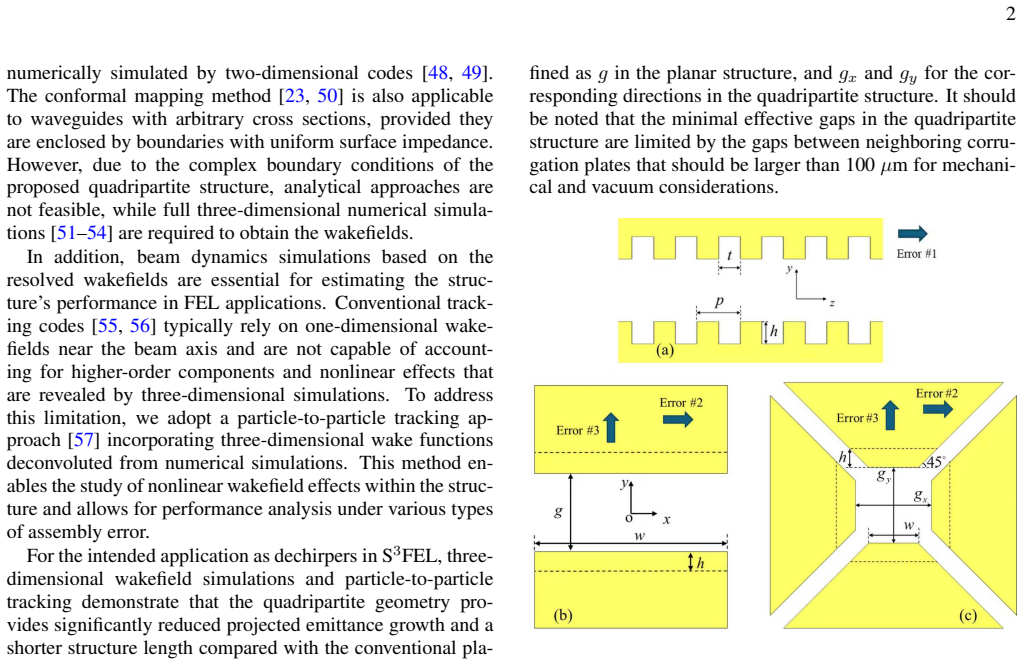
The paper proposes a quadripartite wakefield structure using four identical corrugated…

Development of a quadripartite wakefield structure as dechirper for free electron laser

A four-plate symmetric corrugated structure suppresses quadrupole wakefields in FEL dechirpers, yielding lower projected emittance growth…

Figure from the paper full image
abstract click to expand
Wakefield structures are critical for beam manipulation in free-electron lasers (FELs), particularly when serving as dechirpers, where beam-induced longitudinal wakefields compensate the energy chirp introduced during beam magnetic compression. However, conventional planar structures also generate time-dependent quadrupole wakefields due to their asymmetric geometry, which can cause beam mismatch and projected emittance growth. To address this limitation, we propose a quadripartite wakefield structure comprising four identical corrugated plates, able to fully suppress quadrupole wakefields while preserving strong longitudinal wakefields. To accurately evaluate its performance, we calculate wake potentials based on the Panofsky-Wenzel theorem using three-dimensional simulation software and extract the corresponding wake functions by deconvolution. We further adopt a particle-to-particle (P2P) tracking method incorporating these wake functions, which is capable of accounting for higher-order components and nonlinear effects that are typically neglected in standard tracking codes. Simulation results confirm that the quadripartite geometry offers significantly reduced projected emittance growth and a 25% shorter structure length compared with the planar design. The tracking method also reveals that the nonlinearities of three-dimensional wakefields induce noticeable slice emittance growth for large transverse beam sizes, which may in turn affect lasing performance. In addition, the tracking method enables analysis of various types of assembly error and indicates that misalignment along the direction of plate motion may severely degrade the emittance via dipole wakefields. Such misalignment can be mitigated through beam-based alignment and precise plate adjustment using high-resolution servo motors.
0
0
physics.acc-ph 2026-05-01

Compact X-band compressor reaches 317 MW in 27 ns pulses

Development of Ultra High Power Compact X-Band Pulse Compressor

Spherical cavities with symmetric TE modes compress 52 MW klystron output for high-gradient accelerators

Figure from the paper full image
abstract click to expand
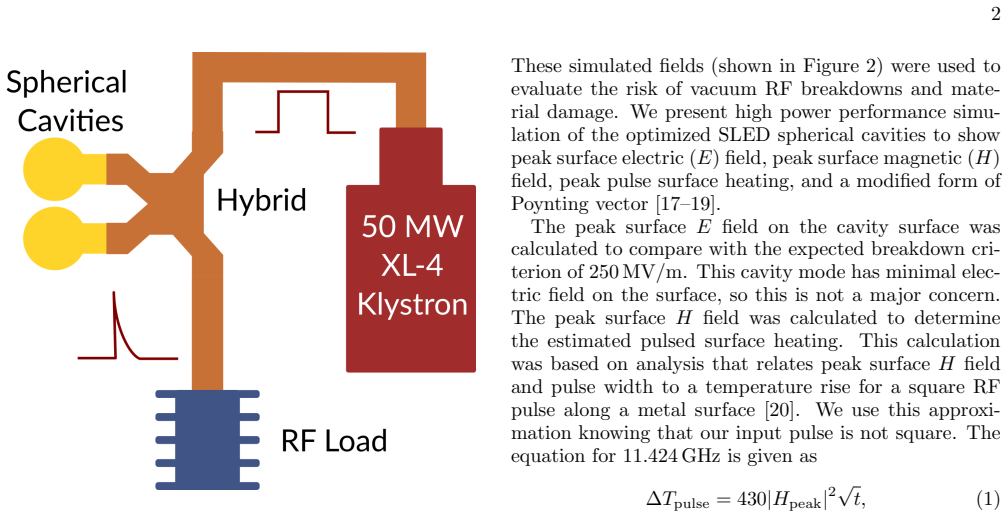
We demonstrate a new 11.424 GHz SLED-type RF pulse compressor for powering high-gradient X-band photoinjectors with pulse lengths around 20 ns. RF pulse compression provides a practical path to higher peak power at the cost of pulse length for various applications such as RF deflectors for electron beam diagnostics on free electron lasers. Our new compact pulse compressor uses spherical cavities supporting axially symmetric TE modes which have minimal electric fields on the cavity surfaces, intended to improve high-power robustness as compared to existing compact spherical SLEDs which use a TE dipole mode. We present the design of this pulse compressor composed of two spherical cavities and a waveguide hybrid. The two cavities and hybrid have TE01 circular waveguide ports. This pulse compressor was built and high power tested at SLAC. These tests demonstrated a peak power of 317 MW by compressing 52 MW, 1 {\mu}s pulses generated by a SLAC XL-4 klystron. The full-width at half-maximum of this compressed pulse was 27 ns. We conjecture that this development demonstrates a viable route to reaching the high-gradient, short pulse regime for accelerating structures and RF photoinjectors.
0
0
physics.acc-ph 2026-05-01

ATS optics halve sextupole count in EIC arcs while keeping aperture

Achromatic Telescopic Squeezing for Dynamic Aperture Optimization in the Electron Storage Ring of the EIC

The method lowers sextupole strengths and nonlinear effects but raises emittance, limiting use to rings that tolerate larger beam size.

Figure from the paper full image
abstract click to expand
We investigate the application of the Achromatic Telescopic Squeezing (ATS) scheme to the Electron Storage Ring (ESR) of the Electron-Ion Collider (EIC) as a method to improve dynamic aperture and momentum acceptance. A comparative study is performed between conventional sextupole correction schemes and ATS-based optics using both a simplified test lattice and the full ESR lattice. We show that ATS optics can reduce the required sextupole strengths and mitigate higher-order nonlinear effects, leading to improved momentum aperture. With the ATS principle one could reduce the number of sextupoles in an arcs by a factor of two while maintaining similar momentum aperture. We additionally show a scheme utilizing all sextupoles which provides an advantage in momentum aperture. While the resulting ATS optics provides a measurable increase in momentum acceptance ($\sim$0.1\% under the test conditions), it also induces emittance growth due to increased $\beta$-functions in the arcs. This trade-off limits its applicability for the ESR but suggests potential advantages for storage rings where moderate emittance growth is acceptable.
0
0
physics.acc-ph 2026-05-01

THz waveguides set design rules for electron beam streaking

High temporal resolution THz streaking of high brightness relativistic electron beams

Experiments on horn-coupled structures define performance limits for high-resolution relativistic beam timing.

Figure from the paper full image
abstract click to expand
We report a systematic experimental study of terahertz (THz) streaking structures for ultrafast characterization of relativistic, high-brightness electron beams. Horn-coupled waveguide geometries are investigated, enabling a comparative characterization of streaking strength, dispersion, transmission, and temporal fidelity. Analytical models and electromagnetic simulations are used to describe the dependence of streaking power on the waveguide dimensions and the drive frequency. Experimentally, the structures are characterized using compressed electron beam from an RF photoinjector over a range of THz field strengths, beam energies, and bunch durations. These results establish general design principles and performance limits for THz streaking structures applicable to ultrafast electron beam diagnostics.
0
0
physics.acc-ph 2026-05-01

Beam divergence and orientation shape diamond undulator radiation

The impact of experimental conditions on the observation of channeling and crystalline undulator radiation

Simulations of 855 MeV electrons match experiment once angular spread, alignment, detection angle and doping profiles are included, guiding

Figure from the paper full image
abstract click to expand
In this study, we present a comprehensive quantitative analysis of the radiation emitted by 855 MeV electrons propagating through an oriented diamond hetero-crystal. The crystal consists of two distinct segments: (i) a straight single-crystal diamond substrate, and (ii) a diamond layer that is periodically doped with boron atoms. The doping profiles were derived from precise experimental measurements of boron concentration obtained during the layer fabrication via Microwave Plasma Chemical Vapor Deposition (MPCVD). Our study systematically investigates the channelling and the crystalline undulator radiation, accounting for the different doping profiles in the undulating region. The simulations were conducted using the advanced MBNExplorer software package, which enables detailed modeling of particle trajectories and radiation emission. We report on good agreement with experiment and discuss remaining discrepancies providing possible explanations for them. The results obtained show that the radiation intensity is significantly affected by a range of factors, including the angular divergence of the incident beam, its orientation with respect to the target, the direction in which the emitted radiation is detected, and the choice of the doping profiles. These findings are important for optimising the design of crystalline undulators as novel gamma radiation light sources.
0
0
physics.acc-ph 2026-05-01

Self-modulation produces 1-fs X-ray pulses at 1.3 GHz

Phase-Stable Self-Modulation for GHz Continuous-Wave Ultrafast X-Ray Free-Electron Lasers

Bunches use their own THz radiation to build energy modulation for intense ultrafast output from low-current ERL light sources.

Figure from the paper full image
abstract click to expand
High-brightness femtosecond-to-attosecond pulses are indispensable for probing electron dynamics on their fundamental temporal scales. X-ray free-electron lasers (XFELs) at high repetition rates will facilitate high-statistics measurements and time-resolved studies that were previously inaccessible. Although energy recovery linacs (ERLs) are well suited for high-repetition-rate operation, their relatively low peak current poses a major challenge for generating intense ultrashort X-ray pulses. Here, we propose a completely laser-free scheme that fundamentally overcomes this bottleneck through a continuous, phase-stable self-modulation process. By interacting with its own coherently emitted terahertz radiation within a helical wiggler, the electron bunch naturally accumulates a robust, few-cycle energy modulation in its core, even when starting with the intrinsically low peak current typical of ERLs. A downstream dispersion chicane subsequently converts this energy modulation into an isolated, exceptionally sharp current spike. Start-to-end simulations based on a 1~GeV ERL light source demonstrate the feasibility of generating isolated soft X-ray pulses with an average peak power exceeding 4~GW and a pulse duration of about 1~fs at an unprecedented 1.3~GHz repetition rate. The proposed scheme offers a highly practical pathway for advancing ultrafast X-ray generation into the true continuous-wave regime, with transformative implications for the development of next-generation coherent light sources.
0
0
physics.acc-ph 2026-04-30

Researchers modeled the longitudinal instability in a laser modulator for steady-state…

Longitudinal beam instability driven by coherent radiation in an SSMB laser modulator

A theoretical model using cavity mode decomposition for longitudinal single-bunch multi-turn instability in SSMB laser modulators is…

abstract click to expand
Storage ring-based steady-state microbunching (SSMB) is a promising approach for generating high-average-power coherent radiation, while the instabilities driven by coherent undulator radiation in the laser modulator (LM) is important for the ring performance. In this paper we investigate the longitudinal single-bunch multi-turn LM instability using cavity mode decomposition techniques. The evolution of the wakefield in the longitudinal beam dynamics equations are derived, and the instability growth rates are analyzed. Numerical simulations show excellent agreement with the theoretical model, validating the mode decomposition approach. These findings provide critical insights into the design and operation of SSMB storage rings, suggesting effective mitigation strategies to suppress the instability and enhance the overall performance.
0
0
physics.acc-ph 2026-04-29

Gas-dynamic electrodes promise record emittance ion beams at FAIR

Proposal for applying the novel gas-dynamic ion-beam extraction and bunching technique to the cryogenic stopping cells at FAIR

Simulations show a short stack behind the RF carpet delivers 100 percent transmission and lowest emittance across wide ion masses in FAIR's

Figure from the paper full image
abstract click to expand
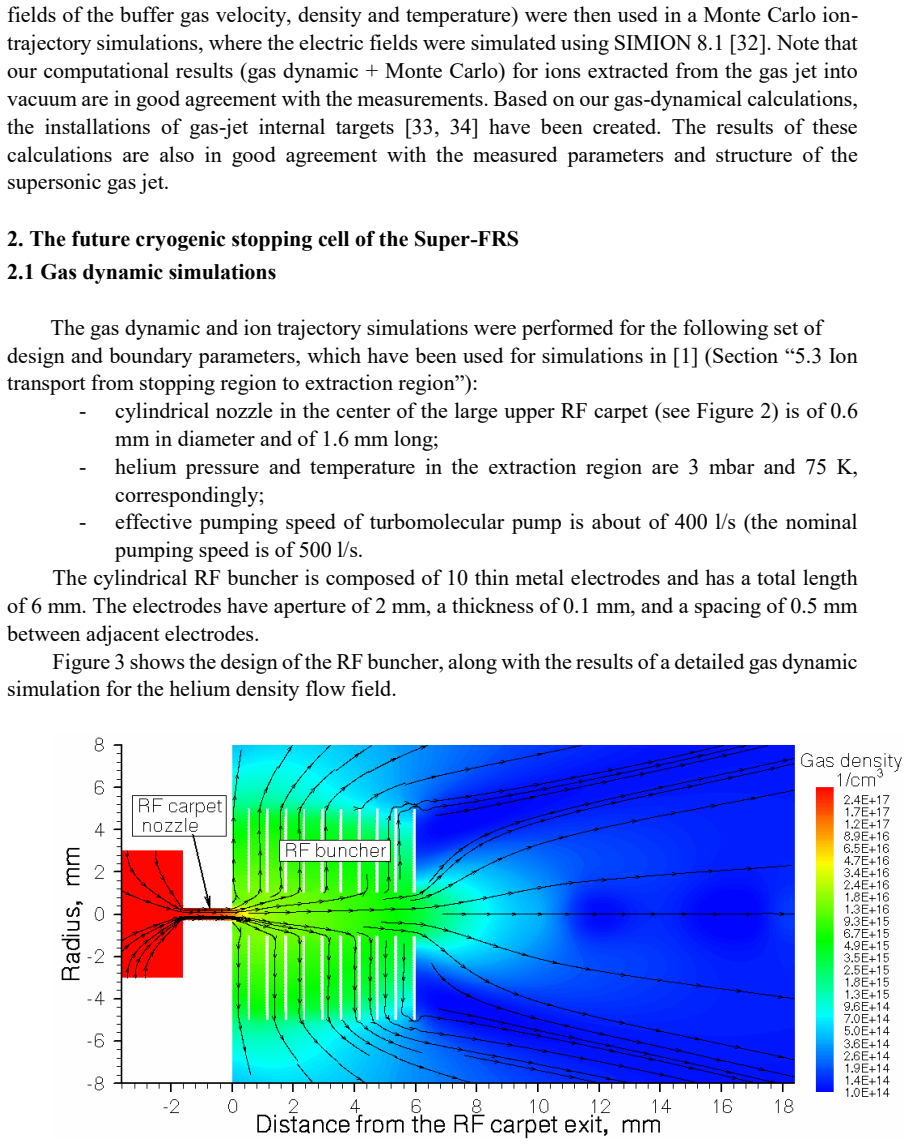
To enhance the quality of pulsed cold ion beams extracted from the two cryogenic stopping cells at FAIR (i.e., the one currently used in the FRS and the one under development for the Super-FRS at FAIR), we propose using a novel gas-dynamic ion beam extraction and bunching technique as an alternative to the radiofrequency quadrupole (RFQ) method. This technique allows for 100% ion transmission by placing a short stack of thin cylindrical electrodes behind the extraction RF carpet. Detailed gas-dynamic and ion trajectory computer simulations demonstrate that implementing this proposal will enable the achievement of world-record emittance values for ion beams in a wide mass range. The results of these simulations are presented and discussed.
0
0
physics.acc-ph 2026-04-29

Combined diagnostics pin down plasma profiles for 15-GeV beams

Revealing Laser and Electron Beam Evolution in 10-GeV-class Laser-Plasma Accelerators

Longitudinal electron and laser data validate simulations over full length, predicting 15 GeV at 65 cm and 20 GeV at 70 cm with same laser

Figure from the paper full image
abstract click to expand
Guiding relativistically intense laser pulses in low-density plasmas enables extended acceleration lengths in laser-plasma accelerators (LPAs), allowing for the production of multi-GeV electron beams. Quantitative interpretation of such experiments is often limited by substantial uncertainties in key plasma parameters, particularly the transverse density profile of hydrodynamic optically field-ionized channels. Distinct plasma density distributions can produce similar terminal beam energies, complicating efforts to infer the underlying interaction physics from measurements at the accelerator exit alone. By combining longitudinally resolved electron beam diagnostics with independent measurements of laser spectral evolution in a 10 GeV LPA, we establish a multi-observable constraint on plasma density profiles. Once plasma downramps are taken into account, excellent agreement is observed with simulation over the entire accelerator length for two plasma channel sizes. The validated simulations indicate that extending the accelerator length to 65 cm would increase the electron beam energy to 15 GeV. They also point the way to achieving $\sim$20 GeV electron beams in $\sim$70 cm via linear matching using the same 24 J laser energy.
0
0
physics.acc-ph 2026-04-29

Gradient descent retrieves bunch profiles from radiation spectra flexibly

Adaptable phase retrieval for coherent transition radiation spectroscopy based on differentiable physics information

Enforcing measured amplitudes and real-space priors in a differentiable model matches older methods while allowing added experimental

Figure from the paper full image
abstract click to expand
Coherent transition radiation (CTR) spectroscopy is a critical diagnostic for characterizing the longitudinal structure of relativistic electron bunches in laser-plasma and conventional accelerators. In practice, recovering the bunch profile from a measured CTR spectrum is an ill-posed phase-retrieval problem. Traditionally, this is addressed using Gerchberg-Saxton (GS)-type iterative algorithms. However, these implementations often rely on explicit inverse propagators, making them difficult to adapt to sophisticated experimental forward models. In this work, we introduce a flexible gradient-based framework for CTR phase retrieval. By leveraging a differentiable forward model, we propose a phase-only gradient descent (GD-Phase) approach that enforces the measured spectral amplitude as a hard constraint while optimizing the Fourier phase under physical real-space priors. Using synthetic CTR spectra spanning multi-peaked and strongly modulated profiles, we benchmark GD-Phase against traditional GS and a real-space amplitude-parametrized gradient descent (GD-Amp) algorithm. Unlike traditional methods, this formulation allows for the seamless inclusion of arbitrary differentiable experimental effects into the reconstruction loop. We demonstrate that this physics-informed approach not only reproduces the fidelity of GS methods but also establishes a robust baseline for incorporating multi-diagnostic constraints and uncertainty quantification. This enables the systematic extension to higher-dimensional, multimodal, and uncertainty-aware diagnostics, facilitating fast and scalable phase retrieval in realistic experimental settings.
0
0
physics.acc-ph 2026-04-28

LEP3 collider design fits inside existing LHC tunnel

Updated Design for LEP3

Updated proposal targets high luminosity for precision studies of Z, W and Higgs bosons using current infrastructure.

Figure from the paper full image
abstract click to expand
An updated design for the LEP3 electron-positron collider is presented. The machine is designed to operate in the existing tunnel infrastructure currently hosting the Large Hadron Collider and aims to deliver high luminosity for precision studies of the Z, W, and Higgs boson.
0
0
physics.acc-ph 2026-04-28

RF resonance cuts emittance in hybrid plasma accelerators

Resonant RF Wakefield Coupling for Radiation-Reaction Control of 3D Betatron Dynamics in Hybrid Laser Plasma Accelerators

Aligning external fields with betatron frequencies strengthens radiative damping to suppress transverse oscillations and energy losses.

Figure from the paper full image
abstract click to expand
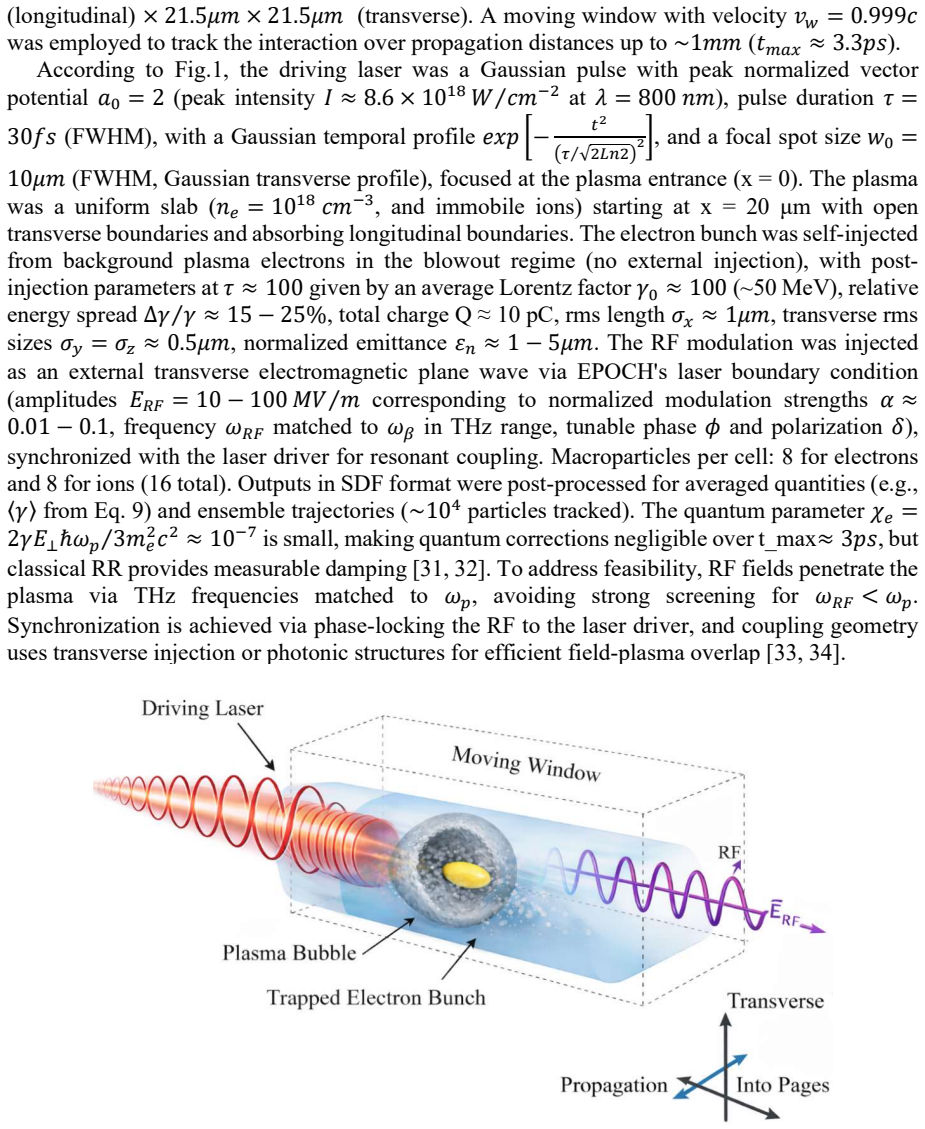
Hybrid laser plasma radiofrequency (RF) acceleration architectures signify a promising advancement in addressing the stability challenges associated with traditional laser wakefield accelerators. A thorough theoretical and numerical analysis of the three-dimensional dynamics of ultra-relativistic electron bunches in these hybrid systems is presented, clearly explaining how transverse beam stability, betatron oscillation polarisation, and radiative cooling work. By combining analytical models of spatiotemporal plasma wakefield modulation and phase dependent RF-driven oscillations with fully self-consistent 3D particle in cell (PIC) simulations, incorporating classical radiation reaction (RR) via the Landau Lifshitz model (with quantum parameter to account for synchrotron like losses during betatron oscillations. The findings indicate that the external RF fields operate as a tunable lattice, allowing for exact adjustment of amplitude, frequency, and carrier-envelope phase, which facilitates deterministic regulation of transverse focussing gradients and betatron amplitudes. A regime of resonant alignment between RF fields and natural betatron frequencies is established; this resonance enhances controlled transverse excursions while concurrently diminishing parasitic oscillations via increased radiative damping, resulting in substantial emittance reduction and the alleviation of synchrotron-like energy losses. Also, the detailed stability maps and 3D force landscapes show that the gamma factor growth rates change over time depending on the interaction between longitudinal field gradients and initial injection conditions. The paper's results give a clear picture of the nonlinear, resonant, and damping events that happen in hybrid accelerators. They also make it possible to get ultra stable, high-quality electron beams with the right polarisation states.
0
0
physics.acc-ph 2026-04-28

Biharmonic field boosts high harmonics in low-K undulators

High Harmonic Radiation from a Low-K Biharmonic Planar Undulator

Overlaying a 1/3 subharmonic component raises fifth and seventh harmonic output, delivering high flux in the 16-22 keV range with a 3.5 GeV

Figure from the paper full image
abstract click to expand
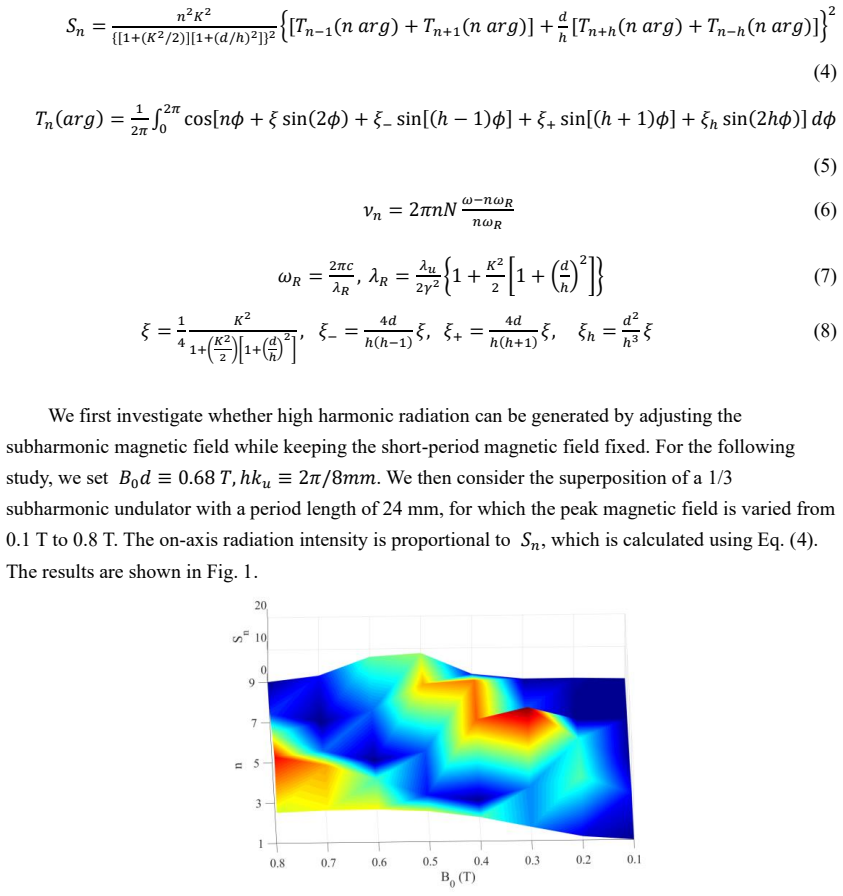
High harmonic generation by an undulator is a key issue for extending the photon energy range of synchrotron light sources. In this work, we propose a biharmonic planar undulator operating in the low-K regime (K<1) to enhance high-harmonic radiation. By superimposing a 1/3 subharmonic undulator field onto a short-period superconducting undulator, a biharmonic undulator is formed. The on-axis intensities of the 5th and 7th harmonics are significantly enhanced, corresponding to radiation near the 2nd harmonic of the short-period superconducting undulator. The results are confirmed by both theoretical analysis and numerical simulations using SPECTRA. It shows that the biharmonic configuration effectively overcomes the limitations of low-K undulators for high harmonic generation. In this study, reasonable undulator parameters are selected with full consideration of technical challenges. The simulation indicates that an unprecedented photon flux in the 16-22 keV energy range can be achieved with a 3.5 GeV beam, offering a promising approach for high brightness, short-wavelength synchrotron radiation.
0
0
physics.acc-ph 2026-04-27

Python package enables full FACET-II beamline simulations

FACET2-S2E: Start-to-end simulations of the FACET-II beamline

Users can now run common pipelines to design experiments and interpret results for the high-energy accelerator.

abstract click to expand
FACET2-S2E is a Python package for start-to-end simulations of the Facility for Advanced Accelerator Experimental Tests-II (FACET-II), a US Department of Energy National User Facility. A kilometer-long particle accelerator creates, manipulates, and accelerates electron beams to over 10 GeV before focusing and compressing them to the micron-scale. These beams create extreme electric and magnetic fields on the femtosecond timescale, uniquely enabling research into exotic states and advanced accelerator technology, including plasma wakefield acceleration. This software package enables present or prospective facility users to easily run the most common types of simulation pipelines to design experiments and interpret results.
0
0
physics.acc-ph 2026-04-27

Lower coupling raises vertical X-ray coherence in storage rings

Controlling and Measuring the Degree of Coherence at CLS using X-ray Interferometry

Double-slit measurements at 7 keV confirm visibility rises as coupling factor falls, matching beam-size predictions.

Figure from the paper full image
abstract click to expand
This paper investigates a case study on measuring and controlling the first-order degree of spatial coherence under different coupling adjustments in the storage ring. The experimental findings are consistent with the predicted inverse relationship between the visibility and the coupling factor. The degree of coherence was measured using X-ray double slit interferometry with synchrotron radiation at an energy of 7 keV on the Brockhouse X-Ray Diffraction and Scattering in-vacuum undulator beamline. The vertical degree of coherence increases as the coupling factor in the storage ring is reduced. The Linear Optics for Closed Orbit (LOCO) algorithm is used to model the linear terms of the storage ring optics in Accelerator Toolbox. The LOCO-tuned model provides insights into the variations in the vertical beam size at two different source points in the storage ring as a function of the coupling factor. The coupling factor is parameterized by the closest-tune approach with a bunch-by-bunch feedback system to confirm the trend in the changes of the vertical beam size and the visibility.
0
0
physics.acc-ph 2026-04-27

Showers from particle interactions set beam-loss patterns in accelerators

Particle-Matter Interactions

Review walks through photon and hadron processes, nuclear reactions, and FLUKA modeling of a typical LHC shower

Figure from the paper full image
abstract click to expand
This lecture reviews the principles of particle-matter interactions, providing the essential physics background required to understand beam loss mechanisms in high-energy accelerators and their associated implications. The main interaction processes of photons and charged particles are introduced, together with an overview of nuclear reactions. The lecture then addresses electromagnetic and hadronic showers, which play a central role in particle-matter interaction physics. Following a brief overview of Monte Carlo simulation tools, with emphasis on FLUKA, the lecture concludes with a detailed examination of a representative LHC-type radiation shower.
0
0
physics.acc-ph 2026-04-27

Beam losses in accelerators create damage and radiation risks

Beam Loss Consequences

Review of mechanisms at the LHC and future colliders shows how losses affect materials, electronics, and safety protocols.

Figure from the paper full image
abstract click to expand
The operation of high-energy and high-intensity particle accelerators inevitably leads to the loss of a fraction of beam particles, either through controlled processes or accidental events. This article builds on a first lecture on particle-matter interactions to review the main beam loss mechanisms in high-energy and high-intensity accelerators and their implications for safe and efficient operation. It discusses the resulting risks of equipment and material damage, radiation effects on electronics, and radiation-protection hazards. The focus is on beam losses in hadron accelerators, with particular emphasis on the Large Hadron Collider at CERN, while also addressing proposed future facilities such as the Future Circular Collider and muon colliders.
0
0
physics.acc-ph 2026-04-24

Synchrotron radiation polarizes electron OAM near unity

Orbital angular momentum radiation and polarization of relativistic electrons in magnetic fields

The polarization builds orders of magnitude faster than spin polarization, offering control over vortex beams.

Figure from the paper full image
abstract click to expand
While spin polarization from synchrotron radiation is well established, the polarization of orbital angular momentum (OAM) in such radiative processes remains elusive. We study radiation and polarization of relativistic electrons in a uniform magnetic field, focusing on OAM polarization radiation for vortex electrons which carry intrinsic OAM. The results illustrate that transition rates are asymmetric in the low-photon-energy regime, favoring OAM decrease, analogous to the spin-flip asymmetry in the Sokolov-Ternov effect. Under these conditions, synchrotron radiation can polarize the OAM. The characteristic relaxation time and stationary-state OAM distribution are obtained analytically. The polarization of spin about \(\mathcal{P}_{\text{spin}}\) reaches \(92.38\%\), while that of \(\mathcal{P}_{\text{OAM}}\) can even approach almost unity for a large OAM; however, their polarization behaviors are different. For typical storage ring parameters, the OAM polarization time is orders of magnitude shorter than the spin polarization time. Thus, synchrotron radiation offers a mechanism for controlling vortex electron beams which carry OAM for high-energy accelerator applications.
0
0
physics.acc-ph 2026-04-23

Fiber cube spectrometer resolves proton energy and position in one exposure

A Spatial-Resolved Proton Energy Spectrometer Based on a Scintillation-Fiber Cube

Calibration shows 6-93 MeV range and 0.6 percent uncertainty at 80 MeV for broadband complex beams.

Figure from the paper full image
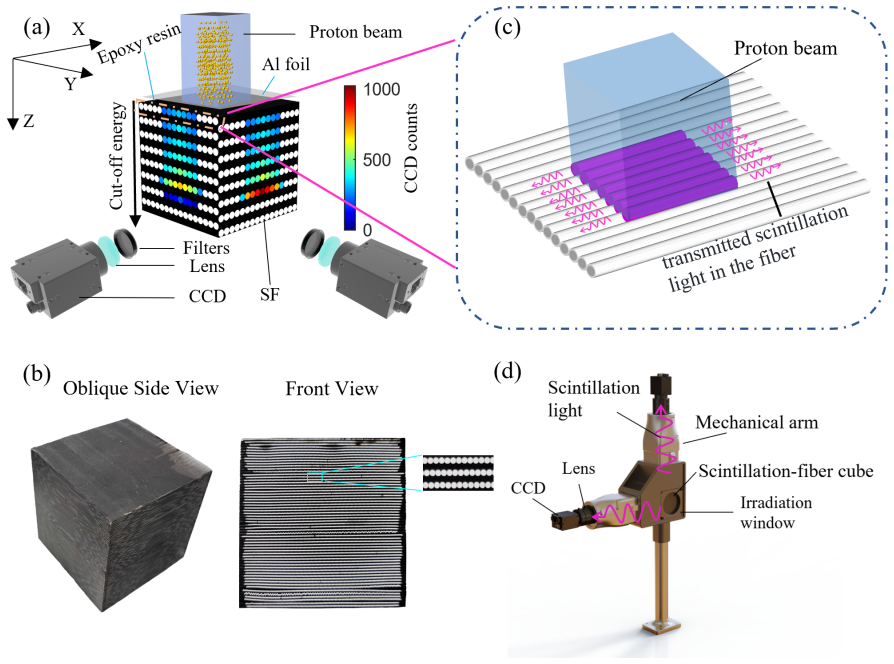
abstract click to expand
Advanced particle acceleration methods have produced high-peak-current ion beams with broad energy spread and complex spatial distribution. There is an urgent need to develop online spatial-resolved energy spectrometers for high-energy pulsed ions. This paper introduces a novel spectrometer based on a scintillation-fiber cube for online diagnosis of proton beams with broadband energy spread and complex spatial distribution. We present its working principles, experimental setup, and comprehensive calibration using monoenergetic and spatially uniform proton beams generated by a synchrotron accelerator. Calibration results confirm an energy measurement range of 6-93 MeV, a relative energy uncertainty of 0.6% at 80 MeV, and a pixel size of 0.5 mm for beam profile reconstruction. By exploiting a custom-designed energy degrader, we generated a complex proton beam and measured it with the scintillation-fiber cube spectrometer (SFICS). The results demonstrate the spectrometer's potential for online measurement of the energy spectrum and spatial distribution of complex proton beams.
0
0
physics.acc-ph 2026-04-23

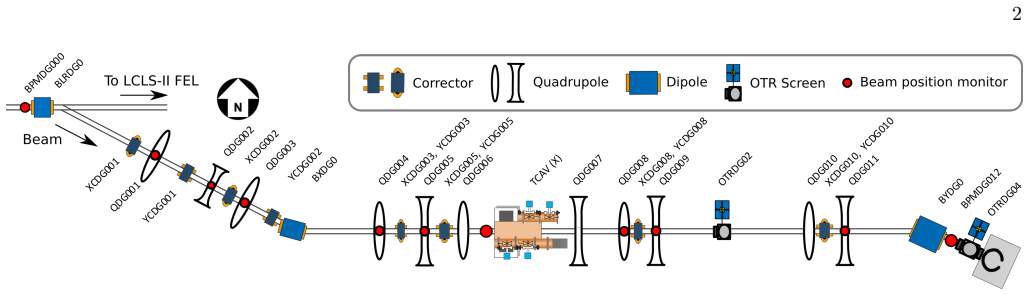
Autonomous 6D tomography tracks LCLS-II beams every 5-10 minutes

Autonomous operation of the DIAG0 diagnostic line for 6D phase-space monitoring at LCLS-II

Machine-learning control and generative analysis enable continuous injector monitoring without human setup.

Figure from the paper full image
abstract click to expand
Characterizing the full 6-dimensional phase-space distribution of beams from the LCLS-II photoinjector is essential for understanding and optimizing downstream accelerator performance. Long-term monitoring of this distribution is equally important for detecting drifts in machine state and implementing timely corrective actions. Continuous phase space characterization during routine operation demands reliable tomographic diagnostic measurements and fast, efficient reconstruction methods. In this work, we demonstrate the first fully autonomous 6-dimensional beam-tomography system deployed on the DIAG0 parasitic beamline at LCLS-II. Using machine-learning-based control algorithms, the system autonomously configures DIAG0 and executes tomographic manipulations within operational constraints, adaptively re-optimizing beamline parameters and scan ranges in response to changes in the incoming beam. Tomographic measurements are streamed to the S3DF computing cluster where generative analysis methods reconstruct the phase-space distribution. We demonstrate that this framework produces detailed 6-dimensional beam reconstructions at a cadence of one reconstruction every 5 to 10 minutes, enabling real-time, multi-hour monitoring of injector beam evolution with unprecedented fidelity. These results represent a significant step toward fully autonomous operation of accelerator beamlines with real-time beam diagnostics for current and next-generation accelerator facilities.
0
0
physics.acc-ph 2026-04-22

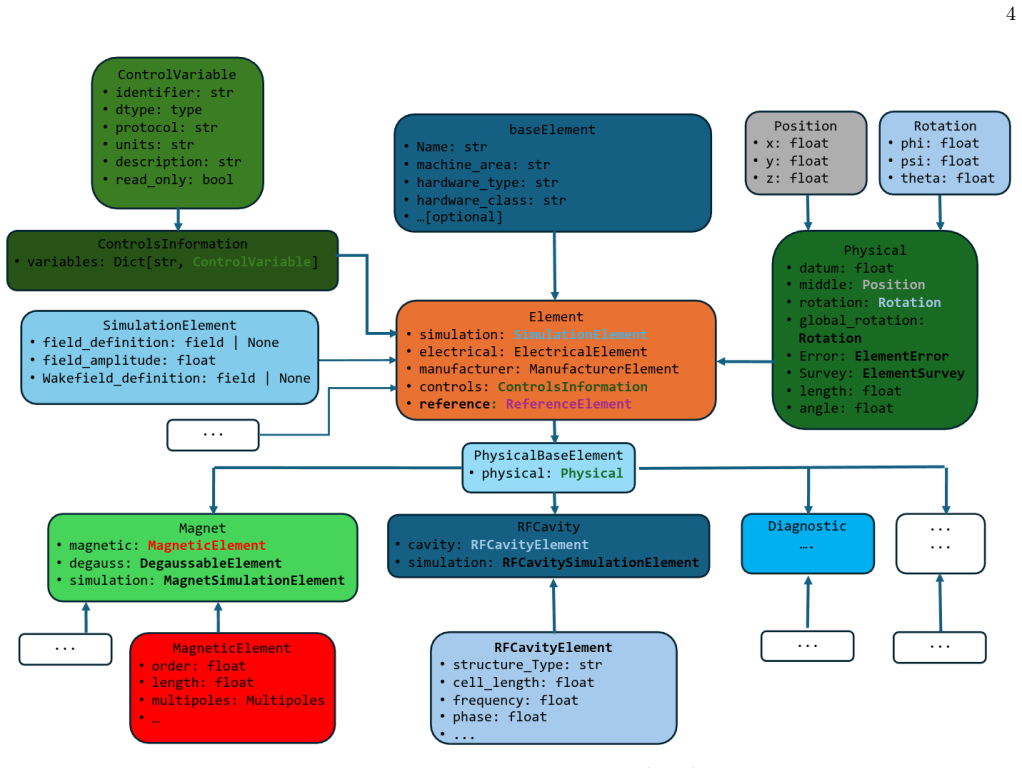
Unified lattice schema enables seamless code transfers in accelerators

A flexible start-to-end simulation framework for particle accelerators based on a comprehensive lattice description

A single comprehensive description of accelerator elements can be translated for use in multiple simulation programs, supporting full start-

Figure from the paper full image
abstract click to expand
Standardization of data formats in a scientific discipline brings a range of benefits to researchers, as it enables the sharing of workflows and solutions to common problems, provides the foundation for generically useful tools that can be applied across the field, and gives a basis for cross-checking and validation that can be understood by all. Owing to the wide range of possible modes of description of particle accelerator lattices, a standard solution to this problem has not yet been developed for the field, although efforts are underway across the community. This article presents a schema for a comprehensive and generic format for describing particle accelerator lattices, encompassing physical element information, simulation code-specific parameters, control system variables, electrical and magnetic data, and other parameters, for each element. A translation layer is also provided in order to export this lattice into formats suitable for a variety of standard accelerator simulation codes. Based on this format, a framework has been developed for generating, tracking and analyzing beams through the lattice, providing a seamless transfer between simulation codes and the basis for a fully generic start-to-end simulation framework.
0
0
physics.acc-ph 2026-04-22

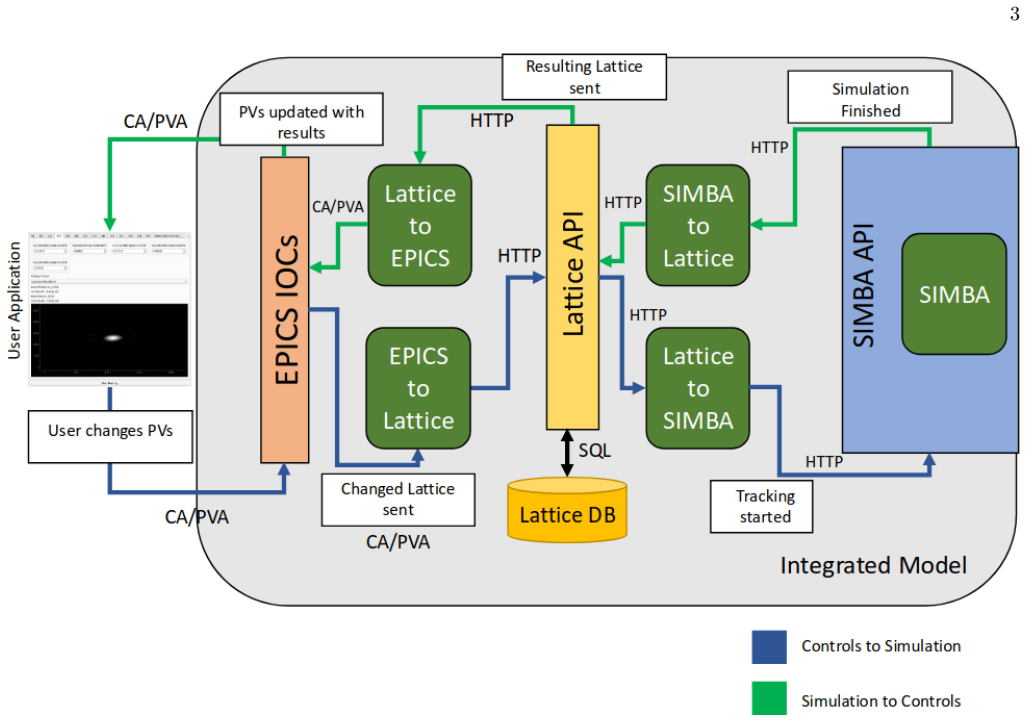
Accelerator digital twins auto-generate from a single source of truth

Closing the Loop: Deploying Auto-Generating Digital Twins for Particle Accelerators

A virtual control system mirrors physical hardware and feeds simulation results back to diagnostics without parameter ambiguity.

Figure from the paper full image
abstract click to expand
The simulation of a physical system in a virtual replica, known as a digital twin, is a useful way to interrogate the system non-invasively, providing the ability to perform predictive maintenance and surveillance, and to investigate potential novel configurations without perturbing the system. This article presents the implementation of an auto-generating digital twin architecture for particle accelerators: a virtual control system is generated to mirror the physical accelerator hardware, and used to update a simulation model which then feeds back the results into virtual diagnostics. All of the information about the accelerator lattice is cascaded down from a ground source of truth, removing any ambiguity about the naming of parameters between the simulation model and the virtual hardware. This design is modular and extensible, allowing researchers from different institutions to use their own models (for example, a machine learning model) and accelerator lattices while maintaining the overall structural coherence of the digital twin. This architecture has been tested for three accelerator facilities \textendash~CLARA, the ISIS injector, and the proposed UK XFEL \textendash~and aims to provide the foundation for a collaborative community effort in the development of shared technology towards a generic digital twin solution.
0
0
physics.acc-ph 2026-04-21

Python TRAIN code matches original and LHC beam-beam data

pyTRAIN -- a modern TRAIN implementation

Re-implementation adds arbitrary particles and interaction points while reproducing classic results for closed orbits and tunes.

Figure from the paper full image
abstract click to expand
The TRAIN code, developed in 1995 as a post-processor for second-order transport maps from MAD, has been used extensively at the LEP and the LHC to study self-consistent closed orbits, tunes and chromaticities of bunch trains under the presence of beam-beam long-range (BBLR) and PACMAN effects.. This paper presents a modern re-implementation of the TRAIN concept in Python using well-known numeric libraries (numpy, scipy) and an optional link to MAD-X via cpymad. This greatly improves the usability, maintainability and extensibility of the code. New functionality includes the support for arbitrary particle types, an arbitrary number and distribution of beam-beam interaction points, and the extrapolation of the beam-beam induced closed-orbit effects to arbitrary points in the machine. The code is benchmarked against the classic TRAIN code, and simulation results are compared to observations from LHC physics operation.
0
0
physics.acc-ph 2026-04-21

Effective lasing length controls attosecond XFEL power and duration

High-power attosecond X-ray free-electron lasers: physics and design strategy

Unified analysis shows electron beam properties set limits for terawatt attosecond pulses regardless of generation scheme

Figure from the paper full image
abstract click to expand
Attosecond pulses from X-ray free-electron laser (XFEL) have opened new opportunities for probing ultrafast electronic dynamics on the Angstrom--attosecond spatiotemporal scale. Most attosecond XFEL concepts rely on generating an ultrashort high-current spike through either external laser modulation or accelerator-based beam manipulation. Despite their different implementations, these approaches share the same essential physics, namely that the XFEL amplification is confined to a short effective lasing window within the electron beam. However, existing studies are often scheme-specific and do not yet provide a unified quantitative picture of how fundamental electron-beam properties constrain high-power attosecond performance. In this work, we investigate the general physics and scheme-independent requirements for generating high-power attosecond X-ray pulses from a short current spike. From the perspective of post-saturation superradiant evolution, we show that the effective lasing length of the electron beam governs both the attainable peak power and the pulse duration. We further examine the distinct roles of slice energy spread, slice emittance, energy chirp, undulator tapering, and transverse beam tilt. Our results reveal the trade-off between peak power, pulse shortening, and single-spike probability, and provide facility-independent guidelines for optimizing electron-beam phase-space manipulation toward terawatt-class attosecond XFEL operation.
0
0
physics.acc-ph 2026-04-21

3D-printed cavity reaches 4.8 MeV/m pulsed gradients at 60°C

Bridging Metal Additive Manufacturing and RF Accelerator Design: Development of a 704.4 MHz Crossbar H-Mode Linac for Efficient Beam Acceleration

Additive manufacturing creates internal cooling channels that let a compact 704 MHz linac handle high gradients in both continuous and short

abstract click to expand
The development of Ultra-High Frequency (UHF) linear accelerators via Metal Additive Manufacturing (MAM) is a strategic research focus of the RACERS team at GSI. The 704.4 MHz Crossbar H-mode (CH) cavity, proposed in 2021 to facilitate efficient frequency jumps and downsize accelerator footprints, represents both the highest-frequency CH structure to date and the first of its kind fabricated entirely through MAM. This study demonstrates the structure's capability for efficient beam acceleration in both Continuous Wave (CW) applications (e.g., accelerator-driven systems) and pulsed operations (e.g., spallation neutron sources). By operating in the UHF regime, the cavity inherently enhances sparking resistance, shifting the physical bottleneck away from surface electric field constraints to enable higher accelerating gradients. To manage the resulting thermal loads within compact dimensions, this study utilizes the design freedom of MAM to integrate a sophisticated "lotus-root-like" cooling network, which is a geometry unachievable through conventional subtractive machining. In combination with a kind of high-strength and high-conductivity alloy, CuCr1Zr, the cavity can achieve energy gain rates of 1.4-1.5 MeV/m (CW) and 4.6-4.8 MeV/m (pulsed), while maintaining a peak surface temperature of approximately 60 degrees Celsius. These results indicate that bridging additive manufacturing with advanced RF design provides a robust framework for next-generation UHF linac structures to go beyond current accelerating-gradient limits.
0
0
physics.acc-ph 2026-04-20

Plasma lenses halve length for achromatic staging

Achromatic optics using nonlinear plasma lenses for beam-quality preservation between plasma-accelerator stages

The lattice preserves emittance at several percent energy spread and offers tunable bunch control, outperforming magnet systems.

Figure from the paper full image
abstract click to expand
Plasma acceleration promises to deliver high-energy particle beams by combining, or staging, several low- or medium-energy accelerator stages. However, chromatic aberrations from the combination of high divergence and energy spread make it nontrivial to transport beams between plasma-accelerator stages. This paper describes a compact and achromatic lattice optimized for staging, based on a new beam-optics element; a nonlinear plasma lens. The lattice preserves emittance for energy spreads up to several percent and has a tunable $R_{56}$ that enables bunch-length preservation or a longitudinal self-correction mechanism. The performance and limitations of the plasma-lens-based solution are modeled analytically and numerically, and compared to a more conventional yet novel solution based on quadrupole and sextupole magnets. While functional, the latter is double the length, has about twice the number of elements and a narrower energy bandwidth. Lastly, a solution for scaling to TeV energies is described, in which all lengths scale with the square root of the energy and the deleterious effects of coherent and incoherent synchrotron radiation are mitigated.
0
0
physics.acc-ph 2026-04-20

Kicker cavity splits beam for dual tunable infrared FELs

A two-color dual-oscillator infrared free-electron laser

The 500 MHz device divides a 1 GHz electron train so mid- and far-infrared oscillators can run simultaneously with independent wavelength d

Figure from the paper full image
abstract click to expand
We report on the design and performance of a two-color dual-oscillator infrared free-electron laser (FEL). The mid-infrared (MIR) FEL at the Fritz Haber Institute (FHI FEL) has been upgraded to include a second oscillator FEL beamline that permits lasing in the far-infrared (FIR) regime from 4.5 {\mu}m to 175 {\mu}m. In addition, a 500 MHz kicker cavity has been installed downstream of the electron accelerator. It allows to deflect electron bunches of up to 50 MeV energy alternately left and right by an angle of {\pm}2{\deg}. It can, thus, split the high-repetition-rate (1 GHz) electron bunch train from the accelerator into two bunch trains of 500 MHz repetition rate each; one is steered to the MIR FEL and the other one to the new FIR FEL. In this two-color mode of simultaneous, synchronized operation the wavelengths in both FELs can be tuned independently over wide ranges of up to a factor of four each by undulator-gap variation. In addition, two-color operation is also available at reduced repetition rates (e.g. 55.6 MHz of both MIR and FIR pulses), as needed for some applications. This unique two-color mode opens up a wealth of novel user applications such as, MIR-FIR pump-probe experiments.
0
0
physics.acc-ph 2026-04-20

Data-driven chaos score tunes sextupoles to widen beam aperture

Online optimization of nonlinear lattice using a data-driven chaos indicator

Turn-by-turn position data trains a model whose uncertainty guides magnet adjustments, enlarging stable orbits and raising injection rates.

Figure from the paper full image
abstract click to expand
We report the experimental implementation of a Data-Driven Chaos Indicator (DDCI) [Y.~Li \emph{et al.}, Nucl.\ Instrum.\ Methods Phys.\ Res.\ A \textbf{1024} (2022) 166060] for online optimization of the National Synchrotron Light Source II (NSLS-II) storage ring. The DDCI quantifies the predictability of electron beam dynamics using turn-by-turn beam position monitor data. A surrogate model of the one-turn map is first trained, and its out-of-sample predictive uncertainty is then employed as a measurable indicator of chaos. By tuning sextupole magnets to mitigate nonlinear effects, a clear enlargement of the dynamic aperture is achieved, accompanied by a corresponding improvement in injection efficiency.
0
0
physics.acc-ph 2026-04-20

Terahertz bunch control stabilizes laser-plasma accelerators

Controlling external injection in laser-plasma accelerators with terahertz frequency bunch manipulation

Simulations achieve 0.2% energy jitter in GeV beams by locking and compressing bunches to sub-10 fs for reliable injection.

Figure from the paper full image
abstract click to expand
Laser-plasma wakefield acceleration (LWFA) offers ultrahigh accelerating gradients in compact setups, but the complex non-linear nature of the process makes it challenging to generate high-quality beams. Injection of electron bunches from an external source into a plasma accelerator provides a promising route to improved performance; however, electron bunches from conventional radio-frequency (RF)-based injectors suffer from non-linear compression and laser-beam asynchrony, leading to energy jitter and emittance growth. We present a fundamental concept of terahertz-controlled electron bunches for external injection into LWFA. This terahertz-frequency approach provides temporal locking between the electron beam and the drive laser, and enables the compression of high-quality beams to sub-10-fs durations before injection into the LWFA. Numerical simulations demonstrate that GeV-scale acceleration with excellent beam quality and stability -- energy jitter and energy spread around 0.2% -- can be achieved using this method. This concept opens new opportunities for stable, multi-stage laser-driven accelerators and supports the development of next-generation applications such as free-electron lasers (FELs).
0
0
physics.acc-ph 2026-04-20

Proposed OAM closure for vortex particles fails in uniform fields

Comment on "Angular momentum dynamics of vortex particles in accelerators''

Breathing packets make mean L_z oscillate, incompatible with the closed equation except in matched cases.

abstract click to expand
We comment on Ref.[D. Karlovets, D. Grosman, and I. Pavlov, Phys. Rev. Lett. 136, 085002 (2026)], which proposes a BMT-like equation for the mean kinetic orbital angular momentum (OAM) of vortex particles in accelerator fields and draws spin-like conclusions about depolarization, resonances, and control. We show that the proposed closure is not generally valid even at the mean-value level. In the authors' own homogeneous-field model, Eq.(8) already makes $\langle L_z\rangle$ depend on the packet second moment $\langle \rho^2\rangle(\tau)$; for an exact family of breathing Landau/LG packets this yields an explicit oscillation incompatible with Eq.(9) except in the nongeneric matched case. Moreover, the Appendix A assumption that mixed correlators are negligible suppresses the transverse kinetic-OAM components themselves, since those correlators are precisely the building blocks of $L_x$ and $L_y$. We also stress that, even if a closed equation for $\langle \hat{\mathbf L}\rangle$ were available, it would still not constitute a transport equation for a vortex quantum state. Mean-OAM transport does not determine OAM spectra, inter-mode coherences, or fidelity. State-level claims therefore require a mode-resolved density-matrix treatment rather than an Ehrenfest equation for a low-order moment.
0
0
physics.acc-ph 2026-04-15

CuCrZr emissivity fixed at 0.056 for beam dump use

Emissivity measurements of CuCrZr alloy

Constant value from 100-650°C lets IR camera give reliable temperatures on the FRIB minichannel beam dump under vacuum.

abstract click to expand
The FRIB heavy-ion accelerator, in user operation since 2022, produces rare isotope beams (RIBs) via interactions of high-intensity stable ion beams with a graphite production target. Approximately 20-40$\%$ of the primary beam power is deposited in the target, while the remaining 60-80$\%$ is absorbed by the beam dump. The minichannel beam dump (MCBD), currently operated at 20 kW and designed for operation up to 50 kW, uses CuCrZr alloy absorber plates. Thermal validation and thermal cycling tests of the MCBD were conducted at the Applied Research Laboratory (ARL) at Pennsylvania State University. Temperature measurements were obtained from an infrared (IR) camera. Since accurate temperature determination requires reliable emissivity values, the emissivity of CuCrZr was measured using the IR camera validated against thermocouple reference temperatures up to $\approx$ 650 $^{o}$C. The measurements were conducted under a vacuum level of $\approx$10$^{-5}$ torr to minimize emissivity variations due to surface oxidation. The emissivity of CuCrZr was determined to be 0.056 $\pm$ 0.009 using a constant fit to the measured data over the surface temperature range from 100-650 $^{o}$C.
0
0
physics.acc-ph 2026-04-15

Noisy EXAFS data backs oxygen models in mid-T RF cavities

Investigations and Considerations of Oxygen Diffusion Profiles in Superconducting Mid-T RF Cavities Utilizing EXAFS Spectroscopy

Qualitative checks on diffusion profiles in superconducting cavities support existing theories despite data limitations.

abstract click to expand
A screening of oxygen profiles in mid-T treated SRF cavities is crucial, in order to infer physical correlations between the microscopic cavity lattice and cavity performance - a problem concerning acceleration physicists for years. This thesis provides an analysis of oxygen diffusion profiles for three differently treated samples: Two mid-T baked and the third with the standard EuXFEL recipe. The measurement method utilizes EXAFS spectroscopy and was carried out at the DELTA facility in Dortmund. The result suffers heavily under noise, making the quantity of the result barely useable. Qualitatively, no deviations of current models regarding the profiles, could be proven, and no results of previous studies were contradicted. The experimental analysis is described in precision, interpretations of the possible are undertaken and theoretical considerations regarding error estimation and possible EXAFS simulations for future attempts are provided. A repetition at the PETRA III facility is indicated.
0
0
physics.acc-ph 2026-04-14

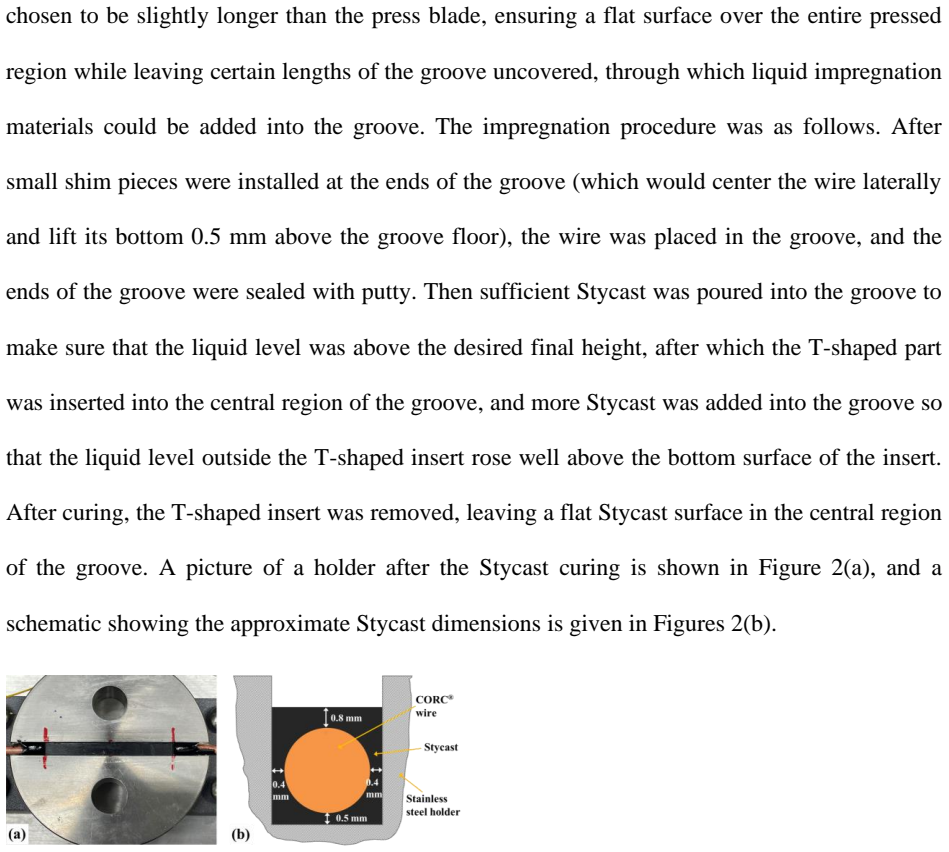
Tests quantify transverse stress limits for CORC wires

Critical transverse compressive stresses of straight and bent CORC^circledR wires with and without impregnation

Pressures for 3% and 5% critical current drops reported across straight, bent, and impregnated configurations to guide magnet design.

Figure from the paper full image
abstract click to expand
CORC$^\circledR$ wires are a promising superconductor for accelerator magnet applications. While their excellent uniaxial tensile properties have been well established, potential degradation under transverse compression remains a significant concern for accelerator magnets, in which transverse compression is a primary stress experienced by superconductors. To evaluate the critical transverse compressive stresses of ReBCO conductors, we developed an experimental system that enables testing of samples both with and without impregnation in liquid nitrogen. Furthermore, because bending strain induced during coil winding may influence the critical compressive response of CORC$^\circledR$ wires, the apparatus was also modified to allow testing under the bending condition. In this study tests were conducted for five configurations: (1) straight wires without impregnation, (2) bent wires without impregnation, (3) straight wires with Stycast 2850 FT impregnation, (4) bent wires with Stycast 2850 FT impregnation, and (5) bent wires impregnated with paraffin wax. The transverse pressures corresponding to 3% and 5% reductions in the critical current are reported. The effects of wire bending and impregnation on the critical transverse pressure are analyzed, and the implications for transverse stress levels in accelerator magnet conductors are discussed.
0
0
physics.acc-ph 2026-04-13

Chirped electron beams produce 30 eV hard X-ray attosecond pulses

Broadband hard X-ray attosecond pulses from extremely chirped electron beams

Single-spike output from RF linac doubles prior bandwidth records through chirp compensation

Figure from the paper full image
abstract click to expand
Attosecond pulses from free-electron lasers have opened the doors to atomic site-specific pumping and probing of quantum systems. Key to their success has been electron beam shaping techniques enabling the generation of sub-femtosecond current spikes with peak currents on the order of 10 kA. We demonstrate in an RF linac the generation of current spikes with extreme chirps on the order of 350 MeV/micron, competitive with the chirps expected from beam-driven plasma wakefield accelerators. Leveraging chirp-taper compensation, we use these highly chirped beams to generate single spike hard X-ray attosecond pulses with bandwidths exceeding 30 eV, a factor of two beyond earlier single spike hard X-ray demonstrations. Such large chirps can be further compressed downstream of lasing, enabling subsequent superradiant light emission or direct excitation with the beam's intense space charge field for attosecond pump-probe experiments.
0
0
physics.acc-ph 2026-04-13 2 theorems

Hadron colliders' luminosity solutions guide future machines

Hadron Colliders

Past resolutions to beam and magnet challenges supply the engineering basis for HL-LHC upgrades and FCC designs.

Figure from the paper full image
abstract click to expand
In this paper we will provide an overview of the hadron colliders built to date and the design and operational challenges that each of these machines has faced. Many of these are inherent to the ongoing effort to optimise the instantaneous and integrated luminosity of the machines, which inevitably lead to many technological challenges that must be met and overcome. We will summarise how these challenges have been successfully met in the past and present machines and outline the role they could play in ambitious future accelerator projects such as the HL-LHC upgrade and the FCC project.
0
0
physics.acc-ph 2026-04-08 Recognition

GNN embeddings map CEBAF injector into ten stable regimes

Machine-State Embeddings as an Operational Coordinate System for Accelerator Operation

137k snapshots show operations occupy persistent neighborhoods in 16D space instead of a featureless continuum.

Figure from the paper full image
abstract click to expand
We demonstrate that graph neural network (GNN) embeddings of injector configurations provide a practical operational coordinate system for the Continuous Electron Beam Accelerator Facility (CEBAF) injector at Jefferson Lab. Using 137,389 snapshots spanning January 2022 through March 2023, we show that injector operation occupies a small number of persistent, well-separated neighborhoods in a 16-dimensional learned state space rather than a featureless continuum. Density-based clustering identifies ten recurring operating regimes with strong operational run alignment, and regime persistence statistics confirm that these regimes are stable over timescales of hours to weeks. Large relocations between neighborhoods are rare and episodic; 99.6% of one-hour operating windows fall within an empirically derived jitter baseline. Geometric outlier screening narrows a year-long dataset to a small set of intervals warranting operational review, and nearest-neighbor retrieval enables case-based reasoning over the historical archive. A controlled beam study validates that deliberate injector reconfiguration traces coherent, interpretable trajectories in embedding space. Together these capabilities demonstrate that machine-state embeddings support holistic operational monitoring in ways that single-channel inspection cannot.
0
0
physics.acc-ph 2026-04-08 Recognition

Thin axisymmetric shells simplify vessel stresses to membrane forces

Introduction to Mechanics and Structures

Shell theory under thin-wall and symmetry assumptions yields direct formulas for pressure-induced stresses, buckling loads, and design rules

Figure from the paper full image
abstract click to expand
This work provides a comprehensive overview of the fundamental concepts in continuum mechanics, focusing on the behaviour of materials under mechanical loads. It discusses the distinction between elastic and plastic, highlighting their atomic origins and macroscopic implications. Elastic behaviour is examined via Hooke's law and constitutive matrices, while plasticity is treated through yield surfaces, flow rules, and hardening laws, including isotropic and kinematic hardening. In addition, the theoretical foundations and design principles of pressure vessels and thin axisymmetric shells, focusing on their mechanical behaviour under internal or external pressure, is discussed. The analysis is based on shell theory, assuming thin walls and axisymmetric geometry, which simplifies the stress distribution into membrane stresses. The work also addresses buckling phenomena under external pressure, secondary stresses at geometric discontinuities, and design provisions from the EN 13445 standard.
0
0
physics.acc-ph 2026-04-08 2 theorems

Flying focus tunes wake speed to raise electron energies

Electron Acceleration in a Flying-Focus Laser Wakefield Accelerator

Adjusting the laser pulse focus velocity lets electrons ride the wake longer before slipping out of phase.

Figure from the paper full image
abstract click to expand
Structured light pulses hold significant promise for their ability to overcome dephasing in laser-wakefield accelerators, that should facilitate applications in high-energy physics and XFEL. Numerical studies have shown that sculpting a pulse into a flying focus and using it to drive a wakefield can achieve dephasing-free acceleration of electrons, with gain in excess of 100\,GeV within reachable with existing laser facilities. This work reports on novel experiments using a flying-focus generated laser-wakefield accelerator to accelerate electrons to relativistic energies. The flying-focus pulse is achieved by sculpting the laser-pulse before focusing using spatio-temporal couplings and generating a quasi-Bessel beam with an axiparabola. This combination allows for the tuning of the propagation velocity of the wakefield, which, we demonstrate, has an impact on the maximum achievable electron energy. Optical and particle-in-cell simulations are used to support the data and to provide direct evidence of the partial mitigation of dephasing through this flying-focus scheme. These results are further elucidated in our companion letter [1].
0
0
physics.acc-ph 2026-04-08 Recognition

THz and optical methods enable practical electron accelerators

Terahertz and Optical Acceleration Techniques

Shorter wavelengths overcome breakdown limits to deliver higher gradients with lower pulse energies and precise bunch timing.

Figure from the paper full image
abstract click to expand
The use of terahertz (THz) and optical radiation for electron acceleration and manipulation of electron bunches has progressed over the last decade to a level where practical devices for THz guns, THz and optical acceleration modules and a wide range of beam manipulations have become possible. Here, we discuss recent progress in optical driven Terahertz generation and its use in charged particle acceleration and beam manipulation devices. The advantages of using shorter wavelength radiation for acceleration are in overcoming breakdown phenomena, therefore enabling higher acceleration gradients than in conventional RF-accelerators albeit with lower bunch charge. The lower pulse energies needed to power the smaller cross section of the accelerating structures is also advantageous. In addition, the shorter wavelengths enable tighter timing control of the generated electron bunches but in return also need more precise timing when multiple stage interactions are required. Early results on THz guns, beam manipulation devices and accelerator structures are discussed as well as basic working principles of dielectric laser accelerators.
0
0
physics.acc-ph 2026-04-07 2 theorems

Laser sensor measures piezo stroke directly at cryogenic temperatures

Direct stroke measurement of Piezos for cavity frequency tuner of the ILC prototype cryomodule using a Laser Displacement Sensor

New method characterizes ILC prototype cryomodule tuners without using the cavity as an indirect sensor

Figure from the paper full image
abstract click to expand
Piezoelectric actuators are critical for achieving high accelerating gradients and preventing RF trips in narrow-bandwidth superconducting radio-frequency (SRF) cavities by compensating for detuning caused by Lorentz force detuning. Depending on the maximum acceleration gradient an appropriate piezo stroke requirement has to be fulfilled. Since the stroke of piezo actuators decreases at cryogenic temperatures, evaluating their performance under such conditions is essential. Common characterization methods either use the SRF cavity itself as a sensor or rely on capacitance measurements during cool-down. Both these approaches do not measure the stroke directly and involve a trade-off between measurement precision and experimental simplicity, as well as cost and time. We developed a new method for the direct and precise measurement of piezo stroke at cryogenic temperature inside a cryocooler-cooled cryostat using a laser displacement sensor. The setup was used to characterize and evaluate two piezo actuators for cavity frequency tuners of the ILC prototype cryomodule, which is currently being built at KEK. In this article we are reporting on the development, setup, test, and application of this novel method, allowing the direct stroke measurement of piezos in vacuum and at cryogenic temperatures.
0
0
physics.acc-ph 2026-04-06 Recognition

Diffusion model speeds 4D beam reconstruction 11000x

PhaseFlow4D: Physically Constrained 4D Beam Reconstruction via Feedback-Guided Latent Diffusion

Physics-constrained latent diffusion with feedback tracks particle phase space from 2D projections alone in real time.

Figure from the paper full image
abstract click to expand
We address the problem of recovering a time-varying 4D distribution from a sparse sequence of 2D projections - analogous to novel-view synthesis from sparse cameras, but applied to the 4D transverse phase space density $\rho(x,p_x,y,p_y)$ of charged particle beams. Direct single shot measurement of this high-dimensional distribution is physically impossible in real particle accelerator systems; only limited 1D or 2D projections are accessible. We propose PhaseFlow4D, a feedback-guided latent diffusion model that reconstructs and tracks the full 4D phase space from incomplete 2D observations alone, with built-in hard physics constraints. Our core technical contribution is a 4D VAE whose decoder generates the full 4D phase space tensor, from which 2D projections are analytically computed and compared against 2D beam measurements. This projection-consistency constraint guarantees physical correctness by construction - not as a soft penalty, but as an architectural prior. An adaptive feedback loop then continuously tunes the conditioning vector of the latent diffusion model to track time-varying distributions online without retraining. We validate on multi-particle simulations of heavy-ion beams at the Facility for Rare Isotope Beams (FRIB), where full physics simulations require $\sim$6 hours on a 100-core HPC system. PhaseFlow4D achieves accurate 4D reconstructions 11000$\times$ faster while faithfully tracking distribution shifts under time-varying source conditions - demonstrating that principled generative reconstruction under incomplete observations transfers robustly beyond visual domains.
0
0
physics.acc-ph 2023-12-20

Storage ring design aims to catch neutron capture on unstable nuclei

Conceptual Design of a Low-Energy Ion Beam Storage Ring and a Recoil Separator to Study Radiative Neutron Capture by Radioactive Ions

A low-energy ring plus Wien-filter separator would let radioactive ions repeatedly traverse a neutron target and reveal capture recoils.

Figure from the paper full image
abstract click to expand
Recently, the TRIUMF Storage Ring (TRISR), a storage ring for the existing Isotope Separator and Accelerator-I (ISAC-I) radioactive ion beam facility at TRIUMF, was proposed. It may be possible to directly measure neutron-induced radiative capture reactions in inverse kinematics by combining the ring with a high-flux neutron generator as the neutron target. Herein, we present the conceptual design of a low-energy ion storage ring as well as a fusion product extraction system with a Wien filter and recoil separator for detecting neutron capture products based on ion optical calculations and particle-tracking simulations.
0

browse all of physics.acc-ph → full archive · search · sub-categories